

Hospital Accessibility Questions to Ask Before Traveling to Turkey
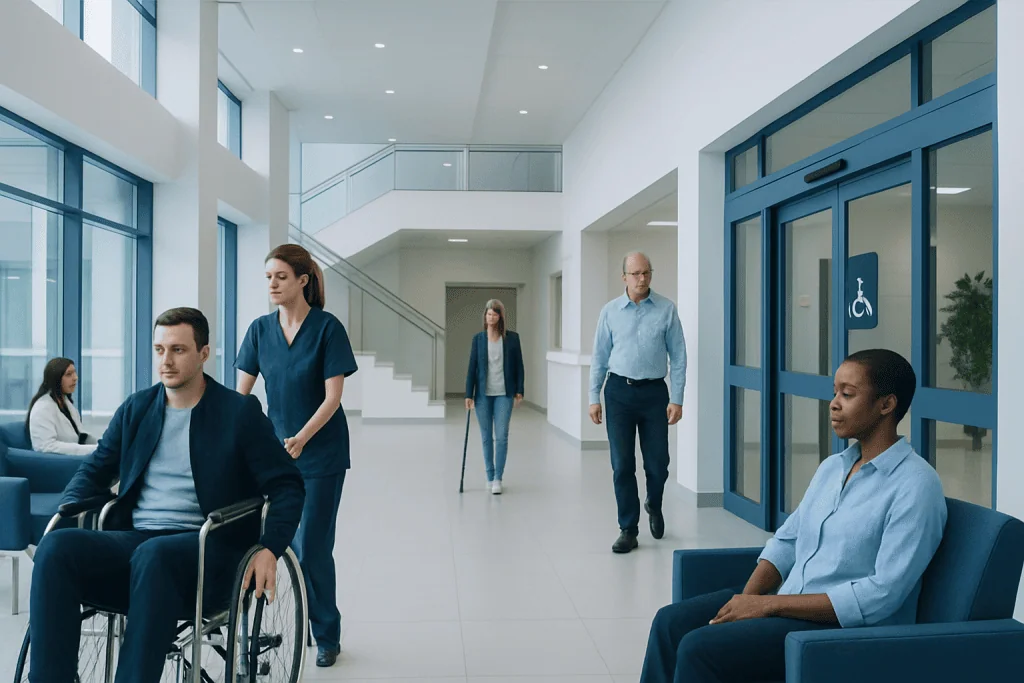
Ask about step-free routes in the exact building you will visit, elevator and toilet access, interpreter availability, companion and overnight rules, transport and hotel suitability, and equipment support. Put these questions to the international patient team before you book flights, and ask for the agreed arrangements in writing so nothing depends on memory on arrival day.
Will you get from the car door to reception without stairs? Can your companion stay overnight? Will someone explain the discharge instructions in a language you understand? These are the questions that keep people awake before a medical trip abroad, and every one of them is worth asking early, before flights are booked, not after.
If you live with reduced mobility, a sensory need, a chronic condition, or you rely on a caregiver for daily tasks, the difference between a manageable trip and an exhausting one usually comes down to planning. Hospitals can prepare a great deal, but only for the needs they know about.
This guide sets out the hospital accessibility questions to ask before traveling to Turkey, organised by stage of the journey: the building itself, transport and accommodation, communication, companions, equipment, and the trip home. Use it to build a written plan with your international patient coordinator before you commit to dates.
At a glance
- Best time to ask: Before booking flights or confirming hospital dates
- Who to ask: The hospital’s international patient coordinator or access team
- Key areas to confirm: Step-free routes, communication support, transport, companion rules, equipment and power
- Useful documents: Medical summary, medication list, device details, disability documentation if relevant
- Goal: A written, practical accessibility plan covering arrival, treatment days, admission, and discharge
Why hospital accessibility questions matter before traveling to Turkey
Traveling to another country for healthcare involves far more than choosing a hospital and an appointment date. If you use a wheelchair, walker, hearing aid, visual aid, oxygen device, insulin pump, or communication device, or you simply cannot walk long distances or stand in queues, small logistics decide how safe and comfortable each day is. A corridor that is trivial for one person is an obstacle for another.
Asking hospital accessibility questions to ask before traveling to Turkey is not a formality. It gives the hospital time to prepare accessible entrances, step-free routes, patient lifts, suitable toilets, interpreter support, longer appointment slots, companion arrangements, and coordination with airport and hotel services. Requests made on arrival day can sometimes be met; requests made three weeks earlier almost always can.
Well-run international patient departments relay these details to the relevant hospital units before you travel, but they can only prepare for what they know. The aim of early questions is not to have someone assume what you need, but to build a realistic plan that supports your medical care, mobility, communication, privacy, and dignity throughout your stay. If you are still comparing hospitals, our guide on questions to ask before choosing a hospital in Turkey covers the broader selection criteria that sit alongside accessibility.
Start with your personal access profile
Before you send a single question, write a short access profile in plain language. It should explain what you can do independently, where you need help, what equipment you use, and which situations create difficulty. The more specific the profile, the easier it is for a coordinator to put precise questions to the right departments and come back with practical answers instead of general reassurance.
Specificity matters. Instead of writing that you need wheelchair assistance, say whether you use a manual or powered chair, whether you can transfer to a car seat, whether you can stand briefly, and whether the chair folds. Instead of noting a hearing impairment, describe how you prefer to receive information: written instructions, large print, lip reading, sign language, or a quiet room without background noise. Vague descriptions produce vague arrangements.
A useful profile covers:
- Mobility level, transfer ability, walking distance limits, and stamina through a long day
- Assistive devices, wheelchair dimensions and weight, batteries, chargers, prosthetics, oxygen or CPAP equipment
- Medication schedule, allergies, dietary needs, and known fatigue or pain triggers
- Communication preferences and language support needs
- How involved your companion or caregiver is in personal care and decision-making
Send this profile alongside your medical documents. If you have not yet gathered those, see how to organize your test results before traveling to Turkeythe two sets of information work best together.
Questions to ask about hospital buildings and movement inside

Once your appointment location is known, ask about the exact building you will visit, not the hospital group in general. Accessibility can vary between outpatient clinics, imaging suites, wards, operating floors, laboratories, and discharge points. You want a picture of the whole route: entrance to registration, registration to consultation, consultation to tests, and, if admission is planned, the path to your room.
Questions worth asking about the building itself:
- Is there step-free access from the drop-off point to reception, and where exactly should the vehicle stop?
- Do the elevators accommodate your wheelchair, or a stretcher if one may be needed?
- Are accessible toilets located near the departments you will actually use?
- How far apart are the departments on your schedule, and can appointments be grouped to reduce walking?
- Is seating available along the route if you tire, feel pain, or become breathless?
- Are patient rooms available with accessible bathrooms, grab rails, or adjustable beds?
Ask also about emergency and evacuation procedures for people with reduced mobility or sensory needs. Hospitals plan for this, but the plan works better when staff on your ward know in advance that you cannot use stairs or may not hear an audible alarm. This is a short conversation before admission and a stressful one during an incident.
Questions to ask about transport, arrival, and accommodation
Accessibility begins before you enter the hospital. The airport arrival, transfer vehicle, hotel entrance, room layout, and daily commute all draw on your energy. Ask whether your international patient coordinator can arrange or recommend suitable transfers, and be explicit about what you can and cannot do: climb steps into a minibus, transfer into a standard car seat, or manage luggage alongside a mobility device.
For accommodation, ask about elevator access, bathroom layout, shower type (step-in or roll-in), bed height, doorway width, and realistic distance from the hospital. A hotel described as comfortable is not automatically suitable for a wheelchair user or for someone who needs a caregiver in the room overnight. If you need refrigeration for medication, arrangements for oxygen, or a quiet room away from traffic noise, raise it before anything is booked.
Useful questions for this stage:
- Can accessible airport transfer support be coordinated in advance, including a vehicle with wheelchair space?
- Will the driver know which entrance gives the easiest access on the day?
- Can the hotel confirm a room near the elevator, or one with an accessible bathroom, in writing?
- Is there space for a companion, mobility device, and medical supplies in the room?
- How long does the hotel-to-hospital journey take in heavy traffic, not just on a quiet Sunday?
Airlines run their own assistance systems, and these must be requested directly with the carrier, usually at booking or at least 48 hours before departure. Confirm wheelchair handling, battery rules for powered chairs, and assistance through security and boarding with the airline: the hospital cannot arrange this part for you.
Questions about communication, interpreters, and sensory needs
Clear communication is accessibility. If you do not speak Turkish, ask whether interpreter support will be available during consultations, consent discussions, admission, discharge, and follow-up instructions, and confirm it for your specific dates and language, not just in principle. Consent conversations in particular deserve a language you fully understand; our guide on questions to ask before signing a consent form for treatment in Turkey goes deeper on that step.
If you rely on lip reading, written communication, sign language, captions, or a communication device, explain this early so the team can prepare. Ask whether written instructions can be provided in a language you read, whether large print is available, and whether a quiet space can be used for important conversations.
Patients with autism, dementia, anxiety, a trauma history, or sensory sensitivities may need a quieter waiting area, fewer transitions between rooms, extra time for explanations, or a trusted companion nearby throughout. Not every request can be met in every clinical area, imaging suites and operating floors have fixed constraints, but early notice gives the team a genuine chance to plan around them rather than improvise.
Whatever is arranged, bring your own essentials: glasses, hearing aids and their batteries, communication cards or devices, chargers, a written medication list, and any personal items that help you stay oriented and calm. These belong in hand luggage, not the hold.
Questions about companions, caregivers, and personal assistance
If you need help with dressing, bathing, toileting, transfers, medication reminders, mobility, decision-making, or emotional support, ask what level of companion involvement is possible. Hospitals set rules on visiting hours, overnight stays, ward access, and who may enter clinical areas, and these rules vary by department, room type, infection-control status, and your medical condition. Do not assume the rules for an outpatient clinic apply to intensive care or a surgical recovery area.
Be clear about the difference between a companion and a trained caregiver. A family member can provide reassurance and familiarity but may not be permitted, or able, to perform certain care tasks in a clinical setting. If you need professional nursing or personal care outside the hospital, ask what can be discussed locally and what you should arrange from home before you travel.
Confirm the practical details for your companion too: where to wait during procedures, how to travel between hotel and hospital, where to eat, what to bring for an overnight stay, and whom to reach on arrival day. A well-briefed companion is calmer, and a calmer companion makes your own experience easier. Many of these questions overlap with the general checklist in questions to ask at your online consultation before traveling to Turkey, which is a natural moment to raise them.
Questions about equipment, power, and supplies
Medical devices raise their own questions. Turkey uses 230-volt power with European two-pin (Type C and F) sockets, so check whether your chargers and devices need adapters or voltage converters. Ask the hospital what equipment is available on site, hoists, transfer boards, bariatric beds, commodes, and what you are expected to bring yourself.
For powered wheelchairs and battery devices, confirm battery type and airline rules well before departure; lithium batteries have specific carriage requirements. For medication, ask about storage: whether your hotel room has a fridge if you need one, and how temperature-sensitive medicines should be handled during travel. Carry medication in original packaging with a copy of your prescription, and keep at least a few days’ extra supply in case of delays. Any change to what you take, or how you take it, is a decision for your treating doctor, travel plans should be built around your current regimen, not the other way round.
Questions about admission, discharge, and the journey home
Discharge is the stage patients most often forget to plan. Ask where discharge physically happens, how you will get from the ward to a vehicle, and whether the timing can account for your mobility after treatment. If a procedure temporarily changes what you can do, sitting tolerance, lifting limits, wound care, bathroom transfers, ask how those limits affect the hotel stay and the flight home before you book either.
Some questions here need clinical review rather than administrative answers: fitness to fly after a procedure, oxygen during the flight, and how soon travel is sensible are matters for the treating physician. Build slack into your itinerary so a medical recommendation to wait a few extra days does not collide with a non-changeable ticket. Our guides on questions to ask before you book a recovery flight home and how to prepare your home before traveling to Turkey for treatment cover the two ends of that journey in detail.
Getting answers in writing before you commit
Verbal reassurance is helpful; written confirmation is better when you are planning international travel. Treat the hospital accessibility questions to ask before traveling to Turkey as a working checklist: each answer should end up in a document you can carry. Before booking flights, ask for a summary of the agreed arrangements: airport transfer plan, hospital arrival point, interpreter cover, equipment considerations, admission expectations, companion arrangements, and discharge transport. Keep a copy on your phone and a printed copy with your travel documents.
Written answers do two things. They surface gaps while there is still time to fix them, and they give you something concrete to point to on arrival day if a detail has been lost between departments. A plan that exists only in a phone call exists only in memory.
If anything changes before departure, update your coordinator immediately. A new mobility limitation, a pressure sore, an infection, a recent fall, a medication change, a pregnancy, or a new diagnosis can all affect travel and hospital arrangements. Early updates let the care team adjust the plan; late ones force improvisation after you land.
Step by step
- Write your accessibility profile. Summarise mobility, communication, sensory, equipment, medication, and caregiver needs in plain language. Include practical detail: wheelchair type and dimensions, transfer ability, walking distance, and whether you need help with personal care.
- Share documents before scheduling travel. Send your medical summary, current medication list, relevant test results, and any equipment or disability information the hospital requests, so both clinical suitability and practical support can be assessed together.
- Ask about the exact hospital location. Confirm the building, entrance, clinic, imaging department, ward, and discharge point you are likely to use, and ask for step-free routes and the best drop-off point.
- Plan airport, hotel, and hospital transfers together. Confirm whether you can use a standard vehicle, need wheelchair space, require help with luggage and equipment, or need short walking distances at each transition. Book airline assistance directly with the carrier.
- Confirm communication support. Ask when interpreters are available for your language and whether written instructions can be provided in a language you read. State your preferred communication method if you have hearing, vision, speech, cognitive, or sensory needs.
- Clarify companion and caregiver arrangements. Ask whether your companion can attend consultations, stay overnight, assist with personal care, and receive discharge instructions, and what differs by department.
- Request a written accessibility plan. Before booking or departure, ask for a practical summary of the agreed arrangements and contact details for arrival day. Keep digital and printed copies.
Your checklist
- Medical summary and diagnosis list in English, if available
- Current medication list with doses, schedules, and allergies
- Details of wheelchair, walker, prosthesis, oxygen device, CPAP, pump, or other equipment
- Chargers, plug adapters, spare batteries, and device instructions
- Written accessibility profile covering mobility, communication, and caregiver needs
- Flight assistance confirmation from the airline and airport, if needed
- Hotel accessibility confirmation, including bathroom and elevator details
- Contact details for your international patient coordinator
- Comfort items, glasses, hearing aids, communication cards, or sensory aids
- Travel insurance documents and emergency contact information
Key takeaways
- Accessibility planning should cover the full journey: airport, hotel, hospital, treatment days, admission, and discharge.
- Specific details about mobility, equipment, communication, and caregiver needs produce better practical support than general descriptions.
- Ask about the exact building and department you will use, not only the hospital name.
- Interpreter, companion, and sensory support should be discussed and confirmed before arrival.
- Fitness to fly and post-procedure travel timing are clinical questions for your treating doctor, so build flexibility into your itinerary.
- A written accessibility plan reduces stress and prevents details being lost between departments.
Frequently asked questions
When should I ask hospital accessibility questions before traveling to Turkey?
Before booking flights or confirming treatment dates, especially if you need mobility assistance, medical equipment, interpreter support, or a companion. Some arrangements require coordination between hospital departments, transport providers, and accommodation, so early notice makes them realistic rather than rushed.
Can I travel with my wheelchair or mobility scooter?
In many cases, yes, but confirm airline rules, battery requirements, airport assistance, vehicle space, and hospital access in advance. Share the dimensions, weight, battery type, and whether the chair folds with both the airline and your patient coordinator, since each handles a different part of the journey.
Will the hospital provide an interpreter?
International patient departments commonly coordinate interpreter support, but availability should be confirmed for your specific dates and language. Ask whether interpretation covers consultation, consent, admission, discharge, and follow-up instructions, and whether written instructions can be provided in a language you read.
Can my companion stay with me in the hospital?
This depends on the department, room type, infection-control rules, and your clinical situation. Ask before travel whether your companion can attend consultations, visit recovery areas, stay overnight, and help with personal care, and note that the answer may differ between an outpatient clinic and a surgical ward.
What if I have sensory sensitivities or anxiety in hospital settings?
Explain before arrival what helps: a quieter waiting space, written explanations, extra time, a companion nearby, or fewer transitions between rooms. Not every request can be met in every clinical area, but early communication gives the team a real chance to plan around your needs.
Should I bring my own medical equipment?
Bring the personal devices you rely on daily, hearing aids, glasses, mobility aids, CPAP equipment, communication devices, chargers, and plug adapters, in your hand luggage. For larger or specialised equipment such as hoists or hospital beds, ask what is available on site and what you are expected to bring.
Do I need medical clearance before flying to Turkey?
If you have a serious condition, recent surgery, limited mobility, oxygen needs, a pregnancy, or complex medication requirements, fitness to fly should be assessed individually by a doctor who knows your history. Hospitals can plan your care in Turkey, but they cannot replace personalised medical clearance before travel.
What should I get in writing before booking flights?
A summary of agreed arrangements: transfer plan, hospital arrival point and drop-off, interpreter cover for your dates, companion and overnight rules, equipment considerations, and discharge transport. Keep a copy on your phone and a printed copy with your travel documents.
Add us as a Preferred Source to see more of our trusted health content across Google Search, AI Overviews and Discover.

Update history
- PublishedJune 8, 2026
- Medical review approvedSeptember 13, 2026
- Last content updateSeptember 12, 2026
References2
More Patient Guides

Airport Wheelchair Assistance: How to Book It for a Medical Trip
Airport wheelchair assistance is free, it exists at every commercial airport, and airlines are legally required to provide it, yet half…

Travelling With a Stoma: Flights, Supplies and Airport Screening
Traveling to Turkey with a stoma is manageable with the right supplies, airport screening plan, and recovery support in Istanbul or Turkey.
Mobility Aids in Turkey: Renting a Wheelchair, Walker, or Crutches
Mobility aids in Turkey can be rented through medical suppliers, pharmacies, and hospital-linked services in Istanbul and other cities.

Traveling to Turkey with Food Allergies or Special Diet Needs
Traveling to Turkey with food allergies or special diet needs is manageable with planning, translated allergy cards, and hotel and hospital support…