

Hospital Visitor Rules and Etiquette in Turkey

Hospital visitor rules and etiquette in Turkey vary by hospital and department, so confirm hours and unit restrictions before you arrive. Expect ID checks at reception, stricter limits in ICU, newborn and oncology areas, and hand hygiene on entry. Keep visits short and quiet, ask before bringing food or flowers, and clear any overnight companion stay with the care team in advance.
Wondering whether you can simply turn up at the ward, or whether one of you can stay the night? You are not the first to ask. Hospital visitor rules and etiquette in Turkey are practical rather than mysterious, but they do vary by hospital, by department and sometimes by patient, so a little preparation makes the day calmer for everyone.
This guide explains how visiting typically works in Turkish hospitals: hours and security, bedside etiquette, what you can and cannot bring, companion and overnight arrangements, language and privacy, and what happens if a visitor needs care themselves. It is written for international families, so it also flags the points where you should confirm details with the hospital rather than assume.
At a glance
- Best for: Family members, companions and friends visiting a patient in a Turkish hospital
- Typical visiting hours: Set by each hospital and department; ICU, newborn and oncology units are more restricted and can change day to day
- Companion stays: Often possible in private rooms for one approved adult, but always confirmed with the care team first
- What to bring: Photo ID, the patient’s full name, and only items the nursing team has approved
- Helpful support: Interpreters and international patient coordinators for hours, documents and companion arrangements
- Main principle: Protect the patient’s rest, privacy, infection safety and treatment schedule, when unsure, ask before you act
Hospital Visitor Rules and Etiquette in Turkey: What to Expect
Turkish hospital culture is family-oriented. Relatives often want to be close during illness, staff are used to it, and a companion at the bedside is a normal sight rather than an exception. At the same time, every hospital balances that warmth against three practical needs: the patient’s rest, infection control and the smooth running of clinical work. Hospital visitor rules and etiquette in Turkey sit exactly at that balance point, which is why the rules feel flexible in some places and strict in others.
In larger private hospitals, including Acibadem hospitals, you can expect organised reception desks, security checkpoints, visitor registration and clear guidance from nursing staff. International patient teams can tell you where to go, when to visit, which documents to bring and whether an interpreter is available for important conversations. If you are arriving from abroad and Turkish hospital routines are new to you, that support is worth using before your first visit rather than after a misunderstanding.
One honest caveat: there is no single national visiting rulebook that applies identically everywhere. Public hospitals, private hospitals and university hospitals each set their own policies, and a ward can tighten access at short notice if a patient’s condition changes or infection risk rises. Treat everything in this guide as the typical pattern, and treat the ward’s own answer as the final word. The most useful mindset is to see your visit as part of the patient’s care environment: short, calm and considerate usually beats long and lively.
Visiting Hours, Security and Department Rules
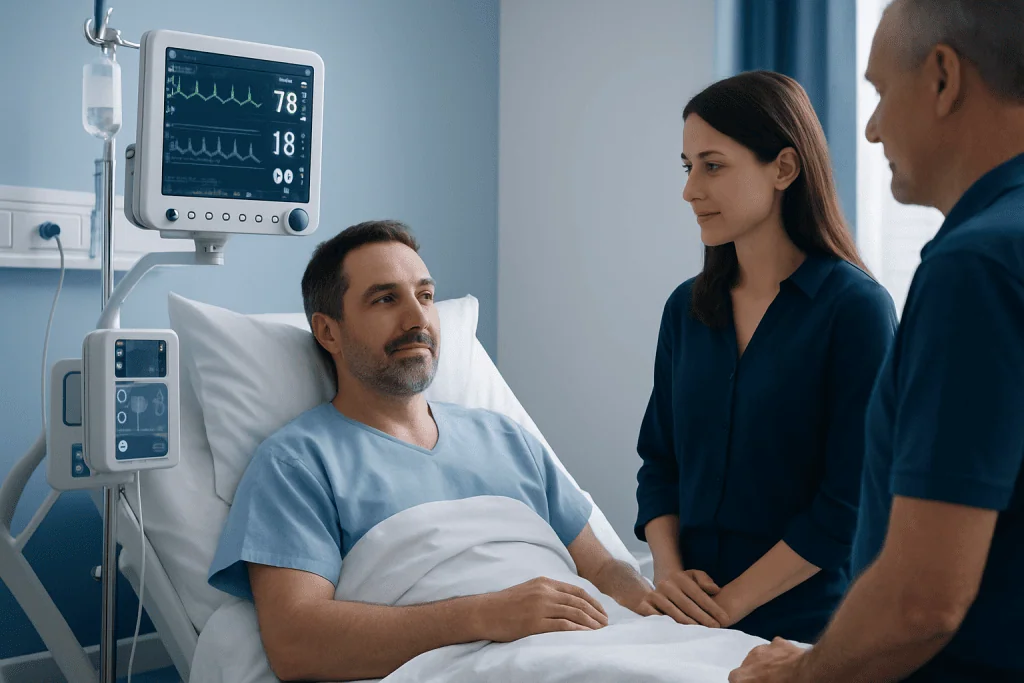
Visiting hours are set by each hospital and often differ between units. General inpatient floors usually allow visitors during defined daytime or evening windows. Intensive care, newborn and neonatal units, transplant areas, and some oncology and surgical wards run much stricter systems, sometimes a single short visiting slot per day, sometimes named visitors only, sometimes no bedside visits at all while a patient is unstable. Even where hours are published on a website, the care team can adjust access on the day for procedures, rest or infection control. That is not staff being difficult; it is the rules doing their job.
At the entrance or ward reception, expect to be asked for photo identification and the patient’s full name, and sometimes the department or room number. Many hospitals issue a visitor badge and direct you to a specific lift or corridor. Go only where you have been directed, clinical floors contain areas that are restricted for good reasons, and wandering to “have a look” creates work for security staff.
Three practical questions to settle before your first visit: the exact visiting hours for that specific unit, the maximum number of visitors allowed at one time, and any age restrictions for children. Age limits are common on Turkish wards and often tighten during winter infection seasons, so do not promise a child a bedside visit until the ward confirms it. Evening and night-time access is a separate topic again, most wards protect a quiet period, and our guide to hospital quiet hours in Turkey explains how rest periods, night checks and late visitors typically work.
Etiquette at the Bedside: Calm, Clean and Considerate
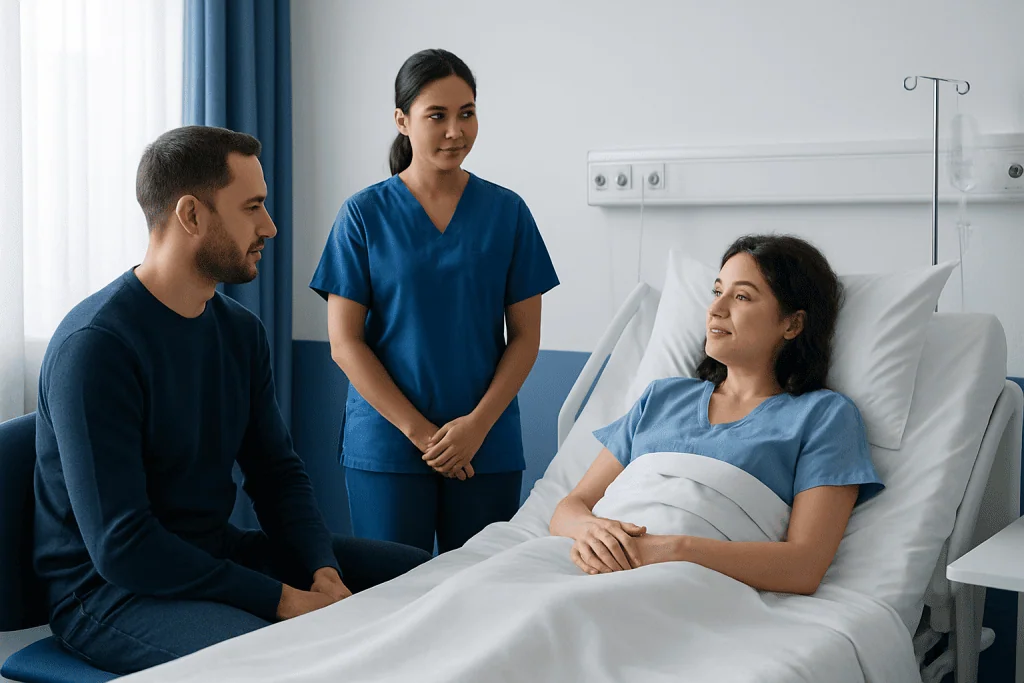
Good bedside etiquette in Turkey looks much like good bedside etiquette anywhere, with a slightly stronger emphasis on courtesy and respect for elders. Knock before entering. Greet the patient quietly. Keep your phone on silent and take calls outside the room. Do not sit on the bed unless the patient invites you and the nurses have no objection. If doctors or nurses arrive to examine the patient, step back or leave the room without being asked twice, clinical care always has priority over a social visit.
Hand hygiene is the single most important rule. Use the sanitiser at the ward entrance and again when you enter and leave the room. Do not visit at all if you have a fever, a cough, stomach symptoms, a contagious rash or recent close contact with someone infectious. This is not a formality: a mild cold in a visitor can become a serious problem for someone recovering from surgery, receiving cancer treatment or lying in intensive care. Sending a message and visiting another day is the more caring choice.
Let the patient set the tone of the conversation. Some people want news from home and light distraction; others are tired, anxious or in pain and want quiet company. Avoid strong perfume, loud speakerphone or video calls, crowding around the bed, family disputes at the bedside, and pressuring the patient to discuss diagnoses or decisions in front of an audience. Culturally, Turkish visitors often keep hospital visits short and warm: a brief visit with genuine attention is considered better manners than a long one that exhausts the patient. If the patient’s eyes are closing, the kindest move is to leave and come back tomorrow.
A note on staff: nurses and support workers in Turkey respond well to plain politeness: a greeting, a thank you, patience at busy moments. Money is a different matter, and hospital clinical staff are not tipped. If you are unsure how gratitude and service customs work during a medical trip, see our guide to tipping and service etiquette during medical travel in Turkey.
Food, Gifts, Flowers and Personal Items
Bringing something is a deeply Turkish instinct, food is how many families express care. In a hospital, that instinct needs a checkpoint. Patients may be on restricted diets before or after surgery, during cancer treatment, ahead of tests, or because of diabetes, kidney disease or other conditions. A patient may even be under strict fasting orders before a procedure, when a single well-meant snack can delay an operation. Never offer outside food, drinks or herbal products until the nursing team confirms they are permitted for that patient on that day.
Flowers carry a similar asterisk. They are a warm gesture in Turkish social life, but many hospital units restrict or ban them for infection control and allergy reasons, and potted plants with soil are widely discouraged. Balloons, large gift baskets, sweets and strong-smelling foods can also be impractical in small rooms or shared clinical spaces. If you want to bring something, ask the ward first: a simple question at reception avoids an awkward moment at the bedside.
The gifts patients actually use tend to be modest: a phone charger, headphones, reading glasses, lip balm, unscented toiletries, comfortable slippers if the ward permits them, a light cardigan, or a notebook for writing down questions for the doctors. Avoid bringing valuables into the hospital at all, and ask staff where personal belongings should be stored. Two things you should never hand a patient without the care team’s knowledge are medicines and supplements, even familiar ones from home. If you are carrying your own medicines into the country as a companion, read the medication rules for traveling to Turkey before you fly, and keep your medicines clearly for your own use.
Companions, Overnight Stays and Family Roles
In Turkey, one close relative or companion: a refakatçioften supports the patient throughout a hospital stay. In private rooms, an approved adult companion may be able to stay overnight, usually on a fold-out sofa or companion bed, depending on the department, room type and the patient’s condition. This is common but never automatic: ICU, maternity, paediatric, transplant and infection-sensitive units all have their own policies, and the arrangement should be confirmed with the hospital before you plan around it. Our detailed guide to overnight companion rules in Turkish hospital rooms covers who can stay, where they sleep and what to bring.
Understand the boundary of the role. A companion supports; the hospital treats. You can help the patient communicate preferences, keep track of belongings, note down questions for the ward round and offer reassurance. You should not adjust medicines, handle wounds or dressings, or move a post-operative patient on your own initiative: those tasks belong to the clinical team unless a nurse specifically shows you how to help. If you see something that worries you, press the call button and describe it; do not try to fix it yourself.
When several relatives are involved, agree on a single main contact person before the admission. One person receives updates from the team, one person relays them to the wider family, and the patient is spared the same conversation five times a day. Hospitals appreciate this too: repeated questions from different relatives slow the ward down and occasionally produce contradictory versions of the same update. At Acibadem, international patient coordinators and interpreters can help the family understand the schedule for consultations, tests and discharge planning, so everyone stays informed without crowding the clinical team.
Language, Privacy and Cultural Sensitivity
Do not assume every staff member speaks your language at every moment. Hospitals that serve international patients usually offer interpreter support, but you should actively ask for it for the conversations that matter: consent, diagnosis, medication changes, surgery, discharge instructions and financial paperwork. Relying on a child, a friend or a translation app for those discussions is a genuine risk, apps are fine for asking where the lift is, not for understanding a treatment plan.
Privacy rules are taken seriously. Do not photograph or film staff, other patients, monitors, documents or shared areas. If you want a photo with your loved one, ask the patient first, and check the frame for anything sensitive: a whiteboard with names, a chart, a neighbouring bed. Think twice before posting from a hospital room at all; a casual social media update can reveal medical details the patient never agreed to share.
As for wider Turkish etiquette, the hospital version is simple. Greet people; a smile and a “merhaba” go a long way. Dress reasonably modestly for a clinical setting, nothing formal is required, just ordinary tidy clothing. Be patient with security procedures rather than treating them as an insult. Avoid raised voices and public arguments, which are considered poor form everywhere in Turkey and doubly so on a ward. During Ramadan, some patients, relatives and staff may be fasting; you are not expected to fast, but a little discretion about eating and drinking in shared spaces is appreciated. If you or the patient have religious, dietary or cultural needs, halal or vegetarian meals, prayer space, a preference regarding staff gender for personal care where feasible, raise them calmly with the care team or international patient office. Hospitals experienced with global patients handle such requests routinely when they can.
If You Become Unwell While Visiting
Two questions come up constantly from visiting families, so here are straight answers. First: should you visit while ill? No. Postpone the visit and let the ward know. Second: do tourists get free healthcare in Turkey? Also no. Turkey’s public health system covers people enrolled in its social security scheme; short-term visitors are not covered and are billed for care they receive, whether in a public or private hospital. Emergency departments will assess and treat you regardless, but treatment is not free, which is why comprehensive travel insurance that covers medical care is strongly recommended for anyone accompanying a patient abroad. What a bill depends on, the facility, the tests, the treatment, is something the hospital’s patient services team can explain, and any quote should come from them in writing rather than from guesswork.
For minor complaints, a headache, travel fatigue, an upset stomach, a pharmacy (eczane) is usually the first stop; pharmacists in Turkey are accessible and used to helping visitors. But if you develop something time-critical, such as chest pain, sudden weakness or face drooping, severe difficulty breathing or heavy bleeding, call your local emergency number or go to the nearest emergency department now. In Turkey the emergency number is 112. Do not wait to “see how it goes” because you are far from home.
Step by step
- Confirm the visiting rules before you go. Call the hospital, check your patient coordinator’s message or ask the ward directly about visiting hours, unit restrictions, visitor limits and required identification. Rules can change with the patient’s condition, scheduled procedures or infection control needs.
- Choose one or two visitors at a time. Small visits are easier on the patient and the ward. If many relatives want to show support, arrange a rota or channel messages through one family contact instead of arriving as a group.
- Prepare clean, practical items. Bring your photo ID, the patient’s full name and department, and only comfort items the ward has approved. Hold back food, flowers, herbal products and anything medicinal until the nursing team confirms they are allowed.
- Check in at reception or security. Give the patient’s name, follow the visitor registration process, wear any badge you are issued and go only to the areas you are directed to.
- Keep the bedside restful. Sanitise your hands on entering and leaving, silence your phone, keep your voice low, and step outside whenever care begins or the patient tires.
- Use interpreter support for important discussions. For medical updates, consent conversations and discharge instructions, ask for professional interpretation rather than relying on apps or family members. It protects the patient’s ability to make informed choices.
- Coordinate after the visit. With the patient’s agreement, share one brief update with the wider family. If you are the companion, collect questions in a notebook for the next doctor or nurse conversation instead of interrupting the ward repeatedly for non-urgent matters.
Your checklist
- Photo ID or passport for hospital entry
- Patient’s full name, department and room number if available
- Confirmed visiting hours and unit-specific rules, including age limits for children
- Phone on silent, plus a charger if the patient needs one
- Hand hygiene on entry and exit, and no visit at all if you feel unwell
- Interpreter requested for consent, diagnosis and discharge conversations
- Only staff-approved items; no outside food, flowers or supplements without permission
- One agreed family contact person for updates
- Overnight stay confirmed with the ward before anyone plans around it
- No photos or recordings without the patient’s permission and a clean frame
Key takeaways
- Hospital visitor rules and etiquette in Turkey vary by hospital, department and patient condition, confirm details with the ward before every visit, not just the first.
- Short, calm, hand-sanitised visits are more helpful than long or crowded ones, and staying away while you are unwell is an act of care.
- ICU, newborn, oncology and surgical units run stricter access rules for safety reasons; the care team’s answer on the day is final.
- Food, flowers, herbal products and any medicines from home need staff approval before they reach the bedside.
- One overnight companion is often possible in private rooms, but the arrangement must be confirmed in advance and the role stays supportive, not clinical.
- Tourists are not covered by Turkey’s public health system, so companions should travel with medical insurance of their own.
Frequently asked questions
What is the protocol for visiting someone in the hospital in Turkey?
Confirm the unit’s visiting hours in advance, bring photo ID, register at reception or security, and follow directions to the ward. Sanitise your hands on entry, keep the visit short and quiet, step out when care begins, and check with nurses before bringing food, flowers or gifts. If access is restricted, the care team’s decision is final.
Can I visit a patient in a Turkish hospital at any time?
Usually not. Most hospitals set visiting windows, and units such as ICU, newborn care and oncology restrict access much more tightly. Hours can also change on the day for procedures or infection control, so confirm with the ward or your patient coordinator before travelling to the hospital.
Can a family member stay overnight with the patient?
In many private hospital rooms, one approved adult companion can stay overnight, depending on the department, room type and the patient’s condition. ICU and other specialised units generally do not allow routine overnight companions. Always confirm the arrangement with the hospital before you plan accommodation around it.
What are the biggest cultural taboos to avoid in a Turkish hospital?
Raised voices and public arguments, disrespect towards elders and staff, photographing people without permission, and eating conspicuously in front of fasting patients or relatives during Ramadan. None of these will cause a crisis, but avoiding them marks you as a considerate guest. Politeness, patience and a warm greeting cover almost everything else.
Do tourists get free healthcare in Turkey?
No. Turkey’s public system covers people enrolled in its social security scheme, not short-term visitors. Emergency departments will treat you regardless of nationality, but you will be billed for care. Travel insurance with medical cover is strongly recommended for anyone accompanying a patient, and any cost questions should go to the hospital’s patient services team in writing.
Are children allowed to visit patients in Turkey?
Sometimes, in general inpatient areas, but age restrictions are common and often tighten during infection seasons. Young children are usually not permitted in ICU or other high-risk units. Ask the ward in advance so a child is not turned away at the entrance.
Can I bring homemade food to a hospitalised patient?
Only if the care team confirms it is safe. Many patients follow strict dietary rules because of surgery, tests, treatment or underlying conditions, and some are under fasting orders before procedures. Even a healthy-looking homemade dish can interfere with a treatment plan, so always ask the nurses first.
Is it acceptable to take photos in the hospital room?
Only with the patient’s permission and with privacy protected. Never photograph or record staff, other patients, monitors, charts or shared areas. Check the background of any photo before sharing it, and when in doubt, ask the nurse or patient coordinator first.
Add us as a Preferred Source to see more of our trusted health content across Google Search, AI Overviews and Discover.

Update history
- PublishedJune 8, 2026
- Medical review approvedAugust 30, 2026
- Last content updateAugust 30, 2026
More Patient Guides
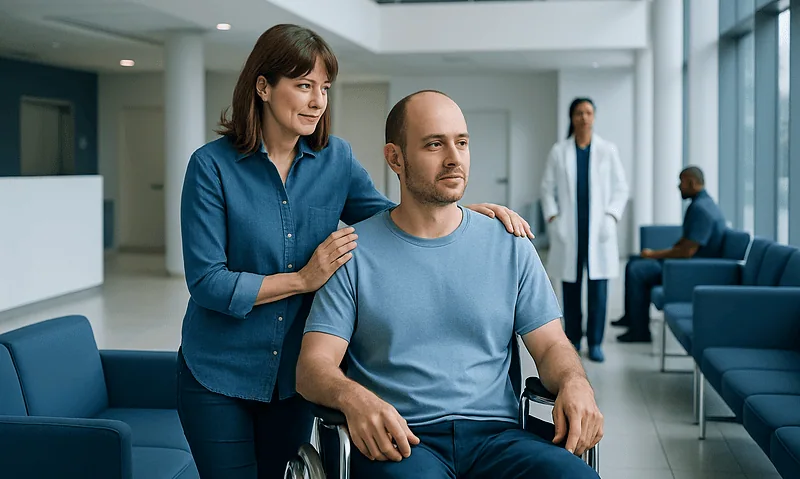
Medical Travel with a Companion: Who Should Come and Why
Medical travel with a companion can make treatment in Turkey easier by providing practical help, communication support and reassurance before and after…

How Family Members Can Help Without Disrupting Recovery
Family support during recovery helps when you listen, organize practical tasks and follow the care plan without taking over, in Turkey or…

Need a Family Member to Travel With You? A Companion Decision Guide
A companion travel guide for treatment in Turkey: decide who should travel with you, plan practical support, and prepare for Istanbul care.

Unexpected Overnight Stay in Turkey: What Patients and Companions Should Be Ready For
Unexpected overnight stay in Turkey? Here is what patients and companions should prepare for, from essentials and updates to hospital logistics in…