

Overnight Companion Rules in Turkish Hospital Rooms
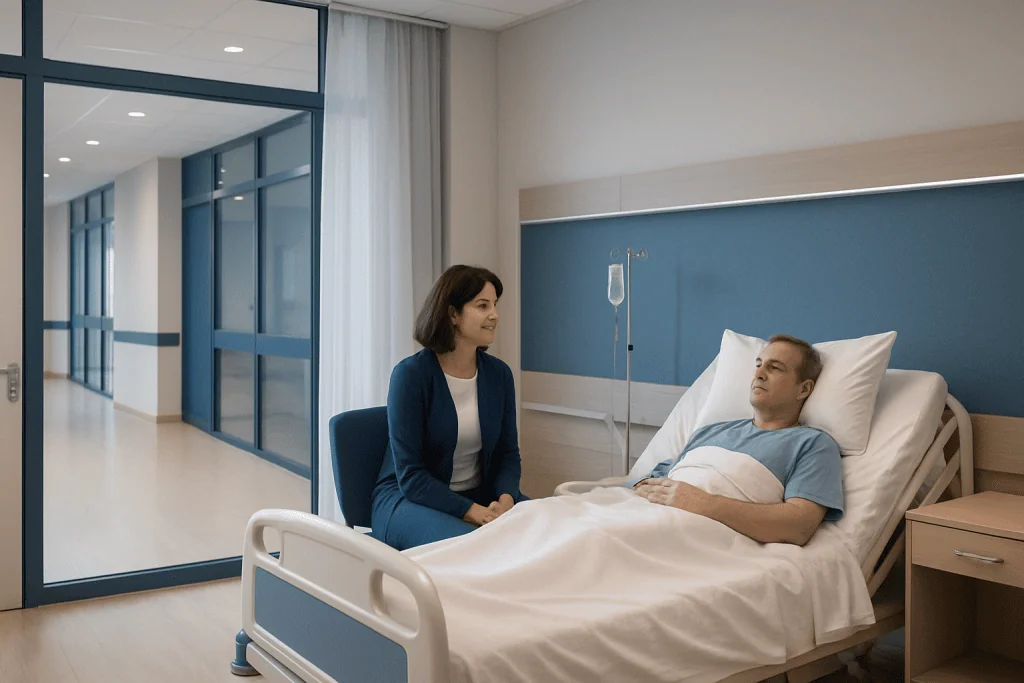
In many private Turkish hospitals, one approved adult companion may stay overnight in a standard single patient room. The companion registers with ID, follows ward instructions, and sleeps on a recliner or sofa bed where provided. ICU, isolation rooms, shared rooms, and some specialised units apply stricter limits, so confirm the policy for your specific unit before admission rather than assuming.
If you are planning surgery or inpatient treatment in Turkey, one question tends to surface early: will you spend the night alone in an unfamiliar hospital, in a country where you may not speak the language? Usually not. In many Turkish hospitals, one trusted adult can stay in your room overnight, and for international patients that single fact often changes how the whole trip feels.
This guide explains the overnight companion rules in Turkish hospital rooms in practical terms: who can stay, how registration works, what the room actually offers a companion, and when access is restricted. It also explains where Acibadem International can help and, just as plainly, where hospital safety rules cannot be bent.
At a glance
- Typical overnight rule: One approved adult companion may usually stay in a single patient room, subject to the ward’s policy on the day
- Where limits apply: ICU, isolation rooms, shared rooms, recovery areas, and some paediatric or maternity units follow stricter rules
- Best person to choose: One calm, healthy adult who can follow instructions and stay consistent across the admission
- Documents needed: Passport or national ID for the companion, plus any hospital-issued companion card, badge, or wristband
- What a companion is not: A substitute for nursing care, clinical tasks always stay with the ward team
- Support available: International patient teams can confirm the policy for your unit, arrange interpretation, and advise on nearby accommodation
What overnight companion rules in Turkish hospital rooms actually mean
In Turkey, the person who stays with a patient is called a refakatçia companion or attendant. The role is well established in Turkish hospital culture. Families expect to be present, wards are used to accommodating one attendant, and many private hospital rooms are built with a companion sofa or recliner as standard. This is a genuine difference from some Northern European and North American hospitals, where overnight family presence is more of an exception.
A companion’s job is comfort and practical support: keeping you company, fetching small items, helping you communicate everyday needs, and keeping family at home informed. A companion is not there to manage medication, monitor equipment, or make clinical decisions. That distinction matters, because it also defines the limits of what a companion is allowed to do on the ward.
Overnight companion rules in Turkish hospital rooms are not a single national standard. They vary by hospital, by department, by room type, and by your medical condition. A private single room on a surgical ward usually accommodates one adult companion. A shared room, an intensive care unit, an isolation room, or a specialised unit may allow no overnight companion at all, or only limited presence at set times. The care team always weighs companion access against patient safety, infection prevention, rest, and the privacy of other patients.
At Acibadem, the International Patient Services team can confirm the companion policy for your specific hospital and department before you travel. That single confirmation, in writing, before admission, prevents most of the awkward surprises this guide describes. If you have not yet chosen your room category, read Choosing a Hospital Room in Turkey first, because room type is the biggest single factor in whether a companion can stay.
Are you allowed to stay overnight with someone in hospital?
In most Turkish private hospitals, yes, for one adult, in a suitable room, with the ward’s approval. The general pattern looks like this:
- Single private rooms: one overnight companion is commonly permitted and often expected.
- Shared rooms: overnight companions may be limited or refused, because the other patient’s rest and privacy come first.
- ICU and high-dependency units: overnight stays are generally not possible; access is usually limited to short, scheduled visits.
- Isolation and infection-control rooms: access depends entirely on the precautions in place and can change day to day.
- Paediatric wards: a parent or guardian staying overnight is normal and often required, but usually only one at a time.
- Maternity units: policies vary; some units allow a partner overnight, others restrict overnight presence to certain room categories.
Two useful rules of thumb follow from this. First, never assume: the same hospital can apply different rules on different floors. Second, ask before you travel, not at the reception desk on admission evening. If you are still deciding whether anyone should travel with you at all, the companion decision guide walks through that choice honestly.
Who can stay with you overnight
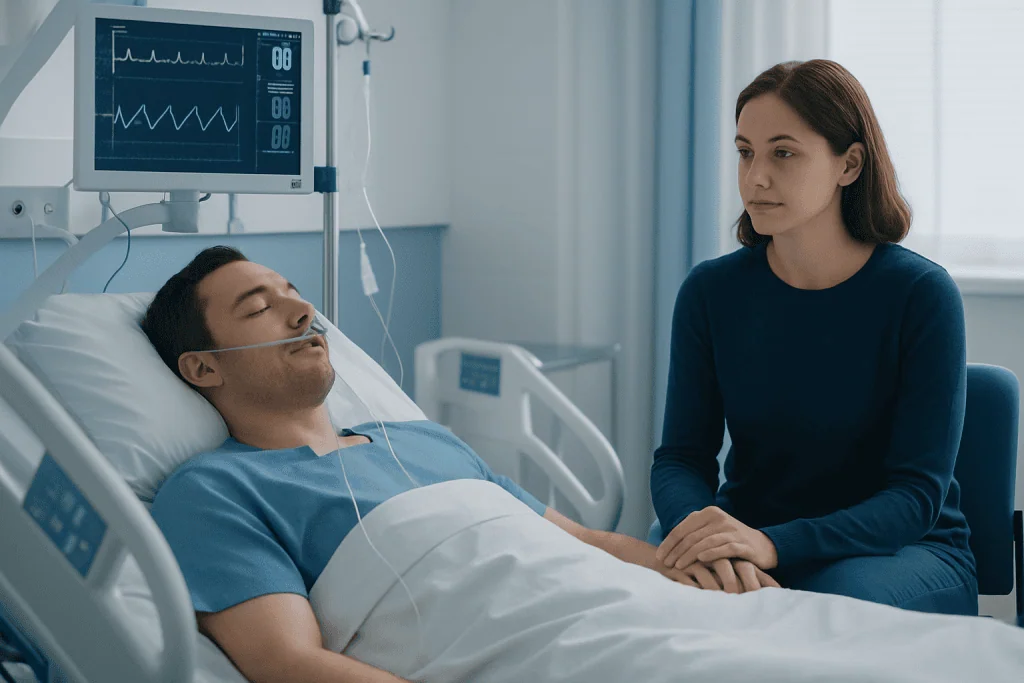
The best overnight companion is a responsible adult who stays calm, follows hospital instructions, and supports you without becoming overwhelmed themselves. That may be a spouse, adult child, parent, sibling, close friend, or a professional caregiver. There is no rule that the companion must be a relative, but hospitals strongly prefer one consistent person rather than a rotating cast. Consistency helps ward security, reduces disruption at night, and means the nursing team always knows who is in the room and why.
Health matters as much as relationship. Your companion should be free of fever, cough, vomiting, diarrhoea, or any contagious rash. If they develop symptoms during your stay, they should tell the ward team and step out of the overnight role until they are well: this protects you, other patients, and staff. Hospitals may also decline overnight companions who are minors, who cannot care for themselves independently, or who cannot follow safety instructions.
Some situations make a companion especially valuable: paediatric admissions, elderly patients, patients with mobility or sensory needs, and international patients who want language support at the bedside. Even in these cases, permission still depends on unit rules and the care plan. If your family situation is unusual, for example, you want two people to alternate nights, or your companion has their own health needs, raise it with the hospital early. Wards can often accommodate a sensible plan agreed in advance; they cannot improvise one at 22:00 on admission day. Practical planning for the travelling companion themselves, visa, insurance, flights, is covered in Bringing a Companion to Turkey for Treatment.
Registration, ID, and hospital access

Your companion should carry a valid passport or national ID. At admission, or on the ward itself, the hospital may register the companion by name, issue a visitor or companion card, and explain which areas they may enter. This is routine in Turkish hospitals and exists to protect patients, not to inconvenience families.
Outside standard visiting hours, identification matters most. Many hospitals ask overnight companions to wear a wristband, badge, or lanyard, and security may ask to see it when the companion enters the inpatient floor at night, returns from the cafeteria, or passes the main entrance after hours. Three practical points keep this smooth:
- The registered name must match the person in the room. Do not pass a companion card between relatives without the ward’s approval: it can cause a genuine access problem at night.
- Report changes in advance. If you want a different person to stay overnight, tell the nurse or patient services team before the changeover, so the hospital knows who is responsible for staying with you.
- Keep the ID accessible. A companion who leaves passport and badge in a hotel room may have trouble re-entering the ward late at night.
For international families, Acibadem International can explain registration steps in your preferred language wherever possible, and can tell you before travel exactly which documents the companion should have to hand on admission day.
Room facilities, meals, and comfort expectations
Many private hospital rooms in Turkey include a chair, recliner, or sofa bed for one companion. Comfort varies widely by room category and building age, so treat any assumption as a question to ask. A hospital room is a care space first: medical equipment, nurse access, and hygiene take priority over guest comfort, and no ward will move a monitor to make space for a suitcase. Do not expect a full second bed, hotel-style toiletries, or room service for the companion unless these have been confirmed for your room category. If a companion bed genuinely matters to you, Booking a Companion Room in Turkey lists the exact questions to ask before you confirm anything.
Companion meals are the most common point of confusion. Depending on the hospital, the room category, and your admission arrangement, companion meals may be included, available to order separately, or not offered at all, in which case the companion uses the hospital cafeteria, café areas, or nearby food services. Ask at admission rather than discovering the answer at dinner time. How to budget for companion meals and other day-to-day expenses, and what typically drives those costs up or down, is explained in Companion Costs in Turkey.
Food brought into the room deserves its own warning. Wards may restrict outside food for hygiene, allergy, or dietary reasons, and if you are on a medically controlled diet, fasting before a procedure, recovering from bowel surgery, on fluid restrictions, your companion must not offer you food or drink unless the care team has confirmed it is safe. When in doubt, the answer is always: ask the nurse first.
Packing light helps everyone. Useful companion items: phone and charger, basic toiletries, comfortable layered clothing, their own prescription medicines, glasses, earplugs, and a payment card with a small amount of local currency. Leave behind: large suitcases, valuables, strong perfume, and anything noisy. The room needs to stay clear for nursing trolleys and, if needed, emergency equipment.
Etiquette, quiet hours, and patient privacy
Hospital rooms need to stay quiet, clean, and accessible. Good companion behaviour is mostly common sense applied consistently: keep phone calls short, use headphones, dim screens at night, and step into the corridor or a lounge for longer conversations. During nursing care, doctor rounds, in-room procedures, or personal hygiene support, staff may ask the companion to wait outside: this protects your privacy and dignity, and it is not negotiable.
Companions and visitors are different categories. Your companion is the one approved person staying with you; other relatives and friends follow visiting hours and visitor limits, which are covered separately in Hospital Visitor Rules and Etiquette in Turkey. If several family members have travelled with you, arrange a rotation based at a nearby hotel rather than gathering in the patient room: a crowded room is harder to keep clean, harder to rest in, and harder for nurses to work in.
The physical rules matter too. Companions should follow hand hygiene instructions every time they enter or leave the room, keep belongings tidy and off the floor, avoid sitting on the patient bed unless staff invite it, and never touch monitors, IV lines, drains, call buttons on the patient’s behalf without asking, or any medical device. If your companion is unsure whether something is allowed, the answer is to ask the nurse. A respectful question is always better than a confident guess.
When overnight stays may be restricted
There are times when the hospital limits or pauses companion access, and it helps to expect this rather than be surprised by it. Overnight companion rules in Turkish hospital rooms can tighten temporarily in intensive care and high-dependency units, post-anaesthesia recovery areas, isolation rooms, during infection-control situations, in shared rooms, and during outbreaks, building works, emergencies, or changes in national health guidance. Restrictions are clinical decisions, and no patient services team: Acibadem’s included, can override them.
What you can do is plan the alternatives. If overnight access is not possible, ask about:
- Scheduled visiting windows, and exactly when and where the companion should present themselves
- Video calls from the bedside, where the unit permits phones
- A single appointed family contact who receives updates, so the ward is not fielding calls from five relatives in three time zones
- Interpreter-supported update calls for family who do not speak Turkish or English
- Nearby accommodation, so the companion can rest properly and return quickly if asked
Acibadem teams work with families who have travelled long distances and are understandably anxious when access is limited. They can clarify what the restriction means in practice, coordinate communication, and point companions to hotels and waiting areas. If your admission runs longer than planned, ask the team early what the extra nights mean for your companion’s access and accommodation, so nobody is improvising at midnight.
Step by step
- Confirm the policy before admission. Ask your international patient coordinator whether one overnight companion is allowed for your room and medical unit, and ask specifically about ICU, maternity, paediatric, isolation, or shared-room rules if any apply to you. Get the answer before you book flights.
- Choose one main companion. Pick a calm, healthy, organised adult. If several relatives are travelling, decide in advance who stays overnight and who visits during permitted hours from a hotel base.
- Prepare documents and essentials. The companion needs a passport or national ID, phone charger, toiletries, their own medicines, and comfortable clothing, in one small bag, because floor space in the room must stay clear.
- Register on arrival. At admission, ask where the companion registers and whether a card, badge, or wristband is issued. Make sure the registered name matches the person actually staying, or night-time re-entry can become a problem.
- Clarify meals and sleeping arrangements. Ask whether companion meals are included or purchased separately, and what the sleeping option is, recliner, sofa bed, or chair, so expectations match reality from the first night.
- Agree communication routines. Appoint one family contact for updates, especially with relatives in different countries, and ask the international patient team how to request interpretation for important conversations. On the day of surgery itself, your companion’s role changes, so ask the ward in advance what they can and cannot do that day.
- Follow ward etiquette from the first evening. Low noise, hand hygiene, no outside food without asking, and stepping outside whenever staff request privacy. A companion who gets these right on night one has an easier stay throughout.
Your checklist
- Confirm in writing whether one overnight companion is permitted in your specific unit and room type
- Bring the companion’s passport or national ID for registration
- Ask whether a companion badge, card, or wristband is required after hours
- Pack one small bag: clothing, toiletries, charger, personal medicines
- Clarify whether companion meals are included or bought separately
- Check visiting hours and limits for other family members
- Ask how to request interpreter support for important discussions
- Keep valuables at the hotel; keep the room clear for staff and equipment
- Tell the ward team before changing the overnight companion
- Follow hygiene, quiet hours, and privacy instructions at all times
Key takeaways
- Most Turkish private hospitals allow one approved adult companion overnight in a single room, but the rule depends on the unit, the room type, and the safety situation on the day.
- Confirm the policy for your specific department before you travel, not on admission evening.
- Companions register with ID, may receive a card or wristband, and must not swap identification informally.
- Hospital rooms are care spaces first: meals, sleeping arrangements, and outside food are all things to ask about, not assume.
- ICU, isolation, shared rooms, and infection-control situations legitimately restrict access; plan communication alternatives in advance.
- Acibadem International can confirm companion rules, arrange language support, and guide practical arrangements, but cannot override clinical safety decisions.
Frequently asked questions
Are you allowed to stay overnight with someone in a Turkish hospital?
Usually yes, within limits. In most private Turkish hospitals, one approved adult companion may stay overnight in a standard single patient room, sleeping on a recliner or sofa bed where provided. Access depends on the department, room type, your condition, and current policy, so confirm with the hospital before admission, particularly for ICU, isolation, or shared rooms.
Can you stay overnight in hospital with family, or is it just one person?
Overnight stays are generally limited to one registered companion at a time, to protect rest, privacy, hygiene, and staff access. Other family members can usually visit during set hours but cannot remain overnight. If your family has a special need, for example, two relatives alternating nights, raise it with the ward or international patient team in advance rather than on the night.
What is code 9 in a hospital?
Hospital emergency codes are internal shorthand for staff, and there is no universal meaning for “code 9”, codes vary between countries and often between individual hospitals. As a patient or companion, you do not need to memorise codes. If you hear an announcement or alarm, stay where you are, keep corridors clear, and follow staff instructions. Any question about your own care goes through the call button.
Which hospital in Turkey is considered the best?
There is no single official “best” hospital in Turkey, and any page claiming one is simplifying. Turkey has many large public and private hospital groups, and the right choice depends on your condition, the relevant department’s experience, language support, and how clearly the hospital answers your pre-travel questions. Acibadem operates hospitals in several Turkish cities and has dedicated international patient services; judge any hospital, including Acibadem, by the specificity of its answers to your case.
Does my companion need to speak Turkish?
No, though it helps. Hospitals experienced with international patients provide interpreter support for important medical conversations, and international patient teams handle much of the practical communication. Your companion should still learn the basics of ward routine, how to call the nurse, where the cafeteria is, when quiet hours start, because everyday moments do not always come with an interpreter.
Are companion meals included during the hospital stay?
It varies by hospital, room category, and admission arrangement. Some rooms include companion meals, some offer them to order separately, and some expect companions to use the cafeteria or nearby food services. Ask at admission, or before travel, so your companion can plan. What the answer depends on is the structure of your room package, so confirm it in the same conversation as your room booking.
What happens if my companion becomes ill during my stay?
They should tell the ward team and stop staying overnight until they are well. Fever, cough, stomach symptoms, or any contagious condition puts you and other patients at risk. The hospital may register another adult as a replacement companion, or the companion may rest at the hotel and return once recovered. Reporting symptoms early keeps this a small problem rather than a big one.
Can my companion help me walk, shower, or get out of bed?
Only if the care team has said it is safe and shown them how. After surgery, sedation, or illness, falls happen quickly, and well-meaning help can cause harm. The correct routine is simple: use the call button, let nurses assess whether you can move, and let them show your companion any supporting role. Your companion should never adjust equipment, lines, or drains.
Add us as a Preferred Source to see more of our trusted health content across Google Search, AI Overviews and Discover.

Update history
- PublishedJune 8, 2026
- Medical review approvedSeptember 13, 2026
- Last content updateSeptember 12, 2026
References1
- NHS: Going into hospital nhs.uk
More Patient Guides
Medical Travel with a Companion: Who Should Come and Why
Medical travel with a companion can make treatment in Turkey easier by providing practical help, communication support and reassurance before and after…

How Family Members Can Help Without Disrupting Recovery
Family support during recovery helps when you listen, organize practical tasks and follow the care plan without taking over, in Turkey or…

Need a Family Member to Travel With You? A Companion Decision Guide
A companion travel guide for treatment in Turkey: decide who should travel with you, plan practical support, and prepare for Istanbul care.

Unexpected Overnight Stay in Turkey: What Patients and Companions Should Be Ready For
Unexpected overnight stay in Turkey? Here is what patients and companions should prepare for, from essentials and updates to hospital logistics in…