

How to Compare Hospital Safety Standards in Turkey Before You Book

Compare hospitals in Turkey against the same checklist: confirm the exact facility where care happens, verify its licence and any international accreditation, ask about intensive care and emergency backup, check interpreter support for consent and discharge, and request a written treatment plan. Providers that answer these questions clearly and in writing tend to run more organised care pathways than those that stay vague.
You have found a treatment, a date, maybe even a surgeon’s name — but how do you know the hospital itself is safe, organised, and ready for what you need? That question is difficult to answer from another country, and it is the one most international patients quietly worry about most.
This guide shows you how to compare hospital safety standards in Turkey before you book, using practical checks you can make from home — without needing medical training or a site visit.
At a glance
- Best for: International patients comparing hospitals in Turkey before committing to a booking
- What to verify: Licensing, accreditation status for the actual facility, infection control, ICU access, emergency readiness, and follow-up arrangements
- Key document: A written treatment plan naming the hospital, the pathway, the expected stay, and the aftercare route
- Ask about: Interpreter support during consent and discharge, medication safety processes, and after-hours arrangements
- Red flags: Vague answers, pressure to pay quickly, or no confirmed hospital name and address
Why you should compare hospital safety standards in Turkey before you book
When you weigh up treatment abroad, it is natural to focus on the doctor, the procedure, and the quote. Safety deserves the same attention, and it deserves it earlier. A well-run hospital reduces avoidable risk through structured infection prevention, medication checks, correct patient identification, emergency preparedness, and coordinated handovers between teams. None of this is visible in a promotional photo, but almost all of it can be checked with the right questions.
Hospital safety standards in Turkey vary from one facility to another, just as they do in any country with a large mix of public hospitals, private hospital groups, and standalone clinics. That is why the most useful approach is not to search for a single “best” name, but to compare hospital safety standards in Turkey before you book using one consistent checklist — the same questions, asked of every provider, with answers requested in writing.
Two things make this comparison harder from abroad. First, marketing language tends to sound similar everywhere: every website mentions quality, technology, and experienced teams. Second, the entity you are messaging is not always the entity that will treat you — agencies, brokers, and clinics sometimes arrange care in hospitals they do not operate. The checks in this guide are designed to cut through both problems by anchoring every question to a named, verifiable facility.
If you are planning treatment in Istanbul or another major city, it also helps to ask how the hospital supports international patients in practical terms. Hospital groups that treat international patients routinely, including Acibadem, typically use dedicated coordinators and interpreters, which makes safety information easier to obtain and reduces confusion at moments that matter — consent, admission, and discharge. You can read more about how this works in practice in our guide on how we explain surgical risks and safety checks before you travel.
Start with accreditation, licensing, and oversight
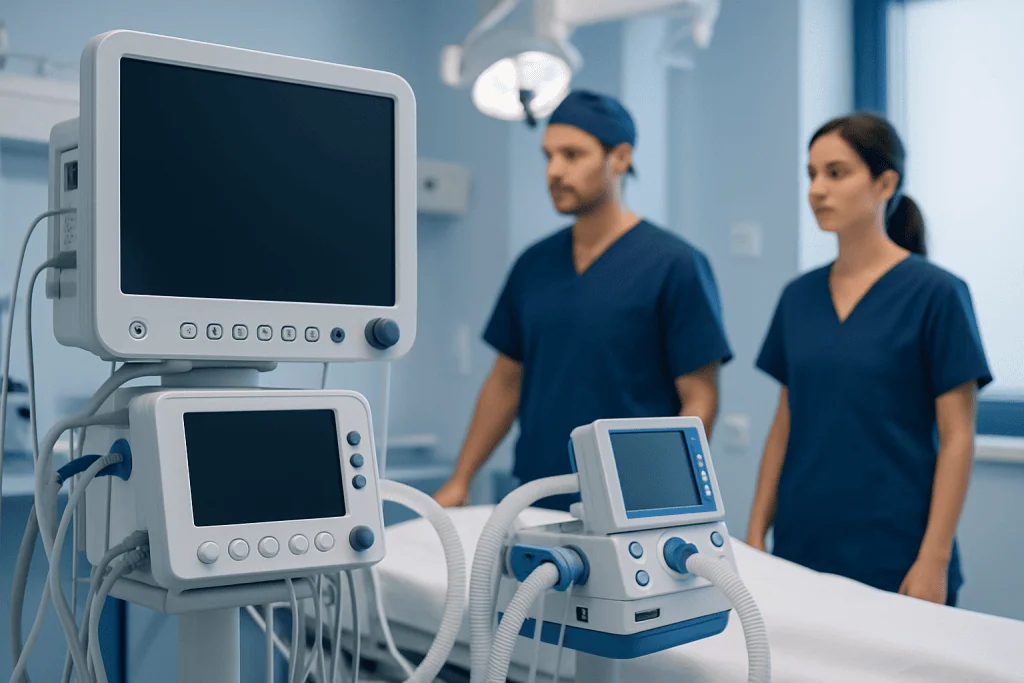
Your first check is whether the hospital operates under proper national licensing. Hospitals in Turkey are licensed and inspected under the Ministry of Health, which also runs a national healthcare quality standards programme. This is the baseline layer of oversight: a legally licensed hospital operates within a regulated system, with defined requirements for facilities, staffing, and inspection. A provider should be able to name the licensed facility where your care will actually be delivered. If a clinic advertises a treatment but the surgery or inpatient stay happens somewhere else, ask for the exact hospital name and address before you agree to anything.
International accreditation adds a second, voluntary layer. The most widely recognised international benchmark is Joint Commission International, usually shortened to JCI. Accreditation of this kind means the hospital has been assessed by external surveyors against defined standards covering areas such as patient identification, medication safety, infection prevention, surgical safety processes, and quality monitoring. It does not guarantee a perfect experience — no certificate can — but it is meaningful evidence that safety systems exist, are documented, and are reviewed.
What accreditation does and does not tell you
Read accreditation claims precisely. Three details matter more than the logo itself:
- Currency. Accreditation is granted for a fixed period and must be renewed. Check that the status is current, not historical.
- Scope. Accreditation applies to a specific facility. Confirm it covers the hospital where your treatment will take place, not just a parent brand, a sister site, or an unrelated building in the same group.
- Verification. Accrediting bodies publish searchable directories of accredited organisations. Checking the primary source takes minutes and removes any doubt about a claim made in a sales conversation.
Equally important is what accreditation does not measure. It does not tell you whether a particular surgeon is the right match for your case, whether the facility performs your specific procedure often, or how communication will feel once you are a patient. Those questions need their own checks, which the rest of this guide covers. For a broader comparison framework, see how to compare hospital quality and safety standards in Turkey.
Is there a “best” hospital in Turkey? What rankings can and cannot tell you
Many patients start their research by searching for the best hospital in Turkey, or even the number one hospital in the world. It is worth being honest about what those searches can return. There is no official global ranking of hospitals. The lists you see online are produced by media organisations and data companies, each with its own methodology — typically a blend of reputation surveys, publicly available indicators, and patient feedback. Different lists rank different hospitals at the top, and a hospital’s position can shift from year to year without anything changing in the wards. The same applies to whole health systems: there is no single, current, authoritative league table ranking Turkey’s healthcare system against every other country, and older comparative exercises are decades out of date.
That does not make rankings useless. It makes them a starting point rather than an answer. A hospital that appears consistently across independent lists is probably well established, but the ranking still cannot tell you whether that hospital suits your treatment, your health history, or your language needs. The honest answer to “which hospital in Turkey is best?” is: best for what, and best for whom? The most useful hospital for a complex cardiac case is not automatically the most useful one for planned orthopaedic surgery.
So use rankings the way an experienced traveller uses a guidebook — to build a shortlist — and then apply the same safety checklist to every name on it. The facility-specific checks below will tell you far more about your likely experience than any headline position can.
Look beyond the logo: the safety systems that protect you
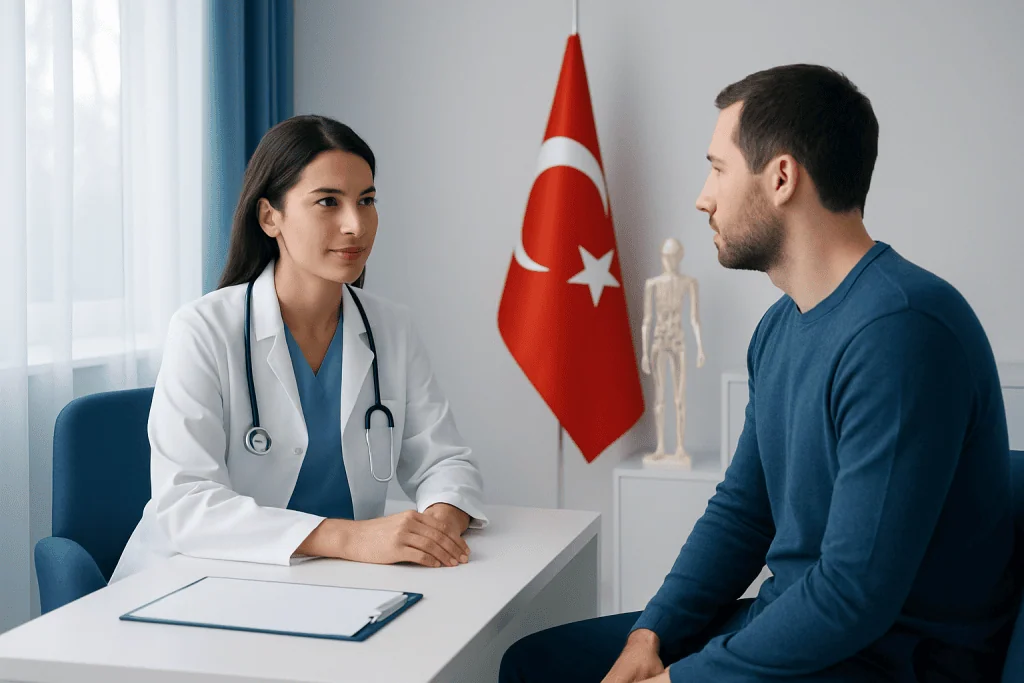
Accreditation is the starting point, not the whole picture. The next step is to ask how the hospital handles everyday safety systems — the routines that protect patients between the headline moments. A well-organised hospital should be able to explain, in plain language, how it prevents infections, identifies patients correctly, records and checks allergies, stores and administers medicines, and escalates care if a patient’s condition changes suddenly.
You do not need technical vocabulary to evaluate this. Straightforward questions work well: How do you reduce infection risk around my procedure? What happens if I need urgent review after hours? Is there an intensive care unit on site? Who reviews my test results before discharge, and how will I receive them? Clear, calm, specific answers usually indicate an organised team. Vague or evasive responses suggest that patient communication — itself a safety system — is weak.
The quality of the answer matters as much as its content. “We follow all international standards” is a slogan. “Your identity is checked against your wristband and records before every medication and before you enter theatre” is a process. When you compare hospital safety standards in Turkey before you book, you are really comparing how concretely each provider can describe its own routines.
For surgery or any higher-risk treatment, ask specifically about multidisciplinary backup: anaesthesiology, intensive care, imaging, laboratory services, cardiology, and other specialties relevant to your health history. Large hospital groups often coordinate these services within one system, which matters most in the scenario nobody plans for — when care becomes more complex than expected and a second specialty needs to be involved quickly.
How to assess the team, facilities, and emergency readiness
A safe hospital is not only buildings and certificates; it is people and the backup around them. Ask who will be responsible for your care before, during, and after treatment. You should know whether you are dealing with an individual doctor, a clinic coordinator, an agency, or a hospital-based multidisciplinary team — and who holds clinical responsibility at each stage. The more clearly roles are defined before you travel, the easier it is to get consistent information once you arrive.
Emergency readiness matters even when your treatment is planned and routine. Sensible questions include:
- Is there 24/7 emergency coverage on site, with doctors physically present overnight?
- Is there an intensive care unit in the same building, and is operating theatre support available around the clock?
- Are blood bank services accessible where relevant to the procedure?
- If a complication needed care this hospital cannot provide, where would you be transferred, and how?
Not every treatment requires the same depth of backup, and an honest provider will say so. What you are testing is transparency: the hospital should be open about what is available on site and what would require transfer, rather than implying that nothing ever goes wrong.
Ask practical questions about diagnostics too. Are imaging, pathology, and laboratory services available within the hospital or its network? How are abnormal results communicated, and how quickly can another specialist review your case if needed? Integrated systems generally mean fewer handoffs between unrelated providers — and fewer handoffs mean fewer opportunities for information to be lost. Our patient safety checklist before surgery in Turkey turns these points into a printable question list.
Communication, interpreters, and informed consent are safety issues too
For international patients, communication is not a comfort feature — it is a core part of safety. You should be able to understand your diagnosis, the planned treatment, the realistic recovery pathway, your medicines, the warning signs that would need review, and the follow-up arrangements. If you are not fluent in Turkish, ask whether professional interpreters are available during consultations, admission, consent discussions, discharge, and any key clinical conversations — not only at the reception desk.
Be cautious of providers that rely on informal translation through messaging apps, family members, or hotel staff for important medical conversations. Consent explained through an untrained intermediary is consent at risk of distortion. A properly organised hospital has a structured approach to language support, and it can describe that approach before you book.
Informed consent should never feel rushed. You should have time to ask about alternatives, limitations, and realistic recovery needs — and the answers should be consistent between the coordinator, the doctor, and the paperwork. If a provider pushes you to commit before your medical records have been reviewed, or cannot explain what happens after discharge, treat that as a signal to slow down. The questions in questions to ask before booking surgery in Turkey are a good structure for that conversation.
- Ask whether interpreters are hospital-based or outsourced, and when they are present
- Request written discharge instructions in English
- Confirm your main named contact for urgent questions during your stay
- Make sure medication instructions are explained and written down before you leave the hospital
Practical red flags and smart questions before paying a deposit
The clearest warning signs usually appear before you ever travel. Be cautious if you cannot get a direct answer about where your procedure will take place, who is clinically responsible for you, what pre-treatment assessment is needed, or what support exists if something changes medically. A trustworthy provider does not mind careful questions — least of all about safety.
Ask for a written treatment outline that names the hospital, sets out the expected length of stay, lists the pre-operative assessment where relevant, and describes follow-up arrangements and what your estimate includes. This is not only a financial exercise. A coherent written plan is evidence of a coherent pathway; a plan that keeps changing informally over chat messages is evidence of the opposite. Our guide on how to spot a reliable hospital quote in Turkey explains what a well-structured written offer looks like and what should make you pause.
Finally, think past the treatment day. Safe care includes a realistic plan for pain control, wound care where relevant, medication review by your treating doctor, clearly explained warning signs, and a route for follow-up once you return home. It also includes honest advice about how long to remain in Turkey before flying; if that has not been discussed, read when to book extra recovery days in Turkey before flying home before you fix your return date.
Step by step
- Identify the exact hospital where care will happen. Before comparing anything else, get the full legal name and address of the facility — not just the clinic, agency, or brand promoting the treatment. Every safety check that follows applies to the building where your tests, procedure, and recovery will actually take place.
- Verify licensing and accreditation at the source. Confirm the hospital is licensed in Turkey, and if international accreditation such as JCI is claimed, check the accrediting body’s public directory yourself. Make sure the status is current and covers that specific location.
- Ask about emergency and inpatient backup. Find out what happens if your care becomes more complex than planned: ICU access, 24/7 emergency coverage, anaesthesia support, imaging, laboratories, and specialist consultation. Ask what would require a transfer, and where to.
- Review infection control and medication safety processes. You do not need a technical explanation, but you should hear concrete answers about infection prevention, patient identification, allergy checks, and how medicines are prescribed and explained. Organised hospitals describe these routines confidently and simply.
- Check communication and interpreter support. Confirm that professional language support is available during consent, key clinical discussions, and discharge — not only at reception — and that written instructions will be provided in a language you read well.
- Request a written care plan before you book. It should name the hospital, describe the treatment pathway, list required tests, state the expected length of stay, and set out aftercare. A written plan lets you compare providers fairly and exposes vague arrangements.
- Confirm follow-up after you leave Turkey. Establish who you contact after discharge, which warning signs need urgent review, and how follow-up continues once you are home. Safe care means continuity, not only the treatment day.
Your checklist
- Full hospital name and address confirmed in writing
- Licence and current accreditation verified for the actual treatment facility
- Written treatment and length-of-stay plan received
- Emergency coverage, ICU access, and transfer arrangements clarified
- Interpreter support confirmed for consent, key discussions, and discharge
- Infection control and medication safety questions answered concretely
- Aftercare pathway and remote follow-up contact explained
- Quote inclusions and exclusions set out in writing
- No pressure to pay before your records have been reviewed
Key takeaways
- Compare hospitals by systems and backup, not by rankings, price, or promotion alone.
- Anchor every check to the exact facility: licence, accreditation currency, and accreditation scope.
- Ask concretely about infection control, medication safety, emergency readiness, and ICU access.
- Professional interpretation during consent and discharge is a safety measure, not a luxury.
- A written treatment plan and a defined follow-up pathway reveal how organised a hospital really is.
Frequently asked questions
Which hospital in Turkey is considered the best?
There is no official answer. Media and data companies publish hospital lists, each using a different methodology, and their top names differ. A hospital that appears consistently across independent lists is likely well established, but “best” always depends on your treatment, your health history, and your language needs. Use lists to build a shortlist, then apply the same safety checklist to every hospital on it.
What is the current quality of healthcare in Turkey?
Turkey has a large, mixed system of public hospitals, private hospital groups, and clinics, regulated and inspected by the Ministry of Health under a national quality standards programme. Some private hospitals also hold international accreditation such as JCI. Quality varies between facilities, as it does in any large system, which is exactly why facility-level checks matter more than country-level generalisations.
What is the number one ranked hospital in the world?
No authoritative body names a single number one hospital. Published rankings come from media organisations and data firms, each with its own methodology, and different lists put different hospitals first. Treat any “world’s best” claim as one survey’s result rather than an established fact, and focus on checks specific to the hospital and treatment you are considering.
Is JCI accreditation essential when choosing a hospital in Turkey?
It is not the only marker of quality, but it is a widely recognised sign that a hospital has been externally assessed against structured patient safety standards. It is particularly useful when comparing from abroad. Verify that the accreditation is current and applies to the specific facility, and still ask about emergency backup, communication, and follow-up — accreditation does not answer those questions for you.
How can I verify hospital safety standards in Turkey from another country?
Confirm the exact hospital name and address, check accreditation directly in the accrediting body’s public directory, and request a written treatment plan. Then ask concrete questions about emergency readiness, infection control, interpreter support, and aftercare. Video consultations with the hospital’s international patient department also reveal how organised the provider is — clear, consistent answers are themselves evidence.
Are large hospital groups in Istanbul safer than small clinics?
Not automatically, but larger hospitals typically have broader specialist backup, on-site diagnostics, and stronger inpatient support if your needs change — which matters most for surgery, complex cases, or patients with other medical conditions. A small clinic may be appropriate for minor procedures. The right choice depends on the treatment and the systems behind the facility, not the size of the sign.
What are the biggest red flags before booking treatment in Turkey?
Being unable to get the exact hospital name, a written care plan, or clear information about who will treat you and where. Pressure to pay a deposit quickly, inconsistent answers between the coordinator and the doctor, and weak aftercare planning are also warning signs. If important details stay vague after direct questions, keep comparing other providers.
Why is interpreter support considered a safety issue?
Because misunderstood consent, medication instructions, or discharge advice raises the risk of confusion and error. Professional interpretation during admission, consent, and discharge helps ensure that key medical information is understood correctly in both directions. Informal translation through apps or hotel staff is not a substitute for structured language support during clinical conversations.
Add us as a Preferred Source to see more of our trusted health content across Google Search, AI Overviews and Discover.

Update history
- PublishedJuly 8, 2026
- Medical review approvedSeptember 1, 2026
- Last content updateSeptember 1, 2026
References3
More Patient Guides

Need a Blood Transfusion in Turkey? What International Patients Should Know
Blood transfusion in Turkey is provided after blood typing, compatibility testing and clinical review, with international patient support available in Istanbul.
8 min read
When You May Need ICU Care After Surgery in Turkey
ICU care after surgery in Turkey may be planned for close monitoring or needed if recovery requires extra support. Learn what to…
8 min read
Medical Records Privacy in Turkey: Consent, Sharing, and Patient Rights
Medical records privacy in Turkey gives you rights to informed consent, confidential care, record access and controlled sharing during treatment in Istanbul.
8 min read
When to Delay Travel for Treatment in Turkey Because of Cold, Flu, or Fever
Delay travel for treatment in Turkey if you have fever, worsening flu symptoms, or breathing difficulty; contact your care team before flying.
8 min read