

How to Decide If Treatment in Turkey Is Right for You

To decide if treatment in Turkey is right for you, weigh five things together: whether your condition is safe to travel with, whether a specialist team has reviewed your records before you book anything, how hospital quality is verified, what the full cost structure covers, and how follow-up will work once you are home. If any one of these is unclear, the decision is not ready yet.
Maybe you have a diagnosis and a recommendation you are not sure about. Maybe the waiting list at home is long, or the treatment you need is hard to arrange nearby. Whatever brought you here, deciding to travel for care is personal. It combines medical need, trust, timing, travel comfort and aftercare planning, and no single factor should decide it alone.
This guide gives you a structured way to decide if treatment in Turkey is right for you. It does not try to persuade you. It shows you what to check, what to ask, and where the honest limits of pre-travel planning sit.
At a glance
- Best for: Patients weighing specialist review, coordinated hospital care and international support against staying home
- Key decision factors: Diagnosis, urgency, fitness to travel, hospital quality checks, full cost structure and follow-up needs
- Support to ask about: Pre-travel record review, interpreters, airport transfers, accommodation guidance and a named care coordinator
- Important documents: Recent reports, scans, medication and allergy lists, diagnosis notes, passport and insurance details
- Main caution: Do not book travel until a doctor confirms you are fit to fly and you have a written follow-up plan for home
Start with the reason you are considering treatment abroad
Before you compare hospitals, flights or hotels, take a quiet look at your main reason for looking abroad. You may want a second opinion on a diagnosis you doubt. You may want faster access to a specialist, a coordinated plan for a complex condition, or a treatment that is difficult to arrange near home. Each of these reasons leads to different questions, so name yours first. It is the single most useful step when you try to decide if treatment in Turkey is right for you, because it stops you drowning in information that does not apply to your case.
Write down three things: what you already know about your diagnosis, what your doctors at home have recommended, and what you still do not understand. If you are comparing more than one destination or hospital, put the same questions to each provider so the comparison is fair. Focus on practical facts: who will review your case, what tests may be repeated, how long you may need to stay, and what follow-up will look like after you return.
Turkey is a realistic option for many international patients because it has large multidisciplinary hospitals, experienced specialist teams and established international patient pathways. At Acibadem, coordinators can help collect your medical records, arrange interpreter support and manage the non-medical parts of the visit. That support matters most when you are planning care in a country whose language you do not speak, but it is support around the decision, not a substitute for it. The medical case has to stand on its own. If you want to see how a records review works before any commitment, read how pre-travel medical review helps confirm the right next step.
Check whether your medical situation is suitable for travel
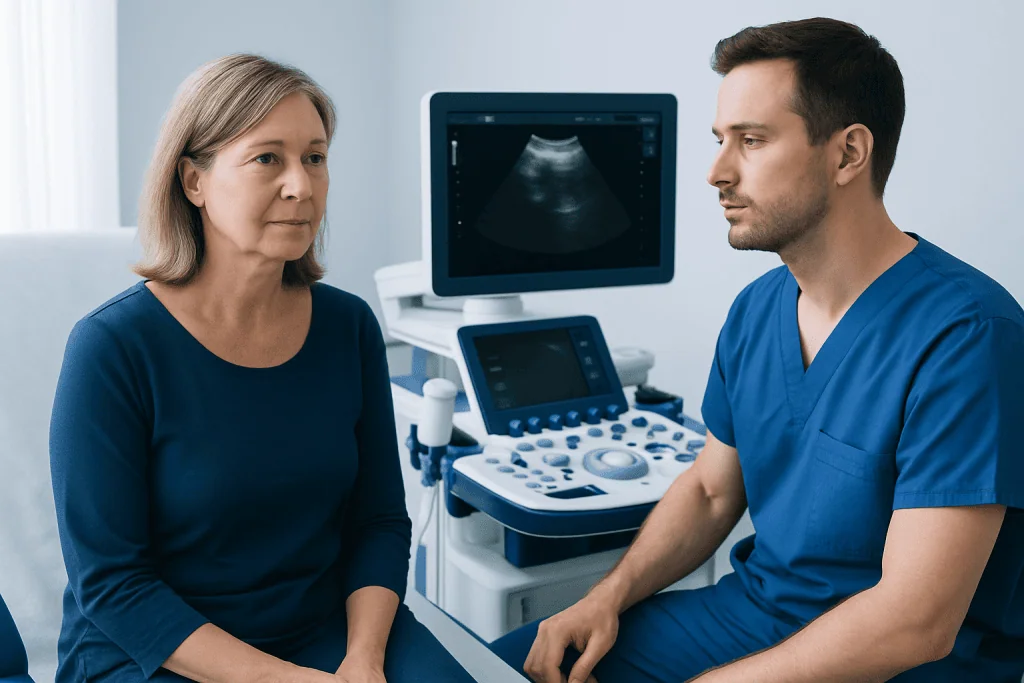
Not every condition is suitable for travel, even when the treatment itself is appropriate. Fitness to fly depends on your diagnosis, current symptoms, recent procedures, medications, mobility, infection risk and how urgent the care is. If you have a heart, lung, neurological or blood clotting condition, or you have recently had surgery, ask your own doctor whether air travel is safe before you make any booking. Do not rely on a hospital abroad, including us, to make that call alone: your local doctor knows your recent history.
Some situations should never wait for a travel plan. If you develop sudden chest pain, severe breathlessness, one-sided weakness, sudden severe headache, confusion, heavy bleeding, or a swollen and painful leg, call your local emergency number or go to the nearest emergency department now. Medical travel is for planned care. It is never a route for symptoms that are changing by the hour.
For planned care, think honestly about the journey itself. Long flights, airport walking distances, time-zone changes and waiting times are tiring even for healthy travellers. If you need oxygen, wheelchair assistance, refrigerated medication, injections during transit, or help with personal care, these must be arranged in advance with the airline as well as the hospital.
When you first contact a hospital abroad, send your most recent and complete records: blood tests, imaging, pathology reports, operation notes, discharge summaries and your current prescription list. A specialist team can only give meaningful guidance when it sees the full picture; missing records lead to delays or repeated tests after arrival. If you are unsure how your documents will be handled once you send them, our guide to medical records privacy in Turkey explains consent and sharing rules.
Look closely at hospital quality and safety standards

Quality should be one of your first checks, and it is checkable. Ask any hospital you are considering, including us, which external accreditations it holds, how recently they were assessed, and how you can verify them independently through the accrediting body’s own public register rather than the hospital’s website. Accreditation does not replace your own questions, but it shows a hospital submits to outside standards for infection control, medication safety, quality improvement and patient rights.
Then ask questions that reveal how care actually works:
- Who reviews my records before I travel, and in what specialty?
- Will more than one specialist discuss my case, and how is that recorded?
- Does my diagnosis need confirming with new tests, and which ones?
- What are the alternatives to the proposed plan, including not treating?
- Who is my named medical contact, and who covers questions after hours?
A trustworthy provider is comfortable explaining uncertainty, risk and why a plan fits your specific situation. Be wary of any provider, anywhere, that answers a records review with a fixed plan, a fixed date and no questions back. For a broader checklist that works for any hospital, not only ours, see selecting the right hospital in Turkey for international patients, and read up on your rights as an international patient in Turkey before you consent to anything.
Understand the full cost picture before you commit
Cost is often one reason people consider medical travel, and it is often the reason decisions go wrong. The safe approach is structural: understand what a quote is built from, not just its headline. A medical quote may cover the main treatment, the hospital stay, standard tests, doctor fees and routine in-hospital medications, but inclusions vary by case. Ask for a written breakdown of what is included, what is excluded, and what would change the total: extra tests, a longer admission, additional consultations, or a revised plan after examination.
People also ask why treatment in Turkey costs less than in many Western countries. The answer is structural, not a sign of corner-cutting or of hidden excellence: it is simply economics. Operating costs, staff salaries, property and exchange rates differ between countries, and large hospital groups treat high volumes, which spreads fixed costs. None of that tells you anything about whether a specific hospital is right for you. Judge quality on the checks above; judge cost on the completeness of the written quote.
Budget the non-medical side from the start: flights, accommodation before and after admission, meals for a companion, local transport, visa fees, travel insurance and time away from work. Check whether your travel insurance covers planned treatment abroad, many policies exclude it, and what it covers if a complication extends your stay.
One honest limit to accept: a careful hospital will not fix a final figure without enough medical information, because your plan may change after in-person examination or updated imaging. If a provider promises a final, unchangeable price before anyone has examined you, treat that as a warning sign, not a convenience.
Is Turkey a good place for medical treatment, and is it safe to visit?
Turkey has a large private hospital sector, university hospitals and a long-established flow of international patients from Europe, the Middle East, Central Asia, Africa and North America. Major cities have modern diagnostic capacity and multidisciplinary teams across most specialties. That makes Turkey a credible option: it does not make every clinic in Turkey a good one. The variation between providers is exactly why the quality checks in this guide matter.
If you are asking whether Turkey is safe for Americans, Britons or other foreign visitors right now, do not settle for a hospital’s reassurance, including ours. Check your own government’s current travel advisory before booking: the US State Department and the UK Foreign Office both publish country pages for Turkey that are updated as conditions change, including any regions they advise against visiting. The main medical destinations, such as Istanbul, sit well away from the areas usually flagged, but verify this yourself close to your travel date.
Some readers also ask about the biggest cause of death in Turkey. As in most middle- and high-income countries, non-communicable diseases, above all cardiovascular disease, are reported by the World Health Organization as the leading cause. This tells you something useful: Turkish hospitals treat cardiac, oncological and chronic conditions at scale for their own population, not only for medical tourists. It is background context, not a reason to choose or avoid any particular provider.
Plan the journey, stay and support you will need
Medical travel is not only the hospital appointment. Think through how you will arrive, where you will sleep, how you will move around, and who helps when you are tired or anxious. Turkey is well connected by international flights, but your daily comfort depends on the city, distance from the airport, traffic, and whether you need accessible transport. Choosing accommodation close to your hospital matters more than most patients expect: our guide to staying near the hospital in Turkey walks through how to pick the right area.
International patient teams can take on much of this: airport transfers, appointment scheduling, interpreter coordination and accommodation guidance. At Acibadem, support teams regularly work with patients and companions visiting Turkey for the first time and can explain what happens on arrival and which documents to bring to each appointment.
Be realistic about your personal needs. Travelling alone? Ask who you can contact after hours, how you will manage meals, and whether you should arrange a companion instead. Travelling with family? Ask about visiting rules, nearby hotels and how long your companion may need to stay, recovery timelines are often longer than the treatment itself. Good planning does not remove uncertainty, but it moves your energy from logistics to recovery.
Make aftercare part of the decision from the beginning
The most neglected question in medical travel is what happens after you leave. Some treatments need wound care, medication monitoring, rehabilitation, imaging or blood tests weeks after discharge. Even when treatment finishes during your stay, recovery continues at home, so aftercare belongs in the decision, not after it.
Before travelling, ask what you will receive at discharge: a discharge summary, medication list, test results, imaging copies, pathology reports and written instructions in a language you understand. Ask when it may be safe to fly home, which activities to avoid, and, specifically, which warning signs need urgent attention.
Take that last point seriously. If, after treatment, you develop chest pain, difficulty breathing, sudden weakness, heavy bleeding, a high fever, or a swollen and painful leg, call your local emergency number or go to the nearest emergency department now. Do not wait to reach the hospital in Turkey first; local emergency care always comes before remote advice. Non-urgent questions, a healing wound, a medication query, a scheduled result, are what your named contact and discharge documents are for.
If possible, speak with your doctor at home before you travel and ask whether they will support follow-up after your return. This matters most for chronic conditions, cancer care, heart conditions, orthopaedic rehabilitation, or anything needing long-term monitoring. A planned handover between the treating hospital and your local team is what protects continuity of care, and if your home doctor cannot or will not follow up, that is a factor that should genuinely weigh against travelling.
Step by step
- Collect your medical records. Gather diagnosis reports, recent test results, imaging files, discharge summaries, your current medication list and allergy list. Complete records let the specialist team assess your case before you travel and reduce avoidable delays and repeated tests.
- Request a specialist review before booking anything. Share your documents with the international patient team and ask what else is needed. A preliminary review tells you whether travel is reasonable and what appointments to expect after arrival, and it costs you nothing to hear a doubt at this stage.
- Verify quality and coordination. Ask which external accreditations the hospital holds and check them on the accrediting body’s public register. Confirm whether more than one specialist will review your case and who your named coordinator will be.
- Clarify the expected stay and recovery timeline. Ask how long you may need in Turkey before treatment, during it, and after discharge, including follow-up checks and any restrictions on flying home.
- Get the cost structure in writing. Request a written outline of what the quote includes, what it excludes, and what could change it: extra tests, longer admission, additional consultations or a revised plan after examination.
- Arrange travel and accommodation last, not first. Book flights only once you understand the likely schedule and your fitness to fly. Plan airport assistance, transfers, hotel distance from the hospital, accessibility needs and whether a companion should come.
- Set up aftercare before you leave home. Identify who will support you after your return and which local doctor can help. Ask the treating hospital for discharge documents and clear written instructions on medications, warning signs and follow-up.
Your checklist
- Recent medical reports, test results, scans and diagnosis notes are ready to share
- Your current doctor has confirmed whether you are fit to travel
- You can state, in one sentence, why treatment in Turkey may suit your situation
- You have verified accreditation independently and asked about specialist coordination
- You have a written outline of the cost structure and what could change it
- You know how long you may need to stay before and after treatment
- You have checked your government’s current travel advisory for Turkey
- Interpreter, transfer, accommodation and accessibility needs are discussed
- A companion is arranged if you may need practical or emotional support
- You have a follow-up plan at home and know who to contact, both there and in Turkey, for non-urgent concerns
Key takeaways
- You can only decide if treatment in Turkey is right for you when medical need, fitness to travel, verified hospital quality, the full cost structure and an aftercare plan all line up.
- External accreditation you have verified yourself, multidisciplinary review and clear communication are the strongest safety signals when choosing a hospital.
- Lower costs in Turkey are structural, different operating costs and exchange rates, and say nothing, good or bad, about a specific provider’s quality.
- Send complete medical records before travel; a review without the full picture is guesswork.
- Aftercare and warning-sign planning belong at the start of the decision. For anything urgent, at home or abroad, local emergency services come first, always.
Frequently asked questions
How do I know if treatment in Turkey is right for me?
Start by clarifying your medical goal and asking your own doctor whether travel is safe for your condition. Treatment in Turkey may suit you if a specialist team has reviewed your records before you book, you understand the proposed plan and its uncertainties, and you have practical support for travel and aftercare. If any of those pieces is missing, the decision is not ready yet.
Is Turkey good for medical treatment?
Turkey has large multidisciplinary hospitals, experienced specialists and long-established pathways for international patients, which makes it a credible option for many kinds of planned care. But quality varies between providers, as it does everywhere. Judge the specific hospital: its accreditation, its willingness to review your records honestly, and its communication, rather than the country as a whole.
Is Turkey safe for Americans and other foreign visitors right now?
Check your own government’s current travel advisory before booking, and again close to your travel date. The US State Department and the UK Foreign Office both publish updated Turkey pages, including any regions they advise against visiting. The main medical destinations, such as Istanbul, are generally distant from flagged areas, but verify this yourself rather than relying on any hospital’s reassurance.
Why is medical treatment cheaper in Turkey?
The difference is structural: operating costs, staff salaries, property and exchange rates differ between countries, and high patient volumes spread a hospital’s fixed costs. Lower cost by itself tells you nothing about quality in either direction. Assess quality through accreditation you have verified, specialist review of your records and clear communication, and assess cost through a written breakdown of inclusions and exclusions.
Can I get a treatment plan before traveling?
Often, yes: a hospital can give preliminary guidance after reviewing your records. But the final plan may depend on in-person examination, updated tests or new imaging after you arrive. Be cautious of any provider that offers a fixed, final plan or an unchangeable price without enough medical information; careful teams state their limits plainly.
Should I travel alone or bring a companion?
It depends on your condition, mobility, emotional comfort and expected recovery. A companion can help with airport transit, communication, meals, medication reminders and decisions. If you travel alone, ask the hospital what support exists outside appointment times, who you can reach after hours, and how to get help if you feel unwell in your accommodation.
How long should I stay in Turkey after treatment?
It varies with the diagnosis, the treatment, your recovery and the risk of complications. Ask your medical team when it may be safe to fly and whether you need follow-up checks before leaving Turkey. Avoid booking inflexible return flights until you understand the likely timeline, building in slack is cheaper than changing plans under pressure.
What happens if my treatment plan changes after I arrive?
Plans can change when new tests show different findings or when your team recommends a safer approach. Before you commit, ask how changes would be explained to you, how your consent is taken, and how cost and schedule would be adjusted in writing. You are entitled to time to understand your options before agreeing to anything.
Add us as a Preferred Source to see more of our trusted health content across Google Search, AI Overviews and Discover.

Update history
- PublishedJune 8, 2026
- Medical review approvedSeptember 13, 2026
- Last content updateSeptember 12, 2026
References3
More Patient Guides

Choosing Between Inpatient and Day-Case Treatment in Turkey
Inpatient and day-case treatment in Turkey differ mainly in overnight monitoring, recovery needs and travel planning. Learn how to choose safely.

How to Compare Hospitals in Turkey for Complex Treatment
Compare hospitals in Turkey for complex treatment by checking accreditation, specialist teams, ICU support, coordination, and follow-up.

At Acibadem, How We Explain Surgical Risks and Safety Checks Before You Travel
Surgical risks and safety checks before travel means understanding your personal risk, required tests, and travel timing before coming to Turkey.

At Acibadem, What to Check Before Comparing Treatment in Turkey With Care at Home
Comparing treatment in Turkey with care at home starts with safety, records, follow-up, travel timing and total support in Istanbul.