

Medical Travel to Turkey with Dementia or Cognitive Impairment

Many people with dementia or cognitive impairment can travel to Turkey for medical care, provided the trip is planned around their needs. That means a fitness-to-travel review at home, a familiar companion, clear consent paperwork, records shared with the hospital in advance, simplified flights, and a written plan for the return journey. The condition itself is not the barrier; unprepared logistics are.
Can you really fly to another country for treatment when memory or thinking has become unreliable? Often, yes. Medical travel to Turkey with dementia or cognitive impairment is possible for many patients, but only when the journey is designed around the person, not squeezed around a treatment date. A familiar companion, honest preparation and early communication with the hospital make the difference.
This guide stays on the practical side: deciding whether the trip makes sense, sorting out consent and legal paperwork, choosing the right companion, surviving the airport, keeping hospital days calm, and getting home with a plan your local doctors can actually use. It does not replace medical advice from the doctors who know you.
At a glance
- Best first step: A fitness-to-travel conversation with your home doctor, then sharing cognitive and medical details with the hospital before booking
- Recommended support: A familiar companion travels with you whenever possible, for some patients, more than one
- Key documents: Medical summary, full medicines list, consent or power-of-attorney papers, and one named family contact
- During the stay: Familiar routines, interpreter support, glasses and hearing aids to hand, and fewer confusion triggers
- Return planning: Written discharge instructions, confirmed follow-up and a clear handover to your doctors at home
Is Medical Travel Appropriate When Cognition Is Impaired?
Start with an honest question: not whether the treatment exists in Turkey, but whether the whole journey, airports, hotel rooms, hospital corridors, new faces, a new language, can be made safe and understandable for this particular person. Medical travel to Turkey with dementia or cognitive impairment works best when the reason for travel is clear: a consultation, a diagnostic work-up, surgery for a separate condition, rehabilitation or a second opinion. If the purpose is vague, the stress of travel is harder to justify.
Ask the doctor who knows you to comment on fitness to travel before anyone books a ticket. Useful topics include recent changes in memory or behaviour, risk of delirium, mobility, swallowing difficulties, sleep patterns and any history of agitation or wandering in unfamiliar places. A recent infection, fall, stroke, hospital admission or medication change is a reason to slow down, because travel itself can worsen confusion in the days that follow. Some conditions and procedures also need formal airline clearance: our guide to medical fitness to fly to Turkey explains when that applies.
Stage matters, and so does trajectory. Someone with stable mild cognitive impairment who manages daily life with light support faces a very different journey from someone with moderate dementia whose confusion worsens each evening. Neither situation automatically rules travel out; both change how much support the plan needs. The honest position is this: dementia is rarely the sole reason a trip is impossible, but it is always a reason to plan more carefully than other travellers do.
Check your travel insurance early. Cognitive conditions are pre-existing conditions for insurance purposes, and policies handle them very differently. What a good policy should include is covered in our guide to travel insurance for medical treatment in Turkey.
Consent, Decision-Making and Legal Preparation

Cognitive impairment does not automatically remove your right to make healthcare decisions. Capacity is decision-specific: many people can understand and agree to care when information is explained slowly, in their preferred language, with a trusted person in the room. Others need a legally authorised representative, particularly for anaesthesia, surgery or hospital admission, where the decisions are more complex and the stakes higher.
Bring documents that show who can support or make decisions if you cannot. Depending on your home country, these may include power of attorney, guardianship orders, advance directives, court documents or notarised family authorisations. They should be current, legible and, wherever possible, translated into English or Turkish. A power of attorney that sits in a drawer at home helps nobody in an Istanbul consulting room.
Clarify consent arrangements with the receiving hospital’s international patient team before travel, not on arrival. Hospitals must follow legal and ethical requirements around consent, and incomplete paperwork is one of the most common causes of delayed care for international patients with cognitive conditions. If family members disagree about treatment decisions, resolve that disagreement at home and appoint one main contact person for the hospital. A single calm voice serves the patient far better than five anxious ones.
Keep originals and certified copies separate during the journey, and never put legal papers in checked luggage. Practical methods are covered in our guide on keeping valuables and medical documents safe during treatment travel.
Choosing the Right Companion and Support Plan

For anyone with dementia or significant cognitive impairment, a familiar companion is the single most important safeguard on the trip. A spouse, adult child, close relative or long-term caregiver does something no interpreter or coordinator can: they know what “normal” looks like for you. They notice the early signs of distress, recognise when confusion is worse than usual, and provide the reassurance of a known face in an unknown place.
Be realistic about what the companion role involves. One person may be managing documents, medicines, airport navigation, meals, toileting, disrupted sleep, hospital conversations and delays, sometimes all in the same day. If care needs are high, one companion may not be enough. Consider a second family member or a professional caregiver, and decide this before booking rather than discovering the gap mid-journey.
Agree on practical roles in advance. The companion should know the medication schedule, allergies, communication preferences, triggers for agitation, calming strategies, mobility limits and emergency contacts. A written one-page care profile, “how to communicate with me, what upsets me, what calms me”, is enormously useful for airline staff, hotel teams and hospital nurses who meet the patient for the first time.
- Use short, calm explanations rather than repeated detailed discussions.
- Keep one familiar person as the main communicator whenever possible.
- Carry comfort anchors: glasses, hearing aids, family photos, a familiar blanket, preferred music.
- Build a rest period into the schedule after every major step of the journey.
- Never leave the patient alone in unfamiliar public spaces, even briefly, if wandering is a risk.
Making Flights, Transfers and Accommodation Easier
Travel days are usually the hardest part of the whole trip, harder, often, than the hospital itself. Choose flight times that respect the usual sleep and meal routine where you can, and prefer direct flights over connections, even if a connection is more convenient on paper. Every transfer is another set of queues, announcements and unfamiliar spaces to decode. Wheelchair assistance and airport escort services reduce walking, waiting and decision-making; request them from the airline well in advance and reconfirm shortly before departure.
Cabin baggage carries everything that matters: passport, medical documents, consent papers, medicines in original packaging, snacks, water bought after security, continence supplies, spare clothes, glasses, hearing aids, phone charger and a written emergency note with contacts. Essential medicines and legal papers never go in the hold. Timing doses across time zones takes a little planning: our guide on keeping regular medicines on schedule during medical travel walks through it.
Choose accommodation for simplicity, not style: close to the hospital, easy lift access, a quiet room, good lighting, minimal clutter and space for the companion. A short, repeatable route between hotel and hospital becomes a small piece of routine in an unfamiliar city, and routine is exactly what a confused mind holds onto. Hospital international patient teams can usually advise on practical accommodation and transfer options near the facility.
What to Tell the Hospital Before You Arrive
The more the receiving hospital knows in advance, the better it can prepare. Diagnosis names are the starting point, not the whole story. The team also needs the everyday detail: whether you can answer questions independently, whether confusion worsens in the evening, whether you need help eating or dressing, whether there are swallowing precautions, and whether there is any history of falls, seizures, wandering or delirium. This information shapes appointment timing, interpreter arrangements, room planning and whether extra evaluations are sensible before a procedure.
Provide a complete medication list: dementia medicines, sleep medicines, blood thinners, diabetes medicines, psychiatric medicines, pain medicines and supplements, each with dose, timing and reason. Some medicines can increase confusion, interact with anaesthesia or need adjustment around procedures, decisions that belong entirely to the treating doctors, and that they can only make with accurate information. How to organise records so a foreign team can use them quickly is covered in our guide on sharing your medical history clearly when you travel for treatment.
At Acibadem hospitals, several specialties may be involved depending on the reason for travel, neurology, internal medicine, anaesthesia, surgery, rehabilitation, nursing, nutrition or psychiatryand international patient coordinators and interpreters support communication throughout. Whichever hospital you choose, the principle is the same: background information that arrives early lets the team plan appointments and routines with cognitive comfort in mind, rather than improvising on the day.
Reducing Confusion During Appointments and Hospital Stays
Hospitals are disorienting by design: new faces, sounds, lights, schedules and procedures, all at once. The countermeasure is routine. Keep sleep, meals, hydration, toileting and medicines as close to the home pattern as circumstances allow. Bring hearing aids and glasses everywhere, impaired hearing or vision reliably worsens confusion and makes every conversation harder than it needs to be.
The same principles that help clinicians work with older adults with memory impairment help companions too. Speak slowly, one idea per sentence. Face the person, in good light. Ask one question at a time and allow real pauses. Avoid arguing with a mistaken belief; redirect gently instead. During consultations, the companion can take notes or, with permission, record the agreed instructions. It helps to repeat the plan back in plain language before leaving the room: what happens today, which medicines are changing, when eating is allowed, when you return to the hotel, and who to contact with questions.
Delirium, a sudden worsening of confusion, deserves particular awareness, because unfamiliar environments, procedures, poor sleep, pain, infection, dehydration and constipation all raise the risk. Clinical teams watch for sudden confusion, unusual sleepiness, agitation, hallucinations, fever or reduced urination, and companions who know the person’s baseline are often the first to spot a change worth mentioning to the nurses. Daylight, hydration, familiar reassurance, good pain control and undisturbed sleep all support orientation, and clinical teams treat sudden changes as something to assess promptly rather than watch.
Planning Discharge, Recovery and the Return Home
Return planning starts before treatment begins, not on discharge day. Ask early: what level of help will be needed afterwards, should stairs or long walks be avoided, is wound care or rehabilitation required, and when is flying home reasonable? If confusion is worse after a hospital stay, which is common and often temporary, the flight home should wait until the treating team considers travel appropriate, however tempting the original booking is.
Before leaving the hospital, the companion should receive written instructions in a language they understand: medication changes, warning signs, diet and activity advice, follow-up dates and contact details. If the plan is complex, ask for it to be explained slowly and clarified before you leave the building. A plan that only exists in a tired companion’s memory is not a plan.
Keep every discharge paper, imaging disc, laboratory result and prescription together in one folder for the journey home. Hospital teams prepare medical reports for your doctors at home, and this handover matters more than usual when memory difficulties make it hard to recall what happened abroad. The folder does the remembering.
Step by step
- Start with a fitness-to-travel conversation. Discuss with your home doctor whether travel is safe now. Cover recent infections, falls, medication changes, agitation, sleep problems and whether a second companion or professional caregiver is advisable.
- Share records and cognitive needs early. Send medical reports, the medication list and a one-page daily care profile to the receiving hospital before fixing travel dates. Include how you communicate, what support you need and what triggers confusion.
- Confirm consent and representative documents. Clarify who can sign forms or support decisions if understanding fluctuates. Bring current legal documents with translations, and raise consent arrangements with the international patient team well before arrival.
- Choose the right companion. Select someone who knows your routines, medicines and calming strategies, and who is realistically able to manage airports, appointments, meals, toileting and communication for the whole trip.
- Simplify flights and transfers. Prefer direct flights, book airline assistance early, keep everything essential in cabin baggage, and choose quiet accommodation close to the hospital.
- Keep routines visible during the stay. Use a simple written daily schedule for meals, medicines, appointments and rest. Familiar objects, working glasses and hearing aids, and one calm main communicator reduce disorientation.
- Prepare the return before treatment ends. Confirm medication changes, warning signs, follow-up dates and fitness to fly. Keep all reports in one folder and hand it to your home doctor promptly.
Your checklist
- Passport, visa documents and travel insurance details
- Medical summary including the dementia or cognitive impairment diagnosis
- Complete medication list with doses, timing and reasons
- Power of attorney, guardianship or other consent documents, with translations if available
- One-page care profile: communication, triggers, calming strategies
- Emergency contacts and one named family decision-maker
- Glasses, hearing aids, mobility aids, spare batteries and chargers
- Comfort items, familiar photos, snacks and continence supplies
- Airline wheelchair or special assistance confirmation
- Hotel and transfer details close to the hospital
- Discharge folder for reports, prescriptions and follow-up instructions
Key takeaways
- Medical travel to Turkey with dementia or cognitive impairment is possible for many patients, but it needs a fitness-to-travel review and realistic, unhurried planning.
- A familiar companion is the most important safeguard; high care needs may require more than one.
- Consent and representative documents should be clarified, and translated where possible, before travel, not on arrival.
- The hospital needs everyday detail in advance: communication style, behaviour patterns, mobility, swallowing, falls history and a full medication list.
- Sudden worsening of confusion during the trip can signal delirium or another medical issue, something treating teams assess promptly rather than wait out.
- Plan the return home early: written instructions, confirmed fitness to fly and one folder of documents for your local doctors.
Frequently asked questions
Can patients with dementia travel?
Many can, particularly in earlier stages and with a familiar companion. Whether travel is sensible depends on general health, the stage and stability of the condition, travel tolerance and the purpose of the trip. A recent infection, fall, hospital admission or noticeable worsening of confusion is a reason for extra caution, and a fitness-to-travel discussion with the doctor who knows the patient should come before any booking.
Is it a good idea to travel to Turkey for medical reasons with a cognitive condition?
It can be, when the reason for travel is clear, a specific consultation, assessment, procedure or second opinion, and when the journey is planned around the person’s needs rather than around dates. The relevant question is not only whether the treatment is available, but whether airports, hotels and hospital routines can be made manageable. With a companion, early information-sharing and simplified logistics, they often can.
Can a person with mild cognitive impairment live alone?
Many people with mild cognitive impairment continue to live independently, because MCI by definition does not significantly disrupt daily activities. Whether that remains safe depends on individual factors, driving, finances, medicines, cooking, and how the condition changes over time, which is why doctors reassess it periodically. For travel purposes, someone with stable MCI usually needs lighter support than someone with dementia, but a companion is still worthwhile in unfamiliar surroundings.
What documents should we bring for consent?
Bring passports, identification, medical records and any documents showing who may support or make decisions if the patient cannot: power of attorney, guardianship papers, advance directives or notarised family authorisations, depending on the home country. Documents should be current and legible, ideally with English or Turkish translations, and consent arrangements should be clarified with the receiving hospital before travel so nothing delays care on arrival.
Should dementia medicines be stopped or changed before travel or treatment?
No medicine should be started, stopped or changed except on the instruction of the treating doctor. Bring all medicines in original packaging with a complete list of doses and timing, and make sure the clinical team knows about dementia medicines, sleep medicines, blood thinners, psychiatric medicines, supplements and any recent changes, since some of these matter around anaesthesia and procedures.
What helps when working with an older adult who has memory impairment?
Slow, simple communication in good light, facing the person; one question at a time with genuine pauses; keeping glasses and hearing aids in use; maintaining familiar routines; and avoiding arguments over mistaken beliefs in favour of gentle redirection. A written care profile describing triggers and calming strategies helps every new professional the person meets, from airline staff to hospital nurses.
What if confusion worsens after a procedure or hospital stay?
Treating teams take sudden or unusual confusion seriously, because pain, infection, dehydration, constipation, medication effects and poor sleep can all contribute to delirium, and companions who know the person’s baseline often notice changes first. Increased confusion after treatment is often temporary, but the flight home should wait until the treating team considers travel appropriate.
How should we prepare for returning home?
Before leaving the hospital, obtain written discharge instructions in a language the companion understands, covering medication changes, warning signs, activity advice and follow-up dates. Keep reports, imaging, laboratory results and prescriptions together in one folder and hand it to the home doctor as soon as possible, so care continues without relying on anyone’s memory of what happened abroad.
Add us as a Preferred Source to see more of our trusted health content across Google Search, AI Overviews and Discover.

Update history
- PublishedJune 8, 2026
- Medical review approvedSeptember 13, 2026
- Last content updateSeptember 12, 2026
References3
- Dementia: MedlinePlus medlineplus.gov
- Delirium: MedlinePlus medlineplus.gov
- What is dementia?: NHS nhs.uk
More Patient Guides

Airport Wheelchair Assistance: How to Book It for a Medical Trip
Airport wheelchair assistance is free, it exists at every commercial airport, and airlines are legally required to provide it, yet half…

Travelling With a Stoma: Flights, Supplies and Airport Screening
Traveling to Turkey with a stoma is manageable with the right supplies, airport screening plan, and recovery support in Istanbul or Turkey.
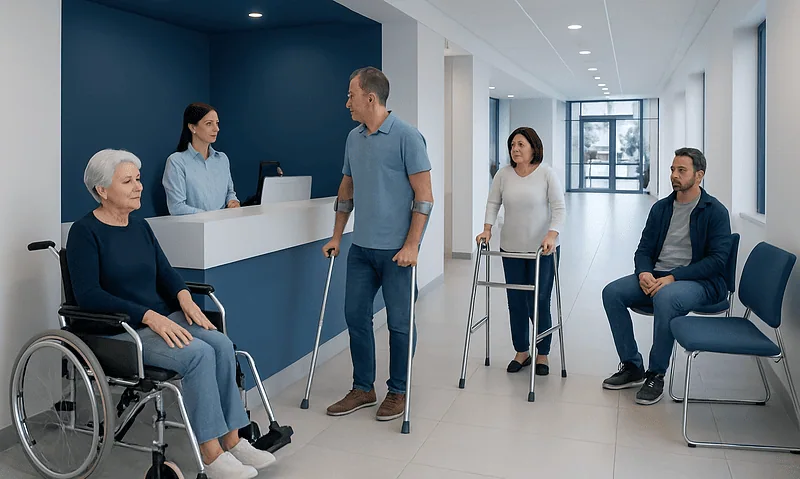
Mobility Aids in Turkey: Renting a Wheelchair, Walker, or Crutches
Mobility aids in Turkey can be rented through medical suppliers, pharmacies, and hospital-linked services in Istanbul and other cities.

Traveling to Turkey with Food Allergies or Special Diet Needs
Traveling to Turkey with food allergies or special diet needs is manageable with planning, translated allergy cards, and hotel and hospital support…