

PET-CT in Turkey: Patient Preparation, Timing, and Scan Day Questions

A PET-CT in Turkey usually means a few hours at the hospital: registration, a review of your preparation, a tracer injection, a quiet uptake period, then the scan itself. Most patients fast for several hours beforehand, avoid strenuous exercise the day before, and keep regular medicines unchanged unless their doctor says otherwise. The hospital's own written instructions always take priority over general advice.
Can you drink water on the morning of the scan? How early should you leave the hotel? Will your diabetes tablets interfere? These are the questions that keep international patients awake the night before a PET-CT in Turkey. Most of them have straightforward answers: you just need them in advance, in writing, from the hospital doing your scan.
This guide explains what a PET-CT appointment involves, how to prepare in the days beforehand, why timing matters more than most people expect, what actually determines the cost, and what happens after the scan. It is written for patients travelling from abroad, so it covers the travel side too.
At a glance
- Best for: International patients arranging a PET-CT in Turkey, and the companions travelling with them
- Main preparation: Fasting for several hours in most cases, hydration guidance, no strenuous exercise the day before, and a medication review
- Plan ahead for: Blood sugar management, recent treatment or infection, pregnancy or breastfeeding, and realistic travel timing
- Time at hospital: Usually a few hours in total, check-in, preparation, tracer uptake, and the scan itself
- Helpful support: Interpreter arrangements, appointment coordination, and transport planning through international patient services
What a PET-CT appointment in Turkey usually involves
A PET-CT combines two kinds of imaging in one session. The CT part shows structure, where things are and what size they are. The PET part shows metabolic activity, using a small amount of radioactive tracer that highlights areas of the body using more energy than expected. Together they give doctors both a map and a signal, which is why the scan is used so often in cancer assessment, staging, and treatment planning.
If you are searching Turkish hospital websites, it helps to know the local terms. A CT scan is called bilgisayarlı tomografi in Turkish, usually shortened to BT. A PET-CT therefore often appears as PET-BT or PET/BT, and the department performing it is typically nükleer tıpnuclear medicinerather than general radiology. Knowing this makes appointment letters, hospital signage, and reports much easier to navigate.
For a PET-CT in Turkey, the practical shape of the day matters more than the technology. Expect registration and identity checks, a review of your preparation and medicines, a blood sugar check in most cases, the tracer injection, a quiet waiting period while the tracer distributes, and then the scan. The scanning itself is often the shortest part of the visit. At Acibadem, international patient teams coordinate this flow for overseas patients, interpreter support, document guidance, and appointment sequencing, which is particularly useful when the scan sits inside a wider care plan involving several specialists.
How to prepare in the days before your PET-CT
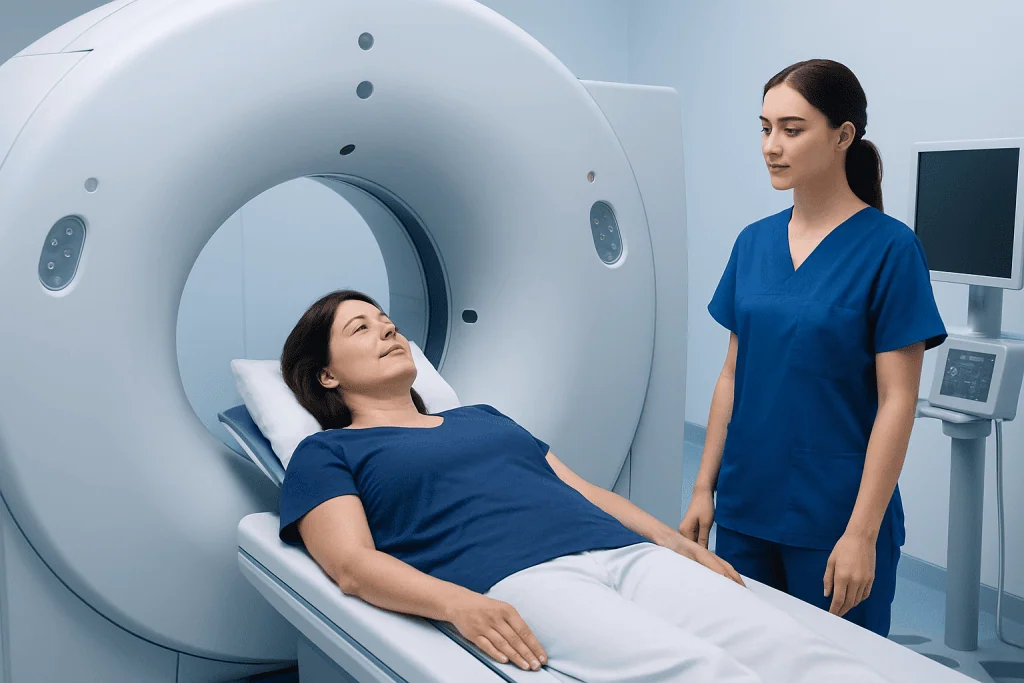
Preparation starts a day or two before the scan, not on the morning itself. You will usually be asked to avoid strenuous exercise, gym sessions, long runs, heavy lifting, because active muscles take up the tracer and can distort the images. Keep the day before quiet and ordinary unless your doctor tells you otherwise.
Food rules matter. Most PET-CT protocols require fasting for several hours before the appointment, because recent food raises blood sugar and insulin levels, which changes how the tracer distributes. Plain water is often allowed and sometimes actively encouraged. The exact fasting window and diet instructions depend on the tracer used and the reason for the scan, so treat the hospital’s written instructions as the only version that applies to you. General internet advice, including this guide, cannot replace them.
Medicines need reviewing in advance, not on the day. Do not stop or adjust anything yourself: that decision belongs to your treating doctor. What you can do is make sure the imaging team has a complete picture: diabetes treatments, steroids, recent contrast studies, allergies, kidney problems, and any supplements. Hospitals usually ask international patients for a medication list and recent reports before travel precisely so that instructions can be tailored before you board a plane rather than improvised at the desk.
The team will also ask whether you are pregnant, could be pregnant, or are breastfeeding. These answers do not automatically rule out a scan, but they can change the timing, the precautions afterwards, or the advice about contact with infants. The earlier this is on the table, the better the planning. If your PET-CT is part of a broader work-up, the guide on why blood tests and scans are sometimes repeated in Turkey explains how imaging done at home fits into a Turkish hospital’s assessment.
Timing matters: blood sugar, recent treatment, and travel plans
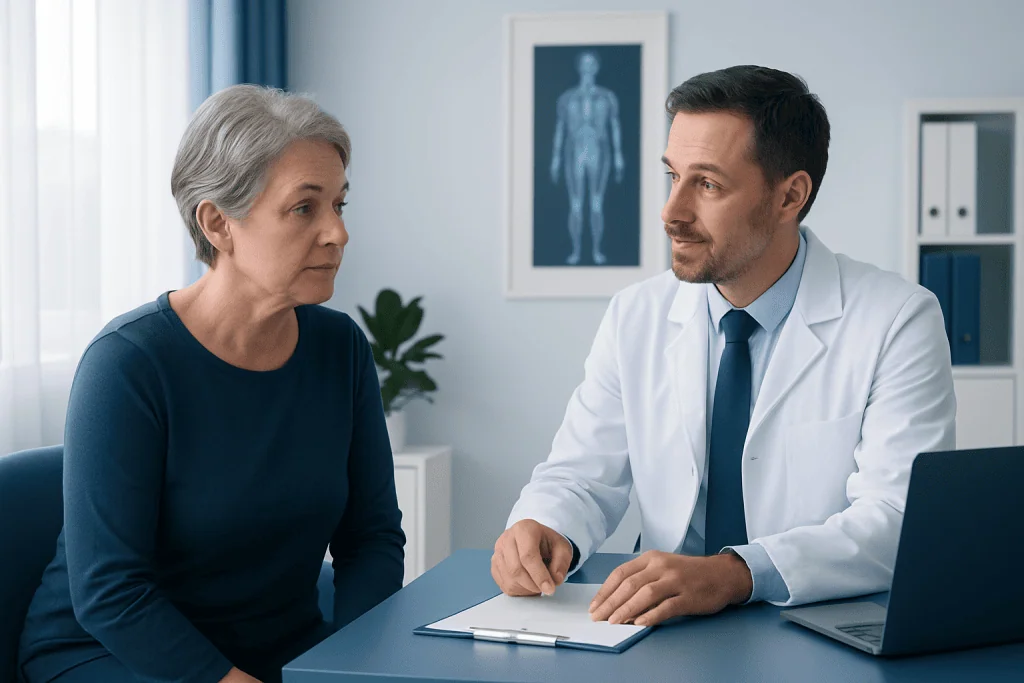
Blood sugar is the single most common reason a PET-CT gets rescheduled. The standard tracer is a form of glucose, so a high blood sugar level competes with it and degrades image quality. Patients with diabetes are usually given a tailored plan, appointment time, fasting window, and specific guidance on insulin or tablets from their own doctor. If you have diabetes, ask for these instructions in writing well before you travel rather than working it out on the morning of the scan.
Recent medical events also shape timing. Surgery, chemotherapy, radiotherapy, infections, and even ordinary inflammation can light up on a PET-CT and complicate interpretation. This is why your doctors may deliberately choose a specific window, a set number of weeks after a treatment cycle, for example, rather than booking the first available slot. A scan done at the wrong moment can be less useful than no scan at all, which is a waste of a flight. If you are travelling soon after treatment at home, the guide on flying to Turkey after chemotherapy covers the travel-timing side in more detail.
Then there is the itinerary itself. A same-day flight in and out around a PET-CT in Turkey is technically possible for some patients, but it leaves no room for traffic, registration queues, or a scan that starts late. Many international patients arrive the day before, especially in Istanbul, where crossing the city can take longer than the scan. Acibadem coordinators routinely align scan slots with consultations, hotel bookings, and airport transfers so that the day involves as little movement as possible: a real advantage, since the preparation includes a rest period where staying calm and still genuinely improves the result.
What to expect on scan day
Wear comfortable, warm clothing without metal fastenings if possible, and give yourself an unhurried morning. At the hospital you will check in, confirm your identity and medical details, and go through the preparation you followed, fasting, medicines, activity. Bring your passport, appointment confirmation, insurance or payment documents if relevant, and any reports or imaging discs the team requested.
The tracer is usually given through a vein in the arm. Then comes the uptake period, commonly around an hour of quiet resting while the tracer circulates. You may be asked to sit still, keep warm, and limit talking, chewing, and phone use, because muscle activity anywhere in the body can create misleading signals. This waiting time is not padding; it is part of the scan.
The imaging itself requires lying still on a narrow table that moves through the scanner’s ring. It does not usually hurt: the challenge is stillness, not discomfort. If you are claustrophobic, very anxious, or have pain that makes one position hard to hold, raise it with the team before the appointment rather than enduring it silently on the table. Departments deal with this regularly and can often make practical adjustments or discuss options with your doctor in advance.
One honest warning: PET-CT departments run on tight tracer schedules, because the tracer itself decays within hours of production. Arriving late can mean the dose prepared for you is no longer usable and the appointment has to move. Ask in advance about departure times and traffic patterns from where you are staying, and err on the side of early. The general logic in when to arrive before surgery in Turkey applies to imaging days too: buffer time is cheap, rescheduling is not.
How accurate is a PET-CT?
No scan is completely accurate, and any page telling you otherwise is selling something. A PET-CT is a powerful test, but it has known limits. Inflammation, infection, and healing tissue can take up tracer and mimic disease: a false positive. Very small areas of disease, or certain slow-growing types, may not take up enough tracer to show clearly: a false negative. Blood sugar, recent treatment, and movement during the scan all influence quality too.
This is why a PET-CT report is rarely a verdict on its own. Doctors interpret it alongside your history, examination, blood work, other imaging, and often a biopsy result. If your scan raises questions rather than answering them, additional tests are a normal next step, not a sign that something went wrong: the guide on when unexpected tests are needed in Turkey explains how this affects an international patient’s schedule. The practical takeaway: prepare carefully, because your preparation is one of the few accuracy factors you control.
What the cost of a PET-CT in Turkey depends on
You will see prices advertised online, often as a single headline figure. Treat these with caution: a meaningful quote is built from specifics, and this guide deliberately gives no figures because yours will depend on your case. What genuinely shapes the cost of a PET-CT in Turkey:
- The tracer. The standard glucose-based tracer is the most widely used; specialised tracers for prostate or neuroendocrine imaging are produced differently and priced differently.
- The scan protocol. Whole-body versus a limited region, and whether a diagnostic-quality CT with contrast is included alongside the low-dose CT.
- The setting. A full-service hospital where the scan feeds directly into a multidisciplinary review is a different service from a standalone imaging centre.
- What surrounds the scan. Consultations, blood tests, interpreter support, and report translation may be itemised or bundled.
The same logic applies to MRI and other imaging: the honest answer to “how much does it cost” is always “it depends on the protocol, and the quote should show you how”. Ask for a written, itemised quote and check what is included before comparing anything. Two guides cover this in depth: questions to ask before accepting a treatment quote in Turkey and how deposits, balances, and billing work.
After the scan: eating, results, and going home
In most cases you can eat and drink normally once the scan is done, unless you were told otherwise. Drinking extra water afterwards is commonly recommended, as it helps clear the tracer. The tracer’s radioactivity fades quickly on its own, but the team may give temporary precautions, for example about close, prolonged contact with pregnant women or small children for a short period. Follow whatever they specify for your dose and tracer.
Results take time, and the timeline varies. A straightforward report may be ready within days; a complex case may need review alongside pathology, laboratory results, or earlier imaging, and in cancer care the findings are often discussed by a multidisciplinary team before recommendations are finalised. Before you leave the department, confirm three things: when the report will be ready, in what form you will receive it (written report, digital images, or both), and how it will reach your treating doctor at home. International patients usually want a digital copy of the images, not just the text report, say so explicitly.
Making the day smoother for you and your companion
Pack the night before: documents, regular medicines, water if permitted, and a snack for after the scan if the team confirms that is fine. Keep the morning simple, especially if you are fasting: a quiet hotel room and an early taxi beat a rushed breakfast negotiation you cannot eat anyway.
If someone is travelling with you, check the companion rules in advance. Policies vary by department: companions can often stay through registration but wait elsewhere during the uptake period and scan, and rules are usually stricter for children and pregnant companions because of the radiation environment in nuclear medicine areas. Knowing this beforehand avoids an awkward negotiation at the door.
Language support is worth arranging early rather than hoping for the best. Fasting rules, consent forms, medication timing, and result plans are exactly the things you do not want to half-understand. Acibadem provides interpreter support for overseas patients as part of its international patient services, which matters most when the PET-CT is one step in a longer treatment journey. And ask your simple questions without embarrassment, scan instructions are specific for good reasons, and confirming always beats assuming.
Step by step
- Confirm why the PET-CT is being done. Ask what decision the scan will inform, diagnosis, staging, treatment response, or follow-up. The purpose explains why the timing and preparation rules are strict.
- Get your preparation instructions in writing. Fasting window, water rules, exercise restrictions, medicine guidance, diabetes plan, and arrival time. Written instructions survive time zones and translation; verbal ones do not.
- Share your medical picture before you travel. Recent reports, prior scans, your full medication list, and anything relevant: pregnancy or breastfeeding, diabetes, allergies, kidney problems, mobility or anxiety concerns.
- Keep the day before quiet. No strenuous exercise if advised, steady meals and sleep, transport arranged in advance. Arrive in Turkey with buffer time rather than racing from the airport to the department.
- Arrive early and treat the uptake period as part of the scan. Rest quietly, stay warm, limit movement and talking as instructed. This waiting time directly affects image quality.
- Settle the aftercare questions before you leave. When you can eat normally, whether to drink extra water, any temporary contact precautions, when the report will be ready, and exactly how you and your doctor at home will receive it.
Your checklist
- Passport or ID
- Appointment confirmation and hospital contact details
- List of current medications, including insulin or diabetes tablets
- Recent medical reports and prior imaging if available
- Written fasting and preparation instructions
- Comfortable, warm clothing without metal fastenings
- Transport plan to and from the hospital, with buffer time
- Snack and water for after the scan, if the team confirms this is appropriate
Key takeaways
- PET-CT preparation usually means fasting, hydration guidance, and no strenuous exercise the day before, with the hospital’s written instructions taking priority over everything else.
- Timing is clinical, not administrative: blood sugar, recent treatment, surgery, and infection all affect when the scan should happen and what it shows.
- Budget hours, not minutes: registration, tracer uptake, and the scan together fill a good part of a day, and arriving late can cost you the tracer dose.
- No PET-CT is completely accurate; it is interpreted alongside other tests, and your preparation is one of the accuracy factors you control.
- Cost depends on tracer, protocol, and what is bundled around the scan, insist on an itemised written quote rather than a headline figure.
Frequently asked questions
How long does a PET-CT appointment usually take?
Plan for a few hours, not the scan minutes alone. The visit includes check-in, preparation checks, the tracer injection, a quiet uptake period that is commonly around an hour, and then the imaging. Do not schedule anything tight around it.
Can I eat or drink before a PET-CT in Turkey?
Most PET-CT protocols require fasting for several hours beforehand, while plain water is often allowed and sometimes encouraged. The exact rule depends on the tracer and the reason for the scan, so the hospital’s written instructions are the only version that applies to you.
Is a PET scan 100% accurate?
No scan is. Inflammation, infection, and healing tissue can mimic disease on the images, and small or low-activity areas can be missed. That is why doctors interpret a PET-CT alongside your history, blood work, other imaging, and often a biopsy, rather than treating it as a verdict on its own.
What is a CT scan called in Turkish?
A CT scan is bilgisayarlı tomografi, shortened to BT. A PET-CT usually appears as PET-BT or PET/BT on Turkish appointment letters and hospital signage, and the scan is typically performed in the nuclear medicine department, called nükleer tıp.
How much does a PET-CT cost in Turkey?
There is no single honest number. The cost depends on the tracer used, whether the scan covers the whole body or a region, whether a contrast CT is included, and what is bundled around it, such as consultations and report translation. Ask for a written, itemised quote and compare like with like.
What if I have diabetes?
Diabetes does not automatically prevent a PET-CT, but blood sugar directly affects image quality, so timing and meal planning matter more. Patients with diabetes are usually given a tailored written plan covering fasting and appointment timing, with medication guidance coming from their own doctor.
Can I fly home on the same day as my PET-CT?
Sometimes, but it is rarely comfortable. Traffic, registration, the uptake period, and any follow-up questions can stretch the day, and tracer schedules leave little room for lateness. Many international patients stay at least one night near the hospital instead.
When and how will I get my results?
Timing varies with the complexity of the case; complex scans may be reviewed by several specialists before a report is finalised. Before leaving the department, confirm when the report will be ready, whether you will receive digital images as well as the written report, and how it will reach your doctor at home.
Add us as a Preferred Source to see more of our trusted health content across Google Search, AI Overviews and Discover.

Update history
- PublishedJuly 8, 2026
- Medical review approvedSeptember 13, 2026
- Last content updateSeptember 12, 2026
References2
- PET Scan: MedlinePlus, U.S. National Library of Medicine medlineplus.gov
- PET Scan: NHS nhs.uk
More Patient Guides
Sleep Apnea Testing in Turkey: What Happens During Your Evaluation
Sleep apnea testing in Turkey may include a consultation, overnight sleep study or home test, and a clear review of your results…

How to Organize Your Test Results Before Traveling to Turkey
Organize your test results before traveling to Turkey by sorting records, images, medicines and timelines so your Istanbul care team can review…

When Extra Tests Are Needed Before Treatment in Turkey
Extra tests before treatment in Turkey may be needed to confirm diagnosis, timing, and safety. Here is what you can expect in…

At Acibadem, How to Prepare for Blood Tests, Scans, and Pre-Op Checks
Blood tests, scans, and pre-op checks at Acibadem in Turkey help confirm you are ready for treatment and avoid delays on the…