

Pre-Op Tests in Turkey: What International Patients Should Expect

Pre-op tests in Turkey usually take place one to two days before your procedure. Most patients have blood tests, an ECG, chest imaging where needed, and an anaesthesia review, often completed within a few hours to one day. Some home-country results are repeated if they are old, incomplete or hard to verify. Bring your passport, previous reports, scan files and a complete medication list.
There is a gap between landing in Turkey and lying on a procedure table, and pre-op tests are what fills it. They are the final safety checks your care team uses to confirm that the plan agreed remotely still fits the person standing in front of them.
For most patients the process is structured and reasonably quick. Testing usually runs over the same day or the next: the tests themselves, a review by the anaesthesia and specialist teams, and clear instructions about what happens before your procedure. This guide explains what pre-op tests in Turkey typically involve, why some tests are repeated even when you have recent results at home, how long the day takes, and what can cause a delay — so nothing on the schedule surprises you.
At a glance
- When it happens: Usually 1–2 days before your procedure, depending on the treatment plan
- What may be included: Blood tests, ECG, chest imaging where needed, anaesthesia review, and specialist assessment
- How long it takes: Often a few hours to one day; some cases need extra review
- Repeats: Home-country results may be repeated if they are old, incomplete or hard to verify
- What to bring: Passport, previous reports, scan files or discs, a full medication list, insurance or payment documents
- Who is involved: International patient coordinators, interpreters, nurses, anaesthetists and your specialist team
- Why it matters: To confirm the procedure is still appropriate and safe before anyone goes ahead
Why pre-op tests in Turkey matter
Pre-op tests are not paperwork. They are how your medical team establishes your current health status before anaesthesia, surgery or another planned procedure. A remote review of scans and reports can build a treatment plan, but it cannot confirm today’s blood counts, today’s heart rhythm or a chest finding that has changed since your last X-ray. Pre-op tests in Turkey close that gap.
For international patients there is a second purpose. This stage pulls your whole medical picture into one place: history, recent symptoms, medication use, allergies, and chronic conditions such as diabetes, high blood pressure, asthma or heart disease. The goal is to reduce last-minute changes — to make sure the plan built from your records still fits you when you arrive in person.
At Acibadem, pre-operative testing for international patients is normally coordinated through international patient services, so you know where to go, what to bring and how the day will run. If you want a broader picture of that first hospital day, the guide on what to expect on your first visit covers it in detail.
What tests you may be asked to do
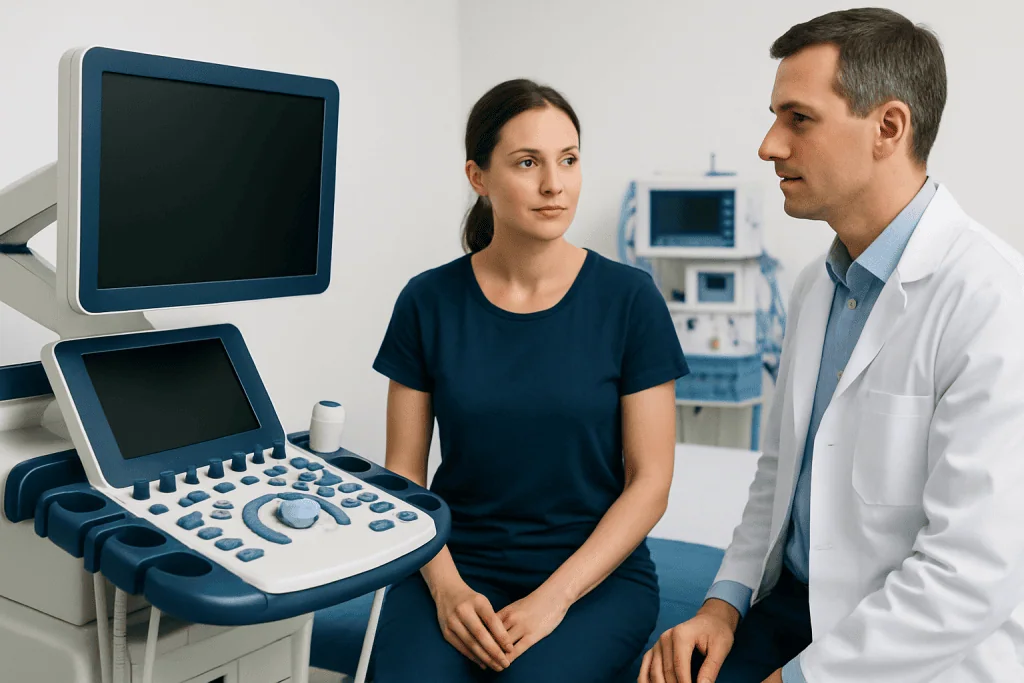
There is no single universal panel. The tests you are asked to do depend on your age, your medical history and the procedure planned. A short cosmetic procedure under sedation and open heart surgery sit at opposite ends of the same spectrum, and the testing scales accordingly.
Blood and urine tests
Most patients having a significant procedure can expect routine blood work: a complete blood count, kidney and liver function, blood sugar, and a clotting profile. Blood typing is common before operations where transfusion is possible. Urine testing may be requested in selected situations, for example before urological procedures or when infection is a concern.
Heart and lung assessment
If your procedure involves general anaesthesia, or if your history suggests closer review, you may have an ECG and sometimes a chest X-ray. Patients with a known heart condition, lung disease or significant risk factors may be referred for cardiology input or additional tests before the anaesthesia team signs off. The guide on general anaesthesia in Turkey explains what that assessment covers and why anaesthetists ask the questions they do.
Imaging and specialty review
Depending on your treatment, you might have updated imaging — ultrasound, CT, MRI or targeted scans — particularly if your existing reports are older or your surgeon wants a clearer current picture. Some patients also meet internal medicine, cardiology or other specialists on the same day. This is normal, not a sign of trouble.
- Routine blood work and clotting profile
- ECG or heart tracing
- Chest imaging when indicated
- Urine tests in selected cases
- Anaesthesia assessment and consent discussion
- Procedure-specific imaging or specialty review
Do all procedures require pre-op testing?
No — and it is worth being honest about this, because the scale varies more than many patients expect. Minor procedures under local anaesthesia in an otherwise healthy person may need little or no formal testing. Day surgery under sedation typically needs a lighter panel than major inpatient surgery. What every reputable hospital does require is an assessment: someone qualified decides, based on your health and the procedure, which tests are actually needed.
The type of anaesthesia matters as much as the operation itself, because sedation and general anaesthesia carry different assessment requirements. A hospital that skips assessment entirely for surgery under general anaesthesia is cutting a corner you should notice. Testing that feels excessive is an inconvenience; testing that is absent is a warning sign.
What your testing day usually looks like

Knowing the order of the day removes most of the anxiety. In hospitals in Istanbul and other major Turkish cities, you check in first, confirm your identity and appointment details, and meet your coordinator or interpreter if one has been arranged. From there you move between stations: phlebotomy for blood draws, imaging, nursing assessment, then physician and anaesthesia review.
Some results come back within the hour; others take longer. Expect short waiting periods between stations, and plan for them: wear comfortable clothing, keep your phone charged, and carry water and a small snack if you are permitted to eat. If fasting is required for any of your tests, you should be told this in advance — ask when your schedule is confirmed rather than assuming either way.
Coordinators usually group appointments so the day runs efficiently, and interpreters can sit in on the physician review so instructions are not lost in translation. If something unexpected appears in a result, the team may add a consultation rather than pressing ahead. That extra step can feel like a setback. It is the opposite: it is the safety check doing its job.
How long results stay valid — and why some tests are repeated
Many international patients arrive with recent test results and are surprised to be asked to repeat some of them. There are usually three honest reasons.
Age of the result. Test results have a shelf life, and it varies by test and by what it is checking. A blood count from several months ago says little about your clotting or infection status today. Hospitals set their own validity windows, and these differ between institutions and between procedures — a result acceptable for a minor procedure may be too old for major surgery. Ask your hospital what it accepts rather than assuming your home results will carry over.
Completeness and comparability. Home-country reports may be missing values the anaesthesia team needs, use different reference ranges or units, or arrive untranslated. A lab cannot always verify another lab’s methods. Repeating a test is often faster and safer than reconciling paperwork.
A current baseline. Before anaesthesia, the team wants numbers it can compare against during and after the procedure. A fresh baseline drawn in the same laboratory serves that purpose in a way an external report cannot.
None of this means your home records are wasted. They establish trends, document chronic conditions and often reduce the total number of tests you need. Bring them regardless.
Documents and information to bring
Complete records make pre-op testing faster and more accurate. Carry your passport, hospital confirmation details and any reports already shared during your remote review. If you have recent scans, bring both the written report and the image files or disc — the images matter more to a surgeon than the summary. The guide on documents to bring for hospital admission covers the full paperwork picture.
Your medication list deserves particular care. Include prescription medicines, over-the-counter products, vitamins, supplements, injections and blood thinners, with doses if you know them. If you have allergies or previous reactions — to anaesthesia, contrast dye, antibiotics, latex or adhesive dressings — write them down and mention them again in person. Repetition here is a feature, not a flaw.
Also bring details of prior surgeries, implanted devices and long-term conditions. A pacemaker, sleep apnoea, kidney disease or insulin use can each change the pre-op plan. The more complete your information, the fewer surprises for everyone.
What pre-op testing costs depend on
This guide does not quote figures, because there is no single honest number. What you can understand is the structure. The cost of pre-op testing depends on the scope of the panel (a basic blood draw versus blood work plus ECG, imaging and specialist consultations), the imaging modalities involved, and whether testing is itemised separately or bundled into the overall procedure quote. Many hospitals include standard pre-op tests within a surgical package; additional tests triggered by a finding are often billed separately.
Before you travel, ask which tests are included in your quote and what happens if extra tests become necessary. The guide on how medical quotes work explains where testing sits in the overall pricing picture and which questions to put in writing.
Reasons for delay, change or extra review
Patients often fear that an abnormal result means automatic cancellation. In practice, a value outside the expected range usually means the team needs more information. A mild infection, unstable blood pressure or blood sugar, anaemia, or a new symptom can each lead to a short delay while the safest approach is reassessed. Sometimes a temporary issue is treated first and the procedure follows days later.
Sometimes the issue is logistical rather than medical: home-country records that are incomplete, outdated or untranslated, or a medicine that needs adjusting before the procedure with enough time allowed for the change to take effect. Any medication change is a decision for the treating doctor, made with your full list in front of them — never something to do on your own initiative.
This is why a tightly booked return flight is a risk you can avoid. Leaving flexibility around your procedure date turns an extra consultation from a crisis into an inconvenience. International patient teams can usually adjust appointments, accommodation timing and transfers if the plan shifts by a day or two.
How to prepare before you arrive
The smoothest pre-op days are arranged before the flight. Confirm in advance whether you need to fast, whether you should take your usual morning medicines on the testing day, and whether anything needs adjusting beforehand — and treat every one of those answers as your doctor’s to give, not yours to guess.
If English is not your strongest language, request interpreter support early rather than on arrival. Save key health information on your phone and print a paper copy: medication names, allergy details, emergency contacts, recent diagnoses. A printed page works when roaming does not.
Arrive rested and, if permitted, hydrated, with slack in your schedule. A new illness in the days before you fly — a fever, a chest infection, a new prescription — belongs in your pre-op record, because it can change which tests are needed and when the procedure can safely happen. The guide on what to expect on arrival in Turkey covers the practical steps between the airport and your first appointment.
Step by step
- Share your records before you travel. Recent medical reports, scan results, a medication list and chronic condition details, sent as early as possible, help the team identify which tests are likely and whether you should arrive earlier than planned.
- Confirm your pre-op schedule. Ask when and where testing takes place, how long to allow, and whether fasting is required. Confirm interpreter support, transfers and appointment grouping if you are using an international patient service.
- Prepare documents and medicines. Pack your passport, hospital paperwork, previous reports, imaging discs and a written medication list. Keep regular medicines in original packaging and allergy information easy to show.
- Attend testing and assessments. Blood work, ECG, imaging, nursing checks and specialist review may all happen in one day. Expect waiting time between departments.
- Review the results with your team. Your doctor or coordinator should explain whether everything is clear to proceed or whether anything needs further attention — and what any extra review means for your procedure timing, hotel stay and travel plans.
- Follow the final instructions exactly. After testing you may receive instructions about eating, drinking, showering, medication timing and arrival time for the procedure. Ask questions if anything is unclear, especially around blood thinners, insulin or other daily medicines.
Your checklist
- Passport and hospital confirmation details
- Recent medical reports and scan images if available
- Written list of all medicines, vitamins and supplements
- List of allergies and past anaesthesia reactions
- Details of chronic conditions, implants and previous surgeries
- Comfortable clothing and a phone charger
- Interpreter request confirmed if needed
- Flexible travel timing in case extra review is required
Key takeaways
- Pre-op tests in Turkey are safety checks that confirm you are ready for treatment and anaesthesia — the panel scales with the procedure and your health.
- Expect blood tests, an ECG, imaging where needed, and an anaesthesia or specialist review, usually completed within a few hours to one day.
- Home-country results may be repeated if they are old, incomplete or hard to verify; validity windows vary by hospital and by test.
- Complete records, a full medication list and clear allergy information prevent most delays.
- An abnormal result usually means extra review, not automatic cancellation — flexible travel dates absorb that possibility.
Frequently asked questions
Do all surgeries require pre-op testing?
No. Minor procedures under local anaesthesia in a healthy person may need little or no formal testing, while major surgery under general anaesthesia requires a fuller panel. What every procedure should involve is an assessment: a qualified clinician decides which tests your case actually needs, based on your health and the planned treatment.
Will I need to repeat tests I already did in my home country?
Possibly. Tests are commonly repeated if earlier results are too old, incomplete, untranslated or not directly comparable, or if the team wants a current baseline in its own laboratory before anaesthesia. This is standard practice, not a sign that anything is wrong. Bring your home records anyway — they often reduce the total number of tests needed.
How long do pre-op tests in Turkey usually take?
Many patients complete routine pre-op testing within a few hours or over one day, including waiting time between departments. More complex cases may need additional consultations or imaging, so keeping some flexibility in your travel schedule is sensible.
Do I need to fast before my pre-op tests?
Sometimes. Certain blood tests require fasting and others do not, so follow the specific instructions given by your hospital when your schedule is confirmed. If no instruction was given, ask before the appointment rather than guessing either way.
What happens if one of my results is abnormal?
An abnormal result does not automatically cancel your procedure. Doctors may repeat the test, request a specialist opinion, treat a temporary issue first, or adjust the timing of the procedure to make it safer. A short delay for extra review is the system working as intended.
Should I stop my regular medicines before testing or surgery?
Only if your treating doctor specifically tells you to. Some medicines — particularly blood thinners, diabetes medications and certain supplements — may need adjustment before a procedure, but any change is a decision for the doctor who can see your full medical picture. Stopping medicines on your own creates unnecessary risk.
How much does a full medical check-up cost in Turkey?
There is no single figure, because the price depends on the scope of the panel: how many blood tests, which imaging modalities, and how many specialist consultations are included. Pre-op tests are often bundled into a surgical quote, while standalone check-ups are priced by package. Ask for a written breakdown of what any quote includes.
Is it a good idea to get surgery in Turkey?
That depends on your procedure, your health and the hospital you choose — no honest answer applies to everyone. Turkey has large hospitals experienced with international patients across dental, cosmetic, orthopaedic, eye and other specialties. Whatever the procedure, structured pre-op testing, a proper anaesthesia assessment and a clear aftercare plan are the things worth checking before you commit.
Add us as a Preferred Source to see more of our trusted health content across Google Search, AI Overviews and Discover.

Update history
- PublishedJuly 8, 2026
- Medical review approvedSeptember 1, 2026
- Last content updateSeptember 1, 2026
References2
- MedlinePlus — Tests and visits before surgery — medlineplus.gov
- CDC Travelers' Health — Turkey — wwwnc.cdc.gov
More Patient Guides

How Long Does Anesthesia Last? Wear-Off Times by Type
Coming round from an operation, almost everyone asks the same two questions: when will my head feel normal, and how long is…

Flying to Turkey After a Recent Illness: When Is It Safe to Travel?
Flying to Turkey after a recent illness may be safe once you are medically stable and cleared to travel; plan airline support…
8 min read
Braces, Retainers, and Dental Work Before Surgery in Turkey: What to Tell Your Team
Braces, retainers and dental work before surgery in Turkey should be shared with your care team early to plan safe anaesthesia and…
8 min read
When Hospital Admission Happens the Day Before Treatment in Turkey
Hospital admission before treatment in Turkey usually includes registration, tests, consent and preparation; your care team confirms your exact schedule.
8 min read