

Requesting Same-Gender Staff for Personal Care in Turkey
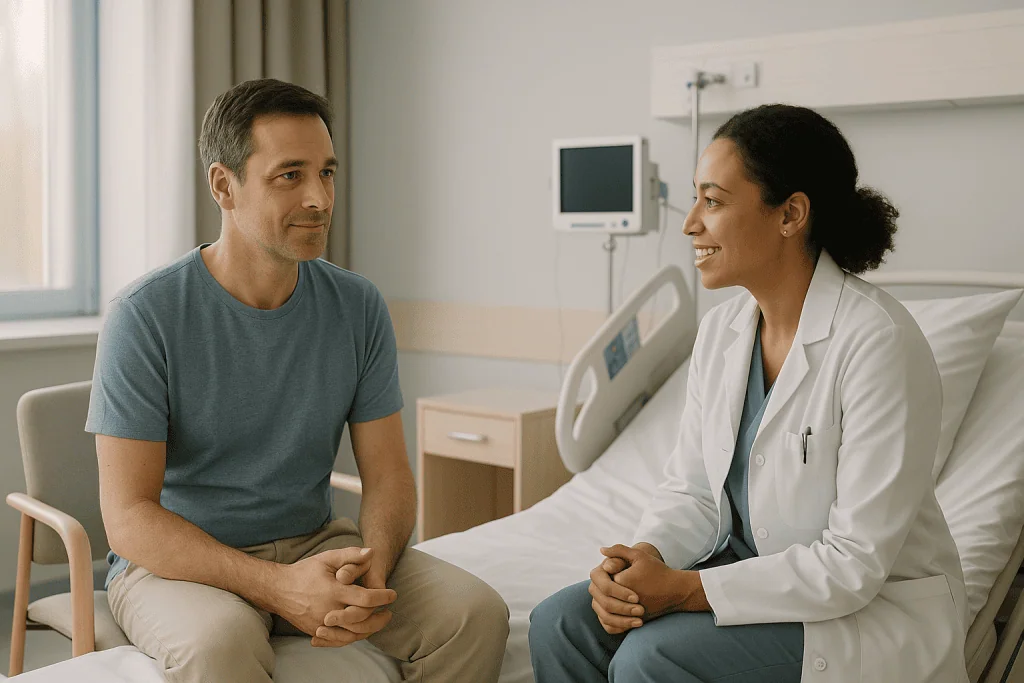
You can request same-gender staff for personal care in Turkish hospitals. Make the request in writing before you travel, repeat it at admission, and ask for it to be noted in your file. Hospitals can usually coordinate this for bathing, dressing, toileting and intimate examinations. In urgent or highly specialised care, the available qualified clinician may not match your preference, so privacy measures are used instead.
Worried about who will help you wash, dress or use the bathroom during a hospital stay abroad? If you would rather that care came from staff of the same gender, say so early, before you travel if you can, and again on the day you are admitted. It is a normal request, and hospitals in Turkey hear it often.
This guide explains how requesting same-gender staff for personal care in Turkey works in practice: what the request usually covers, when and how to make it, what hospitals can realistically coordinate, and the situations where clinical safety or staffing may limit what is possible. It also covers what to do if your request is overlooked, because on a busy ward that can happen, and it is usually fixable.
At a glance
- Best time to request: Before arrival, in writing, and again at admission
- Who to tell: Your international patient coordinator, the admissions team, the ward nurse and the treating team
- What it usually covers: Bathing, dressing, toileting, catheter care, wound checks, intimate examinations, preparation for imaging or procedures
- Availability: Often possible for routine personal care; harder in urgent, overnight or highly specialised situations
- Helpful support: Interpreter, a written note in your file, a short card in English and your own language, companion involvement with your consent
Why same-gender personal care matters
Personal care in hospital is intimate by nature. It can involve undressing, washing, using a bedpan or commode, having a catheter checked, or being examined in ways that expose your body. Many international patients ask about requesting same-gender staff for personal care in Turkey for religious, cultural, personal or trauma-related reasons, or simply because it is what they are used to at home. None of these reasons needs defending. Your comfort and dignity are enough justification to ask.
Turkish hospitals treat patients from many countries and backgrounds, and privacy-sensitive care is familiar territory for ward teams. At Acibadem, international patient coordinators can pass your preference to the nursing team and relevant departments before your admission whenever possible, which reduces awkwardness on the day itself. If modesty is part of a wider set of needs, prayer times, dietary rules, gown coverage, it helps to plan these together; the guide on planning for prayer, modesty and cultural needs during care in Turkey covers that broader picture.
The single most useful thing you can do is be clear and early. A sentence such as, “I prefer female staff for personal care and examinations whenever possible,” gives the team something practical to work with. You do not need to explain why unless you want to. Hospitals do not ask you to justify a modesty preference; they ask what it covers so they can plan around it.
What same-gender staff can usually mean in practice

Same-gender requests most often apply to moments when your body may be exposed. That typically includes help with washing, dressing, changing hospital gowns, toileting, catheter or stoma care, intimate examinations, shaving or skin preparation before a procedure, and assistance in the hours after anaesthesia, when you may feel groggy and vulnerable. It can also extend to bedside nursing checks, wound dressing changes, physiotherapy that involves close physical contact, and preparation for imaging such as ultrasound or MRI where gowns are worn.
Not every part of a hospital works the same way. Routine ward care is usually the easiest place to match your preference, because nursing teams there include several people per shift and tasks can often be swapped between colleagues. An urgent scan, an emergency intervention, or a consultation with a subspecialist is harder, because at that moment there may be only one qualified person available. Understanding this difference helps you set priorities rather than making one blanket demand that is difficult to honour everywhere.
A practical way to structure your request is in three tiers:
| Priority | Typical situations | What to tell the team |
|---|---|---|
| Essential | Bathing, toileting, catheter care, intimate examinations, gown changes | “Please arrange same-gender staff for these, or tell me before care begins if that is not possible.” |
| Preferred | Wound checks, physiotherapy, imaging preparation, post-anaesthesia assistance | “Same-gender staff if available; otherwise please use draping and explain each step.” |
| Flexible | Blood pressure checks, blood draws, medication rounds, meal assistance | “Any staff member is fine.” |
Sorting your needs this way does two things. It shows the team exactly where your dignity is at stake, and it gives them room to keep your medical care safe and on schedule everywhere else.
What is realistic in Turkish hospitals
Nursing and support teams in Turkish hospitals include both women and men, and the mix varies by department, hospital and shift. In practice, requests for female staff for personal care are often straightforward on general wards. Requests for male staff can take more coordination in some departments, simply because of who is rostered that day. Night shifts run with fewer staff than day shifts, so a preference that is easy to honour at 11 in the morning may involve a short wait at 3 in the morning.
Physicians are a separate matter from nursing and personal care. You can express a preference about the gender of an examining doctor, and for planned, non-urgent appointments it can sometimes be accommodated by scheduling. But specialist availability is narrower than nursing availability, and for a specific procedure or consultation the appropriate clinician may simply be who they are. Where a doctor of your preferred gender is not available, a chaperone, often a nurse of your gender who stays in the room during the examination, is a common and reasonable alternative to ask about.
It is also worth knowing that your preference does not end at discharge. If you will need help with washing or dressing changes during recovery, think about who will provide that at your hotel or at home. The guides on preparing a caregiver for your recovery and managing wound care and dressings after discharge in Turkey can help you plan that stage, and a small kit of your own supplies, covered in the guide to toiletries and personal care supplies to buy in Turkeymakes self-care easier where you prefer to manage alone.
When to share your request with the hospital

The best time is before you travel, while your treatment plan is being arranged. Put the request in writing to your international patient coordinator so it can be noted and shared with the relevant teams. Written communication matters here: admission days are busy, and a preference mentioned once in passing is easier to lose than one recorded in your file.
Then repeat it at key moments. Say it again at admission, when you arrive on the ward, before changing into a gown for tests, and before any examination that involves exposure. This is not being difficult. Hospital staff work in shifts, and the nurse who recorded your preference on Tuesday morning may not be the one helping you bathe on Wednesday night. Asking for the preference to be mentioned at shift handover is a specific, actionable request that ward teams understand.
If you travel with a companion, you can ask them to help remind staff, but only if you are comfortable with that. Some patients prefer to keep the matter entirely between themselves and the care team, communicating through an interpreter or coordinator instead. Both approaches work. What matters is that the information reaches the people doing the hands-on care, whichever route it takes.
Requesting same-gender staff for personal care in Turkey works best as a standing note in your record plus polite in-person reminders, rather than a one-time conversation.
How to phrase the request clearly and respectfully
You do not need medical vocabulary. Direct, polite language works best, and specifying the situations that matter most works better than a general statement. If English is not your first language, ask for an interpreter before discussing anything sensitive, so nothing is lost or softened in translation.
Phrases that ward teams can act on immediately:
- “For personal care, I prefer staff of the same gender whenever possible.”
- “I would like female staff for bathing, dressing and intimate examinations.”
- “If same-gender staff are not available, please tell me before care begins.”
- “Is this urgent, or can it wait until same-gender staff are available?”
- “I would like my companion present for certain examinations, if hospital policy allows.”
- “Please make sure this preference is mentioned at shift handover.”
Carrying a short written card helps enormously, one or two sentences in English and in your own language, stating your preference and your essential situations. You can show it to any staff member without having to find the words in a stressful moment.
If the request is connected to religious observance, a trauma history, anxiety or modesty, share only what you are comfortable sharing. A one-line explanation can help staff understand the weight of the request, but you are never required to give personal history. The goal is practical coordination, not justification.
Understanding limits: urgent care, safety and staffing
Here is the honest part. Hospitals try hard to respect this preference, but it cannot be promised in every situation. In emergency response, anaesthesia, intensive care, complex procedures and highly specialised consultations, the qualified person available at that moment may not be the gender you prefer. In those moments, safe and timely treatment has to come first: a principle that protects you as much as it constrains you.
Even then, the team is not without options. When same-gender staff are not available, common privacy-protecting measures include:
- Using curtains, closed doors and careful draping so only the necessary area is exposed
- Limiting the number of people in the room to those who are needed
- Explaining each step before it happens and pausing where possible
- Offering a chaperone of your gender to stay in the room
- Delaying non-urgent personal care until a suitable staff member is on shift
The most useful question you can ask is: “Is this urgent, or can we wait for same-gender staff?” It tells you whether there is genuine flexibility. If waiting is medically safe, the ward team can often adjust timing. If it is not, they should explain why care needs to proceed now and what they will do to protect your privacy while it does. If you are preparing for major surgery, it is also sensible to raise the question for the intensive care setting in advance: the guide on questions to ask about ICU care before major surgery in Turkey covers what to discuss, since ICU staffing runs on clinical need above all else.
Privacy, consent and communication during your stay
Your dignity does not depend only on who provides care; it also depends on how care is provided. Reasonable things to ask for at any time include staff knocking before entering, doors or curtains closed during care, appropriate covering with an extra gown or blanket, and an introduction to anyone entering the room. You can also ask whether students or observers are necessary during an examination, and you can decline their presence for non-urgent care.
Consent and communication matter most when there is a language barrier. Acibadem arranges interpreter support for international patients so that you understand what is being done and why before it happens. If you are unsure about something, it is acceptable to pause and ask for clarification before non-urgent care continues. “Please wait for my interpreter” is a complete sentence, and staff will recognise it.
If something feels uncomfortable, say so in the moment. “I need more privacy,” “Please close the curtain,” or “I would like a same-gender staff member if available” are all easier to act on immediately than to fix after the fact. Most privacy problems in hospital are small, momentary and quickly corrected once named.
If your preference is not met
Sometimes a recorded request gets missed. Shift changes, transfers between departments and urgent schedules are the usual reasons, not indifference. When it happens, raise it calmly with the nurse in charge, your international patient coordinator or the hospital’s patient relations team, and be specific about what you need going forward.
A useful formulation: “I previously requested female staff for personal care. Please make sure this is visible in my file and mentioned at shift handover.” That gives the team a concrete action rather than a general complaint, and handover is exactly the mechanism that keeps the preference alive across shifts.
If you felt distressed or your privacy was genuinely not respected, you can ask for a formal review through the hospital’s patient relations process. International patient services can explain who handles this and support communication in your preferred language where possible. Feedback given during your stay is more useful than feedback given after it: it can change how the rest of your admission goes, not just how the next patient’s does.
Step by step
- Tell your coordinator before you arrive. Share your same-gender preference in writing, listing the situations that matter most: bathing, dressing, toileting, intimate examinations, imaging preparation.
- Ask for the request to be noted in your file. A note in your hospital record makes the preference visible to ward, nursing and department teams. Repeat it in person anyway, different people care for you at different times.
- Repeat the request at admission. Tell the admissions team and the ward nurse. If you need an interpreter, ask for one before discussing sensitive details.
- Set your priorities. Say where same-gender support is essential, where it is preferred, and where you are flexible. This helps the team plan safely when staffing is tight or the schedule shifts.
- Ask how the ward will handle it. Once settled, ask the nurse in charge how the request works across shifts, nights, tests and transfers. Knowing the plan reduces uncertainty.
- Use short privacy phrases during care. “Please close the curtain,” or “Can we wait for a female nurse?” Direct requests are the easiest for busy staff to act on.
- Escalate if it is overlooked. Speak with the nurse in charge, your coordinator or patient relations, and ask for the request to be included in shift handover so it is not missed again.
Your checklist
- Write your same-gender staff preference before travel or admission
- Specify whether you prefer male or female staff for personal care
- List priority situations: bathing, dressing, toileting, examinations
- Ask for the request to be added to your hospital file
- Request an interpreter for sensitive conversations if needed
- Confirm the plan with the ward nurse after admission
- Ask whether your companion can be present when appropriate
- Carry a short written note in English and your own language
- Ask for privacy measures: curtains, draping, limited room entry, a chaperone
- Raise missed requests with the nurse in charge, your coordinator or patient relations
Key takeaways
- You may request same-gender staff for personal care in Turkey, and it works best when raised in writing before admission and repeated in person.
- Routine ward care is the easiest place to match the preference; urgent, overnight and highly specialised care are the hardest.
- Sorting your needs into essential, preferred and flexible gives the team room to protect your dignity without delaying safe care.
- When same-gender staff are not available, draping, chaperones, closed curtains and fewer people in the room are reasonable alternatives to ask for.
- If the request is overlooked, name it specifically to the nurse in charge or patient relations and ask for it to travel through shift handover.
Frequently asked questions
Can I request same-gender staff in a hospital in Turkey?
Yes. You can request same-gender staff for personal care and other privacy-sensitive situations. Share the preference before admission, ask for it to be recorded in your file, and repeat it when you arrive on the ward. Hospitals accommodate where staffing, timing and medical safety allow.
Can we request same-sex hospital staff for religious reasons?
Yes, and religious observance is one of the most common reasons patients give. You do not have to explain your beliefs in any detail, stating that the request is for religious modesty is enough for the team to understand its importance. The request is handled the same way regardless of the reason behind it.
Is same-gender staffing always possible?
No. In emergency care, anaesthesia, intensive care, urgent imaging or specialist consultations, the available qualified clinician may not match your preference, and safe, timely treatment comes first. In those situations you can still ask for privacy measures such as draping, a chaperone and fewer people in the room.
Who should I tell about my preference at Acibadem?
Tell your international patient coordinator in writing before you arrive, then repeat the request to the admissions team and the ward nurse. Ask for it to be recorded in your file and mentioned at shift handovers. If the topic feels sensitive, ask for an interpreter first so nothing is misunderstood.
What if I only need same-gender staff for intimate care?
That is a practical way to frame it. Say that same-gender staff are essential for bathing, toileting, gown changes and intimate examinations, but that you are flexible for routine tasks like blood pressure checks. Prioritising makes the request much easier to honour consistently.
Can my spouse or companion stay with me during examinations?
Sometimes, depending on the setting, hospital policy, infection control rules and the type of care. Ask in advance whether your companion may be present for specific examinations or personal care moments. Where a companion cannot stay, a staff chaperone of your gender may be offered instead.
What should I do if staff enter without warning or I feel exposed?
Ask for what you need in plain language: “Please knock before entering,” “Please close the curtain,” or “I need more covering.” If it keeps happening, raise it with the nurse in charge or your coordinator. Privacy issues are easiest to fix when named early and specifically.
What if I do not speak Turkish?
Ask for interpreter support before discussing personal care preferences or giving consent. Acibadem provides language assistance for international patients throughout the hospital journey. A short written card stating your preference in English and your own language is also worth carrying, so any staff member can read it at a glance.
Add us as a Preferred Source to see more of our trusted health content across Google Search, AI Overviews and Discover.

Update history
- PublishedJune 22, 2026
- Medical review approvedSeptember 13, 2026
- Last content updateSeptember 12, 2026
More Patient Guides

When a Hospital Stay in Turkey Becomes Longer Than Planned: What to Arrange
If your hospital stay in Turkey is longer than planned, arrange medical updates, accommodation, travel changes, insurance and support for your companion.

Waiting for Test Results in Turkey: How to Use Time Between Appointments
Waiting for test results in Turkey is easier with a clear plan for appointments, rest, records, questions and support in Istanbul.

Unexpected ICU Stay in Turkey: What Patients and Families Should Expect
Unexpected ICU stay in Turkey: learn what patients and families can expect, from communication and visiting to care updates and travel support.

How to Manage Special Diets During Medical Travel in Turkey
Special diets during medical travel in Turkey are easier to manage when you share your needs early, confirm meals and carry safe…