

Treatment Package Inclusions for International Patients in Turkey

Treatment packages for international patients in Turkey usually cover the planned consultation, routine tests, the procedure, standard hospital stay, routine nursing care and a first follow-up visit, often with interpreter and transfer coordination. Flights, visas, insurance, companion accommodation and treatment for unexpected complications are commonly separate. Exact inclusions depend on your diagnosis and are only confirmed after physician review.
Before you book a flight for treatment abroad, you deserve to know exactly what your quote covers, and, just as importantly, what it does not. This guide explains treatment package inclusions for international patients in Turkey: what is typically bundled in, what usually sits outside the package, and how to read a proposal so nothing surprises you later.
It also explains how the pathway is usually organised at Acibadem International, from remote review of your records through hospital care, discharge and follow-up after you return home.
At a glance
- Guide type: Care pathway and service package guide for international patients
- Purpose: To help you understand what a treatment package usually includes and how to compare proposals accurately
- Anaesthesia: Depends on the medical treatment in your plan
- Hospital stay: Varies by treatment, same-day, overnight, or several days
- Estimated recovery: Depends on the procedure, your health and your doctor’s advice
- Return to daily life: Based on the specific treatment and your recovery progress
- Final result timeline: Varies widely by treatment and follow-up needs
- Suitable department: International Patient Services together with the relevant medical specialty
- International patient support: Typically care coordination, interpreter support, transfer planning and remote follow-up guidance
What a treatment package actually covers
A treatment package is not a single medical procedure. It is the combination of medical services and practical support arranged around your diagnosis, treatment, hospital stay and follow-up. When people search for treatment package inclusions for international patients in Turkey, they are usually asking a simpler question: which parts of my care are inside the quote, and which parts will I arrange or pay for separately?
A typical package covers consultations, planned tests, the procedure itself, operating or treatment room use, standard ward accommodation, routine nursing care and discharge planning. For patients travelling from abroad, it often adds multilingual support, coordination of airport–hotel–hospital transfers and remote follow-up guidance after you fly home.
At Acibadem International, packages are built around medical need first. The exact contents depend on the specialty involved, whether your treatment is surgical or non-surgical, whether you need admission, and what the treating doctor recommends after reviewing your records. Two packages with the same name can differ, because two patients rarely have identical clinical needs.
When is it recommended?
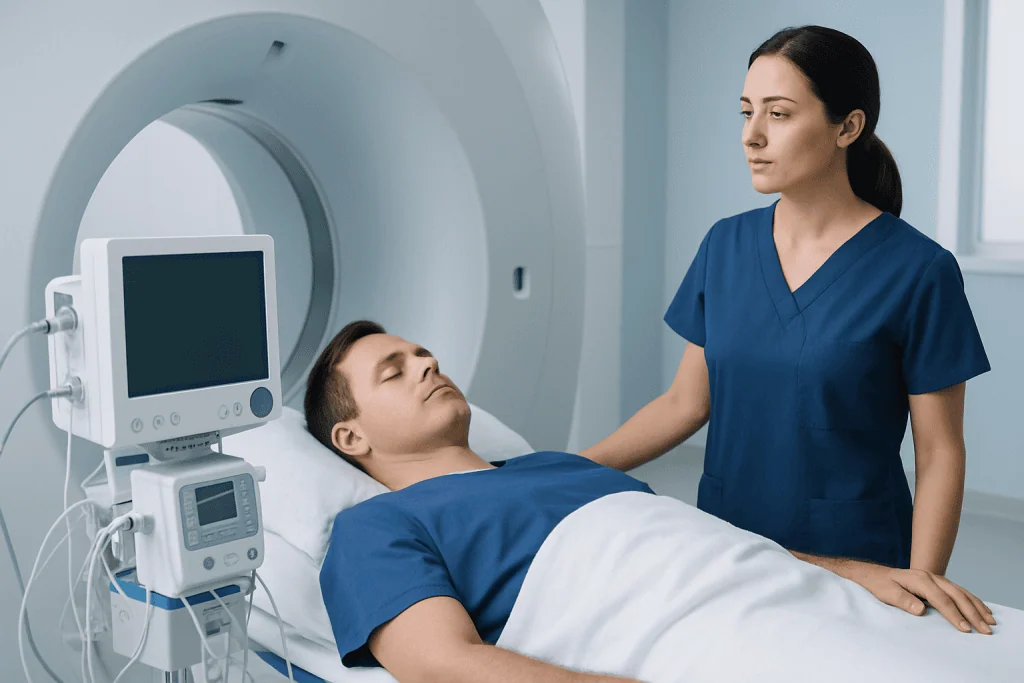
A structured package makes most sense when you are travelling from another country and want an organised plan before you arrive. It sets out the likely care pathway, the services involved and the logistics around your stay, so you are not assembling appointments, interpreters and transfers on your own.
It is especially useful when treatment involves several steps, consultation, imaging, surgery or intervention, hospital stay, then post-treatment controls, or when more than one department may take part in your care, such as cases needing multidisciplinary review.
A package also suits patients who want a single point of contact for scheduling and travel coordination. Even so, the medical plan inside any package should stay flexible enough to adapt to your in-person examination and test results. A rigid package that cannot change is a warning sign, not a strength.
Who is a good candidate?

A package-based pathway tends to work well if you have a confirmed diagnosis or a probable treatment recommendation, and you want one coordinated route from first review through follow-up. It also suits patients who want help with documentation, appointment organisation and practical travel planning alongside the medical care itself.
If you are comparing hospitals, a clearly itemised package makes it easier to see what is being proposed and where later costs or steps could arise. A useful companion read is our guide to questions to ask before booking a treatment package in Turkey.
A fixed package is less straightforward when your diagnosis is not yet clear, when treatment is urgent, or when your condition may change quickly. In those situations, care usually starts with open-ended assessment, consultation and diagnostics first, and package details are confirmed only once the medical picture is settled. That staged approach is slower on paper, but it is honest.
Common package formats
The structure depends on the treatment under consideration. Common formats include:
- Consultation and diagnostic packagesspecialist review plus planned tests, often used when a diagnosis needs confirming before any treatment decision.
- Day-case packagesfor procedures that do not usually require overnight admission, covering the procedure, observation and a first check.
- Inpatient surgical packagesoperating room use, standard ward stay, routine post-operative care and the first control visit.
- Complex treatment pathwaysplans that may involve intensive monitoring, specialist devices or implants, rehabilitation input or multidisciplinary care, usually quoted with more assumptions spelled out.
- Follow-up packagescontrol visits, dressing changes, routine checks or remote review after discharge.
At Acibadem International, the relevant specialist team reviews your case and advises which pathway fits. The aim is not to group services for convenience, but to make the package mirror your diagnosis, expected recovery and travel situation as closely as possible before you commit to dates.
What is usually included
Wording varies between hospitals, but treatment package inclusions for international patients in Turkey commonly cover:
- Specialist consultation with the treating doctor
- Standard pre-treatment tests defined in the plan
- The planned procedure or operation, including operating or treatment room use
- Anaesthesia and the anaesthesia team’s assessment, where the treatment requires it
- Routine medications used during admission
- Standard ward accommodation and routine nursing care
- The first post-treatment control visit
- Interpreter assistance and international patient coordination, depending on the programme
- Transfer coordination between airport, hotel and hospital, where offered
Notice the word standard appearing throughout. It matters. A standard ward stay of a stated length is not the same as an open-ended stay; routine medications during admission are not the same as every medication you might ever need. Ask for the assumed number of nights, the tests the quote assumes, and which room category applies. If a proposal cannot state its assumptions, you cannot compare it with anything else.
What usually sits outside the package
Unless a proposal states otherwise in writing, the following are commonly excluded:
- Treatment of unexpected complications, including intensive care if it becomes necessary
- Additional specialist consultations beyond the planned pathway
- Extra imaging, laboratory or pathology work prompted by new findings
- Admission that runs longer than the assumed stay
- Flights, visa costs and airport expenses
- Travel insurance and medical complications cover
- Companion accommodation, whether in hospital or in a hotel
- Hotel nights before admission and after discharge
- Personal spending, food outside the hospital and local transport you arrange yourself
None of this makes a package dishonest: it simply reflects that no hospital can price the unexpected in advance. What matters is that exclusions are written down before you book. Our guides on hidden costs patients often miss and travel insurance for treatment in Turkey cover the items that most often catch patients out.
Online evaluation before travel
Before travel, your case is usually reviewed remotely using the information you provide: medical history, current symptoms, previous reports, a medication list, and imaging or laboratory results where relevant. Some specialties also request photographs or videos.
This review helps the medical team judge whether treatment in Turkey is appropriate, which further tests may be needed on arrival, and what kind of package can honestly be proposed. It also lets the international patient team estimate how long you may need to stay in Istanbul or another treatment city.
Understand its limits, though. A remote review is preliminary. Your final diagnosis, treatment recommendation, package contents and clearance to proceed depend on the in-person consultation and any tests performed after arrival. A proposal built on incomplete records is an estimate, not a commitment, and a responsible hospital will say so.
Before the treatment
Before anything is finalised, you should hold a written outline of the planned services: expected consultations, tests, the procedure or operation, the assumed hospital stay, routine nursing care and the anticipated first follow-up. Ask equally for a written note of what becomes additional if your medical needs change.
Prepare the practical side too: passport validity, visa requirements where applicable, insurance paperwork, and travel dates that leave room for recovery and review before flying home. If you have ongoing health conditions, bring reports from your regular doctor and a complete medication list, including supplements.
If your plan involves anaesthesia or surgery, the treating team may set fasting instructions and ask you to complete pre-operative tests on arrival. Any decision about your regular medications before treatment belongs to your treating doctor, follow the team’s specific instructions rather than general advice.
During treatment and your hospital stay
The day itself depends entirely on the treatment in your plan. In general, the pathway begins with registration, interpreter support if needed, nursing checks, confirmation of consent and a final review with the treating specialist. If anaesthesia is involved, you meet the anaesthesia team beforehand.
During treatment, the medical team carries out the planned intervention and monitors you closely. Where the package includes inpatient care, your room, standard nursing services, medications used during admission and routine post-treatment observations usually fall within package scope, subject to the written terms.
Sometimes the plan changes after direct examination or new findings: an extra imaging study, a pathology review, longer monitoring or input from another specialist. This is why package contents should be read as medically guided rather than fixed in every circumstance. Your stay may range from a few hours of day-case observation to several days on a ward; if a longer or higher-acuity stay becomes medically necessary, the final scope can change with it.
Discharge and fitness to fly
Before discharge, the team usually checks that you are medically stable, understand your medications, and know how to look after yourself once you leave. You should receive information about wound care or activity limits where relevant, your control appointment schedule, and an indication of when you are likely to be fit to travel.
Discharge planning matters more for international patients than for anyone else, because your hotel and your flight sit between the hospital and home. At Acibadem International, the support team helps coordinate the next steps: transfer arrangements, communication support, and instructions covering the hotel period before your return flight. Ask for your discharge summary and key reports in English so care can continue smoothly at home.
Recovery timeline
Recovery depends on the treatment, your general health, and whether you had anaesthesia, admission or a more complex intervention. For international patients it also includes the days you should remain in Turkey for checks before travel clearance.
The framework below is general orientation, not a schedule you are entitled to. Your own recovery may run shorter or longer, and your doctor’s instructions govern activity, travel and follow-up.
| Timeframe | What to expect |
|---|---|
| First 24 hours | Observation, rest, early symptom control and initial medical monitoring if needed. |
| First week | Control visits, adjustment of care instructions, and gradual return to basic activities depending on the treatment. |
| Weeks 2–4 | Steadier recovery for many patients, with improving comfort and mobility, though restrictions may still apply. |
| Months 1–3 | Ongoing healing, review of early progress, and further recovery milestones depending on the procedure. |
| Longer term | Final results can take weeks to months, and sometimes longer, depending on the treatment and how your body heals. |
Your safest return date rests on doctor clearance, not on how you feel on a given morning. This matters most after surgery, anaesthesia or any treatment where complications can appear late.
What to avoid after treatment
Avoid assuming that any package includes unlimited follow-up, extra nights, or treatment for unrelated health problems: those assumptions cause most post-treatment disputes. Read the written terms before you rely on them.
Depending on the procedure, your doctor may advise against strenuous activity, swimming, smoking, alcohol, heavy lifting, long periods of sitting or early flying. Decisions about prescribed medications stay with your treating doctor; do not adjust them on your own judgement.
Practically, avoid booking a rigid, very early return flight. Patients tend to recover more comfortably when the schedule leaves room for one or more controls, possible dressing changes and final travel clearance. A flexible ticket often costs less in stress than it saves in fare.
Risks, complications and package scope
Every medical treatment carries some degree of risk, and no package removes that reality. The nature of the risk depends on your diagnosis and procedure, but can include reactions to medication or anaesthesia, bleeding, infection, delayed healing, pain, swelling, blood clots, or the need for additional tests or treatment.
There are package-level uncertainties too. The plan may change if the in-person examination shows something different from the remote review, if new test findings appear, or if a longer stay becomes medically necessary. Each of these can affect timelines, follow-up needs and scope, which is why the written terms should state how complications are handled and what falls outside the quoted plan.
A trustworthy proposal describes both the expected pathway and the possibility of change. Physician evaluation and hospital-based monitoring guide those decisions, but your individual risks can only be assessed properly after medical review of your case.
How package costs are structured
This guide deliberately gives no figures, because honest figures do not exist without your records. What can be explained is the structure. The cost of a package reflects the medical specialty, the complexity of your condition, the type of treatment, whether surgery or anaesthesia is required, the length of hospital stay, any devices or implants, pathology and imaging needs, and the level of follow-up. Two quotes that look similar on paper can differ because the clinical assumptions behind them differ.
The same logic applies to check-up programmes. A full body check-up is priced by its scope, which laboratory panels, imaging studies and specialist reviews it contains, so programmes with the same name can contain quite different contents. Ask for the itemised list before comparing.
A complete quotation states its inclusions, exclusions, assumptions and the situations that could change the final amount. If any of those four elements is missing, ask for it in writing. Our guide to comparing surgery packages beyond the headline price walks through this line by line.
Travel planning for international patients
Start travel planning only after a preliminary medical review suggests treatment in Turkey is appropriate. Allow time not just for the treatment itself, but for arrival, the in-person consultation, pre-treatment tests, recovery and one or more controls before the return flight.
Most international patients value support with airport transfers, interpreter arrangements, hospital navigation and accommodation guidance, particularly when the local language and health system are unfamiliar. Acibadem International’s patient services are designed around exactly these steps.
If you are travelling with a companion, check in advance whether they can stay with you in hospital or whether a nearby hotel works better: our guide to booking a companion room in Turkey explains what to check. It is also sensible to discuss fitness to fly, special assistance at the airport, and English-language medical records for continuing care at home.
How Acibadem organises international care
When you travel for treatment, medical quality and practical coordination need to work together. Acibadem International supports patients through specialist teams and a structured international patient service that organises communication before, during and after the stay, interpreter support, transfer coordination and appointment planning included.
This coordination matters most when a pathway includes several appointments, pre-operative tests, hospital admission and follow-up before the journey home. Just as importantly, care is individualised rather than reduced to a one-size-fits-all bundle: the proposed plan is guided by physician review, and if your needs change after arrival, the pathway is adjusted around clinical priorities and safe recovery, not around the original paperwork.
Medical review and disclaimer
This guide has been medically reviewed by the Acibadem International medical team. It is intended to help you understand how treatment package inclusions for international patients in Turkey are commonly organised and which questions are worth asking before travelling.
The information here is general. It does not replace a personal consultation, diagnosis or treatment recommendation from a qualified physician. Pathways, package contents, recovery needs and travel clearance vary between patients, and your suitability for treatment, the exact package scope and the final medical plan can only be confirmed after physician evaluation and, where necessary, in-person examination and tests.
Step by step
- Initial enquiry. The pathway usually begins when a patient shares the treatment or health concern they would like reviewed.
- Record submission. Medical reports, a medication list, relevant imaging or test results, and photos, where the specialty requires visual assessment, are gathered for review.
- Preliminary medical review. The relevant specialist team assesses whether treatment in Turkey may be suitable.
- Treatment plan and quotation. A preliminary plan sets out the expected pathway, likely package inclusions, estimated stay and quotation assumptions.
- Travel planning. Travel dates are arranged around consultation, treatment and recovery, with transfer and accommodation guidance where needed.
- Arrival. Transfers and hospital access are coordinated to the agreed schedule.
- In-person consultation. The treating doctor examines you, discusses expectations and confirms the safest approach.
- Pre-operative tests. Blood tests, imaging, anaesthesia assessment or other evaluations are completed if needed.
- Treatment. The planned procedure, surgery or medical treatment is carried out according to the confirmed care plan.
- Hospital stay. Monitoring continues for the appropriate period, whether same-day observation or inpatient recovery.
- First control. The doctor reviews early recovery, explains next steps and checks progress against expectations.
- Discharge and travel clearance. Discharge instructions, documents and any prescribed medications are provided, along with advice on when flying home is safe.
- Remote follow-up. After the return home, progress updates and reports can be shared with the treating department as advised.
Your checklist
- Valid passport and travel details
- Brief medical history and current diagnosis if known
- List of current medications and supplements
- Known allergies or previous reactions to medication or anaesthesia
- Details of previous surgeries or hospitalisations
- Description of your current symptoms and how long you have had them
- Relevant blood test results, imaging, pathology or medical reports
- Photos or videos if requested for your specialty
- Insurance information if applicable
- Contact details for your regular doctor at home if relevant
Key takeaways
- A treatment package combines medical services with coordination for your trip and stay.
- Inclusions vary by diagnosis, specialist recommendation, hospital stay and follow-up needs.
- Always obtain a written list of inclusions, exclusions, assumptions and conditions before booking travel.
- Complications, extra tests and longer stays are commonly outside the quoted scope unless stated.
- Length of stay in Turkey depends on treatment, recovery and medical clearance to fly.
- No package can be finalised safely without physician evaluation, and plans may change after in-person review.
Frequently asked questions
Is there an all-inclusive medical tourism package for Turkey?
Some hospitals and agencies market packages as all-inclusive, but the term has no fixed meaning. In practice, most packages bundle the planned medical services with coordination support, while flights, visas, insurance, companion costs and treatment for unexpected complications remain separate. The only reliable definition of “all-inclusive” is the written list of inclusions and exclusions attached to your own quote.
What medical treatments are available in Turkey?
Turkey’s larger hospital groups treat patients across a wide range of specialties, including orthopaedics, cardiology and cardiovascular surgery, oncology, neurosurgery, ophthalmology, general surgery, obesity and metabolic surgery, fertility treatment, dentistry and aesthetic procedures. Whether a particular treatment suits your case depends on specialist review of your records rather than on a general list.
How much does medical treatment cost in Turkey?
There is no single answer, because cost depends on the specialty, the complexity of your condition, whether surgery or anaesthesia is needed, the length of hospital stay, any implants or devices, and the follow-up required. Reliable quotes are produced only after medical review of your records, and a complete quote states its inclusions, exclusions and assumptions in writing.
How much does a full body check-up cost in Turkey?
Check-up programmes are priced by scope: which laboratory panels, imaging studies and specialist consultations they contain. Programmes with the same name can differ considerably between providers, so ask for the itemised contents of the specific programme before comparing. Age, sex and medical history also affect which programme is recommended.
Are flights and hotel costs included in a treatment package?
Not usually. Transfer coordination and accommodation guidance may be part of the support programme, but flights, visas, travel insurance, hotel nights and personal expenses are commonly separate unless the written proposal clearly states otherwise. Confirm this in writing before booking travel.
Can my package change after I arrive in Turkey?
Yes. The remote review is preliminary, and the final plan may change after in-person examination or new test findings. If your medical needs turn out different from what was expected, the treatment scope, timeline or hospital stay can change too, which is why quotes list their assumptions.
How long should I plan to stay in Turkey?
It depends on the treatment, the tests required, whether you need admission, and how you recover. Some patients stay only a few days; others need a longer period for monitoring and control visits. The safest return date is set by doctor clearance rather than by the original itinerary, so keep some flexibility in your booking.
How do I know whether a quotation is complete?
A complete quotation covers four things: what is included, what is excluded, what assumptions it rests on (nights in hospital, tests, room category), and which situations could change the final amount. Check whether tests, anaesthesia, hospital stay, routine medications during admission, the first control visit, and interpreter or transfer services appear explicitly. Anything not written down should be treated as not included.
Add us as a Preferred Source to see more of our trusted health content across Google Search, AI Overviews and Discover.

Update history
- PublishedJune 22, 2026
- Medical review approvedSeptember 13, 2026
- Last content updateSeptember 12, 2026
References1
More Patient Guides

HoLEP in Turkey: How It Compares With TURP and What Recovery Involves
HoLEP in Turkey treats enlarged prostate tissue with laser enucleation; learn how it compares with TURP, recovery, travel and follow-up.

Porcelain Veneers in Turkey: Who Is Suitable and How Many Visits Are Needed?
Porcelain veneers in Turkey can enhance tooth shape and colour in two visits for suitable patients after a personalised dental assessment.

How to Prepare for a Sedation Procedure in Turkey
Prepare safely for a sedation procedure in Turkey with guidance on fasting, medicines, travel, recovery and follow-up.

Treatment Delays in Turkey: What Happens If Tests or Recovery Change Your Schedule
Treatment delays in Turkey can happen if tests or recovery change your plan. Learn how to manage appointments, travel, accommodation and follow-up.