

What to Bring for a Hospital Stay in Turkey: International Patient Packing List

Pack around six categories: travel documents, medical records, regular medications in original packaging, essential devices and chargers, loose comfortable clothing, and a few small comfort items. Keep documents and medicines in hand luggage, leave valuables at home, and pack a small hospital bag separate from your main suitcase so admission and discharge stay simple.
Standing over an open suitcase, wondering how much you really need for a hospital stay in another country? Most international patients pack too much of the wrong things and forget one or two items that genuinely matter.
This guide explains what to bring for a hospital stay in Turkey, what can safely stay at home, and how to organise your bag so that admission day, the ward, and discharge all run more smoothly. It covers the hospital itself and the days you may spend in a hotel or apartment before and after treatment.
At a glance
- Best for: International patients preparing for planned treatment or surgery in Turkey
- Main goal: Pack documents, medicines, devices and comfort items without overpacking
- Most important items: Passport, medical records, regular medications, chargers and adapter, loose front-opening clothing
- Keep in hand luggage: Documents, medicines, medical devices, phone and charger
- Leave at home: Jewellery, large sums of cash, sentimental valuables, bulky extras
Start with the essentials, not the suitcase size
If you are deciding what to bring for a hospital stay in Turkey, the most useful approach is to pack for two settings at once: your time on the ward and your time outside it. A hospital stay usually needs far fewer items than people expect. What matters is access, not quantity. Can you quickly reach your passport, your admission paperwork, your medications, your phone charger and a change of comfortable clothes? If so, you are already packing well.
Work in six categories rather than one big pile: travel documents, medical information, daily medications, electronics, hygiene items, and recovery comfort items. Sorting your bag this way makes arrival, admission and discharge much easier, because you always know which pouch or folder holds what. It also makes it obvious when something is missing, which is far better discovered at home than at the check-in desk.
One rule sits above everything else on any packing list you bring for a hospital stay in Turkey: anything essential for your identity, your treatment, your daily medication or your ability to communicate belongs in your hand luggage. Checked bags can be delayed. Your passport, records and medicines should never depend on a baggage carousel.
Documents and medical information you should keep with you

Documents are the part of your luggage that would be hardest to replace mid-trip, so they come first. At minimum, carry your passport, a visa if your nationality needs one, your hospital appointment or admission confirmation, insurance paperwork if relevant, and the contact details your hospital or patient coordinator has shared with you. Keep printed copies in one folder and digital copies on your phone or in your email. Neither format replaces the other: phones run out of battery, and paper folders get left in taxis.
Medical records matter just as much as travel documents. Bring recent test results, imaging reports, discharge summaries from previous hospital stays, referral letters, and a current medication list. If your records are in another language, ask in advance whether translated copies would help; in many cases a hospital can work with originals, but a short English summary speeds things up. There is a dedicated guide to the documents international patients should bring for admission in Turkey if you want the full list with explanations.
If you have allergies, implants or chronic conditions, or you take regular medicines such as blood thinners or insulin, write this down clearly on a single page. A one-page health summary, conditions, medicines with doses, allergies, past surgeries, is one of the most useful items you can carry. It takes twenty minutes to prepare at home and saves repeated explanations during admission, especially when you are tired from travel.
- Passport and travel documents
- Hospital booking or admission confirmation
- Insurance or payment paperwork if relevant
- Medical reports, scans and lab results
- One-page list of medications, allergies and past surgeries
- Emergency contact details, saved offline as well as on paper
Medicines, devices and health-related items to pack carefully
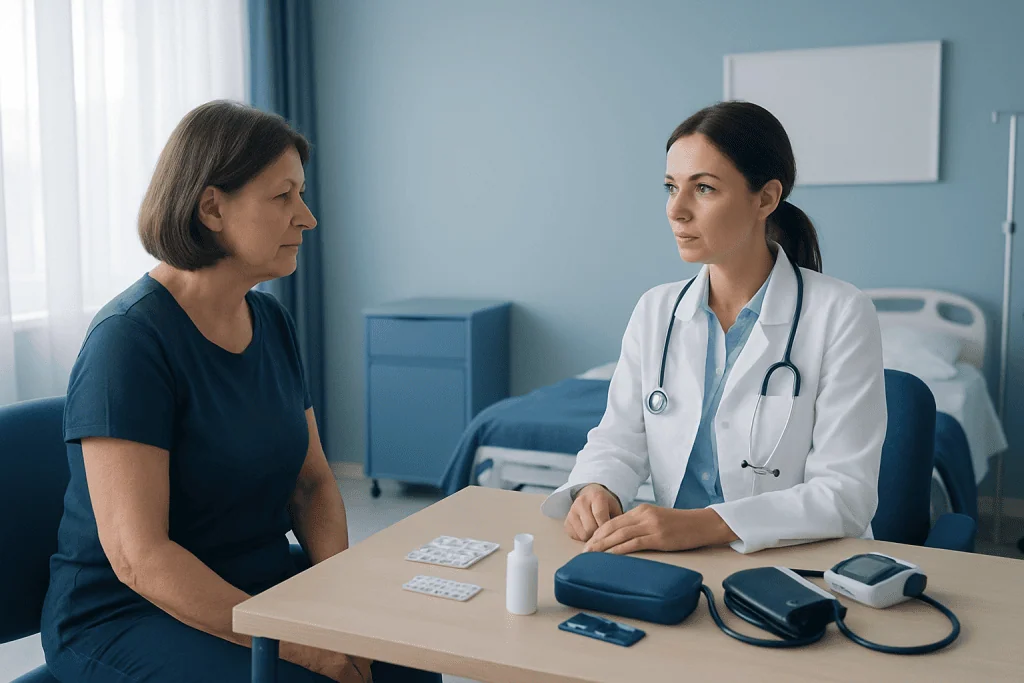
Bring enough of your regular medications to cover your planned travel days plus a small buffer for delays, unless your treating doctor has told you otherwise. Keep medicines in their original packaging so they are easy to identify at the airport and during admission, and carry a copy of your prescription or a doctor’s note where possible. This matters most for injectable medicines, controlled drugs and anything temperature-sensitive. If you have not yet written down what you take, the guide on preparing a medication list for treatment in Turkey walks through the format hospitals find easiest to use.
Decisions about starting, stopping or pausing any medicine around your treatment belong to your treating doctor. Your job as a patient is simpler: bring the medicines, bring the list, and make sure the clinical team knows exactly what you take and at what dose.
Devices deserve the same care as medicines. If you wear glasses, contact lenses, hearing aids or dentures, pack them with their cases and label the cases with your name. Do not assume you can manage without them, even for a short stay: a ward is a much harder place to be without your hearing aids than your living room. If you use a CPAP machine for sleep apnoea, plan for it specifically: the CPAP travel checklist for hospital patients covers power, adapters and what to tell the ward team.
Turkey uses 230-volt power with type C and F plugs, the two-round-pin standard common across continental Europe. Travellers from the UK, Ireland, North America and much of Asia will need an adapter for every device they bring. Pack at least one spare; adapters are the item most often lost between airport, hotel and hospital.
Clothing and comfort items that earn their place
Choose clothing that is loose, soft and easy to put on and take off. Front-opening tops, elastic waistbands, slip-on shoes and warm layers are consistently more useful than structured outfits. Hospital interiors can feel cool even in a Turkish summer, so a light cardigan, shawl or zip-up hoodie is worth its space regardless of the season outside.
Pack for comfort, not appearance. For a short stay, two or three easy outfits are usually enough: underwear, socks, sleepwear if you prefer your own to a hospital gown, and one simple outfit for discharge and the transfer back to your accommodation. If your treatment may affect mobility or leave a dressing or drain in place, avoid anything tight, anything with complicated fastenings, and anything you must pull over your head or bend down to put on. Patients preparing for an operation will find more detail in the guide on how to pack for surgery in Turkey, which covers surgery-specific clothing choices.
Small comfort items do more for morale than most people expect. Lip balm, moisturiser, tissues, a small hairbrush, earplugs and an eye mask cost almost nothing in weight and make ward nights noticeably easier. Something familiar, a scarf, a lightweight blanket for the hotel, helps some patients settle. You do not need full-size toiletries; Turkish hospitals provide the basics of a stay, and travel sizes cover the rest.
- Loose daywear and sleepwear, ideally front-opening
- Non-slip slippers or slip-on shoes
- A warm layer for cool indoor temperatures
- Travel-size toiletries and personal hygiene items
- Glasses case, denture case or hearing aid supplies if needed
- Earplugs and an eye mask for ward nights
Electronics, money, and what to leave at home
Your phone will be one of your most important tools during treatment travel: translation, maps, messages home, boarding passes and digital copies of your records all live on it. Bring the phone, its charger, a power bank if you use one, and the correct plug adapter. A charging cable long enough to reach a bed from a wall socket is a small luxury that hospital patients everywhere appreciate. Save key contacts offline: hospital, hotel, transfer provider, companion, and your embassy or consulate if you want that reassurance.
Bring only the money you genuinely need. A bank card and a modest amount of Turkish lira for small purchases usually cover everything; cards are widely accepted in Turkish cities. Leave jewellery, luxury accessories and sentimental valuables at home. A hospital ward is a place to focus on treatment, not to guard belongings, and travelling light reduces both risk and mental load.
Be cautious about packing food, supplements or wellness products without checking first. Some items are not appropriate around certain treatments, and your treating team is the right source for that answer, not the label on the bottle. Large bags full of extras also become a physical burden at exactly the moments you are least able to manage them: airport arrivals, hotel check-ins and hospital corridors.
Pack for the whole journey: hospital, hotel and discharge day
The hospital stay is only one part of the trip. Many international patients spend nights in a hotel or serviced apartment before admission and again after discharge, and that period has its own needs: extra comfortable clothing, a refillable water bottle, simple entertainment, and perhaps a small pillow or neck support for car transfers.
Discharge day is the most commonly forgotten part of any packing plan. Prepare one outfit that feels gentle and easy to wear, particularly if sitting during a transfer may be uncomfortable. Before you leave the ward, gather your passport, medication list, discharge documents and charger into one bag so nothing requires a search through a suitcase while you are tired.
If someone is travelling with you, divide responsibilities in advance: one person carries the document folder and electronics, the other manages clothing and personal items. This division matters most in the hours after treatment, when you may not be able to carry anything at all. The guide on bringing a companion to Turkey for treatment covers what a companion should plan and pack for themselves.
A calm packing mindset helps more than a perfect list
Many patients worry that forgetting a single item will derail the trip. In practice, almost everything except documents, medicines and medical devices can be bought in a Turkish city if needed. Good preparation matters more than perfection: the goal is not to bring everything you own, but to make sure the few things that cannot be replaced are organised, reachable and in your hand luggage.
Pack two to three days before departure. That buffer leaves time to charge devices, print papers, check medication quantities and add anything missing without last-minute stress. Keep a small essentials bag separate from your main suitcase, particularly if you may move between airport, hotel and hospital on the same day: a routine some patients follow, as described in the arrival day checklist from airport to hospital.
If you are unsure whether a specific device, medicine quantity or special item is needed for your particular treatment, resolve that question before you fly rather than guessing. Practical uncertainties are far easier to settle from home than after arrival, and clearing them early is what turns a suitcase from a source of anxiety into something you stop thinking about.
Step by step
- Gather your medical paperwork first. Start with what would be hardest to replace quickly: passport, appointment confirmations, medical reports, imaging, prescriptions and insurance papers if relevant. Put printed copies in one folder and keep digital backups on your phone or in email.
- Separate regular medications from checked luggage. All daily medicines, prescriptions and essential medical devices go in hand luggage, in original packaging wherever possible, so they are easy to identify during travel and admission.
- Write a one-page health summary. Conditions, medicines with doses, allergies and past surgeries on a single sheet. It answers most admission questions before they are asked.
- Pack one small hospital bag inside your main luggage. Toiletries, charger, lip balm, glasses, earplugs, headphones and one change of clothes. This spares you unpacking a suitcase on the ward.
- Choose clothing for comfort and movement. Loose layers, front-opening tops, simple underwear, socks and easy shoes. Assume you will be tired, sitting for transfers, or moving more slowly than usual.
- Prepare for time outside the hospital too. Add loungewear, entertainment and a refillable bottle for the hotel or apartment phase. Recovery continues after discharge, so pack for both settings.
- Remove valuables and unnecessary extras. Before zipping the bag, take out jewellery, bulky items and anything you do not truly need. A lighter bag makes every transfer easier.
- Confirm any special instructions before departure. If you use a medical device, take time-sensitive medication or have mobility needs, clarify what to bring with your treating team before you travel rather than after you arrive.
Your checklist
- Passport, visa if needed, and travel itinerary
- Hospital confirmation and coordinator contact details
- Printed and digital copies of medical records
- One-page health summary and enough regular medicines in original packaging
- Glasses, hearing aids, dentures or CPAP with cases and supplies
- Phone, charger, plug adapter (type C/F) and power bank
- Loose front-opening clothing, underwear, socks and slip-on shoes
- Travel-size toiletries, lip balm, earplugs and an eye mask
- Bank card, a small amount of Turkish lira, and offline emergency contacts
Key takeaways
- Prioritise documents, medications and easy-to-wear clothing over extra belongings.
- Keep all essential medical information, medicines and devices in your hand luggage.
- Pack for both the hospital stay and the recovery days at your hotel or apartment.
- Bring a bank card and a small amount of cash; leave valuables at home.
- Resolve questions about devices, medicine quantities and special needs before you fly, not after you land.
Frequently asked questions
How much should I pack for a hospital stay in Turkey?
Less than you expect. Focus on documents, medications, basic toiletries, electronics and two or three comfortable outfits rather than packing for every possibility. If the trip is longer, keep the hospital bag small and put hotel and recovery items in your main luggage.
Should I bring my medical records with me to Turkey?
Yes. Bring recent test results, imaging, medication lists and summaries of previous treatment, in both printed and digital form if possible. Organised records make admission faster and reduce repeated questions when you are tired from travel.
Can I bring my regular medications into the hospital?
Bring your regular medications with you, ideally in original packaging with prescription details, and tell the clinical team exactly what you take and at what dose. Do not change how you take any medicine on your own; decisions about what continues, pauses or changes during your stay belong to your treating doctor.
What clothes are best for a hospital stay after treatment or surgery?
Loose, soft, easy-to-change clothing: front-opening tops, elastic-waist trousers and slip-on shoes. Avoid anything tight, heavy or fiddly to fasten. The most useful discharge outfit is simple, warm enough for air-conditioned interiors, and comfortable to sit in during a transfer.
Do I need to bring towels, bedding or full-size toiletries?
Generally no. Hospitals provide bedding and the basics of a stay, so a few travel-size toiletries and personal comfort items are usually enough. Pack separately for any hotel or apartment nights before or after treatment.
Do I need a plug adapter for Turkey?
If your devices use plugs other than the two-round-pin type C or F standard, yes. Turkey runs on 230-volt power, so travellers from the UK, North America and many other regions need an adapter for every device, phone charger, CPAP machine, hearing aid charger and anything else you rely on. Pack a spare.
Is it safe to bring valuables to the hospital?
It is better not to bring them at all. Keep only essentials with you, phone, bank card, documents, and leave jewellery, large amounts of cash and sentimental items at home. A ward is not a place where you want to be responsible for guarding belongings.
What should go in my hand luggage rather than my suitcase?
Everything that cannot be replaced quickly: passport and travel documents, medical records, all regular medicines, medical devices such as glasses, hearing aids or a CPAP machine, your phone and charger, and one change of comfortable clothes in case your checked bag is delayed.
Add us as a Preferred Source to see more of our trusted health content across Google Search, AI Overviews and Discover.

Update history
- PublishedJuly 8, 2026
- Medical review approvedSeptember 13, 2026
- Last content updateSeptember 12, 2026
References2
More Patient Guides

When a Hospital Stay in Turkey Becomes Longer Than Planned: What to Arrange
If your hospital stay in Turkey is longer than planned, arrange medical updates, accommodation, travel changes, insurance and support for your companion.

Waiting for Test Results in Turkey: How to Use Time Between Appointments
Waiting for test results in Turkey is easier with a clear plan for appointments, rest, records, questions and support in Istanbul.

Unexpected ICU Stay in Turkey: What Patients and Families Should Expect
Unexpected ICU stay in Turkey: learn what patients and families can expect, from communication and visiting to care updates and travel support.

How to Manage Special Diets During Medical Travel in Turkey
Special diets during medical travel in Turkey are easier to manage when you share your needs early, confirm meals and carry safe…