

When Is Intensive Care Needed After Surgery in Turkey?

Intensive care after surgery in Turkey is needed when you require closer monitoring or short-term organ support than a standard ward can provide. This applies mainly after major operations, cardiac, brain, chest or complex abdominal surgery, or when existing health conditions make early recovery more demanding. Many ICU admissions are planned in advance, most are temporary, and the decision rests with your surgeon, anaesthetist and critical care team.
Someone has mentioned that you might wake up in intensive care after your operation, and you are not sure what that means. It is a reasonable thing to worry about, particularly when you are planning surgery far from home and every unfamiliar word carries extra weight.
Here is the short version. Intensive care after surgery is needed when you require closer monitoring or short-term organ support than a standard ward can safely provide during the early recovery period. It is a level of care, not a verdict. Many ICU admissions are planned before the operation even begins, and most are temporary. This guide explains when intensive care is used after surgery in Turkey, who decides, what the unit actually looks and feels like, and how you and your family can prepare before you travel.
At a glance
- Who may need ICU: Patients after major, lengthy or technically complex surgery, and those with significant existing health conditions
- Main reason: Continuous monitoring and rapid response in the first hours after an operation
- Planned or unplanned: Often booked in advance as part of the surgical plan; sometimes used when recovery needs more support than expected
- Usual duration: Frequently a matter of hours or one night, until you are stable enough for a regular room
- Decision maker: Your surgeon, anaesthetist and critical care team, based on your operation and your health
- Support for internationals: Interpreting, care coordination and family updates through international patient services
What the question really means: is intensive care needed after surgery in Turkey?
When patients ask whether intensive care is needed after surgery in Turkey, they are usually asking two things at once. First: does surgery abroad carry some special requirement for intensive care? It does not. The clinical triggers for ICU admission in Turkey are the same as in any well-run hospital system: the type of operation, your overall health, and how your body responds in the first hours after anaesthesia. Second: will my operation involve intensive care? That is a question only your surgical team can answer, because it depends entirely on your procedure and your medical history. What this guide can do is show you the pattern, so their answer makes sense when you hear it.
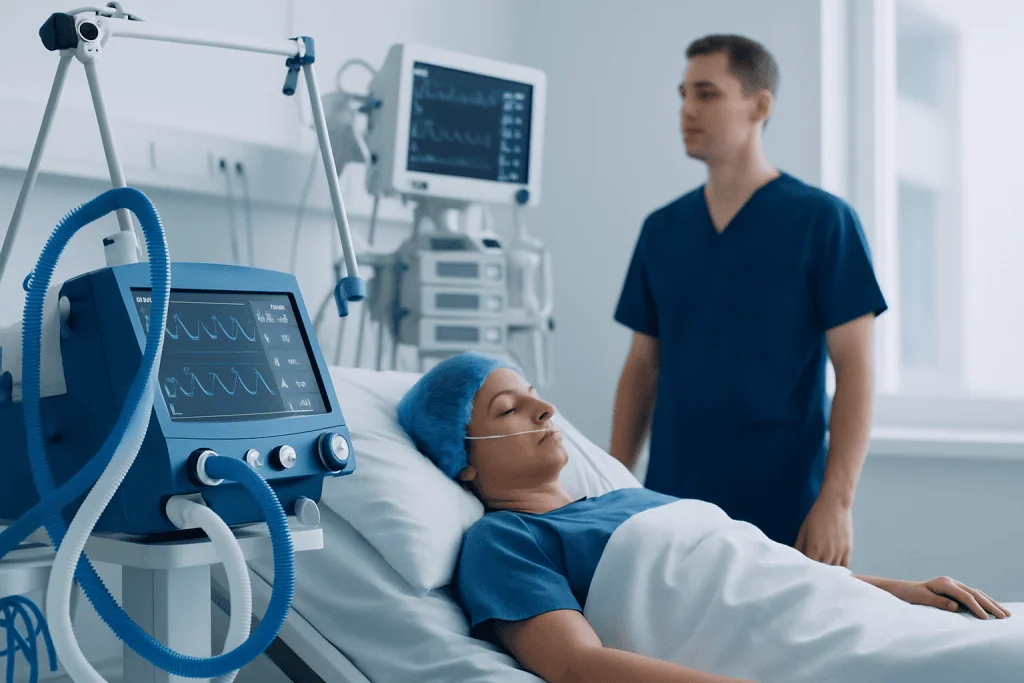
An intensive care unit is designed for one-to-one or very close nursing care, continuous monitoring, and immediate response if anything changes. Staff track your breathing, blood pressure, heart rhythm, oxygen level, urine output and pain control far more closely than a standard ward can. After a major operation, when the first phase of recovery is the most demanding, that density of attention is the whole point.
One thing worth stating plainly: ICU use in Turkey is based on clinical need, not routine preference or hospital habit. At Acibadem, the decision about postoperative intensive care is made jointly by your surgeon, your anaesthetist and the critical care team, with the single aim of placing you in the safest recovery setting for your condition. It is not a sign that anyone expects things to go badly. Often it is the opposite: a plan made precisely so that nothing is left to chance.
When ICU is commonly needed after surgery
Planned admissions: when ICU is part of the surgical plan
For some operations, an ICU bed is reserved before you ever enter the theatre. This is standard practice after many cardiovascular procedures, major chest surgery, complex brain and spine operations, transplant surgery, major vascular repairs and extensive abdominal procedures. These operations tend to involve long anaesthesia times, significant fluid shifts, expected blood loss, or a period where your breathing needs support while you wake. A planned ICU admission simply means your doctors know in advance that the first night will benefit from closer observation. If intensive care is expected to be needed after your surgery in Turkey, you should hear about it during pre-operative planning, not discover it afterwards.
Patient factors: when your health, not the operation, is the reason
Your own health picture matters as much as the procedure. Heart disease, lung disease, sleep apnoea, diabetes, kidney problems, obesity, older age, or a combination of several conditions can all make early recovery more delicate, even after an operation that would send a healthier patient straight to a regular room. A previous difficult experience with anaesthesia counts too. In these cases, ICU is a precaution shaped around you rather than around the surgery itself.
Unplanned admissions: when recovery needs more support than expected
Sometimes intensive care becomes necessary because of how the early hours unfold: unstable blood pressure, low oxygen levels, an irregular heart rhythm, bleeding that needs watching, marked confusion, pain that resists standard control, or a need for breathing support that lasts longer than anticipated. An unplanned move to ICU can sound alarming, but it usually reflects a low threshold for caution: the team escalating early, while a problem is small and manageable, rather than waiting to see whether it grows.
- Major, lengthy or technically complex operations
- Significant pre-existing medical conditions
- Expected need for breathing support after anaesthesia
- Concerns about blood pressure, heart rhythm or bleeding
- A clinical preference for very close monitoring overnight
How the decision is actually made
The decision is not made by one person at one moment. Before your operation, your surgeon and anaesthetist review your medical history, test results and the demands of the planned procedure, and decide whether ICU is likely, possible or unlikely. During surgery, the anaesthetist watches how your body handles the operation, blood loss, blood pressure, oxygenation, temperature, and this can confirm or change the plan. Immediately afterwards, in the recovery area, the team assesses how you are waking: how well you breathe on your own, how stable your circulation is, how alert you are becoming.
This is why the honest answer before major surgery is often “probably” or “possibly” rather than “yes” or “no”. The plan is a forecast, refined by what actually happens. A patient booked for ICU may recover so smoothly that the stay lasts only hours. A patient expected to go straight to the ward may be kept under closer watch for one night because a single number, an oxygen reading, a blood pressure trend, deserves more attention. Neither outcome means anything went wrong with the surgery itself.
What you can expect in the ICU in Turkey

The first thing most patients notice is equipment. Depending on your procedure, you may have monitoring leads on your chest, a blood pressure cuff or an arterial line, oxygen delivered by mask or nasal tube, one or more IV lines, a urinary catheter and surgical drains. Each item exists so the team can track your recovery hour by hour and respond within moments if something changes. It looks like a lot. It is meant to.
You may feel sleepy, thirsty, cold, uncomfortable or briefly confused as anaesthesia wears off, all common in the immediate postoperative period. Nurses check on you frequently, adjust your pain relief, manage nausea, and coach you through breathing and coughing exercises when it is safe to start them. Pain control in intensive care is active and closely titrated; if you want to understand how it works before you travel, our guide to pain control after surgery in Turkey explains the approach in detail.
Communication is the worry that international patients raise most often, and it is a fair one: you may be at your least articulate exactly when the most is happening. In larger private hospitals in Istanbul and elsewhere in Turkey, international patient teams arrange interpreting, keep your companion informed, and explain the plan once you are awake enough to take it in. At Acibadem, this coordination is part of how international care is organised, which can make a high-stress first night considerably more manageable for you and for the people waiting for news.
Visiting in ICU is usually more structured than on a regular ward: shorter windows, fewer visitors at a time, and occasional pauses when the unit is busy. This protects patients rather than excluding families. Companions are typically given a clear point of contact and told when updates will come, so they are not left guessing between visits.
How long you might stay and when you move to a regular room
Most postoperative ICU stays are short. Some patients stay only a few hours; others remain overnight or for a couple of days. There is no fixed schedule, because discharge from intensive care is driven by milestones, not by the clock. Your team looks for a consistent picture: you are breathing well without intensive support, your blood pressure and heart rhythm are stable, there are no ongoing bleeding concerns, your oxygen levels hold steady, you are passing urine normally, and your pain is controlled with standard measures.
Once those goals are met, the move to a regular room is simply the next step, and for planned admissions after major surgery, it often happens on schedule and without drama. If your doctors keep you in ICU an extra night, it is usually because caution costs little and haste can cost a great deal. Asking each morning what milestones stand between you and transfer gives you a concrete sense of progress and turns an open-ended wait into a checklist you can watch shrink.
It helps to accept in advance that a hospital stay involving intensive care feels less predictable than one without it. That unpredictability is not a flaw in the system; it is the system responding to you rather than to a timetable. Families who understand this beforehand tend to cope far better, which is why we have written a separate guide on what families should expect when ICU care is needed after surgery in Turkey.
Questions worth asking before surgery abroad
If you are arranging an operation in Turkey, it is entirely reasonable to ask in advance whether intensive care is likely, possible or unlikely in your case, and what would change that plan. Useful questions include:
- Is an ICU bed reserved for me before the operation, or would admission only happen if needed?
- Which parts of my medical history most affect the decision?
- If I go to intensive care, how and when will my companion receive updates, and in which language?
- What are the visiting arrangements in the ICU compared with the regular ward?
- What milestones would I need to meet before moving to a regular room?
- How might an ICU stay affect the total length of my time in Turkey?
That last question matters more for international patients than for locals, because it touches flights, accommodation and time off work. An ICU night rarely changes the overall picture dramatically, but it can shift the day you are cleared to travel, and flying too early after major surgery is its own risk. Our guide on when it is safe to fly home after surgery in Turkey covers how that decision is made.
How you and your family can prepare
The single most useful thing you can do is give your medical team a complete health picture before surgery: every medication and supplement, allergies, smoking and alcohol use, sleep apnoea, past operations, and any previous problems with anaesthesia or intensive care. Do not edit the list down to what seems relevant, small details change how closely you should be monitored, and your doctors are better judges of relevance than any patient can be. Any changes to what you take before surgery are decided by your treating doctor, so bring the full list rather than adjusting anything yourself.
For your companion, preparation is practical: knowing the hospital location and waiting areas, understanding how updates will be given, keeping phones charged, carrying passports and insurance documents, and holding a hotel booking flexible enough to absorb an extra day or two. A companion who knows the plan waits better than one who has to reconstruct it from fragments in a corridor.
Emotionally, the most helpful reframe is this: intensive care is a higher-support recovery space, not a verdict on how your operation went. Many patients spend a short period there simply because the surgery was major or because their doctors prefer extra caution with their particular history. The stated aim, at Acibadem as elsewhere, is always the same, to move you to a regular room as soon as it is genuinely safe to do so, and not a moment before.
Step by step
- Ask about ICU likelihood before you travel. Find out whether intensive care is planned, possible or unlikely for your specific operation. The answer shapes your expectations, your companion’s arrangements and how much flexibility to build into your stay in Turkey.
- Share your full medical history. Chronic illnesses, previous anaesthesia reactions, sleep apnoea, every medication and supplement, smoking history. Completeness matters more than tidiness, small details change monitoring decisions.
- Understand what would trigger ICU admission. Ask which clinical factors would lead to intensive care in your case: breathing support, blood pressure instability, bleeding concerns, or simply the scale of the operation. Knowing the reasons in advance makes the decision far less frightening if it happens.
- Plan communication with your companion. Confirm who will provide family updates, how often, and whether interpreting is available. If you are too sleepy to talk after surgery, your companion should already know how information will reach them.
- Build flexibility into your travel plans. Even after a smooth operation, your doctors may keep you under closer watch for an extra night. Flexible hotel bookings, work leave and return flights turn a short extension into an inconvenience rather than a crisis.
- Focus on early recovery milestones. After surgery, your goals are usually to breathe well, hold stable vital signs, manage pain and become steadily more alert. Asking your team about these milestones tells you when transfer to a regular room is likely.
Your checklist
- Ask if ICU is planned, possible or unlikely after your procedure
- Bring a current list of medications and supplements
- Tell your team about heart, lung, kidney or sleep apnoea issues
- Confirm how your family will receive updates after surgery
- Check visiting rules for the ICU and for regular rooms
- Keep travel and hotel plans flexible by a few days if possible
- Carry passport, insurance and hospital contact details
- Arrange interpreter support if you prefer communication in your own language
Key takeaways
- Intensive care after surgery is about closer monitoring or short-term support, not automatically a sign that something went wrong.
- Major operations, existing medical conditions, breathing concerns and unstable vital signs are the common reasons for postoperative ICU care in Turkey.
- Many ICU admissions are planned before the operation; many stays last hours or a single night.
- Discharge from ICU is driven by milestones, stable breathing, circulation and pain control, not by the clock.
- Before surgery in Turkey, ask about ICU likelihood, visiting rules, family updates and interpreter support, and keep travel plans flexible.
Frequently asked questions
Is it normal to go into intensive care after surgery?
Yes, for certain operations it is entirely normal and often planned in advance. Major cardiac, thoracic, brain, transplant and complex abdominal procedures routinely include a short ICU stay for close monitoring. For smaller operations it is less common, but an unplanned admission usually reflects caution rather than a serious problem.
Does going to ICU after surgery mean there was a complication?
Not necessarily. Many ICU admissions are arranged before the operation for major or higher-risk surgery so you can be monitored closely from the first hour. When admission is unplanned, it often means the team chose to escalate early over something small and manageable rather than wait.
How long do you stay in intensive care after surgery?
It varies with the procedure and your recovery. Some patients stay a few hours, others overnight, and some for several days. Transfer to a regular room depends on milestones, stable breathing, blood pressure and heart rhythm, no bleeding concerns, and pain controlled with standard measures, rather than a fixed schedule.
What kind of surgery is Turkey known for?
Turkey has a large private hospital sector treating international patients across many fields, including cardiovascular surgery, neurosurgery, transplant surgery, bariatric and metabolic surgery, orthopaedics, and plastic and reconstructive procedures. The likelihood of ICU care depends on the operation itself, not on where it is performed: the same clinical triggers apply as anywhere else.
Will I be awake if I go to ICU after surgery?
You may be drowsy or intermittently awake as anaesthesia wears off, which is common. Some patients need temporary breathing support or sedation for a period after major surgery. Your team explains your status to you and your companion and reduces support step by step as it becomes safe.
Can my family visit me in ICU?
Usually yes, though visiting is more structured than on a regular ward, shorter windows, fewer visitors at a time, and occasional pauses when the unit is busy. Policies vary by hospital and by your condition, so it is worth asking in advance how visits and updates are organised.
How can I reduce the chance of needing ICU after surgery?
You cannot always avoid it, especially when the operation itself is major. What helps is preparation: follow your pre-operative instructions carefully, stop smoking if your doctors advise it, keep chronic conditions well managed with your treating physician, and give your team a complete, accurate medical history.
What is the average cost of surgery in Turkey?
There is no meaningful single figure, because cost depends on the procedure, the surgical technique, the length of hospital stay, whether an ICU stay is planned, implants or materials used, and follow-up needs. Hospitals typically prepare a written estimate after reviewing your medical records, and it is reasonable to ask what the estimate includes and what could change it: an unplanned ICU night being one example.
Add us as a Preferred Source to see more of our trusted health content across Google Search, AI Overviews and Discover.

Update history
- PublishedJuly 8, 2026
- Medical review approvedSeptember 13, 2026
- Last content updateSeptember 12, 2026
References3
- NHS: Intensive care nhs.uk
- MedlinePlus: Critical Care medlineplus.gov
- MedlinePlus: After Surgery medlineplus.gov
More Patient Guides

When a Hospital Stay in Turkey Becomes Longer Than Planned: What to Arrange
If your hospital stay in Turkey is longer than planned, arrange medical updates, accommodation, travel changes, insurance and support for your companion.

Waiting for Test Results in Turkey: How to Use Time Between Appointments
Waiting for test results in Turkey is easier with a clear plan for appointments, rest, records, questions and support in Istanbul.

Unexpected ICU Stay in Turkey: What Patients and Families Should Expect
Unexpected ICU stay in Turkey: learn what patients and families can expect, from communication and visiting to care updates and travel support.

How to Manage Special Diets During Medical Travel in Turkey
Special diets during medical travel in Turkey are easier to manage when you share your needs early, confirm meals and carry safe…