

When You May Need More Tests After Arriving in Turkey for Treatment

Extra tests after arrival are common and usually routine. Doctors often need current results before treatment: records from home may be older than the decision requires, imaging may need repeating in a specific protocol, or the in-person examination may raise a question worth checking. Testing can shift your schedule, so flexible travel plans help. It is a planning step, not automatically a sign that something is wrong.
You booked the flights, packed the reports, and pictured treatment starting within days. Then someone tells you a few more tests are needed first. It is an unsettling moment, and a familiar one for international patients. In most cases it means the team wants the clearest possible picture of your health today, not the picture your records painted weeks or months ago.
This guide explains why you may need more tests after arriving in Turkey for treatment, what kinds of tests are commonly involved, how they can affect your schedule, and what you can do to keep the process organised and calm.
At a glance
- The core point: Extra tests after arrival are usually a routine planning step, not a signal that something has gone wrong.
- When it tends to happen: After your first in-person consultation, during the document review, or at the pre-anaesthesia assessment.
- Why it happens: Results age, imaging formats vary, protocols differ between hospitals, and an in-person examination adds information that paper cannot.
- What may change: Your treatment date, your preparation plan, or the length of your stay may need adjusting.
- What to bring: Recent reports, original imaging discs or files, a current medication list, your passport, and contact details for your doctors at home.
- What helps most: Flexible travel plans and complete, honest medical information from day one.
Why you may need more tests after arriving in Turkey for treatment
Being told you may need more tests after arriving in Turkey for treatment does not mean your diagnosis was wrong or your records were poor. It usually means the team treating you needs current, verifiable information before making decisions that depend on it. A treatment plan drafted from documents is always provisional. The in-person consultation is where it becomes final, and finalising it sometimes requires new data.
Records from another country can be excellent and still need updating. Many results have a practical shelf life. A blood count from three months ago describes the person you were three months ago. An MRI from last spring may no longer reflect the treatment area, particularly for conditions that change over time. If your treatment involves anaesthesia, surgery, or the input of more than one specialty, the case for fresh results grows stronger, because more decisions hang on them.
There is also the simple fact of examination. When a specialist sees you in person, they can pick up things a report cannot carry: how you move, how you breathe, what your blood pressure is doing that morning, how a wound has healed, how a medication is actually being taken. Any of these can prompt a further check. At a large centre such as Acibadem, several specialists may review a complex case together, and that multidisciplinary review can generate its own requests, blood work for one doctor, a cardiac trace for another, an anaesthesia assessment for the team as a whole. The purpose is to reduce surprises once treatment begins, not to slow you down.
Common reasons additional testing is recommended
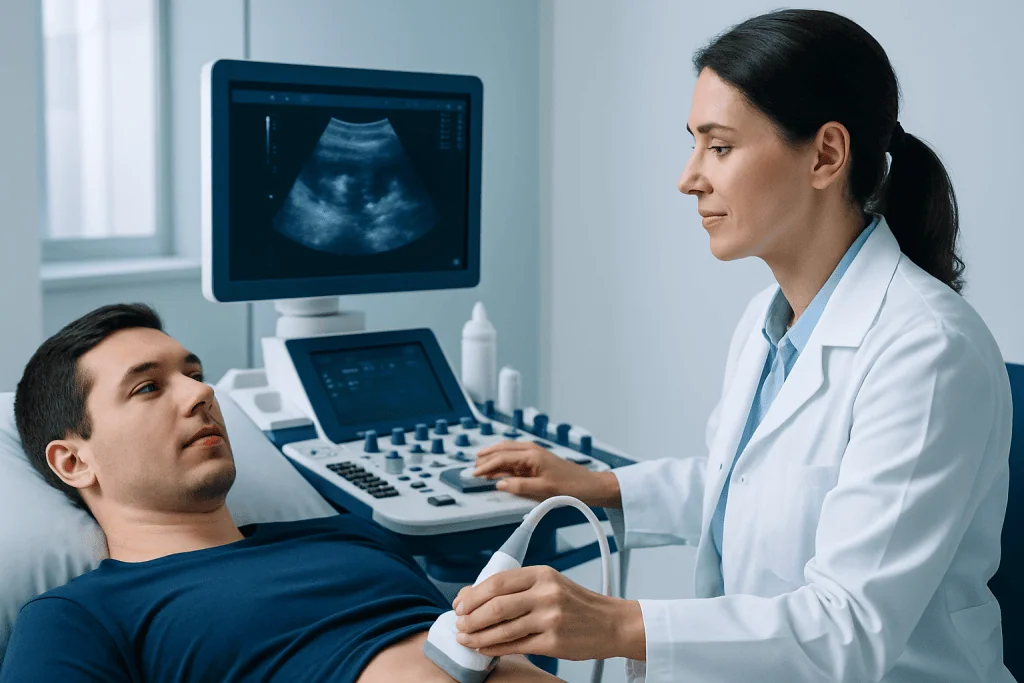
Timing is the most frequent reason. Blood tests, infection screening, cardiac assessments and treatment-planning imaging all have validity windows in practice. Even a complete file from home may need one or two components refreshed so the team is working with current information rather than a snapshot from months ago.
Compatibility and clarity come next. Imaging discs sometimes will not open. Reports may need translation or use measurement conventions the receiving team does not work with. A scan may have been performed with a technique that does not show what your treating physician specifically needs to see. In these situations, repeating a test locally often saves time overall, because it produces a standardised result the team can act on immediately instead of a document they must interpret around.
New findings at examination are the third category. Blood pressure on the day, breathing capacity, mobility, healing risk, medication use, any of these can suggest that one more check is worth doing before committing to a procedure. This is the assessment doing its job.
In summary, additional tests are usually ordered:
- To update older results that have passed their practical validity window
- To verify a diagnosis or confirm the current stage of a condition
- To prepare for anaesthesia or surgery with current fitness data
- To assess a separate condition, such as diabetes or a heart issue, that could affect the main treatment
- To adapt the plan after the in-person specialist review adds new information
If you want a fuller picture of what tends to be checked before a procedure, the guide to pre-op tests for international patients walks through the standard pre-treatment workup in more detail.
What kinds of tests might be requested

The exact list depends on your condition and the planned treatment, but certain requests appear again and again. Routine blood and urine tests, an ECG, chest imaging, ultrasound, CT or MRI, and specialist examinations are all common. If a procedure is planned, a pre-anaesthesia review is standard, and it can itself lead to further checks.
| Type of test | What it usually informs |
|---|---|
| Blood and urine tests | Current organ function, blood counts, clotting, blood sugar, infection markers |
| ECG and cardiac assessment | Heart rhythm and fitness for anaesthesia or a demanding procedure |
| Imaging (ultrasound, CT, MRI, X-ray) | The current state of the treatment area and the technical planning of the procedure |
| Pre-anaesthesia review | Overall fitness, airway assessment, medication and allergy history |
| Pathology or imaging re-review | Confirmation of findings when the treatment choice depends on fine detail |
It helps to understand that these tests serve two different jobs. Some confirm the main diagnosis and its current stage: the what of your treatment. Others assess your fitness for that treatment: the whether and how. Your surgeon may need fresh imaging while, in parallel, the anaesthesia team needs updated blood counts or a heart evaluation. If you live with diabetes, high blood pressure, asthma, kidney disease, or you take blood thinners, expect a few extra steps: these conditions change how a procedure is planned and monitored.
Occasionally a pathology review or a second reading of imaging is requested because the original findings sit near a boundary and the treatment choice depends on which side of it they fall. This can feel repetitive. It is also one of the more important safeguards before a major procedure. It is always reasonable to ask what decision a given test will help the team make: a good answer to that question usually makes the request feel far less arbitrary.
How extra tests can affect your schedule and travel plans
Some additional tests can be done the same day. Others cannot. Blood work is often quick; an MRI slot, a specialist consultation or a pathology review may take longer, and some results need time before they are ready to act on. Depending on what is ordered, your treatment date may hold, shift slightly, or, less often, be postponed while an issue is addressed. Building a few flexible days into your trip is the single most useful precaution, especially before surgery or a multi-specialty plan. There is a reason experienced patients treat arriving early for tests as part of the plan rather than a contingency.
Fixed commitments deserve early attention. If you are travelling with a companion, holding a return flight, or working against a deadline, raise those constraints with your international patient coordinator at the start rather than after a date moves. Coordinators can tell you whether your existing schedule is still realistic and whether extending a hotel booking is the prudent move. The knock-on effects of new testing, on dates and on your overall quote, are covered in more detail in the guide on how extra tests can affect timing and cost. In short: any change to what is being done can change what is charged, which is why itemised estimates and written updates matter more than a single headline figure.
At Acibadem, international patient services coordinate appointments, interpreter support and the practical logistics around hospital visits. That does not remove every delay, no coordination can, but it keeps the moving parts in one place. The most useful mindset is to treat the first days after arrival as an assessment period, not as a countdown to a fixed date. Plans pencilled in from abroad are drafts. The assessment is what turns them into commitments.
What you can do to make the process smoother
The best preparation is organised information. Bring printed reports and digital copies, original imaging discs or files if you have them, or a USB drive with everything gathered in one place. Include a medication list with doses, your allergies and past reactions, previous operations, chronic conditions, and contact details for your doctor or hospital at home in case the Turkish team needs clarification on an earlier finding. Even results that end up being repeated remain valuable: they show your history and how your condition has changed, which no fresh test can do on its own.
Completeness matters as much as recency. A fever last week, a dental infection, a new pain, a possible pregnancy, a skin problem near the treatment area, blood sugar that has drifted, a medication that was changed at home, details like these shape which tests are relevant and whether the planned date still makes sense. The assessment will ask about them; the more accurate the answers, the more useful every test that follows.
On medication specifically: some tests come with preparation instructions, fasting, a full bladder, contrast preparation, and occasionally the team will adjust how a medicine is taken around a test or procedure. Those decisions belong to your treating doctor. Never change a dose or stop a medicine on your own initiative; simply make sure the team has your complete, current list so their instructions are built on accurate information.
If language is a concern, ask for interpreter support from the first appointment. Acibadem provides interpretation and coordination for many overseas patients, so you can understand what has been ordered, where to go and when results are expected. Keep a running note of questions as they occur to you. Patients who write questions down tend to leave consultations informed; patients who trust their memory tend to leave with new questions.
When extra tests lead to a change in the treatment plan
Sometimes additional testing confirms that everything can proceed exactly as planned: this is the most common outcome, and it is worth remembering while you wait. In other cases, the results lead to a different procedure date, a different technique, another specialist opinion, or a recommendation to address something else first. Arriving expecting immediate treatment and then hearing “not yet” is genuinely disappointing. It is also, in most such cases, the more careful decision.
Typical examples: a heart, lung, infection or clotting finding that needs attention before anaesthesia; updated imaging showing that the treatment area has changed since the last scan; blood results suggesting the body needs stabilising before a procedure. These adjustments exist to improve the decision, not to create obstacles. A procedure done on incomplete information is not faster care: it is riskier care.
If the plan changes, ask for the explanation in plain language, and ask three practical questions: Is this change temporary or permanent? What does the new timeline look like? Is it more sensible to stay in Turkey for the next step or to return home and come back? There is no universal answer: it depends on what was found, how long the next step takes and how your travel is arranged, but a well-coordinated team can map the options with you concretely. And once treatment does go ahead, be aware that testing does not always end with it: the guide on follow-up tests after treatment in Turkey explains what monitoring can look like afterwards.
Staying steady while you wait for results
Waiting is often the hardest part. When you have travelled far for treatment, every unexpected step carries extra emotional weight. It helps to hold on to what is actually known: extra testing exists to reduce uncertainty, and the fact that you may need more tests after arriving in Turkey for treatment says far more about careful process than about your prognosis.
Give yourself permission to slow the pace for a day or two. Keep your phone charged and stay reachable. Follow any fasting or preparation instructions exactly as given. Small practical routines: a written schedule, a set time to check in with family at home, a short walk if you are able, make waiting days feel structured instead of empty. If what you need most is an update, a written timeline, an interpreter, or help explaining the situation to relatives, say so plainly; support teams work with these requests every day, and a clear description of the next checkpoint often does more for anxiety than any reassurance could.
Step by step
- Bring every record to your first in-person review. Scans, lab results, medication lists, discharge notes. Even if you sent files before travelling, the team may need originals or better-quality copies to complete the assessment.
- Ask what each new test is checking. You do not need the medical terminology, just the purpose. Is it confirming the diagnosis, checking fitness for anaesthesia, or helping the team choose between treatment options? Every legitimate test has an answer to that question.
- Confirm timing and preparation requirements before you leave the clinic. Some tests need fasting, a full bladder or contrast preparation; any adjustment to your medicines around a test is decided and explained by your treating doctor. Know when the test is, how to prepare, and when results are expected.
- Ask directly whether the planned treatment date is still realistic. The answer shapes sensible decisions about hotel extensions, companion arrangements and flexible return travel, decisions that are cheaper to make early than late.
- Give complete, current answers about your health. Fever, vomiting, chest symptoms, new pain, a medication changed at home, details like these determine which tests matter and whether the plan holds. The value of every test rests on the accuracy of the information around it.
- Clarify the next decision point. Who reviews the results, and how will you hear the conclusion: a specialist meeting, an anaesthesia clearance, a final confirmation? Knowing the shape of the next step makes the whole process feel structured rather than open-ended.
Your checklist
- Passport and hospital registration documents
- Printed medical reports and digital scan files or original discs
- Current medication list with doses
- List of allergies and past reactions
- Contact details for your doctor or hospital at home
- A few extra days of flexible travel planning where possible
- Questions written down for your doctor or coordinator
- Comfort items for longer clinic or hospital days
Key takeaways
- Needing more tests after arriving in Turkey for treatment is common and usually routine, not a sign that something is wrong.
- The usual reasons are aged results, incompatible or unclear records, hospital-specific protocols, and new information from the in-person examination.
- Additional testing can shift your schedule, so flexible travel plans and early conversations about fixed commitments pay off.
- Bring complete records and give accurate, current answers about your health, including anything that seems minor.
- Medication decisions around tests and procedures belong to your treating doctor; your job is to make sure the team has your full, current list.
- Coordinators and interpreters exist to keep appointments, results and logistics organised while the clinical team does the assessing.
Frequently asked questions
Does needing more tests mean my original diagnosis was wrong?
Not necessarily. Most extra tests exist to update, confirm or add detail to information the team already has, checking that the diagnosis, its current stage and your general fitness still match the plan on the day of assessment. A repeated test is usually about currency and precision, not doubt.
Will my procedure definitely be delayed if I need more tests?
No. Some tests are arranged quickly and results come back in time to keep the original schedule. Whether a date moves depends on what is ordered, how much preparation it needs, and what the results show. Planning a small buffer into your trip covers both outcomes.
Should I bring results from home if the hospital may repeat them anyway?
Yes. Earlier records show your history and how your condition has changed over time, which a fresh test cannot show on its own. Even when a test is repeated, the comparison between old and new results often carries real diagnostic value.
What if I do not understand why a new test has been ordered?
Ask for the purpose in plain language, with interpreter support if you need it. Reasonable questions include: what decision will this test inform, how urgent is it, and could it change the treatment plan? A clear answer to those three usually resolves the worry.
Can extra tests be done in one day?
Sometimes, routine blood work, an ECG and some imaging often fit into a single day. But department schedules, preparation requirements and the time specialists need to review results all vary. Planning for some flexibility is more realistic than expecting everything at once.
What happens if my health changes after I arrive?
A change, fever, new pain, a medication adjusted at home, can alter which tests are relevant and whether the planned date still makes sense. This is why assessments include questions about recent changes, and why complete, accurate answers matter more than tidy ones. The plan is built to be updated when the facts update.
Who decides about my medications around testing?
Your treating doctor. Some tests and procedures involve fasting or adjustments to how a medicine is taken, but those instructions come from the clinical team based on your full history. No medicine should be started, stopped or changed on your own initiative while preparing for tests or treatment.
How does Acibadem support patients when a plan changes?
International patient teams handle coordination between departments, interpreter services and the practical logistics around appointments. If extra tests move a date, they can explain the revised schedule, what it means for your stay, and what needs rearranging, so the clinical decision and the travel decisions stay connected.
Add us as a Preferred Source to see more of our trusted health content across Google Search, AI Overviews and Discover.

Update history
- PublishedJuly 6, 2026
- Medical review approvedSeptember 13, 2026
- Last content updateSeptember 12, 2026
References3
- MedlinePlus: Tests and visits before surgery medlineplus.gov
- NHS: Having an operation (surgery): Preparation nhs.uk
- CDC Travelers' Health: Medical Tourism wwwnc.cdc.gov
More Patient Guides

How Long Does Anesthesia Last? Wear-Off Times by Type
Coming round from an operation, almost everyone asks the same two questions: when will my head feel normal, and how long is…

Flying to Turkey After a Recent Illness: When Is It Safe to Travel?
Flying to Turkey after a recent illness may be safe once you are medically stable and cleared to travel; plan airline support…
Braces, Retainers, and Dental Work Before Surgery in Turkey: What to Tell Your Team
Braces, retainers and dental work before surgery in Turkey should be shared with your care team early to plan safe anaesthesia and…

When to Stop Eating, Drinking, or Smoking Before a Procedure in Turkey
When to stop eating before a procedure in Turkey depends on your anesthesia plan; follow your care team’s exact fasting instructions for…