Feeding and Swallowing Rehabilitation
Feeding and swallowing rehabilitation is a non-surgical therapy program for people who have difficulty eating, drinking, or swallowing safely, a condition known as dysphagia. A speech-language pathologist assesses the swallow, often with…

Quick answer
Feeding and swallowing rehabilitation is a therapy program, usually led by a speech-language pathologist, that helps people with dysphagia (difficulty swallowing) eat and drink more safely. It combines a swallow assessment, safer eating strategies, texture-modified diets, and muscle exercises, and is commonly used after stroke, head and neck cancer, neurological disease, or in children with feeding difficulties.
What is Feeding and Swallowing Rehabilitation?
Feeding and swallowing rehabilitation is a structured program of therapy that helps people who have trouble eating, drinking, or swallowing safely. The medical term for difficulty swallowing is dysphagia (pronounced dis-FAY-jee-uh). Swallowing looks simple, but it involves the lips, tongue, jaw, palate, throat (pharynx), voice box (larynx), and the food pipe (esophagus), all working together in a precise sequence. When any part of that sequence is weakened, poorly coordinated, or altered by illness or surgery, food or liquid may go down the wrong way, be left behind in the throat, or take a very long time to swallow.
The program is usually led by a speech-language pathologist (SLP), a therapist trained in the muscles and nerves used for speaking and swallowing. Depending on the patient, occupational therapists, dietitians, physicians, and nurses are often involved as well. In many hospitals it is coordinated within the rehabilitation service; you can read more about the broader specialty on the physical medicine and rehabilitation page. At Acibadem, feeding and swallowing rehabilitation is typically managed through this department together with the treating specialist.
Feeding and swallowing rehabilitation is commonly used for people affected by:
- Stroke, which is one of the most frequent causes of sudden swallowing problems in adults.
- Neurological diseases such as Parkinson’s disease, multiple sclerosis, amyotrophic lateral sclerosis (ALS, a progressive nerve disease), or dementia.
- Head and neck cancer, including changes caused by surgery, radiation therapy, or chemotherapy.
- Traumatic brain injury or spinal cord injury.
- Prolonged intensive care, especially after a breathing tube or tracheostomy (a surgical opening in the windpipe) has been in place.
- Children born prematurely, with cerebral palsy, cleft palate, developmental delay, or sensory-based feeding refusal.
- Age-related muscle weakness that makes chewing and swallowing slower and less coordinated.
Who is a candidate for feeding and swallowing rehabilitation
People often ask who needs feeding and swallowing rehabilitation. In general, a doctor may recommend an assessment when someone shows signs that swallowing is unsafe or inefficient. Typical indications include:
- Coughing, choking, or throat clearing during or after meals.
- A wet or gurgly sounding voice after eating or drinking.
- Food feeling stuck in the throat or chest.
- Repeated chest infections or pneumonia without an obvious cause, which can be a sign of aspiration (food or liquid entering the airway and lungs).
- Unintended weight loss, dehydration, or avoiding certain foods because they are hard to swallow.
- Very long mealtimes, drooling, or difficulty controlling food in the mouth.
- In infants and children: poor weight gain, refusal of textures, gagging, arching or crying at feeds, or frequent coughing during bottle or breast feeding.
Rehabilitation is generally most effective when the person is medically stable and able to take part, even if only in a limited way. It is not suitable, or is adjusted, in some situations:
- When a structural blockage such as a tumor, narrowing (stricture), or a pouch in the esophagus is the main cause; these usually need medical or surgical treatment first, after which therapy may still play a role.
- When the patient is too drowsy, confused, or unwell to follow instructions safely; active exercises may be postponed and safer feeding strategies used in the meantime.
- In advanced, progressive illness where the goals shift toward comfort; therapy may then focus on making eating as pleasant and safe as possible rather than on regaining full function.
Your care team decides on candidacy after a full evaluation, and the plan is individualized rather than one-size-fits-all.
How the feeding and swallowing rehabilitation procedure works
The feeding and swallowing rehabilitation procedure is not a single operation but a course of assessment and therapy. It can be described in three phases.
Before therapy: assessment
Rehabilitation begins with a clinical swallow evaluation. The therapist reviews your medical history, examines the strength and movement of your lips, tongue, jaw, and palate, listens to your voice, and watches you swallow small amounts of different textures. Because many problems cannot be seen from the outside, one or more instrumental tests are often ordered:
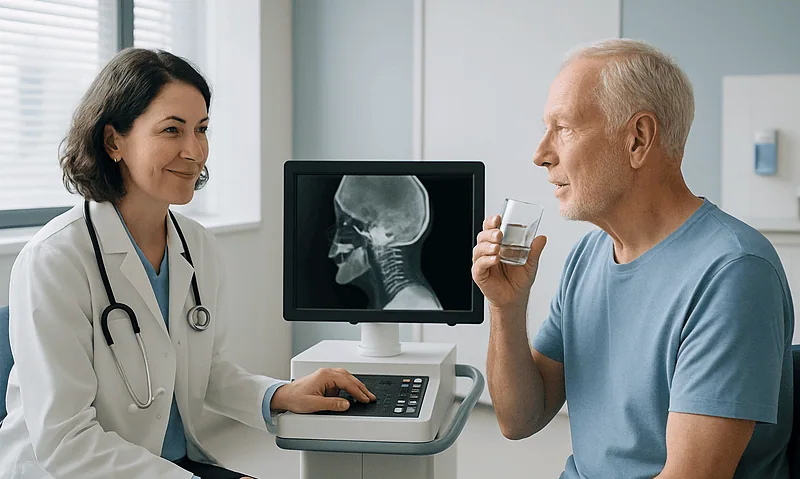
- Videofluoroscopic swallow study (also called a modified barium swallow): you swallow food and liquid mixed with barium, a substance that shows up on X-ray, while a moving X-ray records exactly where it goes.
- Fiberoptic endoscopic evaluation of swallowing (FEES): a thin, flexible camera is passed through the nose to view the throat directly while you eat and drink.
- Other tests, such as manometry (measuring pressure in the throat and esophagus), may be used in selected cases.
These tests show which stage of the swallow is affected and which textures and strategies are safest for you.
During therapy: the treatment program
Based on the findings, the therapist builds a plan that typically combines several approaches:
- Compensatory strategies: immediate changes that make swallowing safer, such as sitting fully upright, taking smaller bites, tucking the chin while swallowing, turning the head to one side, or swallowing twice after each mouthful.
- Diet texture modification: thickened liquids, soft or pureed foods, or specific textures chosen with a dietitian to reduce the risk of aspiration while maintaining nutrition.
- Swallowing exercises: targeted movements that strengthen or re-coordinate the muscles involved, for example tongue-strengthening exercises, effortful swallows, or exercises that help the voice box close properly. These are often repeated many times a day.
- Sensory techniques: using cold, sour, or textured stimuli to trigger a stronger swallow reflex in people with reduced sensation.
- Adjunct methods: in some programs, neuromuscular electrical stimulation (mild electrical pulses applied to the neck muscles during exercise) or biofeedback devices that display muscle activity on a screen may be used alongside exercises.
- Feeding therapy for children: a gentler, play-based approach that addresses oral motor skills, gradual exposure to new textures, positioning, pacing, and the caregiver’s feeding techniques.
Sessions with the therapist commonly last around 30 to 60 minutes. The frequency varies from daily sessions during an inpatient stay to weekly outpatient visits, and most of the real work happens in the home exercise program between sessions.
After therapy: follow-up and reassessment
Progress is reviewed regularly. The therapist may repeat the instrumental swallow study to confirm that a texture can be safely upgraded or that liquids no longer need to be thickened. If a feeding tube was placed for nutrition, the team monitors whether oral intake is becoming sufficient before tube feeding is reduced or stopped, a decision made by the physician and dietitian together.
Preparation for feeding and swallowing rehabilitation
Preparation is mostly practical. Before your first appointment you may be asked to:
- Bring a list of all medications, including any that cause dry mouth or drowsiness, since these can affect swallowing.
- Note which foods or drinks cause trouble, how long meals take, and any episodes of coughing or choking.
- Bring dentures if you wear them, and make sure they fit; loose dentures can worsen chewing and swallowing.
- Follow any instructions for an instrumental test, such as avoiding food for a short period before a barium study, if your team asks you to.
- For children, bring the child’s usual bottle, cup, spoon, and preferred foods so the therapist can observe a typical feed.
It helps to have a family member or caregiver attend, because strategies and exercises are often easier to carry out with support at home.
Recovery and aftercare
Feeding and swallowing rehabilitation recovery time depends heavily on the cause, the severity of the problem, and how well the underlying condition is controlled. There is no single timeline, but some general patterns are commonly seen:
- After a stroke, many patients show meaningful improvement in the first weeks to months, and therapy often continues for several weeks to a few months.
- After head and neck cancer treatment, swallowing may change over a longer period, and exercises are sometimes started before or during radiation to help preserve function; follow-up can extend over many months.
- In progressive neurological conditions, the goal is often to maintain the safest possible swallow for as long as possible rather than to achieve a fixed endpoint, so therapy may be intermittent over years.
- In children, feeding therapy is typically gradual, and progress is measured in small steps such as accepting a new texture or gaining weight steadily.
Aftercare centers on consistency. Patients are usually asked to continue their exercises daily, keep to the recommended textures until a reassessment says otherwise, maintain good oral hygiene (bacteria in the mouth increase the harm if aspiration occurs), and stay upright for a period after meals. Caregivers are typically taught how to recognize warning signs and how to prepare modified foods and thickened drinks correctly.
Feeding and swallowing rehabilitation risks and benefits
When weighing feeding and swallowing rehabilitation risks and benefits, most clinicians consider it a low-risk intervention, especially compared with the risks of untreated dysphagia. Still, it is not entirely free of drawbacks.
Possible risks and side effects include:
- Aspiration during testing or therapy: trying textures during evaluation carries a small risk of food or liquid entering the airway; therapists use small amounts and stop if signs appear.
- Muscle fatigue or soreness from exercises, which usually settles with pacing.
- Nosebleed or gagging during endoscopic evaluation, and brief discomfort from the barium taste or X-ray exposure during a videofluoroscopic study.
- Reduced enjoyment of food and social eating when textures are restricted, which can affect mood and appetite.
- Dehydration or inadequate nutrition if thickened liquids or modified diets are not taken in sufficient amounts; this is why a dietitian is often part of the team.
- Skin irritation under electrodes if electrical stimulation is used.
The main benefits are:
- Lower likelihood of aspiration pneumonia, choking, and hospital readmission.
- Better nutrition and hydration, which support recovery from the underlying illness.
- In many cases, the ability to return to a more normal diet and to eat with family.
- For children, support for growth and development and a less stressful mealtime for the whole family.
Results and outlook
The evidence generally shows that swallowing therapy, particularly exercise-based approaches combined with compensatory strategies, improves swallowing safety and function for many people with dysphagia after stroke and head and neck cancer, and that early assessment reduces complications such as pneumonia. Outcomes vary widely between individuals, however. Factors that influence the outlook include the cause of the swallowing problem, how much nerve or tissue damage is present, the person’s overall health and alertness, and how consistently the exercises are performed.
Some people regain a fully normal diet. Others achieve a safe but modified diet, and some, particularly those with progressive diseases, continue to need partial or full tube feeding while using therapy to keep tasting food safely for pleasure. Your team will discuss realistic goals with you and revise them as you progress. No therapist can guarantee a particular result, and improvement is often gradual.
Cost considerations
The cost of feeding and swallowing rehabilitation is influenced by several factors rather than by a fixed fee. The main drivers are:
- The type and number of assessments, since instrumental tests such as videofluoroscopy or FEES involve imaging equipment and specialist time.
- The setting: therapy delivered during a hospital stay is usually included in inpatient costs, whereas outpatient programs are billed per session.
- The number and frequency of sessions, which depend on severity and progress.
- Supplies and devices, such as commercial thickeners, specialized cups or bottles, electrical stimulation equipment, or, if needed, a feeding tube and its ongoing supplies.
- Follow-up reassessments and dietitian visits.
Insurance coverage and referral rules differ between countries and plans, so it is sensible to ask the hospital’s administrative team for an itemized estimate before starting a program.
Frequently asked questions
Who needs feeding and swallowing rehabilitation?
Anyone who shows signs of unsafe or inefficient swallowing may benefit from an assessment. Common groups include adults after a stroke or brain injury, people with Parkinson’s disease or other neurological conditions, patients treated for head and neck cancer, those recovering from intensive care, and infants or children with feeding difficulties. A doctor or speech-language pathologist decides whether therapy is appropriate after evaluation.
What happens during a feeding and swallowing rehabilitation procedure?
The procedure usually begins with a clinical examination and, often, an X-ray or camera-based swallow study to see exactly where the problem occurs. Therapy then combines safer eating strategies, changes to food and drink texture, and targeted exercises to strengthen or coordinate the swallowing muscles. Sessions are typically 30 to 60 minutes, with daily home practice in between.
What is the typical feeding and swallowing rehabilitation recovery time?
Recovery time varies widely. Many patients recovering from a stroke improve over weeks to months, while people treated for head and neck cancer may need follow-up over a longer period. In progressive conditions, the aim is to maintain function rather than reach a fixed endpoint. Your therapist can give a more realistic estimate once your individual assessment is complete.
What are the main feeding and swallowing rehabilitation risks and benefits?
Risks are generally low and include a small chance of aspiration during testing, muscle fatigue, mild discomfort during endoscopy or barium studies, and reduced enjoyment of food when textures are restricted. Benefits often include fewer chest infections, better nutrition and hydration, and in many cases a return to a more normal diet. Your team weighs these factors for your specific situation.
Does feeding and swallowing rehabilitation hurt?
Therapy itself is not usually painful. Exercises can cause temporary muscle tiredness, and the camera used in an endoscopic swallow study may cause brief gagging or nasal discomfort. No anesthesia is normally needed, although a numbing spray is sometimes offered before endoscopy.
Can feeding and swallowing rehabilitation help a child who refuses food?
Feeding therapy for children addresses both the physical skills of eating and sensory or behavioral factors that lead to food refusal. It is gradual and play-based, and it involves teaching caregivers how to position, pace, and offer foods. Progress is typically measured in small steps, and a pediatrician or dietitian usually monitors growth alongside therapy.
Will I always need thickened drinks or pureed food?
Not necessarily. Texture modifications are often temporary and are reviewed regularly, sometimes with a repeat swallow study. Many patients move back toward regular textures as their swallow improves, while others may keep some modifications long term. Changes should only be made on the advice of your therapist, because moving too quickly can increase the risk of aspiration.
When to see a doctor
You should be assessed by a doctor or speech-language pathologist if you or someone you care for regularly coughs or chokes while eating or drinking, has a wet or hoarse voice after meals, feels food sticking in the throat or chest, is losing weight without trying, takes an unusually long time to finish meals, or has had repeated chest infections. In infants and children, poor weight gain, persistent gagging, frequent coughing during feeds, or refusal of whole food groups also warrant evaluation.
Seek urgent medical attention during or after a feeding and swallowing rehabilitation program if any of the following occur:
- Choking with inability to breathe, speak, or cough effectively.
- Fever, new or worsening cough with phlegm, shortness of breath, or chest pain, which may indicate aspiration pneumonia.
- Signs of dehydration such as very dark urine, dizziness, confusion, or passing little urine.
- Complete inability to swallow saliva or liquids.
- Sudden new weakness, facial drooping, or slurred speech, which can be signs of a stroke.
- Persistent bleeding after an endoscopic swallow study.
Any sudden worsening of swallowing should be reported promptly to your care team so the plan can be reviewed and adjusted.
Preparation
- Bring a list of your medications and a note of which foods or drinks cause coughing, choking, or a sensation of sticking. Wear your dentures if you have them and follow any fasting instructions given before an X-ray swallow study. For children, bring the usual bottle, cup, and preferred foods. Having a caregiver attend helps with carrying out strategies at home.
Aftercare
- Continue the prescribed swallowing exercises daily and keep to the recommended food and liquid textures until your therapist reassesses you. Sit fully upright during meals and for a period afterward, and maintain careful oral hygiene to reduce the harm from any aspiration. Report new coughing during meals, fever, chest symptoms, or signs of dehydration to your care team promptly.
Medically reviewed by the Acıbadem International Medical Board September 13, 2026
See our medical review board →
Update history
- PublishedSeptember 13, 2026
- Medical review approvedSeptember 13, 2026
- Last content updateSeptember 13, 2026
References2
From the Acibadem Blog

Helping a Loved One Through Swallowing Rehabilitation: Mealtimes, Textures and Upright Sitting
Caring for someone in swallowing rehabilitation rests on three habits: keep them fully upright at every meal and for a while afterward, serve only…
How a Swallow Study Works: The X-Ray and Camera Tests Before Swallowing Rehabilitation
A swallow study test is an imaging exam that watches food and liquid move from the mouth to the stomach in real time. The…

What Swallowing Rehabilitation Involves: Exercises, Texture Changes and Safe Eating Positions
Swallowing rehabilitation, usually led by a speech-language pathologist, combines three things: targeted exercises that strengthen and retrain the tongue, throat and airway-protecting muscles; changes…