Plexr Application
Plexr Application, also called plasma exeresis or non-surgical blepharoplasty, is an outpatient skin treatment in which a handheld device creates a tiny plasma arc that vaporizes the outermost skin layer in a…
Quick answer
Plexr Application is a non-surgical skin treatment that uses a handheld plasma device to vaporize tiny points of the skin surface, tightening mildly loose skin and removing small benign growths. It is often used on the eyelids and fine lines, performed under numbing cream in an outpatient setting, with crusting that typically clears in about a week.
What is Plexr Application?
Plexr Application is a non-surgical skin treatment that uses a small handheld device to create a tiny arc of plasma between the tip of the device and the skin. Plasma, in this context, is ionized gas: the device electrically charges the air in the small gap above the skin, producing a brief spark of energy. That spark heats and vaporizes (sublimates) a very small area of the outermost skin layer without cutting and without the tip touching the skin. The technique is sometimes called plasma exeresis or, when used on the eyelids, a non-surgical blepharoplasty (blepharoplasty is the medical term for eyelid lift surgery).
Because each spot treated causes controlled shrinkage of the surrounding skin, Plexr Application is most often used to tighten mildly loose skin. Common areas include the upper eyelids, the skin under the eyes, fine lines around the mouth, and small areas of the neck. Dermatologists may also use it to remove small benign (non-cancerous) skin growths such as skin tags, seborrheic keratoses (harmless, rough, brown or tan patches), xanthelasma (yellowish cholesterol deposits on the eyelids), and some superficial scars. It is not a treatment for skin cancer, and any suspicious lesion should be examined before any cosmetic procedure is considered.
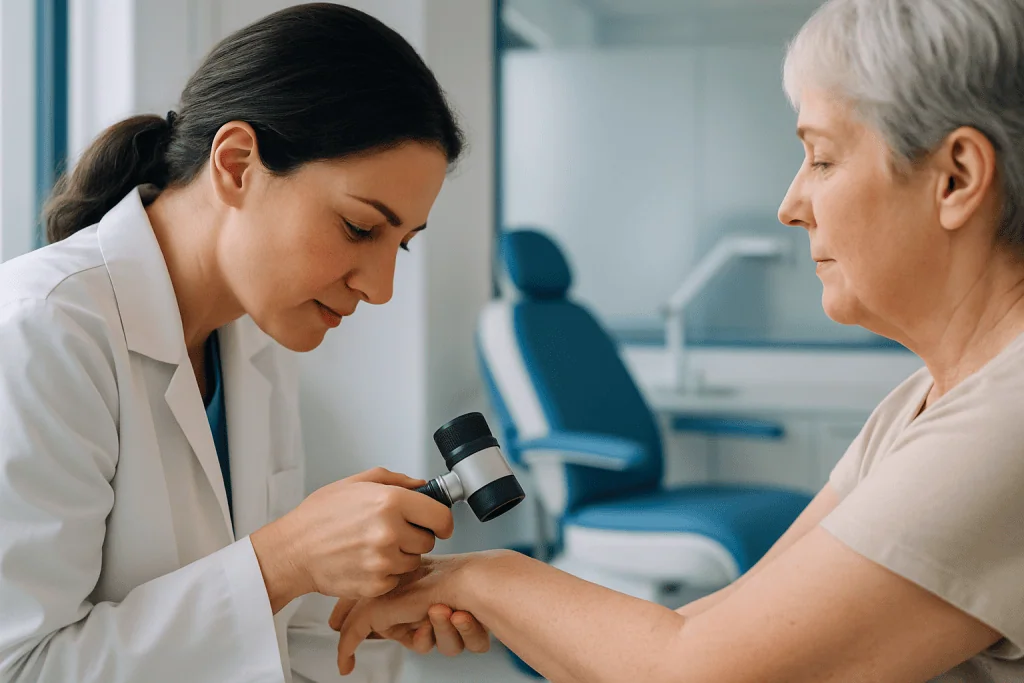
Plexr Application is generally performed in an outpatient dermatology or aesthetic clinic setting. It does not involve stitches, general anesthesia, or a hospital stay. Within a hospital group, this type of treatment is typically managed by the dermatology department, such as the Dermatology unit at Acibadem, where the skin is first assessed to decide whether the technique is appropriate.
Who is a candidate: who needs Plexr Application
In practice, people ask about who needs Plexr Application when they notice early signs of skin laxity but do not want or do not yet need surgery. Typical indications include:
- Mild to moderate excess skin on the upper eyelids that creates a hooded look
- Fine wrinkles or crepey texture under the eyes, around the mouth, or on the neck
- Small benign growths such as skin tags, small warts, or seborrheic keratoses that a doctor has already checked
- Xanthelasma on the eyelids
- Shallow acne scars or small superficial scars in selected cases
A candidate is usually an adult in good general health, with realistic expectations, who understands that results are gradual and that more than one session may be needed.
Plexr Application may NOT be suitable in a number of situations. Your doctor may advise against it if you have:
- Significant eyelid skin excess or fat bulging, which usually responds better to surgical blepharoplasty
- An active skin infection, cold sore (herpes) outbreak, or open wound in the treatment area
- A history of keloids or hypertrophic scarring (thick, raised scars that grow beyond the original wound)
- Naturally darker skin tones, where the risk of post-inflammatory hyperpigmentation (dark marks after healing) is higher and a careful test area may be advised
- Recent use of oral isotretinoin (a strong acne medicine), recent heavy sun exposure, or a recent tan in the area
- Pregnancy or breastfeeding, because safety data are limited
- Certain implanted electronic devices such as a pacemaker, depending on the device and clinic protocol
- Any lesion that has not been examined and confirmed as benign
Only an in-person assessment can determine whether the technique fits your skin type and goals. Written material like this page cannot replace that assessment.
How the Plexr Application procedure works
The Plexr Application procedure is relatively short and follows a predictable sequence. Understanding it in advance often reduces anxiety.
Before the session. The clinician examines the area, takes photographs for comparison, and discusses expectations. A topical numbing cream (local anesthetic applied to the skin surface) is spread over the treatment zone and left for roughly 30 to 45 minutes. Make-up, creams, and contact lenses are removed. For eyelid work, the eyes may be protected with shields or the clinician may work carefully with the eyes closed.
During the session. The clinician holds the device tip a fraction of a millimeter above the skin. Each activation creates a tiny plasma arc that produces a small brown dot, sometimes described as a carbon crust, on the skin surface. The dots are placed in a grid or along wrinkle lines, with small gaps of untreated skin between them. Most people describe a warm, prickling, or snapping sensation; the numbing cream keeps discomfort mild for many patients, though the upper eyelid can be more sensitive. A single session usually takes about 20 to 60 minutes, depending on the size and number of areas treated. For small lesions such as skin tags, the same spark is used to vaporize the growth layer by layer.
Immediately after. The skin looks red and slightly swollen, with a pattern of small brown dots. A soothing or antibiotic ointment may be applied. You can normally go home right away and do not need someone to drive you unless you have been given a sedative, which is uncommon for this procedure.
Preparation before a Plexr session
Preparation is straightforward but does influence how the skin heals. Your doctor may ask you to:
- Avoid sun exposure, tanning beds, and self-tanning products on the area for several weeks beforehand, since tanned skin heals with a higher risk of pigment changes
- Stop retinoid creams, exfoliating acids, and other irritating skin products a few days to a week before treatment
- Report all medicines and supplements, especially blood thinners, isotretinoin, and any drugs that increase sun sensitivity
- Mention a history of cold sores, since a preventive antiviral medicine may be prescribed if the lips or nearby skin are being treated
- Arrive with clean skin, without make-up, moisturizer, or eye creams
- Remove contact lenses if the eye area is being treated and bring glasses instead
It is also sensible to plan the timing. The small crusts are visible for about a week, so many patients schedule sessions when they can avoid important social events or photographs. If more than one session is expected, the clinician will explain the likely spacing, often several weeks apart, so that the skin fully recovers between treatments.
Recovery and aftercare: Plexr Application recovery time
Plexr Application recovery time is shorter than for surgery, but it is not instant. A realistic timeline helps set expectations:
- First 1 to 3 days: Swelling is usually most noticeable, especially around the eyes, where the tissue is loose. Some people find eyelid swelling makes the eyes look smaller or partly closed on the morning after treatment. Mild burning or tightness is common.
- Days 3 to 7: Swelling typically settles. The small brown dots dry into crusts and begin to flake off on their own. It is important not to pick or scrub them, because early removal can increase the risk of scarring or pigment change.
- Days 7 to 14: Most crusts have fallen away, revealing pink new skin. Redness may persist and can be covered with mineral make-up once the skin surface is intact, if your clinician agrees.
- Weeks 2 to 12: Pinkness gradually fades. Skin tightening continues as collagen (the protein that gives skin its firmness) remodels, so the final appearance of a session is often judged at around 8 to 12 weeks.
Many patients return to desk work within a day or two, accepting that the dots are visible. Aftercare instructions commonly include:
- Keeping the area clean and applying the recommended ointment or barrier cream as instructed
- Sleeping with the head slightly raised for the first few nights to limit eyelid swelling
- Using cool compresses briefly for comfort, without pressing hard on the treated skin
- Avoiding make-up, exfoliants, retinoids, and active skincare until the crusts have fully shed
- Avoiding swimming pools, saunas, steam rooms, and heavy sweating for about a week
- Strict sun protection with a broad-spectrum sunscreen and a hat or sunglasses for several weeks, and ideally for a few months, because new skin is prone to darkening
If additional sessions are planned, they are usually scheduled once the skin has completely healed, which for many people means an interval of about six to eight weeks.
Risks and side effects: Plexr Application risks and benefits
Weighing Plexr Application risks and benefits honestly is essential. The main benefit is that it can tighten mildly loose skin and remove small benign lesions without incisions, stitches, or general anesthesia, with downtime of roughly a week. The benefit is modest compared with surgery, and results vary from person to person.
Expected, temporary effects include redness, swelling, crusting, a feeling of tightness, mild itching as the skin heals, and short-lived tenderness. Less common but recognized complications include:
- Post-inflammatory hyperpigmentation: dark patches after healing, more likely in darker skin tones or after sun exposure; this can take months to fade and sometimes persists
- Hypopigmentation: lighter spots where treated skin loses pigment, which can be long-lasting
- Scarring: uncommon when settings are appropriate and crusts are left alone, but possible, including small pitted marks
- Infection: the healing surface is a shallow wound and can become infected if not kept clean
- Prolonged redness lasting beyond the usual few weeks
- Eye-related effects: irritation, temporary blurred vision from swelling or ointment, or, rarely, eye injury if the eye is not adequately protected
- Under- or over-treatment: too little change to be noticeable, or, rarely, excessive tightening or uneven results between the two sides
- Reactivation of cold sores when the area near the lips is treated
Because the technique depends heavily on the skill and settings used by the operator, it is generally advised that it be performed by a trained medical professional in a clinical environment. Cosmetic procedures performed by untrained providers carry a higher chance of complications.
Results and outlook
The results of Plexr Application develop gradually. Some tightening is visible once swelling resolves, and further improvement often appears over the following two to three months as collagen remodels. Many people need two or three sessions to reach the degree of change they are looking for, particularly on the upper eyelids. The improvement is usually described as subtle to moderate; it does not reproduce the result of a surgical eyelid lift, and it does not remove fat pads or correct sagging caused by deeper structures.
The published evidence consists mostly of small case series and observational studies rather than large randomized trials. These studies generally report patient satisfaction with mild eyelid laxity and effective removal of small benign lesions, but they also document pigment changes and the need for repeated treatments. Long-term durability data are limited. In general, treated skin continues to age normally, so the effect is not permanent; some patients choose maintenance sessions after a year or more, while others are content with a single course. Lifestyle factors such as smoking and sun exposure influence how long results last.
Cost considerations
Because this is an outpatient procedure without a hospital stay, the overall cost structure is simpler than for surgery, but several factors still affect the total:
- Number of sessions: the largest driver, since most treatment plans involve more than one visit
- Size and number of areas treated: a single small lesion costs less than both upper and lower eyelids plus perioral lines
- Provider qualifications and setting: treatment by a dermatologist in a clinical facility is typically priced differently from treatment in a non-medical setting
- Consultation and assessment fees: including any dermatological check of lesions before treatment
- Anesthetic and consumables: numbing cream, disposable tips, and aftercare ointments
- Follow-up visits: review appointments to check healing and plan further sessions
Plexr Application for cosmetic purposes is generally regarded as an elective aesthetic treatment and is therefore not usually covered by health insurance. Removal of certain lesions may be handled differently depending on the insurer and on whether there is a medical reason for removal. Asking the clinic for a written breakdown of what is included helps avoid surprises.
Frequently asked questions
Does the Plexr Application procedure hurt?
Most patients report a warm, prickling, or snapping sensation rather than sharp pain, because a topical numbing cream is applied beforehand. The eyelids and the skin around the lips tend to be more sensitive than the cheeks or neck. Discomfort after the session is usually mild, with tightness and swelling more prominent than pain, and simple over-the-counter pain relief is often enough if any is needed.
How long is Plexr Application recovery time before I can go out in public?
The small brown dots and some swelling are visible for roughly five to ten days for many patients. Swelling generally peaks within the first two days and then settles, while crusts flake away over the following week. Many people return to work or daily errands within a day or two, but if you prefer no visible signs, planning about a week of low-visibility time is realistic.
How many Plexr Application sessions are usually needed?
This depends on the area and on how loose the skin is. A single small lesion is often removed in one visit. For eyelid tightening, two or three sessions spaced about six to eight weeks apart are common, because each session produces a modest change and the skin needs time to heal and remodel between treatments. Your clinician can give an estimate after examining your skin.
Who needs Plexr Application rather than eyelid surgery?
People with mild skin laxity, no significant fat bulging, and a preference to avoid incisions are the usual candidates. Those with pronounced excess skin, drooping that affects vision, or prominent fat pads generally gain more from surgical blepharoplasty. A dermatologist or oculoplastic surgeon (an eye specialist trained in eyelid surgery) can help you compare the two approaches for your situation.
What are the main Plexr Application risks and benefits for darker skin?
The main benefit remains the same: non-surgical tightening and lesion removal with limited downtime. The main additional risk in darker skin tones is post-inflammatory hyperpigmentation, meaning dark marks that can last months and occasionally persist. Many clinicians recommend a small test patch first, more conservative settings, strict sun avoidance, and sometimes pigment-lightening creams before and after treatment to reduce this risk.
Are Plexr Application results permanent?
The tightening achieved is real but not permanent, because skin continues to age and lose elasticity over time. Lesions such as skin tags that are fully removed generally do not return in the same spot, although new ones can appear elsewhere. Many patients enjoy their result for a year or more and then decide whether a maintenance session is worthwhile.
Can Plexr Application be combined with other treatments?
It is sometimes combined with other skin treatments such as injectable treatments, chemical peels, or laser procedures, but usually not on the same day in the same area, since the skin needs to heal first. Your doctor may suggest a sequence and timing that reduces the risk of irritation or pigment change. Always tell your clinician about any recent aesthetic treatments before a Plexr session.
When to see a doctor
You should be assessed by a dermatologist or another appropriately trained specialist before considering Plexr Application if you have any skin growth that is new, changing in size, shape, or color, bleeding, itching, or not healing. These features need a medical diagnosis, and a cosmetic device should never be used on a lesion that has not been confirmed as benign. A specialist visit is also advisable if you have eyelid drooping that affects your vision, significant asymmetry between the eyes, a history of problem scarring, or a skin condition such as eczema, psoriasis, or rosacea in the area you want treated.
After the procedure, contact the treating clinic or seek prompt medical care if you notice:
- Increasing pain, spreading redness, warmth, or pus, which can indicate infection
- Fever or feeling generally unwell after treatment
- Swelling that keeps worsening after the third day, or eyelid swelling that prevents you from opening the eye
- Any change in vision, eye pain, sensitivity to light, or a feeling that something is in the eye
- Blistering, open sores, or crusts that are not healing after about two weeks
- Signs of an allergic reaction to creams or ointments, such as intense itching, hives, or swelling of the lips or face
- A cold-sore outbreak near the treated area
Sudden facial swelling with difficulty breathing or swallowing is an emergency and requires immediate emergency care. For non-urgent concerns such as slow fading of redness, dark or light patches, or dissatisfaction with the result, a follow-up review with the treating specialist allows the skin to be examined and further options discussed.
Preparation
- Avoid sun exposure, tanning and self-tanner on the area for several weeks beforehand. Stop retinoids and exfoliating acids a few days before, and tell your doctor about all medicines, isotretinoin use, blood thinners and any history of cold sores. Arrive with clean skin free of make-up and remove contact lenses if the eye area is being treated.
Aftercare
- Keep the area clean, apply the recommended ointment, and do not pick the small crusts, which usually fall off within about a week. Sleep with the head slightly raised for the first nights and avoid make-up, active skincare, swimming, saunas and heavy sweating until the skin has healed. Use strict sun protection for several weeks to months to reduce the risk of dark marks.
Medically reviewed by the Acıbadem International Medical Board September 13, 2026
See our medical review board →
Update history
- PublishedSeptember 13, 2026
- Medical review approvedSeptember 13, 2026
- Last content updateSeptember 13, 2026
References2
From the Acibadem Blog
Plexr Plasma Exeresis vs Surgical Blepharoplasty: Which Eyelids Suit a Non-Surgical Lift?
Plasma exeresis and surgical blepharoplasty address different problems. Plasma exeresis vaporizes tiny points of eyelid skin so it contracts, which suits mild skin laxity…

Plexr Recovery Day by Day: The Grid of Crusts, Swelling and When Makeup Can Return
Plexr recovery usually follows a predictable arc: a grid of tiny brown carbon crusts forms within hours, swelling peaks around the second or third…