Single-Port VATS
Single-port VATS is a minimally invasive form of chest surgery in which a thoracoscope and instruments are passed through a single small incision between the ribs. It is used to remove parts…
Quick answer
Single-port VATS, also called uniportal video-assisted thoracoscopic surgery, is minimally invasive chest surgery performed through one small incision of about 3 to 4 centimeters. A camera and instruments pass through the same opening. It is used for lung cancer resection, lung biopsy, recurrent collapsed lung, pleural infection, and some mediastinal tumors.
What is single-port VATS?
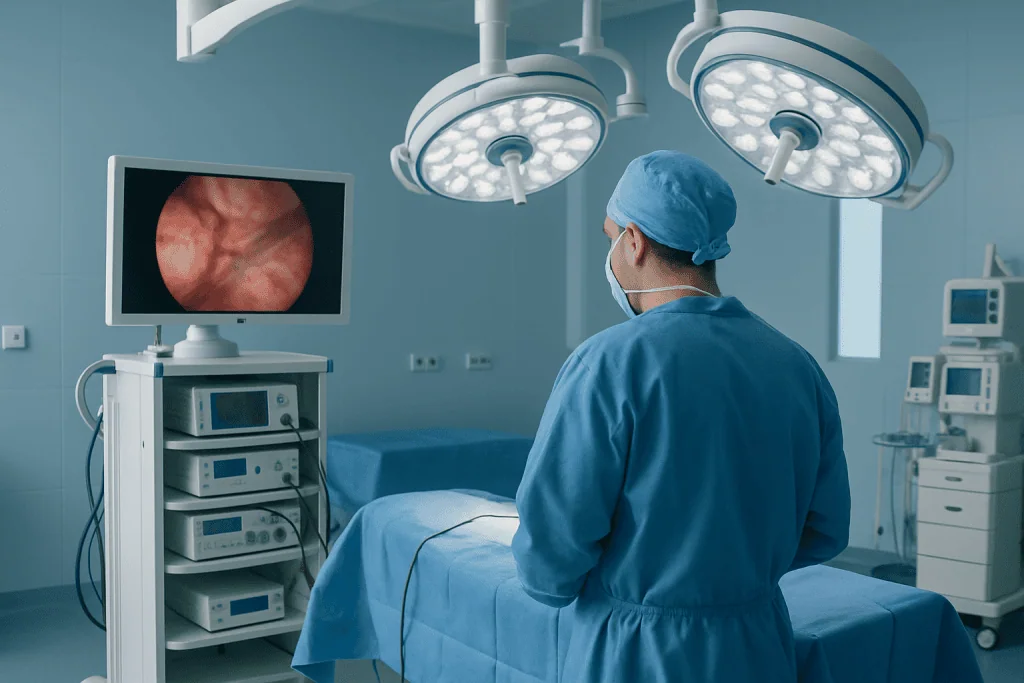
Single-port VATS is a form of minimally invasive chest surgery performed through one small incision (cut) rather than several. VATS stands for video-assisted thoracoscopic surgery. In this approach the surgeon inserts a thin camera called a thoracoscope, together with specially designed instruments, through a single opening in the side of the chest, usually about 3 to 4 centimeters long. The camera sends a magnified image to a screen, and the surgeon operates while watching that screen. You may also see the technique called uniportal VATS; the two names describe the same idea.
Conventional VATS typically uses two to four small incisions. Traditional open chest surgery, called a thoracotomy, uses one much longer incision and often requires spreading the ribs apart. Single-port VATS was developed to reduce the number of wounds and, in many cases, the amount of chest wall pain that follows surgery.
Single-port VATS is used for a wide range of conditions affecting the lungs, the pleura (the thin lining around the lungs), and the mediastinum (the central chest area between the lungs). Common uses include:
- Removing part of a lung affected by cancer, including a wedge resection (removing a small piece), a segmentectomy (removing a defined segment), or a lobectomy (removing one of the lobes of the lung).
- Taking a biopsy (tissue sample) from the lung or pleura when scans alone cannot give a diagnosis.
- Treating a pneumothorax (a collapsed lung caused by air leaking into the chest cavity), especially when it happens more than once.
- Draining or cleaning out infection in the chest cavity, known as empyema.
- Removing certain benign growths, cysts, or tumors of the mediastinum.
- Treating excess fluid around the lung, called a pleural effusion, when it keeps returning.
Who is a candidate: who needs single-port VATS
The question of who needs single-port VATS is answered case by case by a thoracic surgeon, a specialist in chest surgery. In general, the approach may be considered when a person needs chest surgery that could be done with a video camera and small instruments, and when the target area can be reached safely through one opening.
People who may be candidates often include those with:
- An early-stage lung cancer or a suspicious lung nodule that needs to be removed or sampled.
- A recurring pneumothorax that has not settled with simpler treatments such as a chest drain.
- A pleural effusion or empyema that requires surgical drainage.
- A small to moderate-sized mediastinal mass that appears well contained on imaging.
- Reduced fitness for open surgery, where a less invasive approach may be preferred if it is technically possible.
Single-port VATS is not suitable for everyone. Your surgeon may recommend a different approach, such as multi-port VATS, robotic surgery, or open thoracotomy, if:
- The tumor is very large, sits close to major blood vessels or the airway, or has grown into the chest wall.
- There is heavy scarring from previous chest surgery, infection, or radiation that makes safe camera access difficult.
- Lymph nodes or other structures need extensive removal that cannot be completed through a single incision.
- Heart or lung function is too limited to tolerate the one-lung ventilation (breathing support for one lung at a time) that is usually needed.
- Unexpected findings during surgery make it necessary to convert to a larger incision for safety.
Conversion to a bigger incision is not a failure; it is a planned safety option that surgeons discuss with patients before the operation.
How the single-port VATS procedure works
Understanding the single-port VATS procedure step by step can make the experience less stressful. The exact details vary with the reason for surgery, but the general sequence is similar.
Before the operation. You will have a consultation with the surgical team and an anesthesiologist (a doctor who manages anesthesia and pain control). Tests often include chest imaging such as a CT scan, breathing tests called pulmonary function tests, blood tests, and an electrocardiogram to check heart rhythm. If cancer is suspected, additional scans may be arranged to plan the extent of surgery.
During the operation. Single-port VATS is performed under general anesthesia, meaning you are fully asleep. A special breathing tube allows the anesthesiologist to deflate the lung being operated on so the surgeon has room to work. You are positioned on your side. The surgeon makes one incision between the ribs, usually on the side of the chest. The thoracoscope and the instruments pass through this same opening, often with a soft protective sleeve in place. Watching the screen, the surgeon carries out the planned procedure, for example removing a lobe of the lung and sealing the blood vessels and airway with surgical staplers. Removed tissue is placed in a bag and brought out through the same incision. At the end, a chest tube (a flexible drain) is placed through the incision or very close to it to remove air and fluid while the lung re-expands.
After the operation. You wake up in a recovery area where nurses monitor your breathing, heart rate, and pain. The chest tube is connected to a drainage system, and a chest X-ray is usually taken to confirm the lung has re-inflated. The procedure itself typically takes about one and a half to three hours, though complex cases can take longer.
Preparation for single-port VATS
Careful preparation helps reduce risk and supports a smoother recovery. Your team will give instructions tailored to you, but the following points are common.
- Stop smoking. Smoking increases the risk of breathing complications and slows wound healing. Even a few weeks without tobacco before surgery is generally considered helpful.
- Review your medicines. Blood-thinning medicines, some diabetes drugs, and certain supplements may need to be paused or adjusted. Never stop a prescribed medicine without direct guidance from your doctor.
- Practice breathing exercises. Many hospitals teach deep-breathing techniques or provide a small device called an incentive spirometer before surgery so you can use it confidently afterward.
- Fasting. You will usually be asked not to eat or drink for a set number of hours before the anesthesia.
- Plan your recovery. Arrange for someone to take you home and help with daily tasks for the first days. Prepare loose clothing that opens at the front, since raising your arm may be uncomfortable at first.
- Report new symptoms. Tell the team if you develop a cold, fever, or chest infection in the days before surgery, as the operation may need to be rescheduled.
Recovery and aftercare: single-port VATS recovery time
Single-port VATS recovery time varies widely depending on the operation performed, your general health, and your lung function before surgery. The timelines below are typical patterns, not promises.
In the hospital. Many patients spend between one and four nights in the hospital. The chest tube is usually removed once drainage is low and there is no ongoing air leak, often within a day or two, although some people need it longer. You will be encouraged to sit up, walk, and use breathing exercises from the first day to help prevent pneumonia and blood clots. Pain is managed with a combination of oral medicines and, in some cases, local anesthetic techniques placed during surgery.
The first two weeks at home. It is normal to feel tired and to have soreness around the incision and sometimes in the shoulder on the operated side. Short, frequent walks are encouraged. Most people can shower once the team confirms the wound is sealed, but soaking in a bath or pool is usually delayed until the incision has fully healed.
Two to six weeks. Many patients gradually return to light daily activities and desk-based work within two to four weeks. Driving is typically allowed once you are off strong pain medicines and can turn and brake comfortably. Lifting heavy objects and strenuous exercise are often restricted for four to six weeks.
Beyond six weeks. Breathlessness on exertion may continue to improve for several months, especially after a lobectomy, as the remaining lung adapts. Some people notice numbness or tingling near the scar that slowly fades over time.
Follow-up usually includes a wound check, a chest X-ray, and a review of any pathology (laboratory tissue) results. If the surgery was for cancer, the team will discuss whether further treatment such as chemotherapy is advised.
Single-port VATS risks and benefits
Weighing single-port VATS risks and benefits is a shared process between you and your surgeon. No operation is free of risk, and the benefits depend on your individual situation.
Possible benefits commonly described in the medical literature include:
- A single small wound, which many patients find easier to care for and cosmetically preferable.
- Less postoperative pain in many cases compared with open surgery, partly because the ribs are not spread apart.
- Shorter hospital stays and earlier return to normal activity for many patients compared with thoracotomy.
- Less blood loss and a lower risk of wound complications than a large incision.
Risks and side effects can include:
- Prolonged air leak, where air continues to escape from the lung surface and the chest tube must stay in longer.
- Bleeding, which in rare cases requires a return to the operating room or conversion to an open procedure.
- Infection of the wound or the chest cavity, or pneumonia.
- Irregular heart rhythm, most often atrial fibrillation, which is usually temporary.
- Blood clots in the legs or lungs.
- Persistent pain or numbness along the nerve running beneath the rib at the incision site.
- Injury to nearby structures such as blood vessels, the airway, the diaphragm, or the nerve that controls the voice box.
- The general risks of anesthesia, including reactions to medicines and breathing problems.
- Conversion to a larger incision if the single opening does not allow the operation to be completed safely.
People with significant heart or lung disease, older adults, and those having larger lung removals carry a higher overall risk. Your surgeon will explain how these factors apply to you.
Results and outlook
The evidence to date generally shows that, for suitable patients, single-port VATS can achieve results comparable to multi-port VATS for many operations, including lobectomy for early lung cancer, while offering a single incision. Studies comparing the approaches often report similar completeness of tumor removal and similar lymph node sampling when performed by experienced surgeons, along with less short-term pain in some reports. Long-term cancer outcomes appear to depend more on the stage of the disease and the completeness of the operation than on the number of incisions used.
For non-cancer conditions such as recurrent pneumothorax, the operation is generally effective at preventing further collapses when the leaking area is treated and the lung is encouraged to stick to the chest wall. For pleural infection, early surgical drainage can shorten illness compared with prolonged drainage by tube alone in appropriate cases.
Outcomes are influenced by surgeon experience, because single-port VATS demands specific skills in handling all instruments through one opening. It is reasonable to ask how often your surgical team performs this technique. In some hospital groups, such as Acibadem, these operations are managed within the Thoracic Surgery Department, which coordinates evaluation, surgery, and follow-up.
Cost considerations
The cost of single-port VATS varies considerably between countries, hospitals, and individual cases. Rather than a single price, several components usually shape the total:
- Type and complexity of the operation. A biopsy or pneumothorax repair generally involves fewer resources than a lobectomy with lymph node removal.
- Operating room time and anesthesia. Longer procedures use more staff time and medicines.
- Disposable devices. Surgical staplers, energy sealing devices, and the single-port access sleeve are typically single-use items and can form a significant part of the bill.
- Length of hospital stay. Each additional night, especially if a chest tube stays in longer or a complication occurs, adds cost.
- Diagnostic work-up. CT scans, PET scans, breathing tests, and laboratory analysis of removed tissue are often charged separately.
- Follow-up care. Clinic visits, repeat imaging, and any additional cancer treatment influence the overall expense.
- Insurance coverage. Whether the procedure is covered, and under what conditions, differs between insurers and national health systems.
Asking the hospital for an itemized estimate before surgery can help you understand which of these elements apply to your situation.
Frequently asked questions
Is single-port VATS better than regular VATS?
Not necessarily better in every case. Single-port VATS uses one incision instead of several, which many patients prefer and which may reduce pain in the short term. However, the safety and thoroughness of the operation depend mainly on the surgeon’s experience and on whether your anatomy suits the approach. For some patients, multi-port VATS or robotic surgery may be the more appropriate choice, and your surgeon can explain the reasoning.
How long does single-port VATS recovery time usually take?
Many patients leave the hospital within one to four nights and return to light activities within two to four weeks. Full recovery, including a return to strenuous exercise and complete settling of breathlessness, often takes six weeks or more, particularly after a lobectomy. Your own timeline depends on the operation, your lung function, and whether any complications occur.
Who needs single-port VATS rather than open surgery?
People with early-stage lung tumors, lung nodules needing a biopsy, recurrent pneumothorax, pleural infection, or small mediastinal masses are often considered for a minimally invasive approach. Open surgery is usually reserved for very large or invasive tumors, dense scarring, or situations where extensive reconstruction is needed. Only a thoracic surgeon who has reviewed your scans and health history can advise which approach is safest for you.
Is the single-port VATS procedure painful?
Some pain is expected, mainly around the incision and sometimes in the shoulder, because the nerves between the ribs are sensitive. In many cases the pain is less intense and shorter-lasting than after open surgery. Pain is usually controlled with oral medicines and, in some cases, local anesthetic blocks. A minority of people experience lingering discomfort or numbness at the scar for several months.
What are the main single-port VATS risks and benefits I should ask about?
Useful questions include the likelihood of needing to convert to a larger incision, the expected length of chest tube drainage, the risk of prolonged air leak or infection, and how the team manages pain. On the benefit side, ask what the surgeon expects in terms of hospital stay and return to activity for someone in your situation. Honest answers will describe ranges and probabilities rather than guarantees.
Will I have a visible scar after single-port VATS?
You will have one scar, typically 3 to 4 centimeters long, on the side of the chest. It usually fades over many months. Because the chest tube is often placed through the same opening, most people do not have a second scar, though this varies with the surgeon’s technique.
Can single-port VATS be used for lung cancer at any stage?
It is most commonly used for early-stage cancers that are confined to the lung. Larger tumors, those that have invaded nearby structures, or cases that need removal of many lymph nodes or part of the chest wall may require a different approach. Your cancer team will consider stage, location, and your overall fitness before recommending a surgical method.
When to see a doctor
You should be assessed by a specialist if you have a lung nodule or mass found on imaging, a collapsed lung that has happened more than once, a fluid collection around the lung that keeps returning, persistent chest infection that does not clear with antibiotics, or a growth in the mediastinum found on a scan. Ongoing symptoms such as a cough lasting several weeks, coughing up blood, unexplained weight loss, or new shortness of breath also deserve medical evaluation, although they can have many causes and do not by themselves mean surgery is needed.
After single-port VATS, seek urgent medical care if you notice any of the following:
- Sudden or worsening shortness of breath, or chest pain that is sharp and new.
- Coughing up more than a small streak of blood.
- Fever above 38 degrees Celsius (100.4 degrees Fahrenheit), shaking chills, or feeling generally unwell.
- Redness, swelling, warmth, pus, or increasing pain at the incision.
- A rapid or irregular heartbeat, dizziness, or fainting.
- Pain, swelling, or warmth in one leg, which can signal a blood clot.
- Air bubbling under the skin near the wound or a feeling of crackling when pressed.
These symptoms may indicate complications such as bleeding, infection, a recurrent air leak, or a blood clot, all of which are treatable when recognized early. If in doubt, it is safer to be checked than to wait.
Preparation
- Stop smoking as early as possible before surgery and review all medicines, including blood thinners and supplements, with your surgical team. Complete the requested tests such as CT imaging, breathing tests, blood tests, and an electrocardiogram. Follow fasting instructions before anesthesia, practice deep-breathing exercises, and arrange help at home for the first days after discharge.
Aftercare
- Walk and use breathing exercises from the first day to reduce the risk of pneumonia and blood clots, and take pain medicines as directed. Keep the incision clean and dry until your team confirms it has sealed, and avoid heavy lifting or strenuous exercise for about four to six weeks. Attend follow-up visits for wound checks, chest X-rays, and review of laboratory results.
Medically reviewed by the Acıbadem International Medical Board September 13, 2026
See our medical review board →
Update history
- PublishedSeptember 13, 2026
- Medical review approvedSeptember 13, 2026
- Last content updateSeptember 13, 2026
References3
From the Acibadem Blog

Single-Port VATS Recovery: Breathing Exercises, Drain Removal and Walking From Day One
Single port VATS recovery usually starts within hours of surgery: patients are asked to breathe deeply and cough, sit up and walk on the…