

Deep Plane Facelift in Turkey: SMAS Comparison, Recovery, Cost
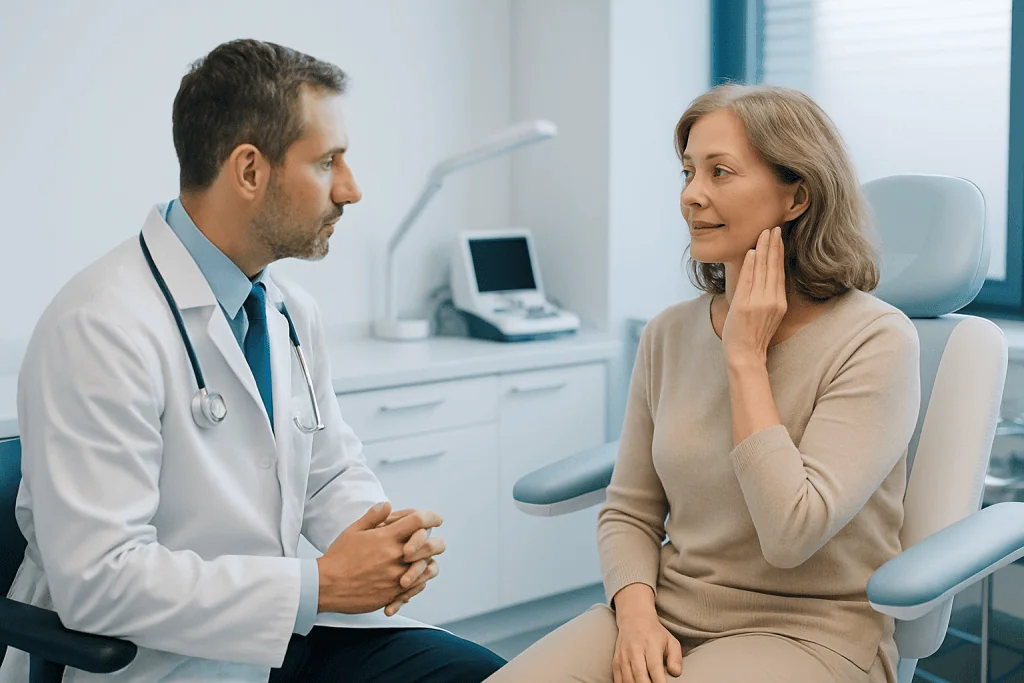
A deep plane facelift in Turkey attracts interest from patients in the United Kingdom, Ireland and North America who want a surgical answer to jowls, a softened jawline and loose neck skin, and who are weighing the option of having that surgery in a full hospital rather than a stand-alone clinic. The term deep plane describes a particular way of performing a facelift, not a separate operation: the surgeon works beneath the SMAS layer and repositions skin and deeper tissue together, which many surgeons feel gives a more natural-looking lift of the mid and lower face than techniques that tighten the surface.
The sections below explain how a deep plane facelift differs from a SMAS facelift, who it suits and who should avoid it, what the operation involves at Acıbadem in Istanbul, how recovery unfolds, where the risks lie, and how the pathway in Türkiye compares with private treatment in the UK or the US. Cost is addressed in general terms; the verified price band beneath these sections gives the actual figures for the UK, the US and Türkiye.
What a deep plane facelift is and who it suits
A facelift, or rhytidectomy, is a surgical facial rejuvenation procedure that tightens sagging skin and deeper tissues to reduce visible ageing in the lower face, jawline and neck. Underneath the skin sits a thin fibrous and muscular sheet called the SMAS (superficial musculoaponeurotic system). How a surgeon handles this layer is what separates one facelift technique from another.
Deep plane vs SMAS facelift
In a conventional SMAS facelift the surgeon lifts the skin off the SMAS, then tightens the SMAS separately, usually by folding or trimming it and fixing it with sutures. In a deep plane facelift the surgeon enters the layer beneath the SMAS, releases the ligaments that tether the cheek and jowl to the underlying bone, and moves skin and SMAS together as a single composite flap. Because the skin is not pulled independently, tension on the skin itself is lower and the lift acts on the sagging tissue rather than on the surface.
Neither technique is universally superior. The choice depends on facial anatomy, skin quality, the degree of sagging and the surgeon’s training, and both fall within the same clinical facts described on this page.
Who it suits
- Adults with moderate to advanced sagging of the cheeks, jowls, jawline or neck
- People in good general health with stable weight
- Non-smokers, or smokers prepared to stop well before and after surgery
- Patients with realistic expectations of what a surgical lift can and cannot change
Who should not have it
A deep plane facelift is not appropriate for people with uncontrolled medical conditions such as poorly managed diabetes, heart or clotting disorders, those who cannot pause blood-thinning medicines, active smokers unwilling to stop, or anyone seeking to change skin texture, pigmentation or fine lines alone, which a lift does not address. It is also unsuitable for anyone unable to commit to the recovery period.
Why patients from the UK and the US choose a deep plane facelift in Istanbul
Patients researching a deep plane facelift in Istanbul are usually not looking for a bargain. They are looking for a surgeon experienced in this specific technique, a hospital environment behind that surgeon, and a timetable they control. Those three things are what Acıbadem offers international patients.
Hospital medicine, not clinic medicine
A facelift is a several-hour operation under general anaesthesia on the face and neck, close to the facial nerve and major vessels. At Acıbadem it is performed in a hospital operating theatre with a consultant anaesthetist, recovery nursing, an intensive care unit and diagnostic imaging in the same building. That infrastructure is rarely used, but its presence changes how safely unexpected events can be handled.
JCI accreditation
Seven hospitals in the Acıbadem network, which comprises more than 20 hospitals, hold Joint Commission International accreditation, the same standard many UK and US private hospitals reference. Accreditation covers infection control, medication safety, surgical checklists and patient records, not just the theatre itself.
Experience with international patients
The group’s international patient service works in English every day, from the first medical review to the discharge letter. Acibadem Maslak Hospital in Istanbul, for example, receives patients from Europe, North America and the Gulf, so the practicalities of a visitor recovering away from home are familiar rather than exceptional.
No waiting list
Facelift surgery is not offered on the NHS for cosmetic reasons, and private lists in London or major US cities can be long. In Türkiye, once the medical review is complete, dates are usually a matter of weeks. London to Istanbul is roughly a four-hour flight; New York to Istanbul roughly ten.
How a deep plane facelift with Acıbadem works, step by step
The pathway is designed so that most decisions are made before travel, and the time in Istanbul is spent on surgery and recovery rather than on paperwork.
- Remote medical review. You send recent photographs of your face in standard views, a medical history and a list of medicines and supplements. A plastic surgeon reviews them and indicates whether a deep plane facelift, a SMAS facelift or a combination with neck work is likely to be appropriate. This review is free and does not commit you.
- Personal plan. You receive a written plan: the proposed technique, anaesthesia type, expected duration, hospital stay, a recommended length of stay in Istanbul, and a personal quote based on the review.
- Arrival and coordinator. A patient coordinator meets you at the airport, arranges transfers and remains your single contact for the whole stay, including appointments, interpreting and hotel questions.
- Consultation and pre-operative tests. The surgeon examines you in person, discusses expectations, and finalises the plan according to skin quality, facial structure and degree of sagging. Blood tests and an anaesthesia evaluation are completed, and consent is signed.
- The operation. Surgery under general anaesthesia, lasting roughly 2 to 5 hours depending on the extent of work.
- Recovery in Istanbul. Discharge the same day or after one night, followed by dressing and suture checks over the following days.
- Follow-up after returning home. Remote check-ins with the surgical team, a discharge summary for your GP, and a clear route to contact the hospital if anything concerns you.
Each step is documented, so your own doctor at home can see exactly what was done and why.
The procedure: technique, anaesthesia, duration and hospital stay
A deep plane facelift is a surgical procedure performed under general anaesthesia. You are fully asleep, monitored throughout by an anaesthetist, and wake in a recovery area before returning to your room.
Preparation
Preparation begins with a detailed consultation, facial assessment, medical history review and an open discussion of expectations. Blood tests and an anaesthesia evaluation are usually required. You should stop smoking and avoid blood-thinning medicines or supplements as advised by the surgical team, because both increase bleeding and impair healing of the facial flap. The surgical plan is personalised to your skin quality, facial structure and degree of sagging; no two facelifts follow an identical template.
What happens in theatre
Incisions are placed along the hairline and around the ear so that they sit in natural creases. Working beneath the SMAS, the surgeon releases the retaining ligaments, repositions the composite flap of skin and deeper tissue upward and backward, secures it, and removes only the excess skin that results, without tension on the skin itself. Where the neck is involved, the platysma muscle may be addressed through the same approach or a small incision under the chin.
Duration and stay
- Anaesthesia: general
- Operating time: 2 to 5 hours, depending on whether the neck and mid-face are included
- Hospital stay: same day or one night
Most international patients stay one night so that the first dressing check and the first hours after anaesthesia take place with nurses present rather than in a hotel room.
Recovery and aftercare timeline
Recovery from a deep plane facelift is measured in weeks for the visible phase and in months for the final settling. The team gives written instructions, but the outline below reflects what most patients can expect.
First days
Swelling, bruising and a feeling of tightness are expected. Keep your head elevated, including when sleeping, avoid bending or lifting, and protect the incisions from moisture and friction. A light dressing is checked and changed at the hospital. Pain is usually moderate and controlled with prescribed medicines.
First week in Istanbul
Sutures around the ear and hairline are checked and removed in stages according to the surgeon’s schedule. Swelling peaks and then begins to subside. Short walks are encouraged; strenuous activity is not. Most patients are asked to remain in Istanbul until the surgeon confirms the wound is healing well and it is safe to fly.
Weeks two to four
Bruising fades and the face begins to look presentable with light camouflage. Numbness around the ears and cheeks is common and gradually improves. Many people return to desk work and social life within this window, which matches the 2 to 4 week recovery time quoted for the procedure. Exercise, saunas and sun exposure remain restricted.
Beyond one month
Residual swelling continues to settle and final facial contour refinement may continue for several months. Scars mature over the same period. Follow-up continues remotely, and your GP or own doctor should be aware of the operation and the discharge plan.
What it costs: UK, US and Türkiye
Typical self-pay ranges from the Turkey Medical Price Index. Türkiye figures are guide ranges for hospital treatment; your personal quote follows a free medical review.
Source: Turkey Medical Price Index (quarterly edition). Ranges depend on the extent of treatment, materials and hospital stay; they are not a quote.
Safety and risks
A deep plane facelift is major elective surgery, and honest counselling about risk is part of good care.
Who is not suitable
Patients with uncontrolled medical conditions, clotting disorders, active smokers, those who cannot stop blood thinners, people with unrealistic expectations and anyone unable to follow aftercare instructions should not proceed. The surgeon may also decline a deep plane approach in favour of a SMAS technique where anatomy makes the deeper dissection less appropriate.
Complications
- Haematoma (bleeding under the flap), the most common early problem, which may need drainage
- Infection or delayed wound healing, particularly in smokers
- Temporary or, rarely, lasting weakness of a branch of the facial nerve, a specific consideration in deep plane dissection because the surgeon works close to these nerves
- Numbness of the cheeks or ears
- Visible or widened scars, hair loss at the incision line
- Asymmetry or an appearance that does not match expectations
- General anaesthetic risks such as nausea, chest infection or clot formation
What cases that go wrong abroad usually share
Reports of poor outcomes after cosmetic surgery abroad tend to have common features: a plan agreed only by messaging, with no surgeon review before travel; surgery within a day or two of landing; a facility without on-site anaesthetists, intensive care or blood bank; several procedures combined in one long session; and a flight home before healing is confirmed, with nobody to call afterwards.
How a hospital setting changes that
In a hospital, the anaesthetist and surgeon see you before surgery, a haematoma can be dealt with in theatre at any hour, imaging and laboratory support are down the corridor, and follow-up is scheduled rather than improvised. None of this removes risk, but it means that when problems occur they are managed where they should be.
UK and US vs Türkiye: how the deep plane facelift pathway and cost compare
The question of deep plane facelift cost in Turkey is usually the starting point for patients, so it helps to understand what sits behind the numbers before reading the price band below.
Pathway differences
In the UK, a facelift is not available on the NHS for cosmetic reasons, so the comparison is with private practice. Private consultations and surgery dates can involve months of waiting, and aftercare is typically local and convenient. In the US, the procedure is almost always self-pay and pricing varies widely by city and surgeon. In Türkiye, the wait is short, but you must travel, stay in Istanbul for the early recovery and arrange follow-up across a distance.
What the lower cost means, and does not mean
Costs in Türkiye are lower mainly because salaries, property, insurance and administrative overheads are lower than in London or New York. Sutures, anaesthetic drugs, monitoring equipment and implants are sourced from the same international manufacturers. The lower cost does not mean a shorter operation, a lesser theatre or an inexperienced surgeon, but it also does not remove the need to check who is operating and where.
Compare like for like
- Is the surgeon a board-certified plastic surgeon who regularly performs deep plane dissection?
- Is the operation performed in an accredited hospital with an anaesthetist and intensive care on site?
- Does the quote include pre-operative tests, the hospital night, dressings, medicines, transfers and follow-up visits?
- How many nights of accommodation are included, and what happens if healing takes longer than planned?
- Who do you contact at three weeks, or three months, if something worries you?
The Price Index band beneath these sections shows verified UK, US and Türkiye figures; your personal quote follows the free medical review.
Planning the trip to Istanbul
Good planning removes most of the stress from travelling for surgery. The coordinator handles the details, but these are the points to settle before booking flights.
Passport and entry
UK, Irish, US, Canadian and Australian passport holders currently enter Türkiye visa-free for stays of up to 90 days. Check the current rules on your government’s travel advice site before departure, and make sure your passport has adequate validity beyond your return date.
How long to stay
For a deep plane facelift, most patients are advised to remain in Istanbul for around 7 to 10 days so that the hospital night, dressing checks and suture removal are completed and the surgeon confirms you are fit to fly. Your personal plan states the recommended stay for your case; build in a buffer rather than booking the earliest possible return.
Companion
A companion is strongly recommended. You should not be alone on the night after discharge, and in the first days you may find dressing care, medication timing and simple tasks easier with help. Hotels near the hospital are arranged with this in mind.
Travel insurance
Standard travel insurance excludes planned medical treatment and its complications. Look for a policy that specifically covers elective treatment abroad, or a medical travel policy, and read the exclusions carefully. Ask the hospital what its own complication cover includes.
What to bring
- Passport, flight details and printed copies of your medical plan
- A list of current medicines and any allergy information
- Loose, front-fastening clothing and a wide-brimmed hat
- A travel pillow to help keep your head elevated
- Sunglasses and gentle skincare products approved by the team
Back home: follow-up, your GP and insurance
The surgical episode ends in Istanbul, but recovery continues at home, and the handover matters.
Follow-up with your own doctor
You leave with a discharge summary describing the technique, anaesthesia, any implants or sutures used, medicines prescribed and the aftercare plan. Give a copy to your GP or own doctor and let them know you have had surgery abroad. Remote follow-up with the Acıbadem surgical team continues by video or secure messaging at agreed intervals, and photographs can be reviewed by the surgeon who operated.
When to seek help
- Sudden one-sided swelling, increasing pain or a firm, tense area under the skin
- Fever, spreading redness, or discharge from an incision
- New weakness of facial movement that was not present at discharge
- Calf pain, chest pain or breathlessness after the flight, which need urgent local assessment
For anything urgent, use local emergency services first and inform the hospital afterwards; do not wait for a scheduled remote appointment.
Insurance, NHS and your own doctor
Private medical insurance in the UK very rarely covers elective cosmetic treatment abroad or its complications, so check your policy wording in advance. The NHS treats complications from surgery abroad as it treats any other patient presenting with a medical problem, but it does not carry out revision cosmetic surgery, and your GP may reasonably expect the operating team to remain involved. For readers in the United States, HSA and FSA eligibility for cosmetic procedures is limited, and travel-medical policies vary considerably in what they cover; confirm the position with your plan administrator before committing.
Questions to ask before deciding on a deep plane facelift in Turkey
A calm decision is a well-informed one. Take this list to any consultation, in Türkiye or at home, and expect clear, specific answers.
About the surgeon
- Are you a board-certified plastic surgeon, and how regularly do you perform deep plane facelifts?
- Why do you recommend a deep plane technique rather than a SMAS facelift for my face, or the reverse?
- Will you personally perform the whole operation?
About the hospital
- Is the theatre inside an accredited hospital, and is there an anaesthetist and intensive care on site?
- How would a haematoma or nerve concern be managed on the first night?
- Who is my named contact during the stay and after I return home?
About the plan and recovery
- What is the expected operating time and hospital stay for my case?
- How many days should I remain in Istanbul, and what happens if healing is slower?
- What does the quote include, and what would count as an extra?
- What can this operation realistically change, and what can it not?
- How will my GP be kept informed, and what should prompt me to seek help locally?
About yourself
- Am I prepared to stop smoking and pause blood-thinning medicines as advised?
- Can I take 2 to 4 weeks away from strenuous activity and public commitments?
- Do I have a companion and adequate insurance for planned treatment abroad?
If any answer is vague, take that as useful information rather than a detail to overlook. Whether a deep plane facelift is right for you is determined by a physician’s evaluation of your health, anatomy and expectations.
What is the difference between a deep plane and a SMAS facelift?
In a SMAS facelift the skin is lifted off the SMAS layer and the SMAS is tightened separately with sutures. In a deep plane facelift the surgeon works beneath the SMAS, releases the ligaments holding the cheek and jowl, and moves skin and SMAS together as one flap, so tension falls on the deeper tissue rather than the skin. Both are established techniques, and the choice depends on anatomy, skin quality and the surgeon's assessment.
How long does a deep plane facelift take and what anaesthesia is used?
The operation is performed under general anaesthesia and takes roughly 2 to 5 hours, depending on whether the neck and mid-face are included. You are monitored by an anaesthetist throughout. Discharge is the same day or after one night in hospital.
How long should I stay in Istanbul after the operation?
Most patients are advised to remain in Istanbul for around 7 to 10 days so that dressing checks and suture removal are completed and the surgeon confirms it is safe to fly. Your personal plan gives the recommended stay for your case. Allow a buffer in case healing takes a little longer than expected.
How much does a deep plane facelift cost in Turkey compared with the UK?
Costs in Türkiye are lower mainly because salaries, property and overheads are lower than in the UK or US, while surgical materials come from the same international suppliers. The verified UK, US and Türkiye price band appears beneath the sections above. A personal quote follows a free medical review of your photographs and history.
What is the recovery time for a deep plane facelift?
The main recovery takes around 2 to 4 weeks, during which swelling, bruising and tightness gradually improve and most people return to desk work and social life. Head elevation, protecting the incisions and avoiding strenuous activity are important in this period. Final contour refinement may continue for several months.
Is a deep plane facelift riskier than a SMAS facelift?
Deep plane dissection works closer to branches of the facial nerve, so temporary weakness is a specific consideration and surgeon experience with the technique matters. Haematoma, infection, numbness and scarring are risks with any facelift. A hospital setting with an anaesthetist and intensive care on site allows complications to be managed promptly.
Can I combine a deep plane facelift with a neck lift or eyelid surgery?
Neck work is often part of a deep plane facelift because the same approach addresses the jawline and platysma. Other procedures may be discussed at consultation, but the surgeon and anaesthetist decide what is safe to combine in one session for your health and the total operating time. Combining too much in one long operation is one of the features seen in cases that go wrong abroad.
Will the NHS or my insurance cover follow-up after surgery in Turkey?
The NHS treats complications from surgery abroad as it treats any medical problem, but it does not carry out cosmetic revision and expects the operating team to remain involved. UK private medical insurance rarely covers elective treatment abroad, and standard travel insurance excludes planned procedures. Look for a policy that specifically covers treatment abroad, and give your GP a copy of the discharge summary.
Your care team
Physicians of the Acıbadem network who perform this treatment in Istanbul.
 Where it is performed Acibadem Maslak Hospital İstanbul · JCI-accredited hospitals
Clinical guide & data
The evidence-based pages behind this guide.
Read this treatment guide in your language
Planning tools for this treatment
Indicative figures for orientation only: your written plan and quote follow a free medical review.