

Dental Implants in Turkey: All-on-4, Full Mouth, Safety & Cost
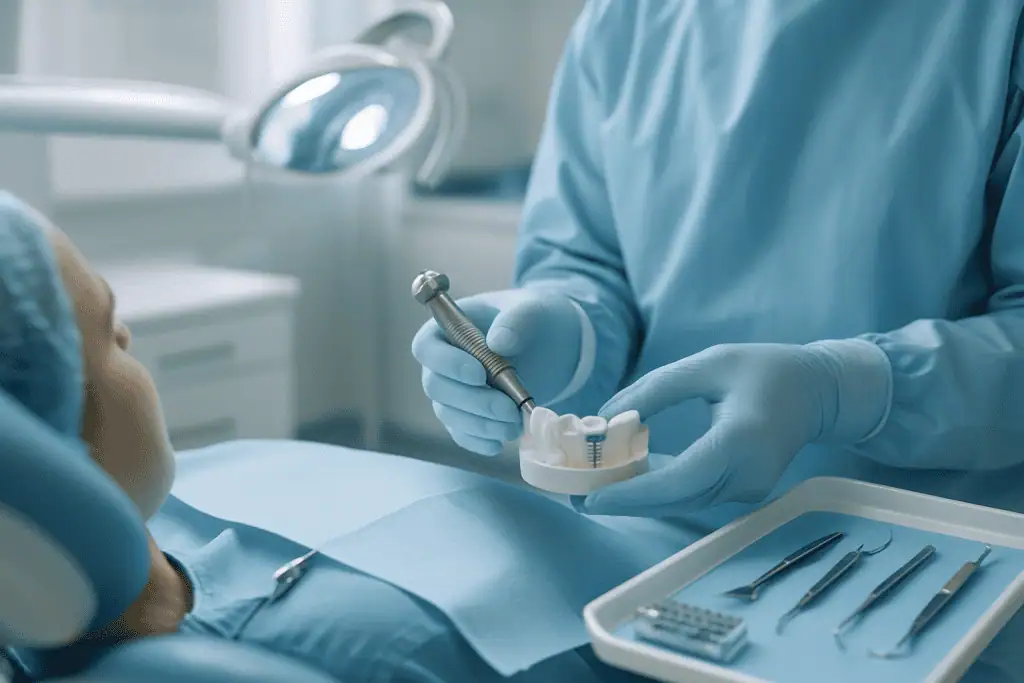
Dental implants in Turkey have become one of the most frequently researched treatments among people in the United Kingdom, Ireland, North America and Australia who have lost one tooth, several teeth or a whole arch. Part of the interest is practical: waiting times and self-pay fees at home can make replacing missing teeth feel out of reach. Part of it is curiosity mixed with caution, because stories about dental work abroad range from very positive to very poor, and it is not always easy to tell what separates the two.
This page is written to help you make that distinction. It explains what dental implants are and who they suit, how the pathway works when you travel to Istanbul with Acıbadem, what the surgery involves, how recovery unfolds, where the genuine risks lie, and how a hospital-based approach differs from a clinic-only one. It also answers the questions people type into search engines: All-on-4 and All-on-6 in Turkey, so-called same-day implants, full-mouth packages, and the honest meaning of the cost difference. It is not a substitute for a consultation with your own dentist, and we would encourage you to involve them at every stage.
What dental implants are and who they suit
A dental implant is a small biocompatible post, usually titanium, placed into the jawbone to take the role of a missing tooth root. Once the bone has healed around it, the post supports a crown, a bridge or a denture. Because the replacement is anchored in bone rather than resting on the gum, implants help restore chewing function and appearance, and they help maintain jawbone volume in the area where a tooth has been lost.
Who is usually a candidate
- Adults with one or more missing teeth, or teeth that cannot be saved
- People with adequate bone volume, or who are willing to have bone grafting first
- Patients with healthy gums or gum disease that has been treated and stabilised
- People able to maintain good oral hygiene and attend follow-up
Who may not be suitable, or may need extra steps
- Anyone with uncontrolled diabetes or other conditions that impair healing
- Patients taking certain medications that affect bone metabolism
- Heavy smokers who are unwilling to stop before and during healing
- People with active, untreated gum disease
- Younger patients whose jaws are still growing
None of these is an automatic refusal; several are reasons to plan more carefully or to treat an underlying problem first. That is why a remote medical review comes before any travel plans, and why your own dentist’s input is valuable. If you are researching turkey dental implants because a quotation at home was daunting, the first useful step is not booking a flight but establishing whether implants are the right treatment for you at all.
Why UK and US patients travel to Turkey for dental implants
The reasons people from the United Kingdom and the United States consider dental implants abroad tend to fall into three groups: access, cost and setting. Access is straightforward: there is no waiting list for planned treatment, so a patient who has decided to proceed can be assessed and scheduled without months of delay. Cost is discussed on its own later on this page, without figures, because a price quoted before a medical review is not a price anyone should rely on.
The third reason is the one most relevant to safety. Acıbadem provides dental implant treatment as hospital medicine rather than as high-street dentistry. The network includes seven JCI-accredited hospitals among more than 20 hospitals, with over 3,300 physicians across specialties. In practice that means implant surgery takes place in a building where anaesthesiology, radiology, laboratory services and intensive care are on site, where infection-control procedures are audited to international hospital standards, and where a medical problem arising during or after surgery can be handled by the right specialist without transferring you elsewhere.
The hospitals also have long experience with international patients. International patient coordinators handle scheduling, interpreting and documents, and clinicians are accustomed to writing reports for GPs and dentists in other countries. Istanbul itself is around four hours by air from London and roughly ten hours from New York, which makes both the treatment visit and the later restoration visit realistic for people with ordinary jobs and family commitments.
None of this makes travel the right choice for everyone. It does mean that, for a patient who has decided to look at dental implants in Turkey, there is a hospital-based pathway that can be compared, like for like, with private care at home.
How dental implants in Turkey work with Acıbadem, step by step
The pathway is designed so that most decisions are made before you leave home, and nothing clinically important is rushed once you arrive.
- Remote medical review. You send recent dental X-rays or a 3D scan if you have them, photographs, a list of medications and a summary of your medical history. A dentist reviews them and tells you whether implants look feasible, whether bone grafting is likely, and which approach is appropriate. This review is free of charge and carries no obligation.
- Personal plan and quotation. You receive a written plan and an itemised personal quote. The site’s Price Index shows verified ranges separately for orientation, but only the personal quote reflects your case.
- Arrival and coordinator. An international patient coordinator meets you, arranges transfers and interpreting, and remains your contact throughout.
- Consultation and pre-operative tests. A face-to-face examination, panoramic X-ray or 3D imaging to confirm bone volume, and a review of gum health and medications. If anything differs from the remote assessment, the plan is revised before surgery, not after.
- The treatment. Implant placement under local anaesthesia as an outpatient, typically one to three hours.
- Recovery in Istanbul. A short stay for initial healing and a check before you fly.
- Follow-up after returning home. Remote check-ins during the integration period, records shared with your own dentist, and a return visit to fit the final restoration.
One hospital frequently used for international dental patients is Acıbadem Maslak Hospital, but the pathway is the same across the network.
The procedure: single implants, All-on-4, All-on-6 and same-day options
Dental implant placement is a surgical procedure. In the cases described on our treatment page it is performed under local anaesthesia, takes between one and three hours depending on how many implants are placed and whether grafting is needed, and is done on an outpatient basis with no overnight stay.
Preparation
Before surgery your dentist uses a dental examination together with a panoramic X-ray or 3D imaging to assess bone volume and plan exactly where each implant will sit. Medical history, medications and gum health are reviewed, and the need for bone grafting is decided. Stopping smoking and establishing good oral hygiene are usually recommended beforehand.
Single and multiple implants
One implant can support one crown; several implants can support a bridge spanning a larger gap.
All-on-4 and All-on-6 dental implants in Turkey
These are full-arch approaches in which a fixed bridge replacing all the teeth in one jaw is supported by four or six implants rather than one implant per tooth. Whether four, six or a different number is appropriate depends on bone quality and distribution, bite forces and the imaging findings; it is a clinical decision, not a menu choice.
Same-day dental implants in Turkey
The phrase usually refers to fitting a provisional restoration soon after implant placement so that the patient is not without teeth. Whether this is advisable depends on how stable the implants are at surgery. The final restoration is placed only after the implants have integrated with the bone, which takes three to six months. Anyone promising a permanent full set in a single visit is describing something that does not match how bone heals.
Recovery and aftercare timeline
Recovery from dental implant surgery happens in two distinct phases, and understanding both helps you plan travel realistically.
Days 1 to 7: initial healing
Mild swelling, tenderness and minor bleeding are normal for a few days. They are managed with prescribed medication and cold compresses. You will be asked to follow soft-food guidance, keep the implant area clean as instructed, and avoid smoking, which interferes with healing. Most patients can manage ordinary daily activity within a day or two, and initial healing is usually complete within three to seven days. A check before you fly home confirms that the site is settling as expected.
Months 1 to 6: integration
Beneath the gum, bone grows onto the implant surface in a process called osseointegration. This takes three to six months and cannot be hurried. During this period:
- You continue meticulous but gentle oral hygiene around the site
- You avoid loading the implants beyond what your dentist allows, particularly if a provisional restoration is in place
- You attend remote or local follow-up so that healing can be monitored
- You report anything unusual promptly rather than waiting for your next appointment
Fitting the final restoration
Once integration is confirmed, the final crown, bridge or full-arch restoration is fitted. For international patients this typically means a second, shorter visit. It is worth building this into your plans from the outset, because a full-mouth dental implants Turkey plan that has no second visit either uses provisional work as if it were permanent or leaves the final stage undefined.
Long-term, implants need the same care as natural teeth: daily cleaning, regular hygienist visits and periodic checks with your own dentist.
What it costs: UK, US and Türkiye
Typical self-pay ranges from the Turkey Medical Price Index. Türkiye figures are guide ranges for hospital treatment; your personal quote follows a free medical review.
Source: Turkey Medical Price Index (quarterly edition). Ranges depend on the extent of treatment, materials and hospital stay; they are not a quote.
Safety and risks: is it safe to have dental implants in Turkey?
The honest answer is that safety depends far more on where and how the treatment is done than on the country. Implant surgery carries the same risks in Istanbul as in London or Boston; what differs is how those risks are anticipated and managed.
Who should not proceed
People with uncontrolled medical conditions affecting healing, those on medications that alter bone metabolism, patients with untreated gum disease, and heavy smokers unwilling to pause are at higher risk of implant failure and should address these issues first. A responsible remote review will say so, even if it means postponing or declining treatment.
Complications
- Infection at the implant site
- Failure of the implant to integrate, requiring removal
- Injury to nearby nerves, causing numbness or altered sensation
- Sinus involvement with upper-jaw implants
- Later inflammation around the implant, known as peri-implantitis
- Mechanical problems with the restoration
What cases that went wrong abroad usually share
Reports of poor outcomes tend to have common features: planning compressed into a single visit with no prior imaging review; a large number of extractions and implants done in one sitting to fit a flight schedule; no hospital backup when a medical problem arose; and no defined follow-up, leaving the patient’s home dentist to untangle unfamiliar components without records.
How a hospital setting changes that
In a JCI-accredited hospital, imaging and medical review precede surgery, sterilisation and infection control are audited, an anaesthesiologist and other specialists are available on site, and documentation is written to be shared. Complications can still occur, but they are recognised and managed within the same institution, and your own dentist receives the information needed to help you afterwards.
UK and US vs Türkiye: cost, waiting and aftercare compared
People searching for turkey dental implant cost or full mouth dental implants turkey price are usually asking two questions at once: why is it cheaper, and is something being left out. Both deserve straight answers, even though this page does not quote figures.
Why the cost is lower
Salaries, rents and operating overheads in Türkiye are lower than in the United Kingdom or the United States. Hospitals here work with the same internationally recognised implant systems, restorative materials and imaging equipment used elsewhere, so the difference reflects the cost of running a hospital, not a different product. A personal quote follows the free medical review; the site’s Price Index shows verified ranges separately.
What the lower cost does not mean
It does not mean shortcuts in sterilisation, imaging or materials in a hospital setting. It also does not mean every low quotation found online is equivalent. A figure quoted without imaging is a guess.
How the pathway differs
- Waiting. NHS access to implants is very limited; private treatment at home may involve several appointments over months. In Türkiye, assessment and surgery are scheduled without a waiting list.
- Payment. Both routes are usually self-pay; abroad, travel and accommodation are added.
- Aftercare. At home, follow-up is a short journey away. Abroad, it relies on structured remote follow-up, a planned return visit and cooperation with your own dentist.
What to compare like for like
Ask for the implant brand and components, the number of visits, whether grafting and provisional restorations are included, what follow-up is provided, and how complications are handled. A full mouth dental implants turkey package that is silent on these points cannot be meaningfully compared with a quotation at home.
Planning your trip to Istanbul for dental implants
Once your plan is agreed, the practical side is manageable, but a few things are easier to get right in advance.
Documents and entry
UK, Irish, US, Canadian and Australian passport holders enter Türkiye visa-free for up to 90 days. Check current rules before travelling, and ensure your passport has sufficient validity. Bring printed and digital copies of your treatment plan, medication list and any recent imaging.
How long to stay
For implant placement, most patients stay long enough for the surgery, initial healing and a pre-departure check, which usually means several days in line with the three-to-seven-day initial healing period. If extractions or grafting are planned, your coordinator will advise on a longer stay. A second, shorter visit is needed after three to six months to fit the final restoration. Do not book flights until the clinical plan has confirmed the timings.
Companion
Local anaesthesia means you can travel to and from the hospital yourself, but many patients find a companion helpful for the first day or two, particularly after full-arch surgery.
Travel insurance
Standard holiday insurance usually excludes planned medical treatment. Look for a policy that explicitly covers travel for elective treatment, including cancellation if your health changes and repatriation if needed. Read the exclusions carefully.
What to bring
- Regular medications in their original packaging
- Soft, comfortable clothing and a travel pillow for the return flight
- Contact details for your GP and dentist
- A means of contacting your coordinator at all hours
Istanbul is roughly four hours from London and around ten hours from New York, which keeps both visits within reach of ordinary annual leave.
Back home: follow-up, records and insurance
Treatment does not end at the airport. The months after implant placement are when integration happens, and they should be supervised.
Follow-up with your own dentist or GP
Before you travel, tell your dentist what is planned. Afterwards, book a check with them within the first weeks and again before your return visit. Acıbadem provides a written report describing the implant system, components, positions and any grafting, along with post-operative imaging, so that your dentist has what they need to monitor you and to maintain the restoration in future years.
Sharing records
Ask for your records in a format your dentist can use, and keep copies yourself. Component details matter: a future dentist can only service an implant if they know what was placed.
When to seek help
Contact your dentist or the hospital’s international team promptly if you notice increasing rather than decreasing pain after the first few days, swelling that worsens, persistent bleeding, fever, a loose provisional restoration, or new numbness. In an emergency, use local services as you would for any other condition.
Insurance, NHS and your own doctor
Private dental or medical insurance rarely covers elective treatment abroad, and some policies exclude complications arising from it; check with your provider before committing. In the UK, the NHS treats complications as it would for any other patient, but it will not routinely complete or repair private implant work. Readers in the United States should note that HSA and FSA eligibility, and the scope of travel-medical policies, vary; confirm in writing what is covered. In every case, keep your own doctor and dentist informed rather than bypassing them.
Questions to ask before deciding on dental implants in Turkey
Whether you are speaking to Acıbadem or to any other provider at home or abroad, the following questions separate a planned treatment from a sales pitch. Write the answers down and compare them side by side.
- Has a dentist reviewed my imaging and medical history before quoting, and will imaging be repeated on arrival?
- Which implant system and restorative materials will be used, and will I receive the component details in writing?
- Is bone grafting expected, and is it included in the plan and the quote?
- Who performs the surgery, what are their qualifications, and is the procedure done in a hospital or a stand-alone clinic?
- What happens if I have a medical problem during or after surgery: is there anaesthesiology and emergency care on the same site?
- How many visits does the full treatment require, and what is provisional versus final?
- If All-on-4, All-on-6 or a same-day approach is proposed, why is it appropriate for my bone, and what is the alternative?
- What follow-up is provided after I return home, who do I contact, and how quickly will they respond?
- What is the policy if an implant fails to integrate?
- What will my own dentist receive, and in what format?
- Does my travel insurance cover planned treatment and its complications?
- Is the quotation itemised, and does it match the written plan?
You should also ask yourself whether you can commit to stopping smoking, maintaining oral hygiene and attending a second visit several months later. Implants reward patients who look after them and are unforgiving of those who cannot.
If the answers are clear and consistent, you are in a good position to decide. Ultimately, whether dental implants, and which approach, are suitable for you is determined by a physician’s evaluation.
Is it safe to have dental implants in Turkey?
Safety depends on where and how the treatment is performed rather than on the country. In a JCI-accredited hospital, imaging and medical review precede surgery, infection control is audited, and specialists are available on site if a complication arises. The same risks exist everywhere; the difference lies in planning, backup and follow-up.
How much do dental implants in Turkey cost?
This page does not quote figures because a reliable price can only follow a review of your imaging and medical history. After a free remote review you receive an itemised personal quotation, and the site's Price Index shows verified ranges separately for orientation. Costs are generally lower than in the UK or US because salaries and overheads are lower, not because different materials are used.
What is included in a full mouth dental implants Turkey package?
A properly planned full-arch treatment should specify the implant system, the number of implants, any grafting, provisional and final restorations, the number of visits and the follow-up arrangements. Anything not written down should be assumed not to be included. Compare packages on these points rather than on a headline figure.
What is the difference between All-on-4 and All-on-6 dental implants?
Both are full-arch approaches in which a fixed bridge replacing all teeth in one jaw is supported by a small number of implants, four or six respectively. The appropriate number depends on bone quality and distribution, bite forces and imaging findings. It is a clinical decision made by the treating dentist, not a preference the patient selects.
Can I get same-day dental implants in Turkey?
The term usually refers to fitting a provisional restoration soon after implant placement so you are not left without teeth. Whether this is advisable depends on implant stability at surgery. The final restoration is fitted only after the implants integrate with the bone, which takes three to six months, so a second visit is normally required.
How long do I need to stay in Istanbul for dental implants?
Implant placement is an outpatient procedure under local anaesthesia lasting one to three hours, with no overnight stay. Most patients remain for several days so that initial healing, which takes three to seven days, can be checked before flying. A shorter return visit is needed after integration to fit the final restoration.
Will my UK dentist or the NHS look after me afterwards?
Tell your dentist before you travel and arrange a check on your return; Acıbadem provides a written report and imaging so they can monitor healing. The NHS treats complications as it would for any patient but does not routinely complete or repair private implant work. Check with any private insurer, as elective treatment abroad is rarely covered.
Do I need a visa to travel to Turkey for dental treatment?
UK, Irish, US, Canadian and Australian passport holders currently enter Türkiye visa-free for up to 90 days. Rules can change, so check official guidance before booking. Bring your treatment plan, medication list and imaging, and arrange travel insurance that explicitly covers planned treatment.
Your care team
Physicians of the Acıbadem network who perform this treatment in Istanbul.
 Where it is performed Acibadem Maslak Hospital İstanbul · JCI-accredited hospitals

Clinical guide & data
The evidence-based pages behind this guide.
Planning tools for this treatment
Indicative figures for orientation only: your written plan and quote follow a free medical review.