

Is It Safe to Have Surgery in Turkey? Risks and How to Check
Is it safe to have surgery in Turkey? It is one of the most common questions British patients ask before they book, and it deserves a straight answer rather than a sales pitch. The truth is that safety depends far less on the country than on the setting: who operates, where, with what support behind them, and what happens in the weeks after you fly home. Türkiye has a large number of accredited hospitals staffed by trained specialists, and it also has premises that market surgery aggressively without any of that infrastructure. Both exist, and the difference between them is what this page is about.
We have written this as a safety guide rather than a treatment page. It covers the patterns behind the ‘gone wrong’ stories you may have read, how to verify a hospital and a physician, what the real statistics can and cannot tell you, and a practical checklist you can work through before making any commitment. Nothing here replaces a conversation with your own GP or specialist, and we would encourage you to have that conversation whatever you decide.
What ‘safe surgery in Turkey’ really means, and who it suits
When people search for whether surgery in Turkey is safe, they are usually thinking about one of a handful of procedures: cosmetic dentistry and implants, hair transplantation, rhinoplasty, abdominoplasty (tummy tuck), bariatric surgery such as gastric sleeve, and laser eye surgery. These are very different operations with very different risk profiles, but the questions that decide safety are the same for all of them.
The first is candidacy. A good outcome starts with being the right patient for the procedure. In general, elective and aesthetic surgery suits adults who are in stable general health, have a clear and realistic idea of what the procedure can and cannot do, and are able to stop smoking and follow pre-operative instructions. For weight loss surgery, candidacy is defined by medical criteria that a bariatric team assesses, not by a form filled in online.
Equally important is who should not travel for surgery, or at least not yet:
- Anyone with an uncontrolled medical condition such as unmanaged diabetes, heart disease or a clotting disorder.
- People who cannot take the time off to recover properly before flying.
- Those under pressure from someone else, or who feel rushed by a deadline or a limited-time offer.
- Patients with expectations that a surgeon has not been able to discuss with them honestly.
- Anyone whose medical history has not been reviewed by a physician before a plan is proposed.
A reputable hospital will decline to operate on some of the people who ask. That is not a marketing failure; it is a sign that clinical judgement, rather than sales volume, is driving decisions. If a provider has never said no to you at any stage, it is worth asking why.
Why patients from the UK and the US travel to Türkiye for treatment
Cost is usually the first reason mentioned, but it is rarely the only one, and it is not the one that determines safety. Patients who research carefully tend to choose Türkiye for reasons that have more to do with how care is organised.
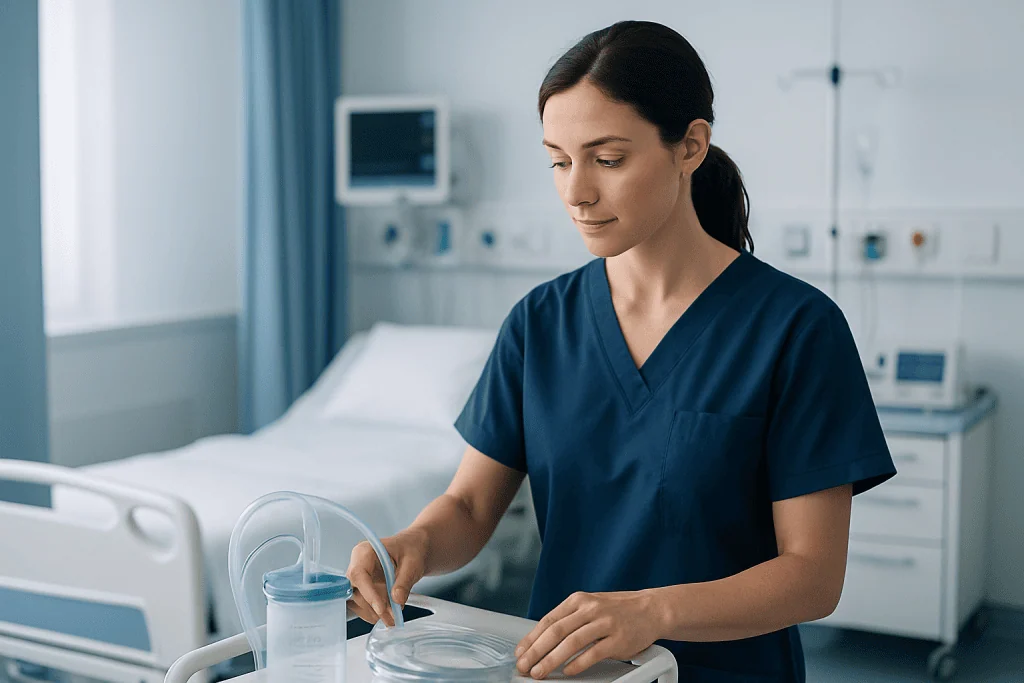
Hospital medicine rather than high-street clinics. The procedures people worry about most, including dental full-arch work, bariatric surgery and body contouring, are performed within Acıbadem in fully licensed hospitals. That means a consultant anaesthetist is present for every general anaesthetic, an intensive care unit is on the same site, and radiology, laboratory and blood bank services are available around the clock. If something unexpected happens in theatre, the response is measured in minutes, not in an ambulance transfer.
International accreditation you can check. Seven Acıbadem hospitals hold Joint Commission International accreditation, within a network of more than 20 hospitals. JCI publishes a register of accredited organisations, so this is a claim you can verify independently rather than take on trust.
Scale and specialisation. With more than 3,300 physicians across the group, patients are treated by specialists working within their own field, supported by colleagues in other departments when a case needs cardiology, endocrinology or intensive care input.
Experience with international patients. Interpreters, coordinators, medical records in English and follow-up by video are part of the normal pathway rather than an afterthought.
No waiting list. For self-funding patients in the UK, elective and cosmetic procedures are not available on the NHS, and private waiting times can be long. Istanbul is roughly a four-hour flight from London and about ten hours from New York, which makes a planned trip realistic without months of delay.
None of these reasons should make anyone rush. They are simply why the question ‘is it safe?’ has a different answer in a hospital setting than in the cases that make the headlines.
How treatment works with Acıbadem, step by step
Safety is built into the pathway long before you board a flight. This is how an international patient is normally managed, and it is a useful template for judging any provider you consider.
- Remote medical review. You send your medical history, current medications, relevant photographs or scans, and your goals. A physician, not a sales adviser, reviews them. Some people are told at this stage that the procedure is not suitable for them.
- Personal plan and quote. If treatment is appropriate, you receive a written plan explaining the recommended procedure, the anaesthesia, the expected hospital stay and the recommended length of your visit. A personal quote follows the free medical review; the Price Index on this site shows verified ranges separately.
- Arrival and coordinator. An international patient coordinator meets you, manages transfers, appointments and interpreting, and remains your single point of contact.
- Face-to-face consultation and pre-operative tests. You meet the surgeon and the anaesthetist in person. Blood tests, ECG and any imaging are done in the hospital. The plan can still change at this point, and you can still decline.
- The procedure. Performed in a hospital operating theatre with a consultant anaesthetist and intensive care available on site.
- Recovery in Istanbul. Inpatient care where needed, then a recommended number of days nearby with scheduled check-ups before you are cleared to fly.
- Follow-up after returning home. Written discharge documents in English, a direct contact line, and scheduled video reviews. You are encouraged to share the records with your GP.
The steps that are most often skipped by problematic providers are the first, the fourth and the seventh: a real medical review, an in-person anaesthetic assessment, and structured aftercare.
The procedure itself: anaesthesia, theatre and the hospital stay
Because this page covers a group of procedures rather than a single operation, the details below are general and are intended to help you understand what to expect from a hospital setting. Your own plan will be specific to you and will be explained by your surgeon before you consent.
Anaesthesia
Most body contouring, bariatric and rhinoplasty procedures are performed under general anaesthesia, administered and monitored throughout by a consultant anaesthetist. Some dental, hair restoration and laser eye procedures are performed under local anaesthesia, sometimes with sedation. Whatever the method, you should meet the anaesthetist beforehand, and the person giving sedation should be a qualified anaesthetist rather than the operator or a technician.
Duration
Operating time varies widely between procedures and between patients. Your surgeon will give you an expected duration during the consultation. Be cautious of plans that combine several major operations into one long session to fit a short trip; extended anaesthesia and combined procedures raise the risk of complications, and a hospital team will tell you when staging is safer.
Hospital stay
Some procedures are day cases; others require one or more nights as an inpatient, with monitoring, pain management and early mobilisation supervised by nursing staff. The recommended stay is a clinical decision made for your safety, not a hotel-booking convenience. If a provider proposes discharge to a hotel on the same day after a general anaesthetic and a major operation, ask who will be responsible for you overnight.
Throughout, the standards you should expect are the same as you would expect in a British or American hospital: sterile theatre conditions, single-use consumables, traceable implants and materials, and a written record of everything used.
Recovery and aftercare timeline
Recovery differs by procedure, so treat the outline below as a framework rather than a schedule. Your discharge letter will contain instructions specific to you.
The first 48 hours
This is when the risk of bleeding, reaction to anaesthesia and early infection is highest, and it is the reason a hospital stay matters for major surgery. You should have access to nursing staff and a doctor, adequate pain relief, and clear guidance on warning signs. For local anaesthetic procedures, expect swelling, tenderness and a written aftercare sheet.
Days 3 to 7
Swelling and bruising are normally at their peak and then begin to settle. Dressings are checked, drains removed where used, and sutures reviewed. Most patients remain in Istanbul during this period so that the operating team can see them at least once before they fly. This is also when many ‘gone wrong’ stories begin: the patient has already flown home and there is no one to examine a wound that is not healing as it should.
Weeks 2 to 6
Light activity resumes gradually. Compression garments, dietary stages after bariatric surgery, or restrictions on strenuous exercise after rhinoplasty and abdominoplasty continue as instructed. Video follow-ups replace in-person visits.
Months 3 to 12
Scars mature, swelling resolves, and functional results settle. Dental implants integrate with bone over several months before final restorations. Hair transplant results develop over a similar period.
Two things should be true throughout: you know exactly whom to contact, and that contact is a clinician who can act on what you tell them. Aftercare that consists only of a WhatsApp number answered by a sales team is not aftercare.
Safety and risks
Every operation carries risk. Elective surgery in Türkiye carries the same clinical risks as the same operation in London or New York, plus the practical risk of being far from the operating team when something needs attention. What the reported cases of harm abroad share is rarely the country; it is the pattern.
What ‘gone wrong’ cases usually have in common
- Rushed planning: a plan agreed online in days, no physician review, and the first medical examination taking place on the morning of surgery.
- No hospital backup: general anaesthesia or sedation given in a clinic without an anaesthetist, without intensive care and without a blood bank on site.
- Over-treatment: healthy teeth aggressively filed down for crowns, several major operations combined into one session, or grafts harvested beyond what the scalp can safely give.
- No follow-up: the patient flies home within days and has nobody to call when infection, bleeding or a leak develops.
- Pressure selling: deposits, deadlines and package deals that leave no room to say no.
What the statistics do and do not tell you
People search for the gastric sleeve death rate in Turkey and for hair transplant deaths in Turkey. It is important to be honest: there is no reliable, centrally published country-level dataset for either. Individual deaths have been reported in the media, and each is a tragedy, but they do not allow anyone to calculate a national rate, and we will not invent one. What the medical literature does establish is that mortality after bariatric surgery in accredited hospital programmes with anaesthetic and intensive care support is low, and that the recognised risk factors are the ones listed above. Death after a hair transplant under local anaesthesia is extremely rare and, where reported, has typically involved sedation without an anaesthetist or an undiagnosed condition.
Who is not suitable
People with uncontrolled medical conditions, those unable to stop smoking, patients with unrealistic expectations and anyone who has not had a physician review their history should not proceed. A hospital team will tell you this plainly, even when it means losing a booking.
UK and US vs Türkiye: what actually differs
Comparing surgery at home and abroad fairly means comparing like for like: the same procedure, in a hospital, by a licensed specialist, with the same anaesthetic support and follow-up.
The pathway
In the UK, cosmetic and most bariatric procedures are self-funded, and private waiting times can be long. In the US, insurance rarely covers aesthetic surgery and deductibles are high. In Türkiye, a self-funding patient can be reviewed, treated and followed up within a planned window without a waiting list. The trade-off is travel: recovery starts in another country, and you must plan for it.
What the lower cost means, and what it does not
Costs are lower in Türkiye mainly because salaries, property and general overheads are lower than in London or New York. In a hospital setting the implants, prosthetics, sutures and pharmaceuticals are the same internationally traceable products used in Britain and America, and the anaesthetic standards are the same. A lower cost does not, by itself, mean lower quality. It also does not mean that everything advertised at a low price is safe. Price tells you about the local economy; the setting tells you about safety.
What to compare
- Hospital or clinic? Is there an anaesthetist and an intensive care unit on the premises?
- Is the surgeon licensed, and in which specialty?
- Is the institution independently accredited, and can you check the register?
- What follow-up is included after you fly home, and who provides it?
- What happens, and who pays, if a complication needs revision?
Aftercare is where the largest real difference often lies. At home, your surgeon is nearby for months. Abroad, that gap must be closed deliberately, through structured remote follow-up and a clear arrangement with your GP.
Planning the trip
Good planning is part of safe surgery, not separate from it. These are the practical points most British, Irish, American, Canadian and Australian patients need to address.
- Passport and entry. UK, Irish, US, Canadian and Australian passport holders currently enter Türkiye visa-free for stays of up to 90 days. Rules change, so check the current position before you book flights. Your passport should be valid well beyond your return date.
- How long to stay. Follow the hospital’s recommendation, not the shortest flight itinerary. Major surgery generally means staying long enough for at least one post-operative review before you fly. Flying too early after a general anaesthetic increases the risk of blood clots and leaves complications unsupervised.
- Travel companion. For anything under general anaesthesia, a companion is strongly advisable. They can help in the first days, notice changes you might miss, and speak with the team if you cannot.
- Travel insurance. Standard travel insurance excludes planned treatment abroad and often excludes complications arising from it. Look specifically for a policy that covers planned medical travel, and read what it says about repatriation and complications. Ask the hospital what its own policy is on treating complications that arise during your stay.
- What to bring. A list of current medications with doses, relevant letters or scans from your GP or specialist, comfortable loose clothing, and any compression garments or dental appliances you have been asked to bring.
- Where to stay. Choose accommodation close to the hospital. Being able to return quickly for an unscheduled check matters more than the view.
Build slack into your plan. If your surgeon recommends an extra day before flying, you should be able to say yes without losing your ticket or your job.
Back home: follow-up with your GP and what to do if something feels wrong
Your care does not end at the airport. Before you leave, you should have a discharge summary in English, an operative note listing any implants or materials used, a medication list, and dates for remote follow-up. Share all of this with your GP or your own doctor as soon as you are home, even if you feel well. It means that if you need help later, whoever sees you knows exactly what was done.
Seek help promptly, either from the hospital’s follow-up line or from local services, if you notice:
- Fever, spreading redness, heat or discharge from a wound.
- Increasing rather than decreasing pain, or pain not controlled by prescribed medication.
- Calf pain or swelling, chest pain or breathlessness, which need emergency assessment.
- Persistent vomiting or inability to keep fluids down after bariatric surgery.
- Sudden change in vision after laser eye surgery, or bleeding that does not stop.
Do not wait for a scheduled video call if you are worried. Early assessment is almost always simpler than late treatment.
Insurance, NHS and your own doctor
Private medical insurance in the UK very rarely covers elective treatment abroad or its complications; check your policy wording. The NHS will treat you if you become unwell after surgery abroad, as it would any patient, but it does not provide cosmetic revision, and you should tell the treating team exactly what you had done and where. For readers in the United States, whether HSA or FSA funds can be used for treatment abroad depends on the procedure and your plan, and travel-medical policies vary widely in what they exclude. In every case, your own doctor should remain part of the picture. The hospital’s follow-up is designed to work alongside your GP, not to replace them.
Questions to ask before deciding: a checklist
Use this list with any provider, in any country. Write down the answers. A reputable hospital will welcome the questions.
The institution
- Is the treatment carried out in a licensed hospital or in a clinic? Can I see the licence?
- Is the hospital independently accredited, and can I find it on the JCI register or an equivalent public list?
- Is there an intensive care unit, a blood bank and 24-hour medical cover on the same site?
The people
- Who will actually operate, and what is their registered specialty?
- Who gives the anaesthetic or sedation, and are they a qualified anaesthetist?
- Will I meet both the surgeon and the anaesthetist before consenting?
The plan
- Has a physician reviewed my medical history before this plan was proposed?
- Am I being advised to combine procedures, and if so, why is that safer than staging them?
- For dental work: how many healthy teeth will be prepared, and is a less invasive option possible?
- How long must I stay before I am cleared to fly?
Afterwards
- What follow-up is included, for how long, and who provides it?
- What happens if I develop a complication after I return home?
- Will I receive full records in English to give to my GP?
The sale
- Am I being asked to pay a deposit before a medical review has happened?
- Is there a deadline or ‘offer’ pushing me to decide?
- Can I change my mind after the in-person consultation without penalty?
If you cannot get a clear answer to any of these, pause. The question ‘is it safe to have surgery in Turkey?’ is really the question ‘is this provider safe?’, and these answers tell you. Ultimately, whether any procedure is suitable for you is determined by a physician’s evaluation of your individual health and circumstances.
Why do so many ‘Turkey teeth gone wrong’ cases happen?
Most reported cases involve healthy teeth being filed down aggressively for crowns or veneers, often when a less invasive option existed, followed by no follow-up once the patient flew home. Over-preparation can expose the nerve, leading to pain, infection and root canal treatment years later. In a hospital dental department, a dentist assesses whether crowns are appropriate at all, uses the least destructive preparation possible, and documents everything so your UK dentist can continue care.
Is it safe to have dental implants in Turkey, and are ‘Turkey teeth’ safe in general?
Dental implants and cosmetic dentistry can be safe in Türkiye when performed by a licensed dentist or oral surgeon in a properly equipped facility using traceable, internationally recognised implant systems. The risks are the same as anywhere: infection, implant failure, nerve injury and over-treatment. What matters is a genuine assessment, conservative planning, staged treatment where bone healing requires it, and an aftercare plan that your own dentist can pick up.
What is the gastric sleeve death rate in Turkey?
There is no reliable, centrally published national figure for gastric sleeve mortality in Türkiye, and we will not quote one. Medical literature shows that mortality after sleeve gastrectomy in accredited hospital programmes with anaesthetic and intensive care support is low but never zero, and that the recognised risk factors include treatment outside a hospital, inadequate pre-operative assessment and early flying without follow-up. Ask any provider where the operation is performed, who the anaesthetist is, and how leaks and bleeding would be managed.
Have there been hair transplant deaths in Turkey?
Individual deaths have been reported in the media, and each is devastating, but they do not allow a national rate to be calculated. Where details have emerged, the cases have typically involved sedation or medication given without an anaesthetist present, or an undiagnosed underlying condition. A hair transplant is a long procedure under local anaesthesia; it should take place in a licensed setting, with a doctor present, a medical history taken beforehand, and emergency support available.
Is it safe to get a nose job in Turkey?
Rhinoplasty is performed under general anaesthesia and carries risks including bleeding, infection, breathing difficulty and the need for revision. In a licensed hospital with a consultant anaesthetist and a surgeon trained in facial plastic or ENT surgery, those risks are managed in the same way as in the UK or US. The main additional concern abroad is aftercare, so you should stay long enough for cast removal and early review, and have a clear plan for remote follow-up.
Is weight loss surgery in Turkey safe?
Bariatric surgery is major abdominal surgery and should only be performed in a hospital with an intensive care unit, a multidisciplinary team including a dietitian and, where needed, endocrinology and cardiology support. Candidacy is decided by medical criteria after a physician review, not by an online form. Long-term success also depends on dietary follow-up over months and years, so ask how that will be provided once you are home.
Is it safe to have a tummy tuck in Turkey?
Abdominoplasty is a significant operation with risks of bleeding, wound healing problems, seroma and blood clots, particularly in smokers and those who fly too soon afterwards. It should be carried out under general anaesthesia in a hospital by a plastic surgeon, with an inpatient stay and enough time in Istanbul for wound checks before travel. Be cautious of plans that combine a tummy tuck with several other procedures in one session to fit a short trip.
Is laser eye surgery in Turkey safe?
Laser vision correction is a well-established procedure, and it can be performed safely in Türkiye by an ophthalmologist in a licensed facility with up-to-date equipment. Not everyone is suitable; corneal thickness, dry eye and prescription stability are assessed with a detailed examination that cannot be skipped. Risks include dry eyes, glare, under- or over-correction and, rarely, infection, so you should stay for the early post-operative check and know exactly whom to contact if your vision changes after you return home.
Your care team
Physicians of the Acıbadem network who perform this treatment in Istanbul.
 Where it is performed Acibadem Maslak Hospital İstanbul · JCI-accredited hospitals

Clinical guide & data
The evidence-based pages behind this guide.