

Rhinoplasty in Turkey: Nose Job Techniques, Stay and Cost
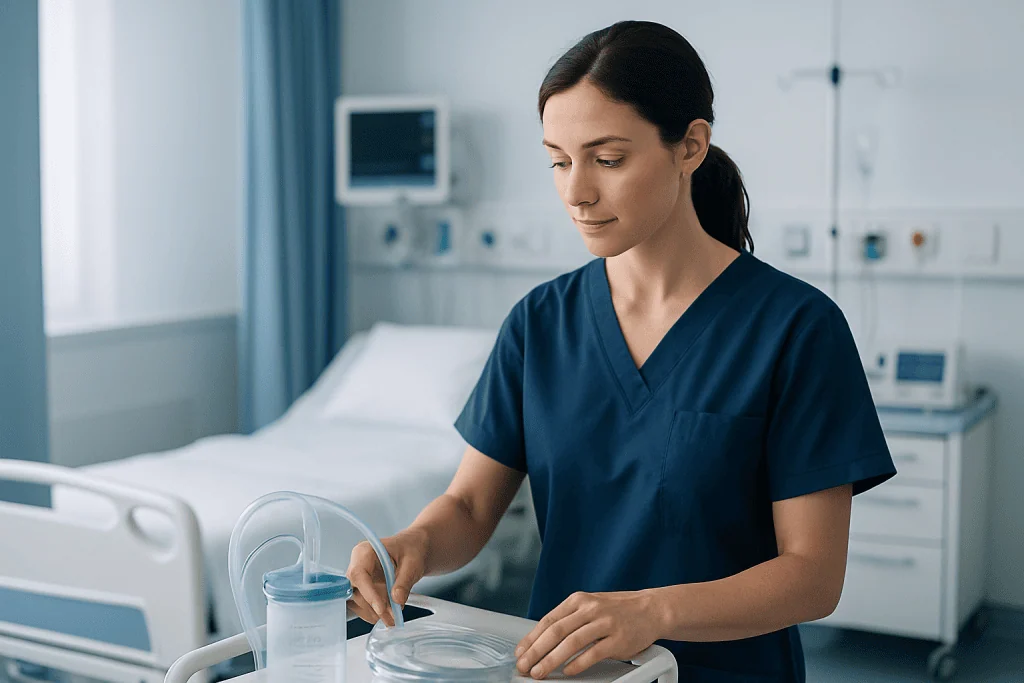
Rhinoplasty in Turkey has become one of the most frequently considered options for adults from the United Kingdom, Ireland and North America who want to change the shape of the nose, improve breathing, or both. The operation reshapes the bridge, tip or nostrils and can correct structural problems after careful planning, and it is carried out in Türkiye as hospital-based surgery rather than clinic work.
This page explains what a nose job in Turkey involves when it is done in an accredited hospital setting: who is a candidate, how the pathway works from remote review to follow-up at home, the techniques and anaesthesia used, the recovery timeline, the honest risks, and how the experience compares with private treatment in the UK or US. Cost is covered in principle here, with the verified price band shown further down the page.
What rhinoplasty is and who it suits
Rhinoplasty reshapes the nose to improve facial balance and, when needed, nasal breathing. Depending on the plan agreed with the surgeon, it may address the bridge, the tip, the nostrils, or structural problems inside the nose such as a deviated septum that restricts airflow. Some patients want a purely aesthetic change; others have a functional problem; many have both.
Who is usually a candidate
- Adults whose facial growth is complete and whose nasal shape or breathing has been a stable concern for some time.
- People in good general health, ideally non-smokers or able to stop smoking well before surgery.
- Patients with realistic expectations who understand that the goal is a nose in proportion with their own face, not a copy of someone else’s.
- Those seeking ethnic rhinoplasty, where the aim is refinement that respects the patient’s heritage and features rather than imposing a single template.
- Patients considering revision rhinoplasty after an earlier operation elsewhere, once tissues have fully settled.
Who should think carefully or not proceed
Rhinoplasty is generally not advised for people with uncontrolled medical conditions, active nasal infection, or bleeding disorders that cannot be managed. Surgeons are also cautious with patients whose expectations are unlikely to be met by any operation, or who are seeking surgery mainly because of pressure from others. Body dysmorphic disorder is a recognised reason to decline surgery and to suggest other support instead. A candid conversation with your own GP or doctor before you enquire is always worthwhile, and the hospital’s remote review may reach the same conclusion: sometimes the right advice is not to operate.
Why patients from the UK and the US choose a nose job in Turkey
Most people who research rhinoplasty in Turkey are self-paying. In the UK, cosmetic rhinoplasty is not available through the NHS unless there is a clear functional or medical need, so the realistic domestic route is private surgery, often with a wait for an initial consultation and a further wait for a theatre date. In the US the position is similar: elective rhinoplasty is rarely covered by health plans, and the patient carries the cost.
Türkiye has developed a large volume of hospital-based rhinoplasty over many years, partly because of the number of surgeons trained in both plastic surgery and ear, nose and throat medicine. For international patients, the meaningful distinction is not the country but the setting. Acıbadem performs rhinoplasty in hospitals such as Acibadem Maslak Hospital in Istanbul, within a network that includes 7 JCI-accredited hospitals among more than 20, staffed by 3,300+ physicians.
What the hospital setting means in practice
- Anaesthesia is given by a specialist anaesthetist in a full operating theatre, not a treatment room.
- Intensive care, a blood bank, laboratories and imaging are on the same site should anything unexpected occur.
- An ENT assessment or CT imaging can be arranged during planning without leaving the building.
- International patient departments work daily with English-speaking patients, handle medical translation and coordinate every appointment.
- There is no waiting list: once the medical review confirms suitability, dates are arranged around your availability.
Istanbul is roughly four hours’ flight from London and about ten hours from New York, which makes the journey manageable for a planned stay and, where needed, a return visit.
How rhinoplasty in Turkey works with Acıbadem, step by step
The pathway is designed so that no one travels before a surgeon has reviewed their case and agreed that surgery is appropriate. It runs as follows.
- Remote medical review. You send a short medical history, current medicines, any previous nasal surgery, and photographs of the nose from the front, both sides and below. A surgeon reviews these and may ask for more information or an online conversation.
- Personal plan. If you are a candidate, you receive a written plan describing the suggested approach, the anaesthesia, expected hospital stay, recommended length of stay in Istanbul, and a personal quote. The quote follows the free review; it is not a generic package figure.
- Arrival and coordinator. A patient coordinator meets you, arranges transfers between the airport, hotel and hospital, and remains your single point of contact throughout.
- Consultation and pre-operative tests. You meet the surgeon in person, discuss the plan again, and complete blood tests, an anaesthetic assessment and, when needed, imaging or an ENT examination. If anything in the tests changes the picture, the plan changes too.
- The operation. Rhinoplasty is performed under general anaesthesia and takes one to three hours. You either go home to your hotel the same day or stay one night for observation.
- Recovery in Istanbul. You attend review appointments, and the splint and internal supports are removed at about one week, before you are cleared to fly.
- Follow-up after returning home. Scheduled photo reviews and messages with the surgical team continue over the following months, alongside contact with your own doctor.
Each stage is documented in English and you receive copies of your records to take home.
The procedure: closed and open techniques, anaesthesia, duration and stay
Rhinoplasty is a surgical procedure performed under general anaesthesia. The operation usually takes between one and three hours depending on what is being corrected, and patients are discharged either the same day or after one night in hospital.
Planning before surgery
Before rhinoplasty, the surgeon evaluates facial proportions, nasal structure, breathing function, medical history and the patient’s goals. Photographs and, when needed, imaging or an ENT assessment support the planning. Patients are usually asked to stop smoking and to avoid blood-thinning medicines or supplements before surgery, exactly as their doctor advises.
Closed rhinoplasty and open rhinoplasty
The two broad approaches differ in where the incisions are placed. In closed rhinoplasty the incisions are inside the nostrils, leaving no external scar; it is often chosen for more limited changes to the bridge or tip. In open rhinoplasty a small additional incision is made across the columella, the strip of skin between the nostrils, which allows the surgeon a direct view of the framework for more complex reshaping, revision work or significant tip changes. Which approach is used is a surgical decision made on the anatomy and the goals, not a menu choice, and your surgeon should explain why one suits you.
What can be addressed
- The bridge, for example reducing a hump or straightening a deviation.
- The tip, refining its shape, projection or rotation.
- The nostrils, adjusting width or shape.
- Structural problems inside the nose that affect breathing, corrected at the same time when indicated.
In ethnic rhinoplasty and revision rhinoplasty the same principles apply, with particular attention to preserving character and, in revision cases, to working with tissue that has already been operated on.
Recovery and aftercare timeline
Recovery from rhinoplasty follows a fairly predictable pattern, although the pace varies from person to person. Knowing what to expect at each stage makes the weeks after surgery far less worrying.
The first week
After surgery a nasal splint and internal supports are usually in place for about one week. You should keep your head elevated, including while sleeping, avoid strenuous activity and protect the nose from any impact. Bruising and swelling around the eyes are common and typically peak in the first few days before fading. Breathing through the nose may be limited while the internal supports are in. Pain is generally manageable with the medicines prescribed; most patients describe pressure and congestion rather than sharp pain.
Around one week
At a follow-up visit the splint and supports are removed. The nose will look swollen and the shape at this point is not the final result. Most patients are cleared to fly home after this appointment.
Weeks two to four
Daily activities are usually possible within one to two weeks. Light exercise can often resume with the surgeon’s agreement, but contact sports, heavy lifting and glasses resting on the bridge are typically avoided for longer. Sun protection matters while the skin is healing.
The following months
Swelling improves over several months, most noticeably at the tip, which is the last area to settle. Follow-up visits, in person or by photograph, allow the team to monitor healing and assess swelling as the final shape gradually appears. Patience is part of the treatment; judging the outcome early leads to unnecessary anxiety.
What it costs: UK, US and Türkiye
Typical self-pay ranges from the Turkey Medical Price Index. Türkiye figures are guide ranges for hospital treatment; your personal quote follows a free medical review.
Source: Turkey Medical Price Index (quarterly edition). Ranges depend on the extent of treatment, materials and hospital stay; they are not a quote.
Safety and risks
Rhinoplasty is established surgery, but no operation is free of risk, and the honest position is that outcomes depend on planning, surgical judgement, the setting and the aftercare, wherever in the world the surgery is done.
Who is not suitable
Patients with uncontrolled diabetes, significant heart or lung disease, bleeding disorders, active infection, or who are unable to stop smoking are usually advised not to proceed or to wait. Surgeons will also decline where expectations are unrealistic or where psychological factors suggest surgery is unlikely to help.
Complications that can occur
- Bleeding, infection and reactions to anaesthesia, as with any operation.
- Persistent swelling, numbness of the tip or skin discolouration that takes longer than expected to resolve.
- Breathing difficulty, which can occasionally worsen rather than improve if the internal structure is weakened.
- Asymmetry, irregularities in the bridge or a shape that does not match the plan, sometimes requiring revision.
- Septal perforation, a hole in the wall between the nostrils, which is uncommon but recognised.
What the widely reported problems abroad usually share
Cases of surgery abroad that have gone wrong tend to have common features: a decision made quickly on a price alone, no independent medical review before travel, surgery in a clinic without hospital backup, an early flight home before supports are removed, and no structured follow-up afterwards. None of these is unique to any country.
How a hospital setting changes the picture
Is it safe to get a nose job in Turkey? The reasonable answer is that safety follows the setting and the process rather than the map. In an accredited hospital the anaesthetic is given by a specialist, complications can be managed immediately on site, the surgeon has access to imaging and ENT colleagues, and the follow-up schedule is part of the plan. Ask about each of these before you book anywhere.
UK and US vs Türkiye: how the pathway and the cost compare
People asking how much a nose job in Turkey costs are usually comparing it with private quotes at home. The verified UK, US and Türkiye price band appears in the Price Index below; the aim here is to explain what the difference does and does not mean.
How the pathway differs
- Waiting time. Private rhinoplasty in the UK often involves separate waits for consultation and theatre; in the US scheduling depends heavily on the individual practice. In Türkiye there is no waiting list once the medical review is complete.
- Payment. In all three countries cosmetic rhinoplasty is normally self-funded, so the decision rests on value, trust and logistics rather than on cover.
- Aftercare. At home, your surgeon is a short journey away. Abroad, the early follow-up happens in Istanbul and the later reviews are by photograph and message, with your own doctor available locally. This works well when it is planned, and poorly when it is an afterthought.
- Travel. A week or more away from work and family needs to be built in, along with a companion for the first days.
What the lower cost does and does not mean
The difference in the price band reflects lower salaries and running costs in Türkiye, not a different grade of medicine. Implants, sutures, anaesthetic drugs and imaging equipment are the same international products used in London or New York. Hospital accreditation is assessed against the same international standards. What the lower cost does not buy is a shortcut: the pre-operative work-up, the anaesthetic care and the follow-up should be identical in scope to what you would expect at home.
Compare like for like
When weighing a quote, check that each option includes surgeon and anaesthetist fees, hospital facilities, pre-operative tests, the overnight stay if needed, splint removal and scheduled follow-up. A rhinoplasty package in Turkey should be read as a list of exactly what is included, and what is not.
Planning your trip to Istanbul
Once your plan is agreed, the practical arrangements are straightforward, but a few points deserve early attention.
Documents and entry
UK, Irish, US, Canadian and Australian passport holders enter Türkiye visa-free for up to 90 days, although rules can change and you should check the current position before travel. Your passport should be valid well beyond your return date. Bring printed copies of your medical review, your plan and your quote, together with a list of your regular medicines.
How long to stay
Most patients stay in Istanbul for about eight to ten days: arrival and pre-operative tests, the operation, recovery, and the review at about one week when the splint is removed and you are cleared to fly. Your coordinator will confirm the recommended length for your case, and it is wise not to book a fixed return before the surgeon agrees.
A companion
Travelling with a partner, relative or friend is strongly encouraged. After general anaesthesia you should not be alone on the first night, and in the early days help with meals, medicines and moving around is genuinely useful.
Travel insurance
Ordinary travel insurance excludes planned treatment abroad and often excludes complications arising from it. Look specifically for a policy that covers elective medical travel, including repatriation, and read the exclusions. Ask the hospital in writing how complications during your stay are handled.
What to bring
- Comfortable clothing that fastens at the front, so nothing is pulled over the head.
- Sunglasses that do not rest on the bridge, or a wide-brimmed hat.
- Extra pillows are usually provided, but a travel pillow helps you sleep upright.
- Any prescribed medicines in their original packaging.
Back home: follow-up, your GP and insurance
Your relationship with the surgical team does not end at the airport, and neither should your relationship with your own doctor. The best outcomes come from both working in parallel.
Follow-up after returning
You will have a schedule of photo reviews and check-in messages at agreed intervals over the following months. Take photographs in the same lighting and from the same angles each time so that swelling can be assessed properly. Keep to the advice on exercise, glasses and sun protection, and report anything unexpected promptly.
Sharing records with your GP or own doctor
Before you leave Istanbul you receive your operative report, anaesthetic record, medication list and discharge summary in English. Give copies to your GP or family doctor on your return, even if you feel well, so that your local record is complete and any future care is informed.
When to seek help
Contact the surgical team and your local doctor, or attend an emergency department, if you have heavy or persistent bleeding, increasing pain, fever, spreading redness, a foul-smelling discharge, or sudden breathing difficulty. Do not wait for a scheduled review if something feels wrong.
Insurance, NHS and your own doctor
Private medical insurance in the UK and elsewhere rarely covers elective treatment abroad, and many policies exclude complications of cosmetic surgery wherever it was performed; check your terms with your provider. The NHS treats anyone who becomes unwell as it would any other patient, but it does not provide routine cosmetic follow-up or revision. For US readers, whether HSA or FSA funds can be used for elective surgery abroad and how travel-medical policies respond to planned treatment varies by plan, so confirm in writing beforehand.
Questions to ask before deciding on rhinoplasty in Turkey
A good provider expects questions and answers them in writing. Use this checklist with any hospital or clinic, in Istanbul or at home.
About the setting
- Is the operation performed in a hospital with intensive care, a blood bank and imaging on site, or in a stand-alone clinic?
- Is the hospital accredited by an international body, and can you show me the current certificate?
- Who gives the anaesthetic, and what are their qualifications?
About the surgeon and the plan
- Which surgeon will operate on me, and will I meet them before the day of surgery?
- Why are you recommending an open or closed approach in my case?
- If I need revision rhinoplasty, how does previous surgery change your plan?
- How will you assess my breathing, and will an ENT colleague be involved if needed?
About the process
- Was my case reviewed by a surgeon before I was offered a date?
- What tests are done before surgery, and what happens if a result is abnormal?
- How long must I stay in Istanbul, and who decides when I can fly?
- What exactly does the quote include, and what would cost extra?
About aftercare and problems
- What is the follow-up schedule after I return home, and who do I contact?
- How are complications handled during my stay, and afterwards?
- Will I receive my full medical records in English?
Take time over the answers, discuss them with your own doctor, and be wary of anyone who discourages questions or presses you to book quickly. Whether rhinoplasty is right for you, and which approach is appropriate, is determined by a physician’s evaluation.
Is it safe to get a nose job in Turkey?
Safety depends on the setting and the process rather than the country. Rhinoplasty performed in a JCI-accredited hospital, with a specialist anaesthetist, intensive care on site and structured follow-up, carries the same recognised risks as surgery anywhere but is managed in the same way as it would be at a hospital at home. Ask where the operation takes place, who gives the anaesthetic and how complications are handled before you book.
How much is a nose job in Turkey?
The verified UK, US and Türkiye price band is shown in the Price Index on this page. The difference between countries reflects lower salaries and overheads in Türkiye, not different materials or standards. A personal quote for your case follows a free remote medical review, and you should check that any figure you compare includes the same elements: surgeon, anaesthetist, hospital, tests, stay and follow-up.
What is included in a rhinoplasty package in Turkey?
With Acıbadem the plan typically covers the surgeon and anaesthetist, the operation in hospital, pre-operative tests, the overnight stay if needed, splint removal and scheduled follow-up, plus coordinator support and transfers. Accommodation and flights may or may not be included depending on the arrangement. Always ask for the inclusions in writing so you can compare like for like.
What is the difference between closed and open rhinoplasty?
Closed rhinoplasty places all incisions inside the nostrils and leaves no visible scar; it suits more limited changes to the bridge or tip. Open rhinoplasty adds a small incision across the columella between the nostrils, giving the surgeon a direct view for more complex reshaping or revision work. The choice is a surgical decision based on your anatomy and goals.
Can I have ethnic rhinoplasty in Turkey?
Yes. Ethnic rhinoplasty refers to reshaping that respects the patient's heritage and facial features rather than applying a single ideal. Planning focuses on proportion with your own face, skin thickness and structural support, and the surgeon should explain how the plan preserves your character. Bring reference photographs of what you like and dislike about your nose to the consultation.
Is revision rhinoplasty possible after surgery elsewhere?
Revision rhinoplasty is possible but more complex, because scar tissue and altered structure from the earlier operation must be taken into account. Surgeons usually want the tissues to have fully settled before operating again and may request previous operative notes and imaging. Discuss realistic expectations openly, as revision cases carry their own limits.
How long do I need to stay in Istanbul after rhinoplasty?
Most patients stay around eight to ten days so that pre-operative tests, the operation, early recovery and the review at about one week can all take place before flying home. The splint and internal supports are usually removed at that visit. Your surgeon confirms when you are fit to fly, so avoid booking a fixed return date until the plan is agreed.
What happens if something goes wrong after I return to the UK?
Contact the surgical team through your coordinator and see your GP or attend an emergency department for urgent symptoms such as heavy bleeding, fever or breathing difficulty. The NHS treats you as it would any patient, but it does not provide routine cosmetic follow-up. Keep your discharge summary and operative notes to hand so that any doctor you see has the full picture.
Your care team
Physicians of the Acıbadem network who perform this treatment in Istanbul.
 Where it is performed Acibadem Maslak Hospital İstanbul · JCI-accredited hospitals
Clinical guide & data
The evidence-based pages behind this guide.
Read this treatment guide in your language
Planning tools for this treatment
Indicative figures for orientation only: your written plan and quote follow a free medical review.