Speech Problems After Stroke: Aphasia, Slurred Speech, and What Therapy Can Improve

Speech problems after stroke may be caused by language impairment, muscle weakness, or both. Aphasia affects language, while slurred speech usually reflects a motor speech problem such as dysarthria.
Key Takeaways
- Speech problems after stroke may be caused by language impairment, muscle weakness, or both.
- Aphasia affects language, while slurred speech usually reflects a motor speech problem such as dysarthria.
- Speech-language therapy can improve communication, swallowing safety, and confidence in daily life.
- Recovery often continues over weeks to months and sometimes longer with ongoing practice and support.
- A sudden new speech problem is a medical emergency and needs immediate stroke evaluation.
Speech problems after stroke are common and may affect the ability to speak clearly, find words, understand language, read, or write. Recovery varies from person to person, but early assessment and speech-language therapy can help many people improve communication and daily function.
Overview
Speech problems after stroke are among the most noticeable and distressing effects of a stroke. A person may suddenly have trouble finding words, speaking in full sentences, understanding others, reading, writing, or making speech sound clear. These changes happen because a stroke can injure parts of the brain that control language, speech planning, muscle movement, or coordination.
Not all post-stroke speech problems are the same. Some people have aphasia, which affects language itself. Others have slurred or unclear speech because the muscles used for speaking are weak or poorly coordinated. Some people have both at the same time. Understanding the difference is important because treatment and recovery strategies may differ.
Although these symptoms can feel overwhelming, improvement is often possible. The brain can adapt, and targeted rehabilitation may help people regain skills or learn new ways to communicate. Early evaluation by a stroke team and a speech-language pathologist is an important part of care after stroke.
Types of Speech and Language Problems After Stroke
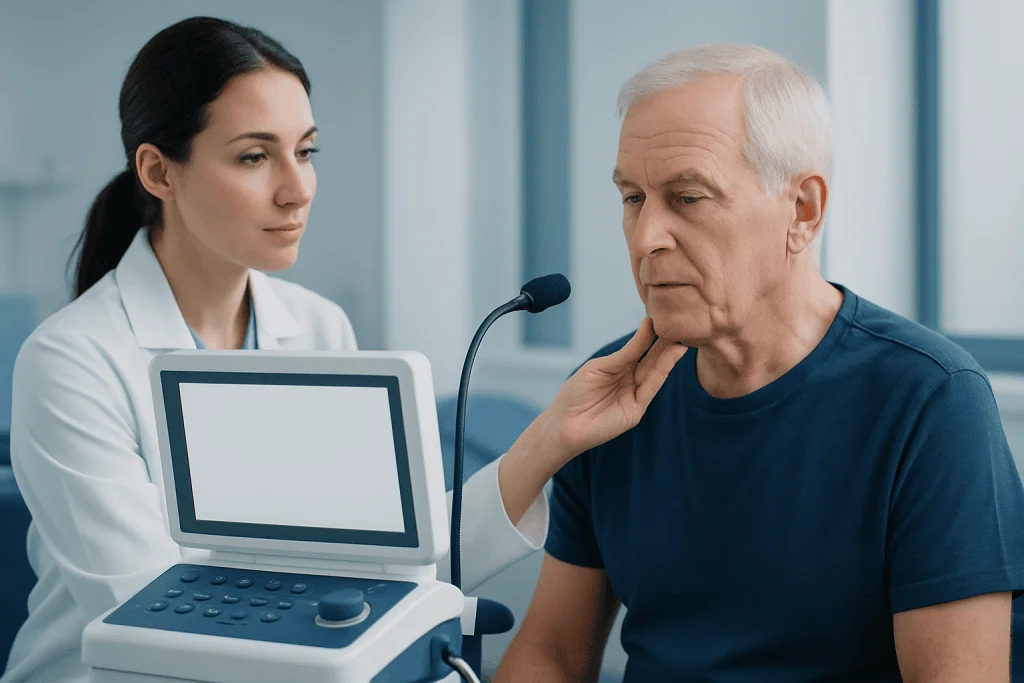
Aphasia is a language disorder caused by injury to the brain’s language networks, most often in the left side of the brain. A person with aphasia may know what they want to say but struggle to find the right words, speak fluently, understand spoken language, read, or write. Aphasia can range from mild word-finding difficulty to severe communication impairment.
Slurred speech after stroke is often due to dysarthria. In dysarthria, the person knows the words they want to say, but the muscles of the lips, tongue, voice box, or breathing system do not work smoothly enough to produce clear speech. Speech may sound slow, weak, nasal, quiet, or imprecise.
Another possible problem is apraxia of speech. This is a motor planning disorder in which the brain has difficulty organizing the movements needed for speech, even when the muscles themselves are not significantly weak. Speech may sound effortful, with inconsistent errors and difficulty starting sounds or syllables.
Some stroke survivors also have swallowing problems, called dysphagia, because the same muscles and nerves involved in speaking may also help with swallowing. If swallowing concerns are present, the care team may recommend evaluation and treatment for swallowing disorders as part of rehabilitation.
Symptoms to Watch For

The symptoms depend on which part of the brain was affected and how severe the stroke was. In aphasia, common signs include speaking in short or incomplete sentences, using the wrong word, substituting sounds, misunderstanding questions, or difficulty reading and writing. Some people speak fluently but the words may not make sense, while others speak very little.
With dysarthria, speech may become slurred, mumbled, unusually slow, or difficult to understand. The voice may sound weak, hoarse, monotone, or breathy. A person may drool, have poor control of the lips or tongue, or tire quickly while speaking.
With apraxia of speech, the person may pause often, struggle to start speaking, repeat sounds, or make inconsistent pronunciation errors. Longer words are often harder than shorter ones. These symptoms can be frustrating because the person usually knows what they want to say.
- Difficulty finding words or naming common objects
- Trouble understanding spoken instructions
- Slurred, slow, or effortful speech
- Problems reading, writing, or texting
- Changes in voice quality or speaking volume
- Associated swallowing difficulty, coughing, or choking while eating
Causes and Risk Factors
A stroke happens when blood flow to part of the brain is blocked or when a blood vessel bleeds into the brain. If the stroke affects language areas, motor pathways, or brainstem structures involved in speech, communication problems may occur. Left-sided strokes commonly cause aphasia in right-handed people and many left-handed people, although brain organization can vary.
The type of speech problem often reflects the location of the brain injury. Damage to language centers may lead to aphasia. Injury affecting facial, tongue, or throat muscle control may cause dysarthria. Damage involving motor planning networks may lead to apraxia of speech. In some cases, more than one communication disorder is present.
Severity varies widely. Larger strokes, delayed treatment, previous neurological disease, hearing problems, cognitive changes, fatigue, and depression can all make recovery more challenging. However, these factors do not determine an exact outcome, and even people with significant early problems may improve with rehabilitation and support.
Because stroke can recur, preventing another event is also important. Care teams often address blood pressure, diabetes, smoking, cholesterol, heart rhythm disorders, and other vascular risks while managing aphasia or other post-stroke symptoms.
How Doctors Diagnose Post-Stroke Speech Problems
Diagnosis begins with urgent stroke evaluation, because a sudden speech change can be a sign of an ongoing medical emergency. Doctors assess when symptoms started, what type of communication problem is present, and whether there are other neurological signs such as facial drooping, weakness, vision loss, or confusion. Brain imaging helps confirm the stroke and identify the affected area.
After the person is medically stable, a speech-language pathologist performs a more detailed assessment. This may include testing speech clarity, word finding, comprehension, repetition, reading, writing, memory, attention, voice, and swallowing. Family members may also be asked how the person communicates in everyday situations.
The purpose of testing is not simply to label the problem. It helps the team understand strengths, limitations, safety concerns, and the best therapy plan. This evaluation also creates a baseline so progress can be measured over time and goals can be adjusted.
Treatment Options and What Therapy Can Improve
Treatment depends on the type of problem, the stage of recovery, and the person’s goals. Speech-language therapy is the main treatment for post-stroke communication disorders. Therapy may begin in the hospital and continue in inpatient rehabilitation, outpatient care, home-based programs, or telehealth sessions. The earlier therapy starts, when medically appropriate, the better the opportunity to build communication strategies.
For aphasia, therapy may focus on naming, sentence formation, understanding spoken language, reading, writing, and practical conversation skills. For dysarthria, treatment often targets breath support, speaking rate, mouth and tongue movement, articulation, and voice strength. For apraxia of speech, repeated practice of sound sequences and motor planning exercises are commonly used. Some patients benefit from broader stroke rehabilitation that combines physical, occupational, and speech therapy.
Therapy can improve more than speech alone. It may help a person communicate basic needs, join conversations, use the phone, return to social activities, and participate more actively in medical decisions. When speech remains limited, alternative methods such as gesture, drawing, writing, picture boards, or communication apps can be introduced. In selected cases, a specialist may also evaluate related voice or throat issues through voice disorders treatment.
Recovery is often gradual. Some people improve quickly in the first weeks, while others continue to progress over many months. Consistent practice, family involvement, and realistic goals are important. If the stroke has left lasting effects on movement or cognition, a comprehensive plan that may include neurological rehabilitation can support long-term function and independence.
Self-Care, Family Support, and Prevention
Daily practice supports recovery. Short, regular sessions are often more helpful than long, exhausting ones. A speech-language pathologist may suggest exercises, word-retrieval tasks, reading practice, breathing strategies, or conversation drills tailored to the individual’s needs. Rest is also important, because fatigue can worsen speech and language performance.
Family members play a valuable role. Helpful strategies include speaking slowly, using simple sentences, asking one question at a time, allowing extra time to respond, reducing background noise, and confirming understanding without correcting every mistake. It is usually best to speak directly to the person rather than only to caregivers, even when communication is slow.
Preventing another stroke is a key part of long-term care. This often includes taking prescribed medicines, attending follow-up visits, controlling blood pressure and diabetes, stopping smoking, exercising as advised, and eating a heart-healthy diet. Emotional support matters too, because frustration, anxiety, and depression are common after stroke and can affect communication recovery.
Near the end of recovery planning, some patients and families seek coordinated follow-up at specialized centers. Acibadem International’s multidisciplinary specialists and JCI-accredited hospitals provide diagnosis, rehabilitation, and ongoing care for international patients with post-stroke speech problems.
When to See a Doctor
A sudden new speech problem should always be treated as a medical emergency. If a person suddenly cannot speak, has slurred speech, cannot understand words, or develops facial drooping or weakness, emergency services should be contacted immediately. Fast treatment can reduce brain injury and improve outcomes.
Medical review is also important if speech is getting worse after an initial period of stability, if swallowing problems are causing coughing or choking, or if communication problems are interfering with nutrition, medication use, safety, work, or relationships. A doctor may look for treatable issues such as another stroke, infection, medication effects, dehydration, or seizure activity.
Even when symptoms seem mild, professional assessment can be worthwhile. Some people adapt by speaking less, avoiding social contact, or relying heavily on family members, which can hide an ongoing communication disorder. Early support may improve quality of life and help prevent isolation.
Frequently asked questions
Can speech return to normal after a stroke?
Many people improve after a stroke, but the degree of recovery varies. Some recover nearly completely, while others continue to have mild or more significant communication difficulties. Early therapy, steady practice, and treatment of stroke risk factors can support the best possible outcome.
What is the difference between aphasia and slurred speech?
Aphasia is a problem with language, so it can affect speaking, understanding, reading, or writing. Slurred speech usually means the words are known, but the muscles or motor control needed to produce clear speech are impaired. A person can have one of these conditions or both together.
How soon should speech therapy start after a stroke?
Speech therapy often begins as soon as the person is medically stable and able to participate. Early evaluation helps identify communication and swallowing needs and can guide a safe recovery plan. The exact timing depends on the person's overall condition and stroke severity.
How long does speech therapy after stroke usually last?
There is no single timeline because recovery differs from person to person. Some people need therapy for a few weeks, while others benefit from months of structured rehabilitation and home practice. Progress can continue over time, especially when therapy goals are reviewed and updated.
Can family members help someone with post-stroke speech problems?
Yes, family support is very important. Speaking calmly, giving extra response time, reducing distractions, and using simple, clear language can make communication easier. Following the speech-language pathologist's advice helps practice stay consistent and less frustrating.
Are speech problems after stroke a sign of another emergency later on?
Any sudden new or clearly worsening speech problem should be treated urgently because it can signal another stroke or another serious neurological issue. Chronic stable symptoms are common during recovery, but they still deserve follow-up if they affect daily life. A doctor can decide whether emergency care or routine reassessment is needed.
References
- World Stroke Organization
- American Stroke Association
- National Institute of Neurological Disorders and Stroke
- National Institute on Deafness and Other Communication Disorders
- American Speech-Language-Hearing Association
This article is for general information only and is not a substitute for professional medical advice. Please consult a qualified doctor about your individual situation.
Aphasia in Turkey — costs, top hospitals & a free quote
JCI-accredited · board-certified surgeons · reply within 24h
Add us as a Preferred Source to see more of our trusted health content across Google Search, AI Overviews and Discover.
Check your numbers in seconds
BMI, calories, due date, blood pressure and 30+ more clinical calculators — free, instant, doctor-reviewed ranges.