Ischemic Stroke vs Hemorrhagic Stroke: How Doctors Tell the Difference

An ischemic stroke happens when blood flow to part of the brain is blocked, while a hemorrhagic stroke happens when a blood vessel bleeds in or around the brain. Both stroke types are medical emergencies and can cause sudden weakness, speech trouble, vision changes, severe headache, or loss of balance.
Key Takeaways
- An ischemic stroke happens when blood flow to part of the brain is blocked, while a hemorrhagic stroke happens when a blood vessel bleeds in or around the brain.
- Both stroke types are medical emergencies and can cause sudden weakness, speech trouble, vision changes, severe headache, or loss of balance.
- A non-contrast CT scan is often the first test used to quickly distinguish bleeding from blockage.
- Treatment depends on the stroke type, so fast and accurate diagnosis is essential.
- Calling emergency services right away gives the best chance for timely treatment and recovery.
Ischemic and hemorrhagic strokes can cause similar sudden symptoms, but they have different causes and require different treatments. Doctors tell the difference urgently by combining symptom review, physical examination, and brain imaging, especially CT scans and MRI.
Overview
When people compare ischemic stroke vs hemorrhagic stroke, the main difference is what happens to the brain’s blood supply. In an ischemic stroke, a blood vessel that carries oxygen-rich blood to the brain becomes blocked, often by a clot. In a hemorrhagic stroke, a blood vessel leaks or bursts, causing bleeding in or around the brain.
Even though the causes are different, the symptoms can look very similar at first. A person may suddenly develop weakness on one side, difficulty speaking, facial drooping, confusion, vision loss, dizziness, or trouble walking. Because the symptoms overlap, doctors cannot safely rely on symptoms alone to decide which stroke type is present.
This distinction matters because the treatments are very different. Medicines that may help restore blood flow in an ischemic stroke can be dangerous in a hemorrhagic stroke. That is why emergency teams work quickly to identify the stroke type with imaging and other tests before choosing treatment.
Symptoms of Ischemic and Hemorrhagic Stroke
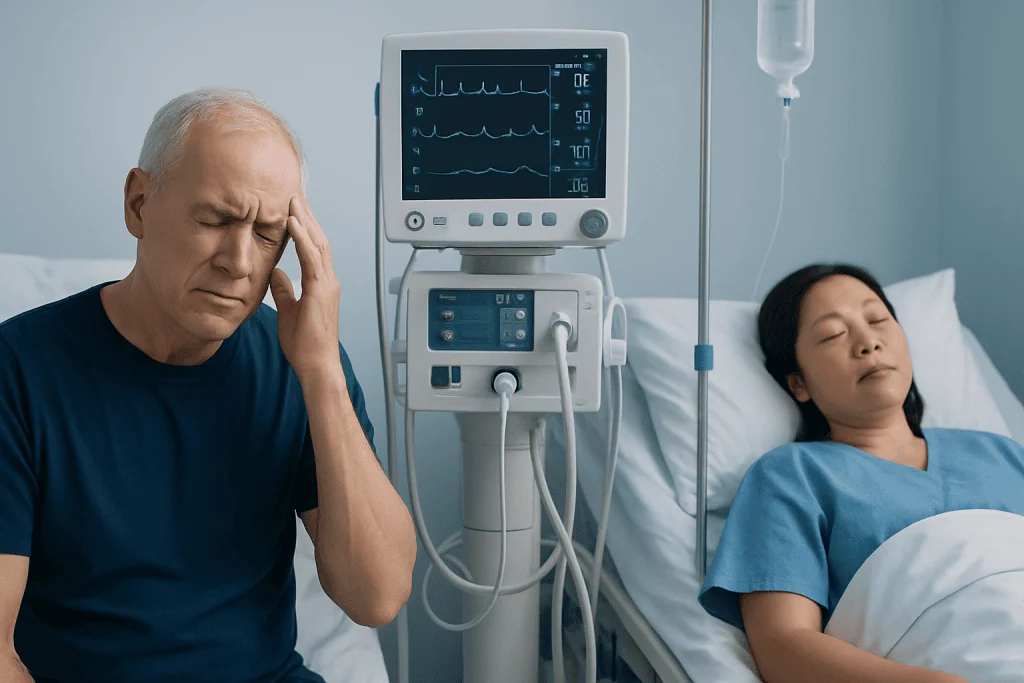
Both types of stroke usually begin suddenly. Common warning signs include facial drooping, weakness or numbness in an arm or leg, trouble speaking or understanding speech, sudden vision problems, severe imbalance, or confusion. These signs often affect one side of the body, but not always.
Some symptoms can slightly raise suspicion for one type over the other, but they are not reliable enough to confirm the diagnosis. For example, a hemorrhagic stroke may be more likely to cause a sudden severe headache, vomiting, reduced alertness, or seizures. An ischemic stroke may more often present with focal weakness, speech difficulty, or vision loss without a major headache. Still, either type can cause many of the same problems.
A simple way to remember urgent stroke symptoms is FAST:
- Face drooping
- Arm weakness
- Speech difficulty
- Time to call emergency services
If these symptoms appear, it is important not to wait for them to improve. Fast medical assessment helps doctors determine whether the person has had a stroke, a transient ischemic attack, or another condition that can mimic stroke.
Causes and Risk Factors
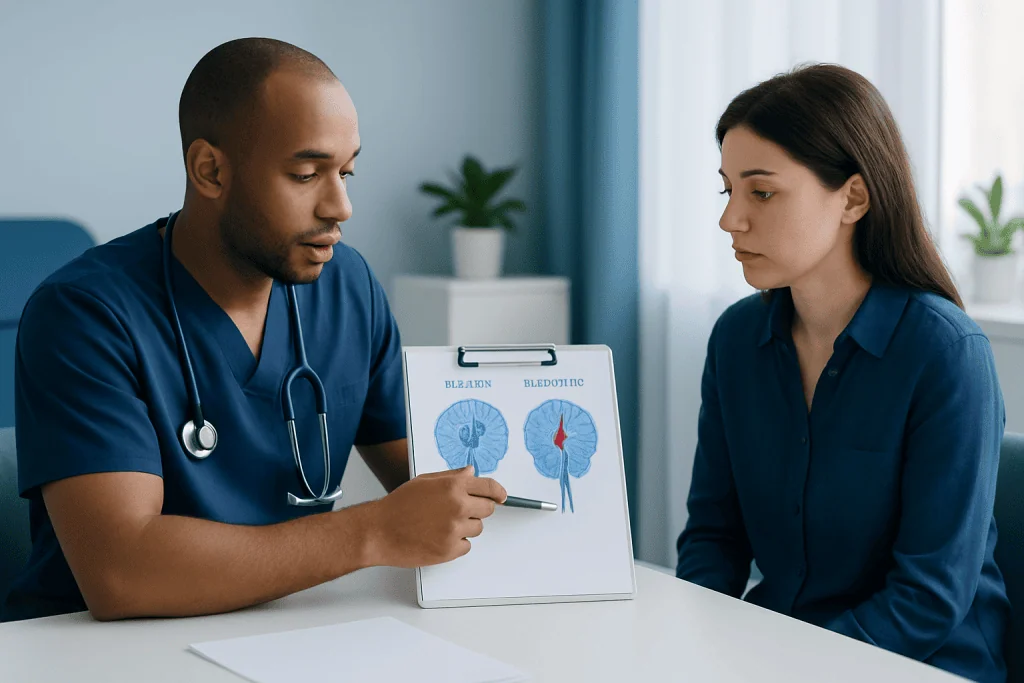
Ischemic stroke is most often caused by a blood clot. The clot may form in an artery supplying the brain or travel from somewhere else in the body, especially the heart. Common underlying causes include atherosclerosis, atrial fibrillation, narrowing of the carotid arteries, and small vessel disease. These mechanisms reduce or stop blood flow, depriving brain tissue of oxygen.
Hemorrhagic stroke happens when a blood vessel ruptures and bleeding damages nearby brain tissue or raises pressure inside the skull. Causes include long-standing high blood pressure, weak areas in blood vessel walls such as aneurysms, abnormal vessel tangles called arteriovenous malformations, head trauma, and bleeding disorders. Some blood-thinning medicines can also increase bleeding risk, especially in the presence of other factors.
Many risk factors overlap between the two stroke types. These include high blood pressure, smoking, diabetes, high cholesterol, obesity, low physical activity, heavy alcohol use, and older age. Family history and certain medical conditions can also play a role. Because high blood pressure is a major risk factor for both blockage and bleeding, controlling it is one of the most important ways to lower overall stroke risk.
How Doctors Tell the Difference
Doctors begin with a rapid history and neurological examination. They ask when the symptoms started, whether they came on suddenly, what body functions are affected, and whether the person takes blood thinners or has conditions such as high blood pressure or atrial fibrillation. They also assess alertness, speech, strength, sensation, eye movements, and coordination.
The key step is urgent brain imaging. In most emergency settings, the first test is a non-contrast CT scan of the head because it is fast and excellent at detecting fresh bleeding. If blood is visible on CT, the stroke is hemorrhagic. If there is no bleeding, doctors consider ischemic stroke and may proceed with additional imaging depending on the situation.
MRI can also help, especially when the diagnosis is unclear or when doctors need more detail about the timing and location of brain injury. CT angiography or MR angiography can show whether a large artery is blocked or whether there is a vascular problem such as an aneurysm. These tests may guide decisions about minimally invasive clot-removal or vessel procedures or neurosurgical treatment when needed.
Other tests support the diagnosis and help identify the cause. Doctors may order blood tests, an electrocardiogram, heart rhythm monitoring, and heart imaging. These do not replace brain scans, but they help explain why the stroke happened and support planning for treatment and prevention.
Imaging Tests and What They Show
A non-contrast head CT is often the first-line test because it can be completed quickly in the emergency department. Fresh bleeding usually appears clearly on CT, allowing doctors to identify a hemorrhagic stroke without delay. Early ischemic changes may be subtle at first, which is why a normal early CT does not always rule out an ischemic stroke.
MRI, especially diffusion-weighted imaging, can detect ischemic brain injury very early and can be useful when symptoms are mild, unusual, or started at an uncertain time. MRI may also help distinguish stroke from conditions such as migraine, seizure-related weakness, infection, or inflammation. However, CT remains the usual first emergency test in many hospitals because it is widely available and fast.
Vascular imaging adds another layer of information. CT angiography and MR angiography can show narrowed or blocked arteries, aneurysms, or other vessel abnormalities. In selected cases, catheter angiography may be used for more detailed evaluation and treatment planning, especially in patients with suspected aneurysm rupture or a large-vessel blockage.
Together, these tests help doctors decide whether the person has stroke, what type it is, where it is located, how extensive it may be, and which treatment path is safest. Speed matters, but so does accuracy, because the wrong treatment for the wrong stroke type can cause harm.
Treatment Options After the Diagnosis
Once imaging shows the stroke type, treatment begins as quickly as possible. For ischemic stroke, the goal is to restore blood flow and protect brain tissue. Depending on timing, imaging findings, and the person’s overall condition, treatment may include clot-busting medication or a procedure to remove the clot from a large artery. Doctors also manage blood pressure, blood sugar, oxygen levels, swallowing safety, and complications.
For some patients with large-vessel blockage, doctors may recommend mechanical thrombectomy to remove the clot directly. This approach is used only in selected cases after imaging confirms the blockage and shows that the brain may still benefit from restoring blood flow. Long-term treatment then focuses on preventing another ischemic stroke, for example by addressing heart rhythm problems, cholesterol, or artery disease.
For hemorrhagic stroke, the priority is to control bleeding, reduce pressure on the brain, and treat the source of the bleed when possible. This may involve careful blood pressure control, reversal of blood-thinning medicines, intensive monitoring, or procedures to repair a ruptured vessel. Some people may need brain surgery or other interventions if there is significant pressure, hydrocephalus, or an aneurysm.
After either type of stroke, rehabilitation is often an important part of recovery. Physical therapy, occupational therapy, speech therapy, and cognitive support can help a person regain function and independence. Specialists may also evaluate related conditions such as brain hemorrhage or ongoing vascular risk factors to guide longer-term care.
Prevention, Self-care, and When to Seek Help
Stroke prevention starts with managing modifiable risk factors. Regular blood pressure checks, diabetes care, cholesterol treatment when appropriate, smoking cessation, physical activity, and a balanced diet all support vascular health. People with atrial fibrillation or other heart conditions should follow their doctor’s advice carefully, since preventing clots can substantially reduce ischemic stroke risk.
Self-care after a stroke includes taking medicines as prescribed, attending follow-up visits, participating in rehabilitation, and watching for new or returning symptoms. Family support can be valuable because stroke recovery may affect mobility, communication, memory, mood, and daily routines. It can also help to review home safety, swallowing guidance, and fall prevention strategies.
Emergency help is needed right away for any sudden stroke-like symptom, even if it improves within minutes. Warning signs include facial drooping, weakness, numbness, speech trouble, severe new headache, fainting, loss of vision, or sudden trouble walking. People should call emergency services rather than driving themselves, because treatment decisions may need to begin as soon as possible.
For patients seeking specialist evaluation, Acibadem International’s multidisciplinary teams in JCI-accredited hospitals diagnose and treat stroke and related neurological emergencies for international patients. A qualified doctor can explain the likely stroke type, the tests being used, and the safest treatment plan for the individual situation.
Frequently asked questions
What is the main difference between ischemic stroke and hemorrhagic stroke?
An ischemic stroke is caused by a blocked blood vessel that reduces blood flow to the brain. A hemorrhagic stroke is caused by bleeding from a ruptured vessel in or around the brain. Both are emergencies, but they need different treatments.
Can symptoms alone tell doctors which type of stroke a person has?
No, symptoms alone are usually not enough to tell the difference with certainty. Both stroke types can cause sudden weakness, speech problems, confusion, or vision changes. Doctors use brain imaging to confirm whether the problem is blockage or bleeding.
Why is a CT scan often the first test for stroke?
A CT scan is quick, widely available, and very good at showing fresh bleeding in the brain. This makes it especially useful in the first minutes of emergency care. It helps doctors decide which treatments are safe to consider.
Is one type of stroke more common than the other?
Yes, ischemic stroke is generally more common than hemorrhagic stroke. However, both types are serious and need urgent medical attention. The first priority is always rapid diagnosis and treatment.
Can a severe headache mean hemorrhagic stroke?
A sudden severe headache can occur with hemorrhagic stroke and may raise suspicion for bleeding. But not every hemorrhagic stroke causes headache, and some ischemic strokes can also be painful. Because symptoms overlap, imaging is still needed for diagnosis.
What should someone do if stroke symptoms go away quickly?
They should still seek emergency medical care immediately. Brief symptoms can be a transient ischemic attack, which is a warning sign of possible future stroke. Quick evaluation may help prevent a more serious event.
References
- World Health Organization
- American Stroke Association
- National Institute of Neurological Disorders and Stroke
- Centers for Disease Control and Prevention
- European Stroke Organisation
This article is for general information only and is not a substitute for professional medical advice. Please consult a qualified doctor about your individual situation.
Explore treatments in Turkey — costs, top hospitals & a free quote
JCI-accredited · board-certified surgeons · reply within 24h
Add us as a Preferred Source to see more of our trusted health content across Google Search, AI Overviews and Discover.
Check your numbers in seconds
BMI, calories, due date, blood pressure and 30+ more clinical calculators — free, instant, doctor-reviewed ranges.