Understanding Crohn’s Disease: A Complete Patient Guide

Crohn's disease can affect any part of the digestive tract, most often the small intestine and colon. Common symptoms include abdominal pain, diarrhea, fatigue, weight loss, and reduced appetite.
Key Takeaways
- Crohn's disease can affect any part of the digestive tract, most often the small intestine and colon.
- Common symptoms include abdominal pain, diarrhea, fatigue, weight loss, and reduced appetite.
- Diagnosis usually combines a medical history, lab tests, imaging, and endoscopy.
- Treatment aims to reduce inflammation, control flares, maintain remission, and prevent complications.
- Early medical care is important if symptoms are persistent, worsening, or linked with bleeding, fever, or dehydration.
Crohn's disease is a chronic inflammatory bowel disease that causes ongoing or recurring inflammation in the digestive tract. It cannot always be cured, but many people manage symptoms well with the right combination of medical care, nutrition support, and lifestyle adjustments.
Overview: what Crohn's disease is
Crohn’s disease is a long-term condition in which the immune system drives inflammation in the digestive tract. It belongs to a group of conditions called inflammatory bowel disease, or IBD. The inflammation may involve any area from the mouth to the anus, but it most often affects the end of the small intestine and the beginning of the colon.
Unlike short-lived stomach infections or occasional indigestion, Crohn’s disease usually follows a pattern of flare-ups and quieter periods. Symptoms may come and go, and the condition can look different from one person to another. Some people have mild disease that responds well to treatment, while others need closer monitoring because inflammation is deeper or more extensive.
Crohn’s disease is not contagious, and it is not caused by stress alone. It is a complex immune-related condition influenced by genetics, the gut microbiome, and environmental triggers. Because it can affect nutrition, energy levels, growth in children, and quality of life, early evaluation and a structured care plan are important.
How Crohn's disease affects the body
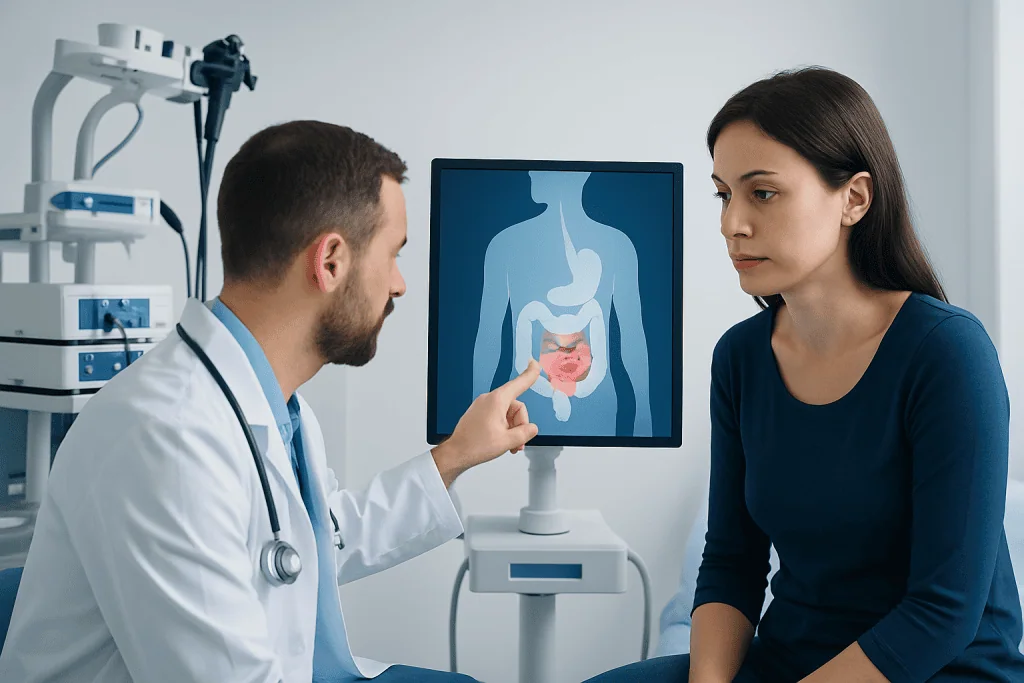
A helpful way to understand Crohn’s disease is to think beyond the bowel. The inflammation can involve the full thickness of the bowel wall, not just the surface lining. This is one reason Crohn’s disease can lead to complications such as narrowing of the intestine, tunnels between organs called fistulas, or small tears and abscesses around the anus.
The condition also has effects outside the digestive system. Some people develop joint pain, skin changes, eye inflammation, mouth ulcers, or liver-related problems. In children and teenagers, poor absorption of nutrients and reduced appetite can affect growth and puberty if the disease is not controlled.
Crohn’s disease may overlap in conversation with ulcerative colitis, another type of inflammatory bowel disease, but they are not the same. Crohn’s disease can affect any part of the digestive tract and often appears in patchy areas, while ulcerative colitis affects the colon and rectum in a continuous pattern.
Symptoms and possible complications

Symptoms of Crohn’s disease depend on which part of the digestive tract is inflamed and how severe the inflammation is. Some people notice symptoms gradually, while others have more sudden flares. The most common symptoms are abdominal pain, ongoing diarrhea, fatigue, urgency to use the toilet, reduced appetite, and unintentional weight loss.
Other symptoms can include nausea, low-grade fever, bloating, mouth sores, or blood in the stool. Children may have delayed growth, poor weight gain, or tiredness related to anemia or nutrient deficiencies. Perianal symptoms, such as pain, drainage, or swelling near the anus, can point to fistulas or abscesses.
Possible complications include bowel obstruction from scar tissue, fistulas, abscesses, malnutrition, anemia, and dehydration. Long-standing inflammation can also raise the risk of bowel cancer in some patients, especially when the colon is involved for many years. Ongoing follow-up helps reduce these risks through timely treatment and surveillance.
- Common symptoms: abdominal cramps, diarrhea, fatigue, weight loss
- Digestive red flags: blood in stool, persistent vomiting, severe pain, dehydration
- Possible extraintestinal symptoms: joint pain, skin rashes, eye irritation, mouth ulcers
Causes and risk factors
The exact cause of Crohn’s disease is not fully understood. Current evidence suggests that it develops when the immune system reacts abnormally in a person who is genetically more likely to develop the condition. The gut microbiome, which includes the bacteria and other organisms living in the intestine, also seems to play an important role.
Several factors may increase risk. A family history of Crohn’s disease or other inflammatory bowel disease can make the condition more likely. Smoking is a well-established risk factor and is linked with more severe disease, more frequent flares, and a greater chance of surgery. Age can also matter, as Crohn’s disease often begins in adolescence or early adulthood, although it can appear later in life.
Diet does not directly cause Crohn’s disease, but certain foods may worsen symptoms during a flare. Stress does not cause the disease either, yet it can make symptoms harder to cope with. Because many factors interact, treatment is usually individualized rather than based on a single trigger.
How Crohn's disease is diagnosed
There is no single test that confirms Crohn’s disease in every case. Diagnosis usually begins with a careful review of symptoms, family history, previous illnesses, diet, medications, and smoking status. A doctor will also look for signs of dehydration, abdominal tenderness, anal disease, anemia, or weight loss.
Laboratory tests can help identify inflammation, anemia, infection, and nutritional deficiencies. Stool tests may be used to check for infection and markers of intestinal inflammation. Imaging studies such as MRI, CT enterography, or ultrasound can show areas of bowel thickening, narrowing, abscesses, or fistulas.
Endoscopy is often central to diagnosis. Colonoscopy with biopsies allows the doctor to directly examine the colon and the end of the small intestine, assess the pattern of inflammation, and rule out other conditions. Depending on symptoms, evaluation may also include upper endoscopy or specialized assessment by a gastroenterology team and, when imaging is needed, MR imaging.
Treatment options and long-term management
Treatment for Crohn’s disease aims to reduce inflammation, relieve symptoms, help the intestine heal, maintain remission, and prevent complications. The best treatment plan depends on where the disease is located, how active it is, whether fistulas or strictures are present, and how the person has responded to earlier therapy. Care often involves a gastroenterologist together with dietitians, radiologists, surgeons, and other specialists.
Medicines may include anti-inflammatory drugs, immune-modifying therapies, biologic medicines, or other targeted treatments. Antibiotics may be used in selected situations, such as certain infections or abscess-related problems. Nutritional support can also be important, especially if appetite is poor, weight loss has occurred, or vitamin and mineral deficiencies are present.
Surgery is sometimes needed when medicines are not enough or when complications develop, such as obstruction, fistulas, abscesses, or severe disease in a limited bowel segment. Surgery does not always eliminate Crohn’s disease permanently, but it can be very effective for specific complications and symptom control. Some patients may need colon surgery or other bowel procedures as part of a broader treatment plan. For complex cases, care may overlap with management of inflammatory bowel disease more generally.
Long-term management usually includes regular follow-up, monitoring for side effects, review of nutrition and bone health, and checking whether treatment goals are being met. Doctors may adjust therapy even when symptoms seem mild if tests show ongoing inflammation, because untreated inflammation can still lead to damage over time.
Daily life, prevention, and self-care
There is no guaranteed way to prevent Crohn’s disease, but self-care can reduce symptom burden and support overall health. Stopping smoking is one of the most important steps for people with Crohn’s disease. It can improve disease control and lower the risk of flare-ups and complications. Good sleep, regular movement, and stress management may also help people cope better with symptoms.
Food triggers vary from person to person, so a rigid one-size-fits-all diet is usually not helpful. During a flare, some people find that smaller meals, adequate fluids, and avoiding foods that clearly worsen symptoms are useful. Because weight loss and deficiencies can happen gradually, guided nutrition support is often as important as medication.
People with Crohn’s disease benefit from staying up to date with routine care, including vaccinations and recommended cancer screening. It is also wise to ask about bone health, iron levels, vitamin B12, folate, and vitamin D if there has been long-standing disease or prior bowel surgery. Keeping a symptom diary can help identify patterns and improve clinic visits.
Near the end of the care pathway, some patients may seek treatment in specialized centers. Acibadem International’s multidisciplinary specialists and JCI-accredited hospitals diagnose and treat Crohn’s disease for international patients when advanced evaluation or coordinated care is needed.
When to seek medical care
Anyone with persistent abdominal pain, ongoing diarrhea, unexplained weight loss, tiredness, or blood in the stool should arrange a medical evaluation. Even when symptoms seem manageable, repeated flares or gradual weight loss can be signs of uncontrolled inflammation that deserves attention.
More urgent medical care is needed for severe abdominal pain, high fever, persistent vomiting, signs of dehydration, a swollen painful area around the anus, fainting, or heavy rectal bleeding. These symptoms can suggest a complication such as obstruction, infection, or abscess and should not be ignored.
People who already have Crohn’s disease should also contact their doctor if a familiar treatment stops working, if symptoms return after a quiet period, or if side effects develop. Early review often makes it easier to treat a flare before it becomes more disruptive.
Frequently asked questions
Is Crohn's disease curable?
Crohn's disease is usually considered a chronic condition, which means it often requires long-term management rather than a one-time cure. Many people still achieve long periods of remission with the right treatment plan and regular follow-up.
What is the difference between Crohn's disease and ulcerative colitis?
Both are forms of inflammatory bowel disease, but they affect the digestive tract in different ways. Crohn's disease can involve any part of the tract and may affect the full thickness of the bowel wall, while ulcerative colitis affects the colon and rectum more continuously.
Can diet cause Crohn's disease?
Diet alone is not known to cause Crohn's disease. However, certain foods may make symptoms worse during a flare, so nutrition advice is usually tailored to the person's symptoms, nutritional status, and disease location.
Does everyone with Crohn's disease need surgery?
No. Many people are managed successfully with medication, monitoring, and nutrition support. Surgery is usually considered when complications develop or when symptoms are not controlled adequately with medical treatment.
Can Crohn's disease affect parts of the body outside the gut?
Yes. Some people develop symptoms involving the joints, skin, eyes, mouth, or liver. These problems may improve when bowel inflammation is treated, but they should still be assessed by a doctor.
How is a Crohn's flare different from a stomach bug?
A stomach bug usually comes on suddenly and improves within a short time, often with rest and fluids. A Crohn's flare may last longer, recur over time, and be linked with weight loss, blood in the stool, fatigue, or a known history of inflammatory bowel disease.
References
- National Institute of Diabetes and Digestive and Kidney Diseases
- Crohn's & Colitis Foundation
- American College of Gastroenterology
- National Health Service
- Mayo Clinic
This article is for general information only and is not a substitute for professional medical advice. Please consult a qualified doctor about your individual situation.
Persistent digestive symptoms? Get evaluated in Turkey
JCI-accredited · board-certified surgeons · reply within 24h
Add us as a Preferred Source to see more of our trusted health content across Google Search, AI Overviews and Discover.