Plantar Fasciitis: Symptoms, Causes, and Treatment Options

Plantar fasciitis usually causes sharp or aching pain under the heel, often with the first steps after rest. It happens when the plantar fascia is overloaded by repetitive strain, tight calf muscles, poor foot support, or changes in activity.
Key Takeaways
- Plantar fasciitis usually causes sharp or aching pain under the heel, often with the first steps after rest.
- It happens when the plantar fascia is overloaded by repetitive strain, tight calf muscles, poor foot support, or changes in activity.
- Most cases improve with conservative care such as stretching, activity changes, ice, and supportive footwear.
- A doctor may use an exam and, if needed, imaging to rule out other causes of heel pain.
- Medical care is important if pain is severe, persistent, or associated with swelling, numbness, fever, or injury.
Plantar fasciitis is a common cause of heel pain caused by irritation of the thick band of tissue along the bottom of the foot. It often feels worst with the first steps in the morning or after sitting, and many people improve with rest, stretching, supportive shoes, and medical guidance when needed.
Overview
Plantar fasciitis is one of the most common reasons for pain under the heel. It develops when the plantar fascia, a strong band of connective tissue that runs from the heel bone to the toes, becomes irritated where it supports the arch of the foot. The condition is common in adults and may affect people who stand for long periods, walk or run often, or wear shoes that do not support the foot well.
The pain is often described as sharp, stabbing, or deep and aching. A typical pattern is discomfort with the first few steps in the morning or after sitting for a while, followed by some easing as the foot warms up. However, pain may return after long periods of standing, exercise, or by the end of the day.
Although the name suggests inflammation, plantar fasciitis often reflects repeated strain and small tissue injury rather than inflammation alone. This matters because treatment usually focuses on reducing overload, improving flexibility, and supporting healing over time. Many people recover with non-surgical measures, though improvement may take weeks to months.
How plantar fasciitis feels
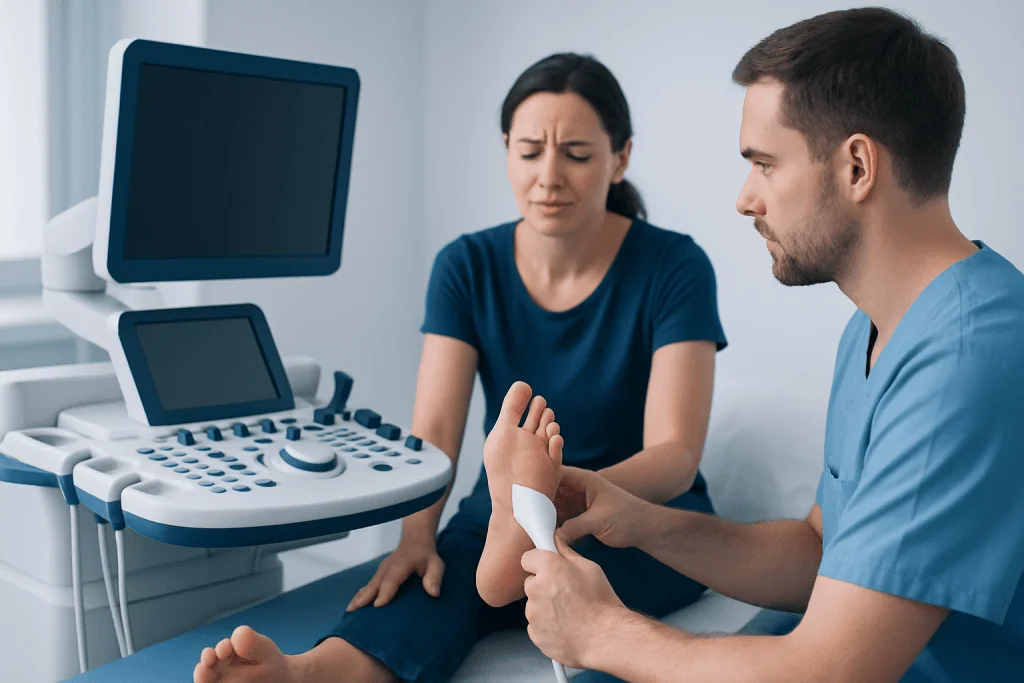
The most common symptom of plantar fasciitis is pain at the bottom of the heel, sometimes slightly toward the inner side of the foot. The pain may be sharp with the first step out of bed, then become more tolerable after a few minutes of walking. Some people feel a pulling sensation along the arch as well.
Symptoms can vary from person to person. Some notice discomfort mainly after exercise, while others feel it during long walks, when climbing stairs, or after standing on hard floors. The foot may feel stiff, especially in the morning, but significant redness or major swelling is less typical and may suggest a different problem.
Plantar fasciitis usually affects one foot, but both feet can be involved. Because heel pain has several possible causes, it is important to distinguish it from other conditions such as a stress injury, nerve irritation, tendon problems, or heel spur-related pain. A medical assessment can help clarify the cause when symptoms are persistent or unusual.
- Pain under the heel, often near the inside edge
- Worse with first steps after rest
- Stiffness in the morning
- Pain after prolonged standing or walking
- Possible tightness in the arch or calf muscles
Why it happens and who is at risk

Plantar fasciitis develops when the tissue on the bottom of the foot is repeatedly stressed beyond what it can comfortably tolerate. This may happen gradually rather than from a single injury. The plantar fascia helps absorb force and support the arch, so activities that increase load on the foot can trigger irritation over time.
Several factors can raise risk. These include a sudden increase in walking, running, or exercise intensity; jobs that involve many hours of standing; tight calf muscles or limited ankle flexibility; and shoes with poor arch support or worn-out soles. Foot mechanics can also play a part. Very flat feet, high arches, or changes in the way weight is distributed through the foot may contribute in some people.
Body weight can increase pressure on the heel and plantar fascia, especially during prolonged standing or walking. Age may also matter, since the condition is more common in middle adulthood, though younger athletes can develop it as well. In some cases, heel pain may overlap with other structural foot problems, and evaluation by specialists in orthopedic care or rehabilitation can be helpful.
How doctors diagnose it
Diagnosis usually begins with a conversation about symptoms, daily activities, exercise habits, footwear, and how long the pain has been present. A doctor will typically ask when the pain is worst, whether it improves after movement, and whether there has been a recent change in activity or an injury.
During the physical examination, the doctor checks for tenderness under the heel, the range of motion in the ankle and toes, calf tightness, foot shape, and walking pattern. Pain that is triggered by stretching the plantar fascia or pressing on its attachment at the heel often supports the diagnosis. The aim is also to look for clues that suggest another source of pain.
Imaging is not always needed for straightforward plantar fasciitis, but it may be used when symptoms are severe, long-lasting, or atypical. X-rays can help assess bone problems, while ultrasound or MRI may be considered if a soft tissue injury, stress fracture, or other condition is suspected. In selected cases, MRI imaging or radiology evaluation can help rule out other causes of heel pain.
Treatment options
Most people with plantar fasciitis improve with conservative treatment. Early care usually focuses on reducing strain on the tissue while maintaining comfortable movement. This may include temporarily lowering high-impact activity, using ice after activity, and choosing shoes with good cushioning and arch support. Avoiding barefoot walking on hard floors can also help.
Stretching is often a central part of treatment. Gentle exercises for the plantar fascia, calf muscles, and Achilles tendon may improve flexibility and reduce stress on the heel. A doctor or physiotherapist may also recommend strengthening exercises for the foot and lower leg to support better mechanics. Some people benefit from taping, heel cushions, or orthotic inserts to reduce pressure and improve arch support.
If pain continues, additional treatments may be discussed based on the person’s symptoms and examination. These may include supervised physical therapy and rehabilitation, short-term use of pain-relieving medicines if appropriate, or other non-surgical options. Surgery is not commonly needed and is usually considered only after prolonged symptoms that have not responded to well-guided conservative care.
Because heel pain can persist if contributing factors are not addressed, treatment is often most effective when it combines symptom relief with changes in footwear, flexibility, activity patterns, and overall foot support. Recovery may take time, but a structured approach is often successful.
Prevention and self-care
Not every case of plantar fasciitis can be prevented, but several habits may lower the chance of recurrence. Supportive footwear is one of the most practical steps. Shoes should fit well, cushion the heel, and provide enough support for daily activity. Athletic shoes that are heavily worn may no longer absorb impact effectively and may need replacing.
Regular stretching of the calf muscles and plantar fascia can be useful, especially for people who run, spend long hours standing, or wake with foot stiffness. Warm-up before exercise and gradual progression in activity can also help reduce overload. A sudden jump in mileage, intensity, or time on hard surfaces is a common trigger for symptoms.
At home, many people find relief by resting when pain increases, applying ice after activity, and avoiding movements that make symptoms worse. Weight management, when relevant, may reduce repeated load on the heels. If symptoms keep returning, a doctor may assess whether another foot condition or gait issue is contributing, including disorders discussed in pages such as flat feet.
When to seek medical care
Medical care is appropriate if heel pain lasts more than a few weeks, limits walking, or keeps returning despite rest, stretching, and supportive footwear. A doctor should also assess pain that is severe, begins after a fall or sudden injury, or makes it difficult to bear weight normally.
Prompt evaluation is especially important if the heel is swollen, warm, numb, bruised, or painful even at rest or during the night. These features are less typical of plantar fasciitis and may point to another condition that needs different treatment. People with diabetes, inflammatory joint disease, circulation problems, or nerve symptoms should not ignore new foot pain.
Specialist care can help when symptoms are persistent or the diagnosis is uncertain. Acibadem International’s multidisciplinary specialists and JCI-accredited hospitals evaluate and treat plantar fasciitis for international patients, with care plans based on the individual cause of heel pain.
Frequently asked questions
What is plantar fasciitis?
Plantar fasciitis is a condition that causes pain where the plantar fascia attaches near the heel. The plantar fascia is the thick tissue band that supports the arch and helps the foot absorb force during walking.
What does plantar fasciitis pain feel like?
It often feels like a sharp pain under the heel, especially with the first steps in the morning or after sitting. Some people also notice arch tightness or an ache that returns after standing or walking for a long time.
Can plantar fasciitis go away on its own?
Many cases improve with time and simple measures such as stretching, rest from aggravating activity, and supportive shoes. However, recovery can be slow, and medical guidance may help if symptoms are not improving or keep returning.
Is walking good or bad for plantar fasciitis?
Gentle walking is often acceptable if it does not worsen symptoms significantly, but long walks or high-impact activity may increase strain. The goal is usually to stay active in a way that does not overload the heel while the tissue settles.
Do heel spurs mean someone has plantar fasciitis?
Not necessarily. Heel spurs can be seen on imaging in people with or without heel pain, so they are not always the cause of symptoms. A doctor looks at the full pattern of pain and exam findings rather than imaging alone.
When is imaging needed for plantar fasciitis?
Imaging is not always needed when the symptoms and examination clearly fit plantar fasciitis. It may be considered if pain is persistent, severe, follows injury, or raises concern for another cause such as a stress fracture or nerve problem.
References
- American Academy of Orthopaedic Surgeons
- National Institute of Arthritis and Musculoskeletal and Skin Diseases
- American College of Foot and Ankle Surgeons
- Mayo Clinic
- NHS
This article is for general information only and is not a substitute for professional medical advice. Please consult a qualified doctor about your individual situation.
Explore treatments in Turkey — costs, top hospitals & a free quote
JCI-accredited · board-certified surgeons · reply within 24h
Add us as a Preferred Source to see more of our trusted health content across Google Search, AI Overviews and Discover.