Teeth Whitening: A Complete Medical Overview

Teeth whitening works best for many external stains caused by food, drinks, tobacco, and normal aging. Not all discoloration responds to whitening; some causes need different dental treatment.
Key Takeaways
- Teeth whitening works best for many external stains caused by food, drinks, tobacco, and normal aging.
- Not all discoloration responds to whitening; some causes need different dental treatment.
- Professional evaluation helps reduce risks such as sensitivity, gum irritation, and uneven results.
- Whitening products do not change the color of crowns, veneers, fillings, or bonding materials.
- Good oral hygiene and limiting stain-causing habits can help whitening results last longer.
Teeth whitening is a cosmetic dental approach that can lighten many surface and age-related stains, but it does not work equally well for every type of discoloration. The safest and most effective plan starts with understanding why teeth look darker and whether gums, enamel, fillings, or sensitivity need attention first.
Overview: what teeth whitening can and cannot do
Teeth whitening is a cosmetic treatment used to lighten the natural color of teeth by reducing certain types of stains. In most cases, whitening involves peroxide-based gels that break down stain molecules within or on the outer part of the tooth. It is commonly performed in dental clinics or with professionally supervised at-home systems, and over-the-counter products are also available.
Whitening is most helpful for teeth that have become yellow or darker over time from food, drinks, tobacco, or the natural aging process. It may be less effective for gray discoloration, internal staining from trauma or some medications, or teeth that appear dark because of enamel wear. Fillings, crowns, veneers, and bonding do not whiten, so color differences can become more noticeable after treatment.
Because teeth whitening is not a one-size-fits-all procedure, a dental assessment is important before starting. A dentist can look for cavities, gum inflammation, enamel loss, and other issues that may affect safety or results. This medical overview focuses on how whitening works, who may benefit, possible risks, and when dental care is advisable.
Why teeth become stained or discolored
Teeth can look darker for several different reasons, and the cause matters because it influences whether whitening is likely to help. The most common cause is extrinsic staining, which affects the outer surface of the tooth. Coffee, tea, red wine, cola, strongly colored foods, and tobacco are well-known contributors. Over time, pigments collect on or within the enamel surface and can make teeth appear yellow, brown, or dull.
Intrinsic discoloration develops deeper within the tooth structure. This may happen with aging as enamel gradually thins and the naturally darker dentin beneath becomes more visible. Tooth injury can also alter the internal color of a tooth. In some people, medications taken during tooth development or excessive fluoride exposure can lead to deeper color changes that do not respond well to routine whitening.
Some teeth that look discolored are not primarily stained at all. Plaque and tartar buildup, enamel erosion, dental decay, and old restorations can all change the appearance of a smile. Conditions affecting the gums may also make teeth seem longer, darker, or more uneven in color, and problems such as gum disease may need treatment before cosmetic whitening is considered.
Who may be a good candidate for teeth whitening

Many healthy adults with mild to moderate yellowing are good candidates for teeth whitening, especially when discoloration is related to age or lifestyle habits. People often choose whitening before photographs, social events, or other cosmetic dental work. Results tend to be more predictable when the teeth and gums are healthy and the main concern is generalized surface or age-related staining.
A person may need extra caution or may not be an ideal candidate if they have untreated cavities, cracked teeth, exposed roots, significant enamel wear, active gum irritation, or a history of strong tooth sensitivity. Whitening gels can pass through weak or damaged areas more easily and may increase discomfort. Pregnant or breastfeeding individuals are often advised to postpone elective whitening because safety data are limited.
Children and teenagers may need individualized guidance because teeth are still developing and sensitivity can be greater. Anyone with extensive crowns, veneers, or visible fillings should understand that these materials will not become lighter. In some cases, dentists recommend other cosmetic approaches instead of or in addition to whitening, such as dental veneers or smile design when shape, spacing, and color all need attention.
How teeth whitening is done
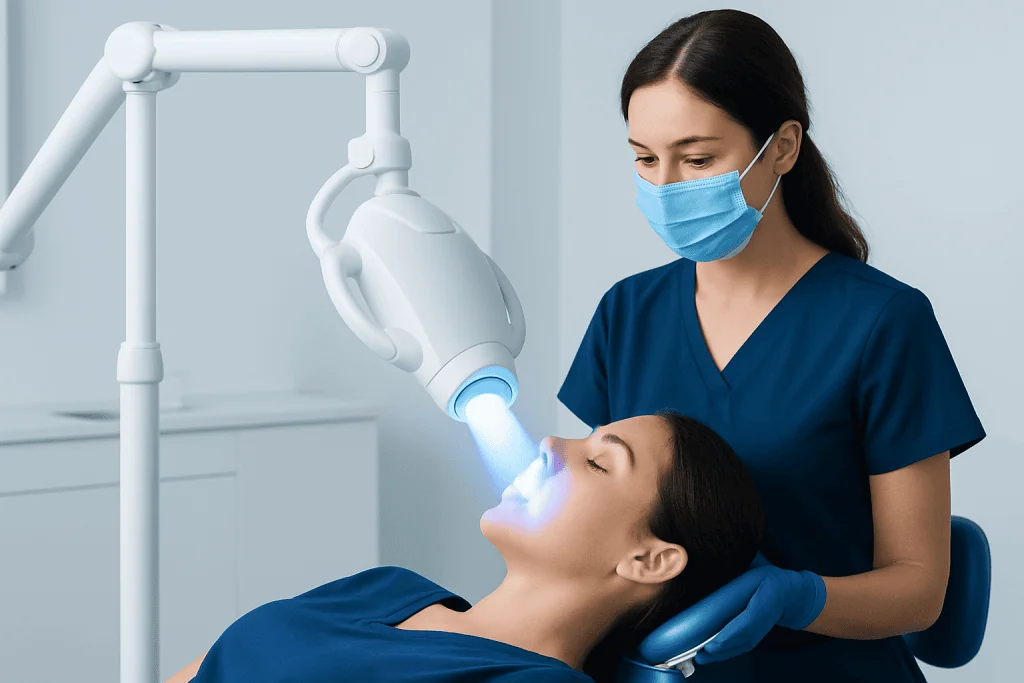
Professional in-office whitening is performed by a dental team using higher-strength whitening agents than those typically found in consumer products. The gums and soft tissues are protected first, and the gel is then applied to the teeth for a carefully timed period. Some systems may use a special light to support the process, although the whitening gel itself is the key active component. In-office treatment can produce visible change more quickly, but the degree of lightening still varies from person to person.
Dentist-supervised at-home whitening usually involves custom trays and a prescribed whitening gel used over several days or weeks. This option can offer more gradual improvement and may allow better control for people prone to sensitivity. It also gives dentists the opportunity to monitor progress and adjust the plan if teeth or gums become irritated.
Over-the-counter strips, trays, pens, and whitening toothpastes are widely used, but they differ in strength and effectiveness. Whitening toothpastes mainly help remove surface stains through polishing ingredients and do not usually change the internal tooth color much. For some people, a professional cleaning is the first step, especially if plaque or tartar is making teeth look darker. A dentist may suggest dental treatment first if there are cavities, worn fillings, or signs of infection that need care before cosmetic whitening begins.
Benefits, limitations, and possible side effects
The main benefit of teeth whitening is a brighter appearance without removing much, if any, natural tooth structure. For many people, it is one of the more conservative cosmetic dental options. It can improve the look of a smile affected by common staining and may support confidence in social or professional settings.
At the same time, whitening has clear limits. It does not treat tooth decay, gum disease, bite problems, or structural damage. It cannot change the color of restorations such as crowns and composite fillings. Some discoloration types, especially deep intrinsic stains, may only improve slightly or unevenly. In these situations, a different approach may give a more balanced result.
The most common side effects are temporary tooth sensitivity and gum irritation. Sensitivity often feels like a short, sharp response to cold air, cold drinks, or sweets and usually settles after treatment stops. Gum irritation may occur if gel contacts the soft tissues. Less commonly, overuse can worsen sensitivity or contribute to a chalky, uneven appearance. Following product instructions and dentist advice is the best way to reduce these risks.
- Common short-term effects: sensitivity, mild gum soreness, temporary white spots that usually fade
- Limitations: no effect on crowns, veneers, fillings, or some deep internal stains
- Reasons to pause treatment: significant pain, swelling, mouth sores, or a tooth that hurts even without cold or sweets
Diagnosis and planning before whitening
A dental examination before whitening helps identify whether the color change is cosmetic, medical, or both. Dentists examine the teeth, gums, existing restorations, and bite, and they ask about sensitivity, trauma, habits, and prior whitening use. If one tooth is much darker than the others, this can suggest a different underlying issue than simple external staining.
Depending on the findings, additional evaluation may be needed. X-rays may be useful when a dentist suspects decay, a damaged tooth, or changes in the root or nerve. A professional cleaning may be recommended first, since plaque and tartar can mask the true tooth color. This step can also reveal whether whitening is likely to produce a more even result.
Treatment planning is individualized. Dentists consider shade goals, the cause of discoloration, gum health, enamel condition, and whether old restorations may need replacement afterward to match the new tooth color. If a dark tooth is related to injury or internal damage, the solution may not be standard whitening. In some cases, more targeted care such as root canal treatment or other restorative options may be discussed.
Prevention and self-care after whitening
Whitening results are not permanent, so daily habits play an important role in maintenance. Brushing twice a day with fluoride toothpaste, cleaning between the teeth, and keeping regular dental visits can help limit new surface stains. Professional cleanings remove buildup that can dull the appearance of teeth over time.
It also helps to reduce exposure to common staining agents. Coffee, tea, red wine, dark sodas, and tobacco can all shorten the lifespan of whitening results. Some people choose to rinse with water after consuming these items or use a straw for certain beverages. Avoiding tobacco has added benefits for oral and general health beyond appearance.
People who are prone to sensitivity should use whitening products carefully and only as directed. A dentist may suggest spacing out treatments, using desensitizing toothpaste, or choosing a lower-strength option. Repeated or unsupervised whitening is not always better and may lead to discomfort without improving the outcome. For international patients seeking coordinated care, Acibadem International’s multidisciplinary specialists and JCI-accredited hospitals diagnose and treat dental concerns, including discoloration and related oral health conditions.
When to seek medical care
Dental advice is recommended before whitening if there is tooth pain, broken enamel, visible holes, gum bleeding, swelling, mouth ulcers, or a loose tooth. These symptoms may point to decay, infection, gum disease, or trauma, and cosmetic whitening should usually wait until the underlying issue is treated. A single tooth that suddenly becomes darker also deserves professional evaluation.
Medical or dental care is also important if strong sensitivity develops during whitening, if the gums become very irritated, or if pain continues after treatment stops. These reactions do not always mean serious harm, but they should be assessed so the cause can be identified and the approach adjusted safely.
A person should seek prompt evaluation if there are signs of infection such as facial swelling, fever, pus, severe throbbing pain, or difficulty opening the mouth. Whitening is cosmetic, but oral symptoms can reflect broader health needs. A qualified dentist or doctor can determine the safest next step and whether another treatment would be more appropriate than whitening alone.
Frequently asked questions
Does teeth whitening damage enamel?
When used correctly and on suitable teeth, whitening is generally considered safe and does not usually harm enamel. Problems are more likely when products are overused, used too often, or applied to teeth with cavities, cracks, or significant enamel wear.
How long do teeth whitening results last?
Results vary widely depending on the original tooth color, the method used, and daily habits. Many people notice that staining gradually returns over time, especially with tobacco use or frequent intake of coffee, tea, red wine, or dark-colored drinks.
Why did only some of the teeth whiten evenly?
Uneven results can happen when discoloration has different causes in different teeth or when some teeth contain fillings, crowns, or bonding that do not respond to whitening. It may also occur if tartar, enamel defects, trauma, or internal discoloration affects certain teeth more than others.
Is professional whitening better than store-bought products?
Professional whitening usually offers more individualized planning, stronger clinical oversight, and better protection for sensitive teeth and gums. Store-bought products may help mild surface staining, but they are not ideal for everyone and may be less predictable.
Can teeth whitening remove all stains?
No. Whitening often improves common yellow or brown staining, but it may not fully remove gray, deep internal, medication-related, or trauma-related discoloration. Some cases need other dental treatments for the best cosmetic result.
Should a person whiten teeth if they have sensitive teeth?
People with sensitive teeth can sometimes still whiten, but it is best to do so with dental guidance. A dentist may recommend a gentler product, shorter wear time, treatment breaks, or addressing other causes of sensitivity before whitening.
References
- American Dental Association
- National Institute of Dental and Craniofacial Research
- Mayo Clinic
- Cochrane
- FDI World Dental Federation
This article is for general information only and is not a substitute for professional medical advice. Please consult a qualified doctor about your individual situation.
Teeth Whitening in Turkey — costs, top hospitals & a free quote
JCI-accredited · board-certified surgeons · reply within 24h
Add us as a Preferred Source to see more of our trusted health content across Google Search, AI Overviews and Discover.