Trapezius Muscle: An Evidence-Based Guide for Patients
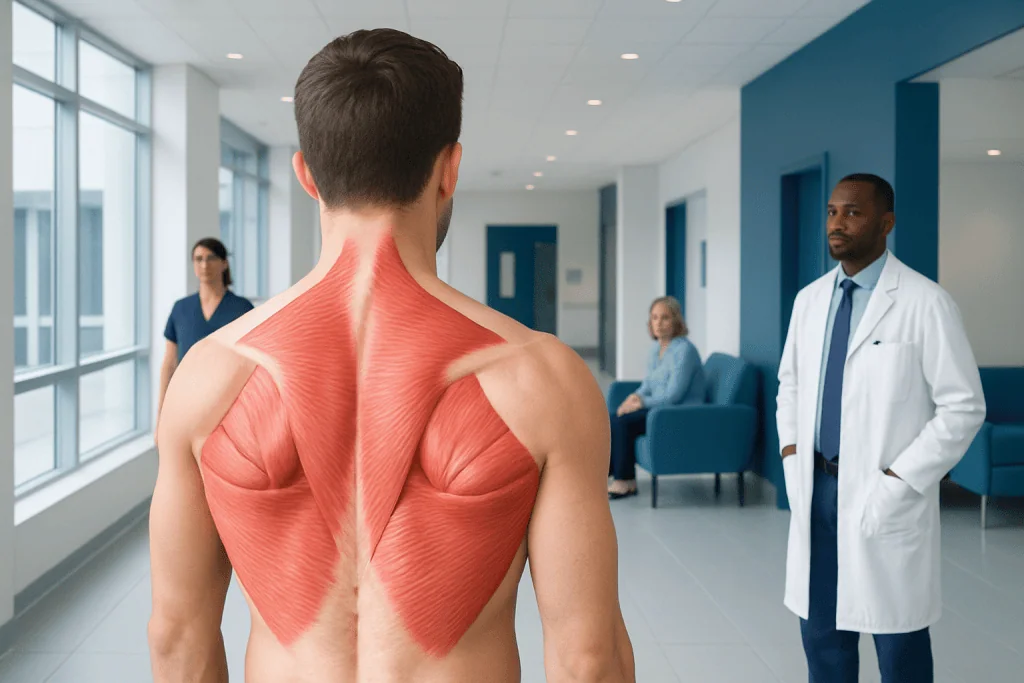
The trapezius muscle supports posture and helps move the neck, shoulders, and shoulder blades. Pain in this muscle is often related to strain, poor posture, overuse, stress, or nearby spine and shoulder conditions.
Key Takeaways
- The trapezius muscle supports posture and helps move the neck, shoulders, and shoulder blades.
- Pain in this muscle is often related to strain, poor posture, overuse, stress, or nearby spine and shoulder conditions.
- Evaluation may include a physical exam and, in some cases, imaging or referral to a specialist.
- Treatment usually focuses on activity modification, physical therapy, posture correction, and pain relief.
- Urgent assessment is important for severe weakness, numbness, injury, fever, chest pain, or symptoms that do not improve.
The trapezius muscle is a large upper back and neck muscle that helps move, stabilize, and support the shoulders and head. When it becomes strained, tight, or irritated, it can contribute to neck, shoulder, and upper back pain that often improves with appropriate self-care and, when needed, medical treatment.
Overview: What the trapezius muscle does
The trapezius muscle is a broad, triangular muscle that spans the back of the neck, the tops of the shoulders, and the upper part of the back. It works continuously in daily life, helping hold the head upright, position the shoulder blades, and support many arm and shoulder movements. Because it is involved in both movement and posture, it can become sore or tight from either heavy activity or long periods of sitting.
Clinically, the trapezius is usually described in three parts: upper, middle, and lower fibers. The upper portion helps elevate the shoulders and assist with neck movement. The middle portion helps pull the shoulder blades back, while the lower portion helps rotate and stabilize the shoulder blades during overhead motion. Healthy function depends on coordination with nearby muscles in the neck, shoulder, and upper back.
When patients describe “trapezius pain,” they may mean muscle tension, a mild strain, trigger points, or discomfort referred from another structure such as the cervical spine or shoulder joint. That is why a symptom-based approach is helpful: rather than assuming all pain comes from the muscle itself, clinicians look at posture, movement, strength, and related nerves and joints.
Common symptoms and how trapezius problems feel
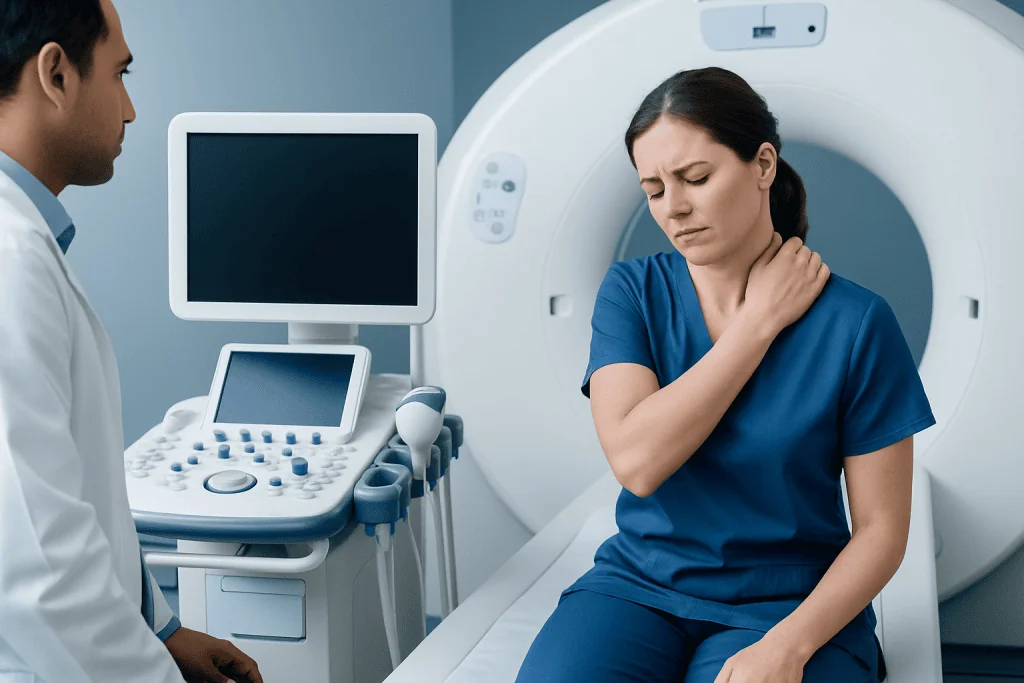
Trapezius muscle discomfort often feels like aching, tightness, burning, or stiffness across the neck, shoulder, or upper back. Some people notice pain on one side, while others feel it on both sides after desk work, carrying bags, exercise, or emotional stress. The area may feel tender to touch, and turning the head or raising the arm can make symptoms more noticeable.
Muscle-related symptoms are commonly worse after repetitive tasks, poor sleeping positions, or prolonged use of phones and computers. Some people also describe tension headaches that begin at the base of the skull and spread upward. In many cases, the muscle is not damaged severely; instead, it is irritated, overloaded, or guarding because of nearby mechanical stress.
Symptoms that suggest a broader problem include numbness, tingling, arm weakness, loss of coordination, pain radiating below the elbow, or pain linked to a recent injury. These features may point to the neck, nerves, or shoulder rather than the trapezius alone. Conditions such as a herniated disc or shoulder problems can sometimes mimic or worsen trapezius symptoms.
- Aching or tightness in the neck and upper shoulders
- Upper back soreness, especially after posture-related strain
- Tender spots or “knots” in the muscle
- Pain with overhead activity or turning the head
- Headaches associated with neck tension
Causes and risk factors

The most common causes of trapezius muscle pain are overuse, sudden strain, and prolonged poor posture. Reaching overhead repeatedly, carrying heavy loads, lifting improperly, or returning too quickly to exercise can overload the muscle. Long periods spent at a workstation with the head forward and shoulders elevated can also increase stress on the upper trapezius.
Stress and muscle tension can play a role as well. During periods of anxiety or concentration, many people unconsciously raise their shoulders or tighten the neck. Over time, this can lead to fatigue, soreness, and trigger points. Sleep position, an unsupportive pillow, and limited movement during the day may add to the problem.
Not all pain in this region is caused by the trapezius muscle itself. Neck arthritis, disc-related irritation, shoulder impingement, rotator cuff problems, and less commonly inflammatory or neurologic conditions may cause similar symptoms. In selected cases, clinicians may evaluate for related issues such as scoliosis or cervical spine disorders if posture asymmetry, persistent pain, or reduced function is present.
Risk factors include desk-based work, repetitive sports, poor conditioning, weak shoulder blade stabilizers, previous neck or shoulder injury, and inadequate recovery between activities. People who frequently look down at a phone, drive for long periods, or perform tasks with arms unsupported may also be more vulnerable.
How doctors evaluate trapezius pain
Diagnosis begins with a careful history and physical examination. A doctor typically asks when the pain started, what movements worsen it, whether there was an injury, and whether there are symptoms such as numbness, weakness, fever, or weight loss. This helps distinguish a simple muscle problem from pain coming from the spine, nerves, or internal organs.
During the examination, the clinician may assess posture, neck motion, shoulder movement, muscle tenderness, strength, and reflexes. The pattern of pain matters. Localized soreness with preserved strength often supports a muscle-related cause, while neurologic changes may point toward cervical nerve involvement. The shoulder joint and shoulder blade motion are also important because poor scapular mechanics can overload the trapezius.
Imaging is not always necessary for mild or recent symptoms. However, X-rays, ultrasound, or MRI may be recommended when pain is severe, follows trauma, lasts despite conservative care, or is associated with weakness or nerve symptoms. Depending on the findings, treatment may involve rehabilitation, physical therapy and rehabilitation, or referral for orthopedic evaluation if a structural problem is suspected.
Treatment options for trapezius muscle pain
Most trapezius muscle problems improve with conservative treatment. Early care usually includes relative rest rather than complete inactivity, along with avoiding the specific motion or posture that triggered symptoms. Gentle movement is often better than prolonged immobilization because it helps reduce stiffness and supports normal healing.
Physical therapy is a common and effective part of treatment. A program may focus on stretching tight tissues, strengthening the deep neck muscles and shoulder blade stabilizers, and improving posture during work and daily tasks. Manual therapy, heat, ice, and guided home exercises may also be used. When shoulder mechanics are contributing to pain, treatment may include exercises that improve control of the scapula during lifting and reaching.
Doctors may recommend short-term pain relief measures such as nonprescription pain medicines when appropriate for the patient, as well as topical treatments or supervised modalities. If the diagnosis is less clear or symptoms suggest a neck source, further assessment may be needed, including specialist spine care in selected cases where structural spinal disease is confirmed. Surgical treatment is not used for ordinary muscle tightness or minor strain.
Persistent symptoms benefit from a broader plan. This may include ergonomic changes, sleep-position adjustment, stress management, and graded return to exercise. For international patients who need coordinated assessment, Acibadem International’s multidisciplinary specialists in JCI-accredited hospitals diagnose and treat neck, shoulder, and upper back conditions with individualized care.
Prevention and self-care at home
Preventing trapezius pain often starts with reducing day-to-day strain. Small changes in posture and workstation setup can make a meaningful difference. The screen should generally be at eye level, the shoulders relaxed rather than lifted, and the arms supported when possible. Frequent short breaks are often more helpful than trying to maintain one “perfect” posture all day.
Regular movement helps the trapezius work more efficiently. Many people benefit from a balanced exercise routine that includes upper back strengthening, shoulder blade control, chest mobility, and gentle neck range-of-motion exercises. Warming up before sports and increasing intensity gradually may reduce the risk of strain.
Self-care can also include heat or ice based on comfort, sleep support that keeps the neck in a neutral position, and awareness of habits such as clenching the jaw or shrugging the shoulders during stress. If symptoms recur often, a clinician or therapist can help identify whether the main issue is posture, muscle imbalance, workload, or a related neck or shoulder condition.
- Take movement breaks every 30 to 60 minutes
- Keep phones and screens closer to eye level
- Use both shoulder straps when carrying a backpack
- Build strength gradually after time away from exercise
- Seek guided exercise if pain keeps returning
When to seek medical care
Mild trapezius pain often improves within days to a few weeks with sensible self-care. Medical evaluation is a good idea if pain is severe, limits daily activity, or does not begin to improve with rest, posture adjustment, and gentle exercises. An appointment is also helpful if symptoms keep returning or interfere with sleep or work.
Prompt medical attention is important when trapezius-area pain occurs after a fall, sports injury, or car accident. It is also important when pain is accompanied by arm weakness, numbness, tingling, balance problems, fever, unexplained weight loss, or loss of bladder or bowel control. Chest pain, shortness of breath, or pain spreading into the jaw or left arm should be treated as urgent because these symptoms are not typical of a simple muscle problem.
A doctor can help determine whether the cause is a muscle strain, a neck or shoulder disorder, or another condition that needs targeted treatment. Early assessment may prevent a short-term problem from becoming a long-lasting cycle of pain, tension, and reduced movement.
Frequently asked questions
What is the trapezius muscle?
The trapezius muscle is a large muscle across the back of the neck, shoulders, and upper back. It helps move the shoulder blades, supports posture, and assists with neck and arm movements.
Why does the trapezius muscle hurt?
It commonly hurts because of strain, overuse, poor posture, muscle tension, or repetitive activity. In some cases, pain in this area can also come from the neck, shoulder, or nearby nerves rather than the muscle itself.
How long does a trapezius strain take to heal?
A mild strain may improve within days to a few weeks, while more significant symptoms can last longer. Recovery depends on the cause, whether activity is modified, and whether posture and muscle balance are addressed.
Can trapezius pain cause headaches?
Yes. Tightness and irritation in the upper trapezius and nearby neck muscles can contribute to tension-type headaches, especially those felt at the base of the skull or around the head.
Should a person exercise with trapezius pain?
Gentle movement is often helpful, but painful or aggravating activities should usually be reduced for a time. A doctor or physical therapist can suggest safe exercises based on whether the problem is a simple strain, posture-related tension, or a more complex neck or shoulder issue.
When is trapezius pain a sign of something more serious?
It deserves prompt medical assessment if it follows trauma, causes weakness or numbness, or comes with fever, unexplained weight loss, chest pain, or shortness of breath. Pain that persists or repeatedly returns should also be evaluated to find the true source.
References
- American Academy of Orthopaedic Surgeons
- National Institute of Arthritis and Musculoskeletal and Skin Diseases
- MedlinePlus
- Mayo Clinic
- National Health Service
This article is for general information only and is not a substitute for professional medical advice. Please consult a qualified doctor about your individual situation.
Joint and spine care in Turkey — expert assessment & treatment
JCI-accredited · board-certified surgeons · reply within 24h
Add us as a Preferred Source to see more of our trusted health content across Google Search, AI Overviews and Discover.