Brown Recluse Bite: What Patients Need to Know

A brown recluse bite may look minor at first, with pain, redness, or a small blister developing over hours. Some bites stay mild, while others cause a darkened center, open sore, or deeper skin injury over several days.
Key Takeaways
- A brown recluse bite may look minor at first, with pain, redness, or a small blister developing over hours.
- Some bites stay mild, while others cause a darkened center, open sore, or deeper skin injury over several days.
- Cleaning the area, using cool compresses, elevating the limb, and avoiding squeezing the wound are sensible first steps.
- Medical care is important for spreading redness, severe pain, fever, drainage, a large wound, or symptoms affecting the whole body.
- Not every unexplained skin sore is a spider bite; infections and other skin conditions can look similar.
A brown recluse bite often starts as a small, mild-looking skin injury, but some bites can become more painful and cause skin breakdown over the next several days. Most suspected spider bites are not actually caused by a brown recluse, so careful medical assessment matters when symptoms worsen or the diagnosis is unclear.
Overview
A brown recluse bite is a skin injury caused by the venom of a brown recluse spider. In many cases, the bite causes only mild local symptoms such as redness, tenderness, or swelling. In some people, however, the venom can lead to tissue damage that becomes more noticeable over the next 24 to 72 hours.
One reason this topic can be confusing is that many skin sores are labeled as “spider bites” without clear proof. Bacterial infections, irritated cysts, allergic reactions, and other skin conditions can closely resemble a brown recluse bite. For that reason, diagnosis usually depends on the pattern of symptoms, location, timing, and whether a spider was actually seen.
Brown recluse spiders are found mainly in certain parts of the United States, especially the south-central and midwestern regions. They prefer dark, quiet spaces such as closets, garages, attics, sheds, and stored clothing or bedding. Most bites happen when the spider is pressed against the skin, for example when someone puts on clothing or rolls onto a spider in bed.
What a Brown Recluse Bite Usually Looks and Feels Like
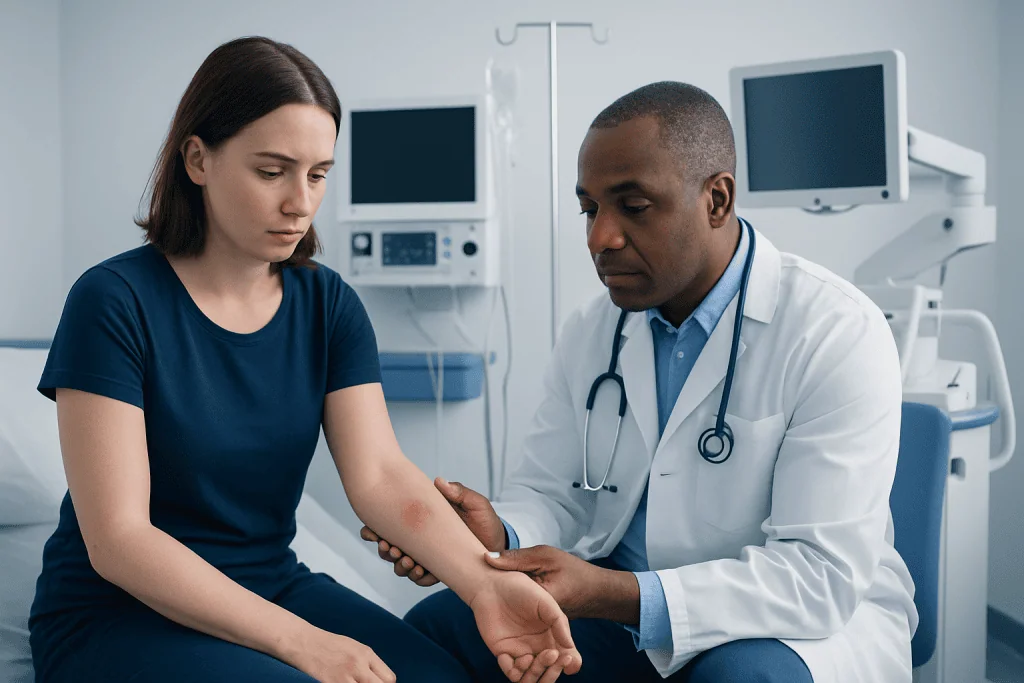
A brown recluse bite is often not dramatic at the moment it happens. Some people do not feel the bite right away, while others notice a mild stinging, pinching, or burning sensation. Over the first several hours, the area may become red, tender, slightly swollen, or itchy.
As time passes, a small blister may form and the center of the bite can look pale, bluish, or darker than the surrounding skin. In more significant bites, the skin may develop a sunken or dark center with increasing pain. Over a few days, this can turn into an open sore or ulcer as damaged skin breaks down.
Doctors sometimes describe a “red, white, and blue” appearance: outer redness, central paleness, and a darker inner area. This pattern can occur, but it is not present in every case and is not enough on its own to confirm the diagnosis. A careful evaluation is still important because several other skin problems can look similar.
- Early symptoms: mild pain, redness, itching, warmth, or swelling
- Symptoms over 1 to 3 days: blistering, increasing pain, skin color change
- More severe local effects: dark center, skin breakdown, open wound
Causes, Risk Factors, and Who Is Most Affected

The bite itself is caused by venom injected when a brown recluse spider feels trapped or threatened. The venom can affect small blood vessels and nearby tissue, which is why some bites become more damaging with time rather than improving quickly like a simple insect bite.
Risk is higher for people who live in or travel to areas where brown recluse spiders are common. The chance of contact also rises in homes, storage spaces, barns, and work areas where clutter, cardboard boxes, wood piles, or rarely used fabric items provide hiding places. Bites are more likely when hands, feet, arms, or legs come into contact with a hidden spider.
Children, older adults, and people with underlying medical conditions may need closer monitoring because they can be more vulnerable to complications from skin injury or infection. It is also important to remember that a painful or worsening skin lesion may be an infection rather than a spider bite. Conditions such as cellulitis may need prompt treatment, especially if redness is spreading or the person has fever.
How Doctors Diagnose a Brown Recluse Bite
There is no simple routine test that confirms a brown recluse bite in most clinical settings. Doctors usually make the diagnosis based on medical history and the appearance of the skin. Helpful details include where the person lives or traveled, when the symptoms began, whether the spider was seen, and how the wound has changed over time.
A clinician will also look for signs that suggest another cause. Skin infections, abscesses, inflamed cysts, allergic reactions, blood vessel disorders, medication reactions, and some chronic wounds can all resemble a spider bite. Because treatment depends on the correct diagnosis, ruling out these conditions is an important part of care.
If the wound is large, draining, very painful, or not healing as expected, doctors may order tests to check for infection or other medical problems. In some situations, wound care specialists, dermatologists, infectious disease specialists, or surgeons may be involved. Imaging is not routinely needed, but it may be considered if there is concern for deeper tissue involvement or another diagnosis.
Treatment Options and Wound Care
Initial care for a suspected brown recluse bite focuses on limiting irritation and supporting healing. The area should be gently washed with soap and water. A cool compress can help reduce discomfort and swelling, and the affected arm or leg can be elevated when practical. Patients are generally advised not to squeeze, cut, or apply harsh chemicals to the wound.
Pain relief may include commonly used over-the-counter medicines if they are appropriate for the person’s age and health status. If the skin is broken, keeping the wound clean and covered can help protect it while it heals. Tetanus vaccination status may also need review, depending on the type of wound and the person’s immunization history.
Antibiotics are not always needed for a brown recluse bite itself, but they may be prescribed if there is evidence of a secondary bacterial infection. When a wound becomes deeper or slow to heal, structured wound care may be recommended to support recovery and reduce the chance of complications. In selected cases with dead tissue or a nonhealing ulcer, surgical assessment may be necessary, and some patients may benefit from plastic and reconstructive surgery after the acute phase has settled.
Most treatment is supportive, but close follow-up matters if symptoms are worsening. People with extensive skin damage, severe pain, fever, weakness, dark urine, or other whole-body symptoms may need urgent evaluation. If the wound is not improving, doctors may also look for other conditions such as skin cancer or inflammatory skin disease that can mimic a chronic “spider bite.”
Prevention and Self-Care at Home
Preventing a brown recluse bite mainly involves reducing accidental contact with spiders. Clothing, shoes, gloves, bedding, and towels that have been stored or left on the floor can be shaken out before use. Storage areas should be kept as tidy as possible, with less clutter and fewer hidden corners where spiders can settle.
When cleaning garages, attics, sheds, or wood piles, gloves and long sleeves may offer some protection. Sealing cracks around windows, doors, and baseboards can also help reduce spider entry into living spaces. Sticky traps are sometimes used to monitor spider activity, although they are not a complete solution on their own.
At home, the bite area should be observed daily for changes in size, color, pain, drainage, or signs of infection. Helpful self-care steps include gentle cleaning, cool compresses, rest, and avoiding friction on the area. Home remedies that irritate the skin, such as strong antiseptics, caustic substances, or attempts to “draw out” venom, should be avoided because they may worsen tissue injury.
When to Seek Medical Care
Medical care should be sought if a suspected brown recluse bite becomes increasingly painful, develops a dark or blistered center, or starts to form an open sore. A doctor should also evaluate any wound with spreading redness, warmth, pus, or bad odor, since these can point to infection rather than venom alone.
Urgent assessment is especially important if there are whole-body symptoms such as fever, chills, nausea, weakness, rash, or dark urine. Children, older adults, pregnant patients, and people with diabetes, circulation problems, or weakened immunity may need earlier evaluation because wound healing can be more complicated.
If the diagnosis is uncertain, expert review can prevent delays in proper treatment. At Acibadem International, multidisciplinary specialists in JCI-accredited hospitals evaluate skin and soft tissue problems for international patients and can coordinate wound assessment, infection management, imaging, and surgical care when needed, including check-up assessment if a broader medical review is appropriate.
Frequently asked questions
How can someone tell if it is really a brown recluse bite?
It can be difficult to know for sure because many skin conditions look similar. A confirmed diagnosis is more likely when the spider was seen or captured and the skin changes match the typical pattern over time. A doctor may also look for signs of infection or another skin disorder.
Does every brown recluse bite cause severe skin damage?
No. Many bites stay mild and heal with basic wound care and observation. More serious tissue injury happens in some cases, which is why monitoring the bite over several days is important.
What should be done right after a suspected bite?
The area should be washed gently with soap and water, and a cool compress can be applied to reduce discomfort. The limb can be elevated if possible, and the wound should not be squeezed, cut, or treated with harsh chemicals. If symptoms worsen, medical advice should be sought.
Are antibiotics needed for a brown recluse bite?
Not always. Antibiotics are generally used only if there is evidence of a bacterial infection, such as pus, spreading redness, fever, or increasing warmth. A clinician can decide whether the skin changes are due to venom, infection, or both.
How long does a brown recluse bite take to heal?
Mild bites may improve over days to a couple of weeks. If there is skin breakdown or an ulcer, healing can take much longer and may require ongoing wound care and follow-up.
When is a suspected spider bite an emergency?
Emergency or urgent care is appropriate if there is severe pain, rapid worsening, a large dark wound, trouble breathing, faintness, fever, or other symptoms affecting the whole body. Immediate care is also important if the person is very young, older, immunocompromised, or has a medical condition that may impair healing.
References
- Centers for Disease Control and Prevention
- American Academy of Dermatology
- Merck Manual Professional Edition
- Mayo Clinic
- MedlinePlus
This article is for general information only and is not a substitute for professional medical advice. Please consult a qualified doctor about your individual situation.
Explore treatments in Turkey — costs, top hospitals & a free quote
JCI-accredited · board-certified surgeons · reply within 24h
Add us as a Preferred Source to see more of our trusted health content across Google Search, AI Overviews and Discover.

More from the Health Library



Related Specialists

Dr. Tansel Yıldıran
Cardiology
Dr. Özlem Akın Çakıcı
Dermatology
Dr. Gülistan Yeşilyurt
Inpatient Clinic Physicians
Prof. Dr. Fatih Dikici
Orthopedic Surgery & Traumatology