Knee Brace: What Patients Need to Know
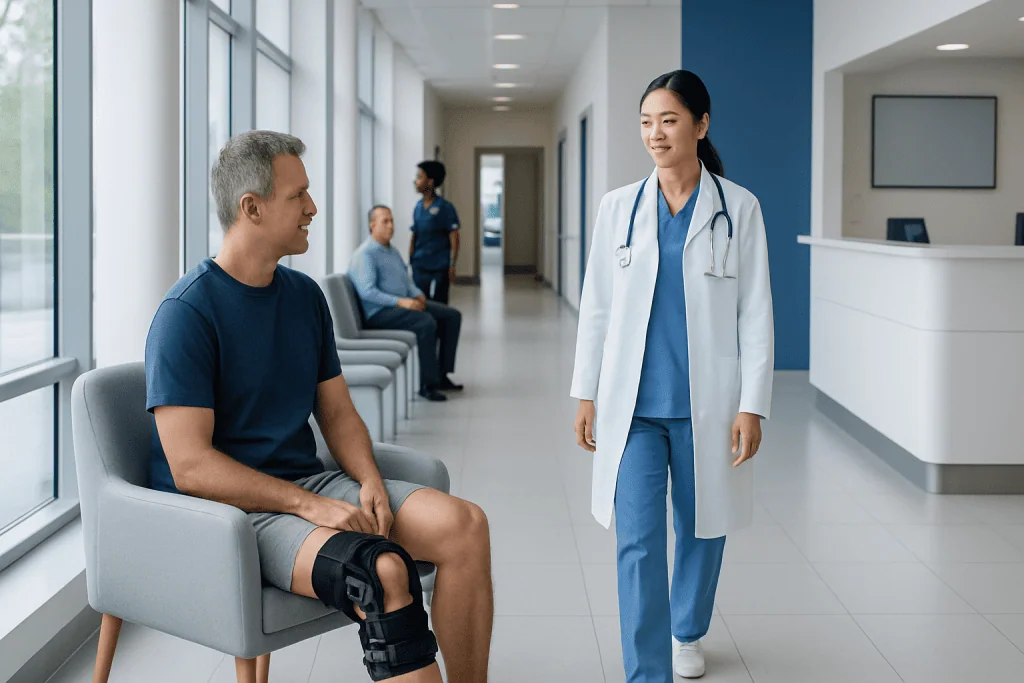
A knee brace may help with support, stability, compression, or protection, depending on the brace type. Not every knee problem needs a brace, and the wrong brace can be uncomfortable or less effective.
Key Takeaways
- A knee brace may help with support, stability, compression, or protection, depending on the brace type.
- Not every knee problem needs a brace, and the wrong brace can be uncomfortable or less effective.
- Braces are often one part of care and may be combined with exercise, physical therapy, medication, or other treatments.
- Persistent swelling, locking, giving way, or inability to bear weight should be assessed by a doctor.
- Proper fit matters; a brace should feel secure without causing numbness, skin irritation, or worsening pain.
A knee brace is a supportive device that may help reduce strain, improve stability, or protect the joint during recovery or activity. It is most useful when matched to the person’s symptoms, diagnosis, and treatment plan rather than chosen by appearance or tightness alone.
What a Knee Brace Does
A knee brace is a wearable support designed to protect the knee, limit certain movements, provide compression, or improve a feeling of stability. Patients often use one for knee pain, after an injury, during sports, or while recovering from treatment. In simple terms, a knee brace does not “fix” every knee problem, but it can be a helpful tool when chosen for the right reason.
The knee is a complex joint made up of bones, cartilage, ligaments, tendons, and surrounding muscles. Because many different structures can cause symptoms, the best brace for one person may not help another. A person with mild swelling from overuse may benefit from a simple sleeve, while someone recovering from ligament injury may need a hinged brace.
It is also important to understand what a brace cannot do. A brace usually does not replace rehabilitation, strength training, weight management, or medical assessment when symptoms are significant. Instead, it is often one part of a broader plan to support healing, comfort, and function.
Common Types of Knee Brace
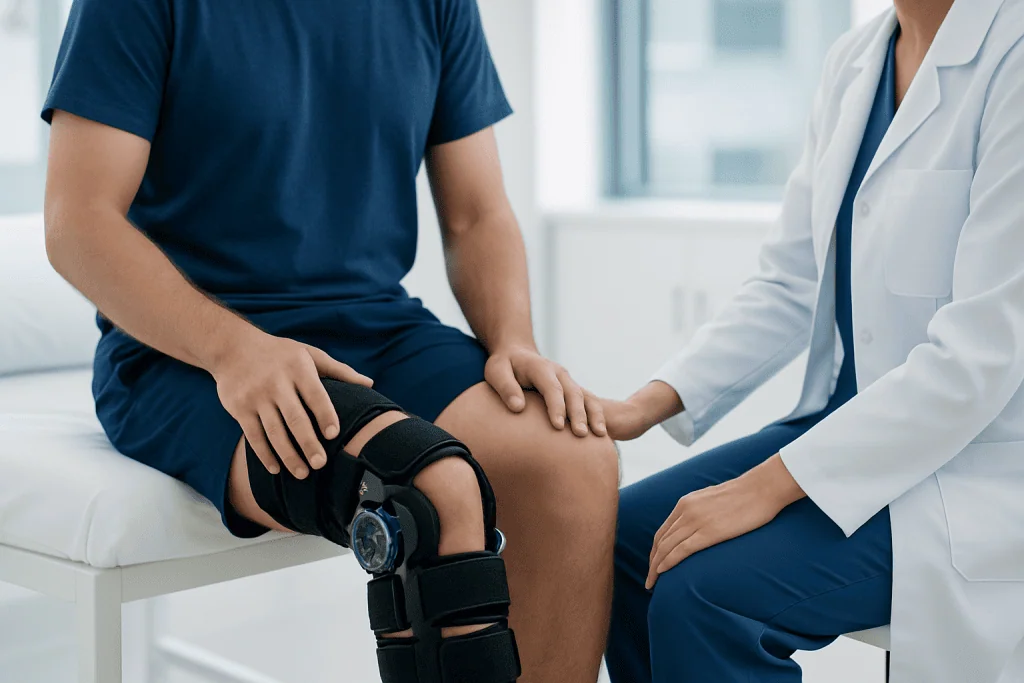
Knee braces come in several main types, and each serves a different purpose. Compression sleeves are soft, flexible supports that may help with mild swelling, warmth, and comfort during daily activities. They are commonly used for minor overuse symptoms or early return to movement after a flare of pain.
Hinged braces provide more side-to-side support and are often used when there is ligament-related instability, such as after a sprain or during recovery from certain injuries. Some braces are designed to limit motion more strictly after surgery or trauma. These are usually prescribed and adjusted by a clinician because they must match the stage of healing.
Unloader or offloader braces are designed to shift pressure away from one part of the knee. They may be recommended for selected patients with knee osteoarthritis affecting one side of the joint. Patellar braces or straps, meanwhile, aim to help guide the kneecap or reduce strain on the tendon in conditions linked to the front of the knee.
- Compression sleeve: mild support, warmth, swelling control
- Hinged brace: added stability for ligaments or instability
- Rehabilitation brace: controlled movement after injury or surgery
- Unloader brace: redistributes pressure in some arthritis patterns
- Patellar brace or strap: support for the kneecap or patellar tendon
When a Knee Brace May Help
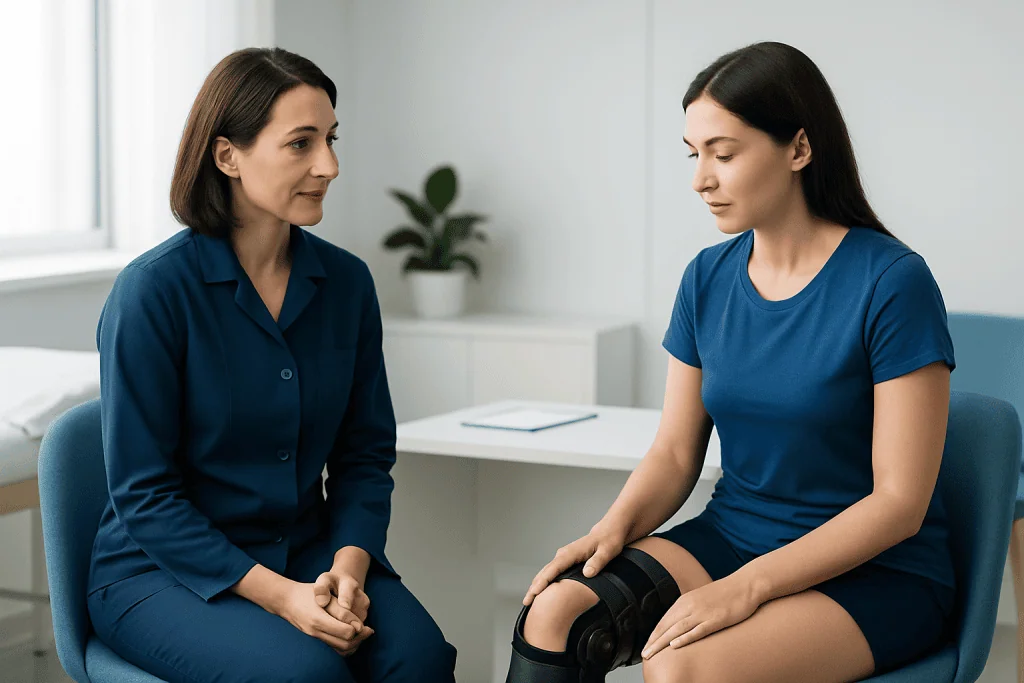
A knee brace may help when the joint feels weak, painful, swollen, or unstable during activity. People sometimes use one after a twist injury, during sports with repeated pivoting, or while returning to walking after a flare of pain. In these situations, the brace may improve confidence and reduce movements that aggravate symptoms.
Doctors may suggest a brace for some ligament sprains, kneecap tracking problems, tendon overload, or certain forms of arthritis. It can also be useful during a rehabilitation program to make movement feel safer while the surrounding muscles regain strength. In some patients, support from a brace can improve daily tasks such as climbing stairs or standing for longer periods.
At the same time, a brace should not be seen as a reason to ignore persistent symptoms. Ongoing pain may be related to meniscus damage, ligament injury, cartilage wear, inflammation, or another joint problem. If a person has repeated instability, catching, or swelling, the underlying cause should be assessed rather than relying on a brace alone.
Situations Where a Brace May Be Less Useful
Not every painful knee benefits from a brace. If the main problem is muscle weakness, poor movement mechanics, or reduced flexibility, strengthening and rehabilitation may be more important than external support. In some cases, prolonged use of a brace without a clear reason can make patients depend on it for confidence rather than building normal joint control.
A brace may also be less helpful if it is the wrong style or fit. A very tight brace can cause discomfort, skin marks, numbness, or poor circulation. A loose brace may slip, bunch up behind the knee, or fail to provide meaningful support. Discomfort while sitting, walking, or exercising often means the brace needs adjustment or reconsideration.
Some conditions require medical evaluation before using any support device. Significant trauma, deformity, suspected fracture, or a hot, very swollen knee should not be managed with self-selected bracing alone. If symptoms are severe or sudden, a proper diagnosis is more important than choosing a brace quickly.
How Doctors Decide Which Knee Brace Is Appropriate
Choosing a knee brace starts with understanding why the knee hurts or feels unstable. A doctor or physiotherapist will usually ask about when symptoms began, what activities worsen them, whether the knee swells or locks, and whether there was a specific injury. They will also examine movement, strength, balance, tenderness, and ligament stability.
Imaging may be useful in some situations, especially after trauma or when symptoms continue. X-rays can help evaluate alignment and arthritis, while MRI can be used when ligament, meniscus, cartilage, or tendon injury is suspected. This is one reason self-buying a brace based only on online descriptions may not address the real problem.
Once the cause is clearer, treatment can be tailored more precisely. Some patients may benefit most from rehabilitation and activity modification, while others need more structured orthopedic care. Evaluation may lead to advice on knee replacement for advanced joint damage, or physical therapy and rehabilitation to improve strength, movement, and pain control.
Using a Knee Brace Safely and Effectively
For a knee brace to help, it needs to fit correctly and be worn for the right activities. In general, the brace should feel snug and supportive without pinching the skin or causing tingling. Patients should follow sizing instructions carefully and, when possible, ask a clinician to check the fit, especially for hinged or post-injury braces.
Skin care matters, particularly if the brace is worn for many hours. The skin should be kept clean and dry, and the brace should be removed regularly as advised. Red marks that fade quickly may be normal, but persistent redness, blistering, rash, or skin breakdown should be reported. People with circulation problems, nerve problems, or sensitive skin may need extra guidance.
A brace is usually most effective when combined with other practical measures. These may include short-term activity changes, ice after aggravating exercise, weight management when appropriate, and exercises to strengthen the thigh, hip, and core muscles. Some patients with more complex injuries may need orthopedic assessment and treatment, especially if the knee repeatedly gives way or remains painful despite conservative care.
A Knee Brace as Part of a Larger Treatment Plan
Many knee conditions improve best when support, exercise, and medical guidance work together. For example, arthritis-related pain may respond to a combination of activity adjustment, muscle strengthening, medication advice, and sometimes an unloading brace. Sports-related injuries may require temporary protection followed by progressive rehabilitation to restore balance, strength, and confidence.
If symptoms do not improve, treatment may be directed at the specific diagnosis. Patients with more advanced wear and tear may be assessed for options related to knee calcification or degenerative joint changes. Others may need targeted management for ligament, meniscus, or cartilage problems rather than a long-term brace alone.
Near the end of the treatment pathway, some patients may need specialist review for procedures or surgery, while many others improve with non-surgical care. Acibadem International’s multidisciplinary specialists and JCI-accredited hospitals diagnose and treat knee conditions for international patients, with treatment plans based on examination, imaging, symptoms, and functional goals.
When to Seek Medical Care
Medical advice is recommended if knee pain lasts more than a few days, keeps returning, or interferes with normal walking, work, sleep, or exercise. A person should also seek care if the knee feels unstable, repeatedly locks, makes weight-bearing difficult, or swells soon after activity or injury. These symptoms can point to a structural problem that a brace alone will not address.
Urgent evaluation is important after a major fall, twist, sports injury, or direct blow if there is severe pain, marked swelling, deformity, or inability to stand. A red, hot, or fever-associated swollen knee also needs prompt medical attention because infection or significant inflammation must be ruled out. Numbness, color change in the leg, or calf swelling should also be assessed quickly.
Early assessment can help patients avoid prolonged discomfort and choose the most appropriate treatment. In some cases, the best next step is not a stronger brace but clearer diagnosis, supervised rehabilitation, or specialist care.
Frequently asked questions
Can a knee brace help with knee pain?
Yes, a knee brace may help some types of knee pain by providing compression, support, or improved stability. However, it works best when the brace matches the underlying problem, such as mild swelling, kneecap irritation, arthritis, or ligament instability.
Should a knee brace be worn all day?
Not always. Some braces are meant only for walking, sports, or specific parts of recovery, while others are used for limited daily support. A doctor or physiotherapist can advise how long to wear it so the knee is protected without causing skin irritation or unnecessary dependence.
How tight should a knee brace be?
A knee brace should feel secure and supportive, but it should not cause numbness, throbbing, tingling, or worsening pain. If it leaves severe marks, slips down repeatedly, or feels uncomfortable behind the knee, the size or style may be wrong.
Is a knee brace enough to treat an injury?
Usually not by itself. A brace may protect the knee or reduce strain, but many injuries also need rest, guided exercises, physical therapy, or further medical treatment. Persistent swelling, instability, or locking should be evaluated by a qualified clinician.
What is the best knee brace for arthritis?
The best brace depends on where the arthritis is and how it affects walking and pain. Some people do well with a simple sleeve for comfort, while others may benefit from an unloader brace that shifts pressure away from the more damaged side of the joint.
Can wearing a knee brace weaken the knee?
A brace itself does not directly weaken the knee, but relying on it without strengthening the surrounding muscles may slow progress in some people. That is why braces are often combined with exercise and rehabilitation rather than used as the only treatment.
References
- American Academy of Orthopaedic Surgeons
- National Institute of Arthritis and Musculoskeletal and Skin Diseases
- National Health Service
- Mayo Clinic
- American Physical Therapy Association
This article is for general information only and is not a substitute for professional medical advice. Please consult a qualified doctor about your individual situation.
Joint and spine care in Turkey — expert assessment & treatment
JCI-accredited · board-certified surgeons · reply within 24h
Add us as a Preferred Source to see more of our trusted health content across Google Search, AI Overviews and Discover.