Bulgarian Split Squat — Explained by Medical Evidence, Not Myths
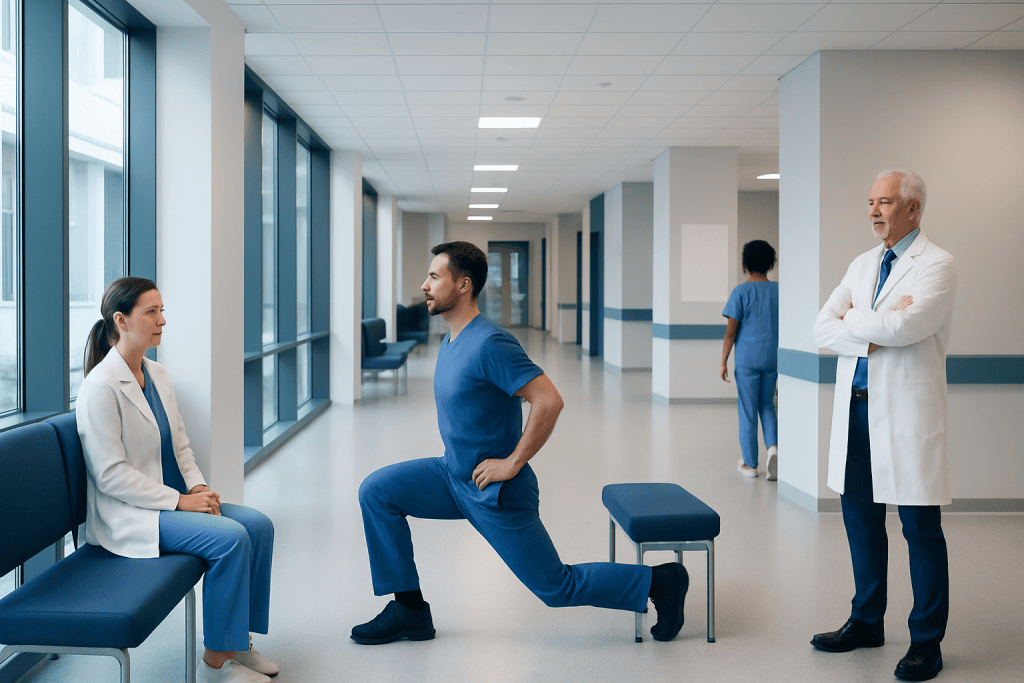
The bulgarian split squat is an effective unilateral exercise for lower-body strength, balance, and movement control. Good technique matters more than heavy weight, especially for the knee, hip, lower back, and balance demands of the movement.
Key Takeaways
- The bulgarian split squat is an effective unilateral exercise for lower-body strength, balance, and movement control.
- Good technique matters more than heavy weight, especially for the knee, hip, lower back, and balance demands of the movement.
- Pain during the exercise is not normal training fatigue and may signal overload, poor form, limited mobility, or an underlying musculoskeletal issue.
- Beginners can start with body weight, a lower rear-foot support, or split squat variations before progressing.
- People with recent injury, persistent joint pain, or repeated instability should seek professional assessment before continuing.
The bulgarian split squat is a rear-foot-elevated single-leg exercise used to strengthen the thighs, glutes, and stabilizing muscles around the hips and trunk. Medical evidence suggests it can be a useful training option when technique, mobility, and load are matched to the person’s condition and goals.
Overview: what the bulgarian split squat really is
The bulgarian split squat is a rear-foot-elevated split squat. One foot stays on the ground in front while the other rests behind on a bench, box, or similar support. The movement mainly trains the quadriceps, gluteal muscles, hamstrings, and calf, while also challenging balance, hip stability, and trunk control.
From a medical and movement perspective, the exercise is neither a miracle movement nor an inherently dangerous one. It is simply a demanding single-leg strength exercise. Its value depends on whether it fits the person’s anatomy, mobility, training history, and current symptoms.
Compared with some two-leg exercises, the bulgarian split squat places more emphasis on side-to-side strength balance and control. This can be useful for athletes, recreational exercisers, and people working on lower-limb symmetry. At the same time, it requires more coordination and may be uncomfortable if there is poor flexibility, reduced ankle mobility, or pain in the knee, hip, or lower back.
What medical evidence says about its benefits
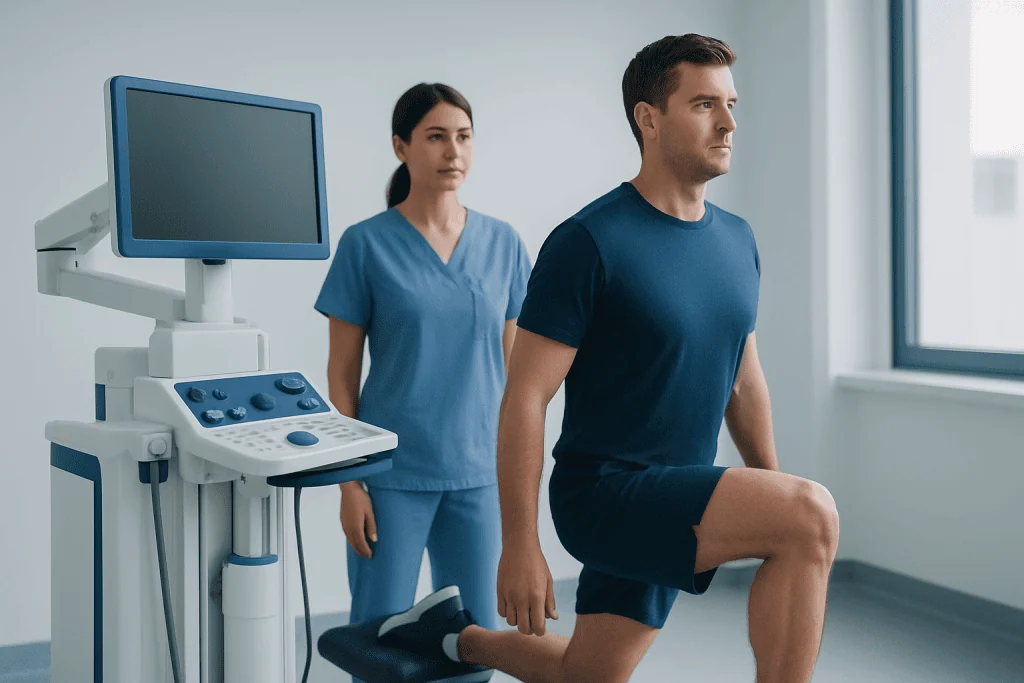
Research on resistance exercise consistently shows that lower-body strengthening supports muscle mass, joint function, bone health, and physical performance. The bulgarian split squat fits within this broader evidence because it loads the lower limbs in a functional, single-leg pattern often used in walking, climbing stairs, and sport.
Potential benefits include improved leg strength, better hip and pelvic control, and greater awareness of side-to-side differences. Many clinicians and strength professionals use unilateral exercises to identify whether one leg is weaker, less stable, or less mobile than the other. That information can help guide training or rehabilitation decisions.
Another practical advantage is that the exercise can create a strong muscular stimulus with moderate external load. For some people, that means less total spinal loading than very heavy bilateral lifts, though this does not automatically make it safer for everyone. It may also be included as part of a broader program for physical therapy and rehabilitation when prescribed by a qualified clinician.
- Strengthens quadriceps and gluteal muscles
- Challenges balance and neuromuscular control
- May reveal side-to-side strength or mobility differences
- Can be adapted for home, gym, or rehabilitation settings
How to perform it with safer, more efficient form
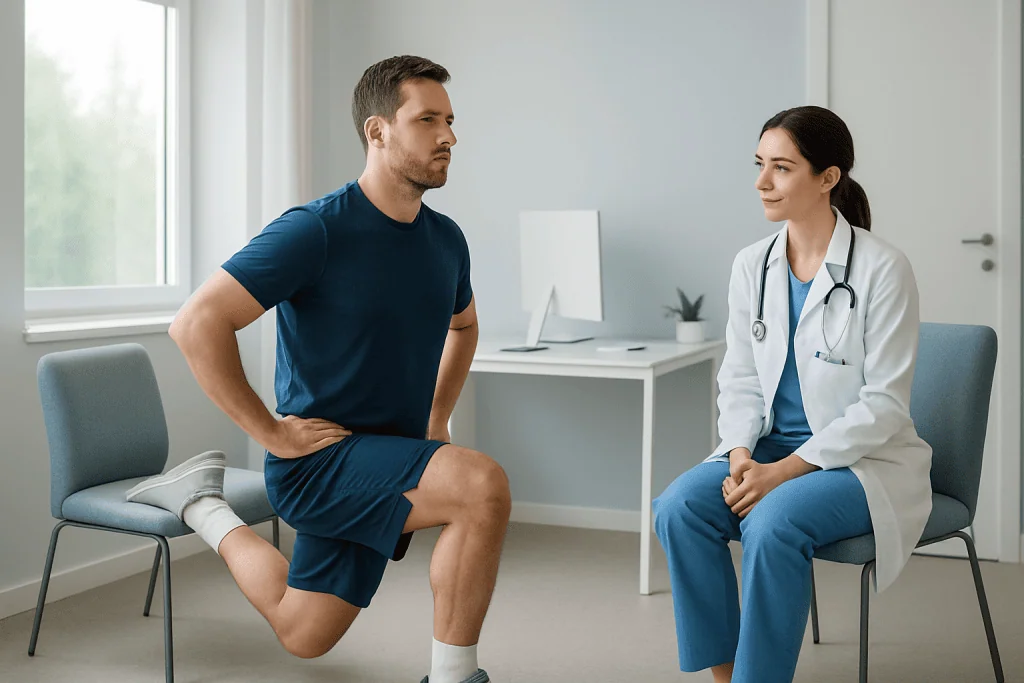
For most people, setup is the main factor that determines comfort. The front foot should be far enough forward that the person can lower under control without feeling cramped or forced into excessive forward collapse. The rear support should be stable and not too high. A lower step or bench is often easier for beginners than a standard bench height.
During the movement, the trunk may lean slightly forward, but it should remain controlled rather than rounded or twisted. The front knee can move forward to some degree, which is normal in many healthy knees, as long as the movement is pain-free and controlled. The front foot should stay planted, with pressure distributed through the midfoot and heel rather than shifting entirely onto the toes.
Progression should be gradual. Many people benefit from starting with a standard split squat on the floor before elevating the rear foot. Others may use support from a wall, rail, or dowel for balance. Load, depth, and range of motion should increase only when the movement feels stable and repeatable without pain.
- Keep the front foot fully grounded
- Move slowly on the way down and up
- Avoid twisting the pelvis or collapsing the knee inward
- Choose a depth that feels controlled and pain-free
Common mistakes, discomfort, and why pain can happen
A frequent myth is that any discomfort with the bulgarian split squat means the exercise is harmful. In reality, mild muscular effort or stretch can be expected, especially in the front leg and the hip flexors of the rear leg. However, sharp pain, joint pinching, catching, instability, or pain that persists after exercise should not be ignored.
Knee pain may occur if the person uses too much load too soon, loses hip control, or trains through an existing problem such as patellofemoral irritation or tendon overload. Hip pain may be linked to mobility limits, deep flexion intolerance, or poor pelvic control. Lower back discomfort may appear when the trunk is poorly braced or when the exercise is forced beyond a comfortable range.
Other common issues include placing the feet too close together, choosing a rear support that is too high, rushing the movement, or treating balance loss as normal. If symptoms continue, a clinician may evaluate for concerns such as knee pain or lower back pain rather than assuming the exercise itself is the only cause.
Who should modify or avoid the exercise
The bulgarian split squat is not mandatory for health or fitness. People with limited balance, recent surgery, acute muscle strain, severe joint pain, or a current flare of low back symptoms may need to avoid it temporarily. For these individuals, simpler exercises may provide similar training benefits with less irritation.
Modification is often enough. Helpful options include reducing depth, lowering the rear-foot elevation, using body weight only, shortening the range of motion, or performing a regular split squat instead. Some people do better with step-ups, supported lunges, sit-to-stand practice, or machine-based leg strengthening while symptoms settle.
People with known orthopedic conditions, recurrent falls, or unresolved pain should seek guidance before continuing. In selected cases, medical assessment and orthopedic rehabilitation may help identify whether the limitation is due to strength, mobility, coordination, or a structural problem.
How clinicians assess exercise-related leg, knee, or hip pain
If the bulgarian split squat repeatedly causes pain, assessment usually starts with a clinical history and physical examination. A doctor or physical therapist may ask where the pain is felt, whether it appears during the lowering or rising phase, and whether there is swelling, locking, giving way, numbness, or pain during daily activities.
Observation of movement often provides important clues. Clinicians may look for asymmetry, reduced ankle mobility, hip weakness, pelvic tilt, knee collapse inward, or poor trunk control. They may also compare symptoms during other tasks such as walking, stair climbing, squatting, or single-leg balance.
Imaging is not needed for every case, but it may be considered when symptoms are persistent, severe, or associated with trauma. Depending on the concern, evaluation may include orthopedic consultation, rehabilitation review, or MRI to assess soft tissues and joints. The aim is to identify the source of symptoms, not simply to stop all activity.
Self-care, progression, and when to seek medical care
For general self-care, it is reasonable to reduce the load, shorten the range, and review technique if mild discomfort appears. Warm-up, gradual progression, recovery days, and attention to ankle, hip, and trunk mobility can all help. It is also sensible to compare both sides rather than repeatedly pushing through a clearly asymmetrical movement pattern.
Training should support function, not create ongoing irritation. If an exercise causes pain each time despite careful adjustments, it may not be the right variation at that moment. Replacing it temporarily with a more tolerable option is often more productive than forcing it.
Medical care should be sought if there is sudden injury, significant swelling, inability to bear weight, joint locking, repeated giving way, visible deformity, numbness, fever, or pain that does not improve. Professional assessment is also appropriate for symptoms lasting more than a few weeks or interfering with work, sleep, sport, or daily life. Acibadem International’s multidisciplinary specialists in JCI-accredited hospitals diagnose and treat musculoskeletal problems for international patients when further evaluation is needed.
Frequently asked questions
Is the bulgarian split squat good for beginners?
It can be, but it is usually better introduced gradually. Many beginners benefit from learning a standard split squat first, using body weight only, or holding onto support for balance before progressing to a rear-foot-elevated version.
Should the knee go past the toes in a bulgarian split squat?
Not always, but it can happen naturally depending on body proportions and technique. In many healthy people, some forward knee movement is acceptable if the foot stays grounded, the motion is controlled, and there is no pain.
Why does the bulgarian split squat hurt the back leg?
The back leg is often placed in a position that stretches the hip flexors and front of the thigh. If the support is too high, the setup is too narrow, or mobility is limited, this can feel uncomfortable and may need adjustment.
Can the bulgarian split squat cause knee pain?
It can aggravate the knee if the load is too heavy, control is poor, or there is an existing knee condition. Persistent or sharp knee pain should be assessed rather than ignored, especially if there is swelling, instability, or pain during everyday activities.
What muscles does the bulgarian split squat work most?
The main muscles worked are the quadriceps and gluteal muscles of the front leg. The hamstrings, calf muscles, and core stabilizers also contribute, and the exercise challenges hip stability and balance.
Is the bulgarian split squat better than regular squats?
It is not universally better; it is simply different. Bulgarian split squats emphasize unilateral strength and control, while regular squats are often better for practicing bilateral loading and may suit people who prefer more stable footing.
This article is for general information only and is not a substitute for professional medical advice. Please consult a qualified doctor about your individual situation.
Explore treatments in Turkey — costs, top hospitals & a free quote
JCI-accredited · board-certified surgeons · reply within 24h
Add us as a Preferred Source to see more of our trusted health content across Google Search, AI Overviews and Discover.

More from the Health Library

Rf Muscle: An Evidence-Based Guide for Patients

Hearing Test: A Complete Medical Overview

Pumpkin seeds benefits of: A Complete Medical Guide for Patients

Benign Tumor: A Complete Medical Overview

Prefrontal Cortex: An Evidence-Based Guide for Patients