Benign Tumor: A Complete Medical Overview

A benign tumor is noncancerous and usually grows slowly without spreading. Some benign tumors cause no symptoms, while others cause pain, pressure, bleeding, or cosmetic changes.
Key Takeaways
- A benign tumor is noncancerous and usually grows slowly without spreading.
- Some benign tumors cause no symptoms, while others cause pain, pressure, bleeding, or cosmetic changes.
- Diagnosis often relies on a physical exam, imaging tests, and sometimes a biopsy.
- Treatment may include observation, medication, or surgery depending on the tumor’s size, location, and symptoms.
- A doctor should assess any new lump, persistent swelling, unexplained bleeding, or change in function.
A benign tumor is a noncancerous growth that does not invade nearby tissues or spread to distant parts of the body. Even so, some benign tumors can cause symptoms, press on organs or nerves, or need treatment depending on where they develop and how they behave.
What Is a Benign Tumor?
A benign tumor is a growth made up of abnormal cells that remains localized and does not spread to other parts of the body. In many cases, it grows slowly and has clear borders, which helps distinguish it from a malignant tumor, or cancer. This is why the term “benign” generally means noncancerous.
However, “benign” does not always mean harmless. A benign tumor can still cause problems if it grows in a place where space is limited, such as the brain, near nerves, inside the digestive tract, or around blood vessels. It may also affect appearance, comfort, movement, or the normal function of an organ.
Benign tumors can develop in many tissues, including skin, fat, muscle, bone, glands, and the lining of internal organs. Common examples include lipomas, fibroids, adenomas, and some types of polyps. A doctor’s evaluation is important because not every lump or mass can be identified by appearance alone.
How Benign Tumors Differ From Cancer
The key difference between a benign tumor and cancer is behavior. Benign tumors do not invade nearby tissues in the same destructive way as malignant tumors, and they do not metastasize, meaning they do not travel through the blood or lymph system to form tumors elsewhere in the body.
Even so, a benign tumor and a cancerous tumor can sometimes feel or look similar at first. Both may appear as a lump, a visible swelling, or a growth found on imaging. For this reason, doctors often use scans and sometimes tissue sampling to confirm exactly what a mass is.
Some growths are clearly benign, while others may be borderline, precancerous, or uncertain until examined closely. For example, some polyps or gland-based tumors can carry a future risk of malignant change. This is one reason follow-up matters, even when a tumor is believed to be noncancerous.
People who are told they may have a tumor often worry about cancer immediately. Reassuringly, many tumors found in everyday medical practice are benign. Still, a timely medical assessment helps determine whether simple observation is enough or whether treatment is advisable.
Symptoms and Possible Effects

Many benign tumors cause no symptoms at all and are found by chance during a physical exam or an imaging test done for another reason. When symptoms do occur, they often depend more on the tumor’s location and size than on the tumor type itself.
A benign tumor may cause a visible or palpable lump, localized pain, pressure, swelling, numbness, or restricted movement. In internal organs, symptoms may include changes in bowel habits, urinary symptoms, headaches, hormonal changes, or abnormal bleeding. Skin growths may lead to irritation, color change, or cosmetic concern.
Possible symptoms can include:
- A new lump or swelling
- Pain or tenderness in one area
- Pressure on nearby structures
- Numbness, tingling, or weakness if a nerve is affected
- Abnormal bleeding or discharge
- Changes in vision, hearing, digestion, or urination depending on location
Because symptoms overlap with other conditions, including infection, cysts, inflammatory problems, and cancer, self-diagnosis can be misleading. Any persistent, enlarging, or unexplained growth should be assessed by a qualified clinician.
Causes and Risk Factors
In many cases, the exact cause of a benign tumor is not known. Tumors form when cells grow and divide in an abnormal way. Normally, the body carefully regulates cell growth and removes older or damaged cells. A benign tumor can develop when this control process is altered.
Several factors may contribute. These include inherited genetic tendencies, hormonal influences, chronic irritation in some tissues, age-related cell changes, and certain environmental exposures. For example, some benign tumors are more common in adults as cells accumulate changes over time, while others are linked to hormone-sensitive tissues.
Risk factors vary by tumor type and location. Family history may matter in some cases, especially when certain syndromes increase the likelihood of multiple growths. Some people may also have benign conditions that resemble or coexist with tumors, such as thyroid nodules or uterine fibroids.
Having a benign tumor does not necessarily mean a person did something to cause it. Often, these growths arise without a clear preventable reason. A doctor can help explain whether any personal, hormonal, genetic, or lifestyle factors may be relevant in an individual case.
How Doctors Diagnose a Benign Tumor
Diagnosis begins with a medical history and physical examination. A doctor may ask when the growth was first noticed, whether it has changed in size, and whether it causes pain, bleeding, or functional problems. The location, texture, mobility, and appearance of the mass can offer useful clues, but they usually do not provide a complete diagnosis on their own.
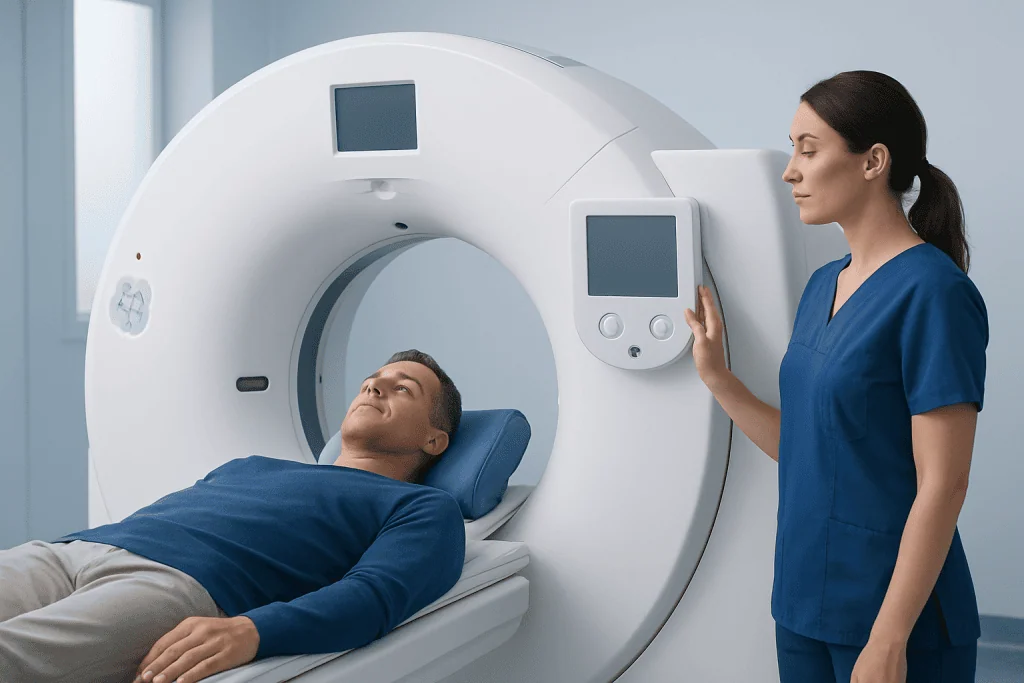
Imaging tests are often used to learn more about the tumor’s size, shape, and relationship to surrounding tissues. Depending on the suspected location, this may include ultrasound, X-ray, CT, or MRI. If the growth is internal or linked to symptoms in the digestive tract or airways, endoscopy may also be used.
Sometimes the only reliable way to confirm the nature of a tumor is to examine a sample of tissue under a microscope. This may be done through a needle biopsy or by removing part or all of the growth. Pathology helps determine whether the tumor is benign, malignant, or something in between.
When a growth affects structures such as the breast, thyroid, brain, digestive tract, or bones, a multidisciplinary approach may be useful. In selected cases, further evaluation may overlap with services such as biopsy or advanced MRI imaging to guide diagnosis and follow-up.
Treatment Options and Monitoring
Treatment depends on the type of benign tumor, where it is located, whether it is growing, and what symptoms it causes. Not every benign tumor needs active treatment. If the growth is small, clearly noncancerous, and not causing problems, a doctor may recommend watchful waiting with periodic exams or imaging.
When treatment is needed, surgery is one of the most common options. A surgeon may remove the tumor if it causes pain, pressure, bleeding, cosmetic concerns, or uncertainty about the diagnosis. Complete removal may also reduce the chance of recurrence, although some benign tumors can come back depending on their type and location.
In some cases, treatment focuses on the underlying effects rather than immediate removal. Hormone-related tumors, for example, may be managed with medical therapy in selected situations. Growths in difficult or delicate locations may need highly individualized planning, particularly if they are near nerves, major blood vessels, or sensitive organs.
If a mass needs to be removed, the approach may range from a minor outpatient procedure to more specialized surgery. Relevant care can include general surgery or, for selected soft-tissue growths, tumor surgery. Near the end of the care pathway, some international patients may seek evaluation at Acibadem International, where multidisciplinary specialists in JCI-accredited hospitals diagnose and treat benign and malignant tumors according to the tumor type and location.
Self-care, Follow-up, and When to Seek Medical Care
Self-care begins with observation, not self-treatment. It is best not to squeeze, puncture, or repeatedly manipulate a lump, as this may irritate the tissue and make evaluation harder. Keeping track of size, tenderness, skin changes, bleeding, or related symptoms can be helpful when discussing the problem with a doctor.
Follow-up is important even when a tumor is thought to be benign. A clinician may recommend repeat exams or imaging to confirm that the growth remains stable. This is especially relevant for tumors that are not removed, are located near important structures, or have features that need periodic review.
Medical care should be sought if a lump is new, rapidly enlarging, painful, hard, fixed in place, or associated with unexplained bleeding, weight loss, fever, weakness, or neurological symptoms. Care is also important if the growth interferes with swallowing, breathing, vision, bowel function, urination, or movement.
In general, any persistent mass or unexplained bodily change deserves professional assessment. Prompt evaluation does not mean cancer is likely; it means the cause should be identified accurately so the most appropriate monitoring or treatment plan can be made.
Frequently asked questions
Is a benign tumor the same as cancer?
No. A benign tumor is noncancerous and does not spread to distant parts of the body. However, it can still cause symptoms or complications if it grows large or presses on important structures.
Can a benign tumor become cancerous?
Some benign tumors remain harmless and stable for years, while a small number of certain growths may change over time or be linked to a higher future cancer risk. The possibility depends on the tumor type, location, and pathology results. This is why medical follow-up is sometimes recommended.
Do all benign tumors need to be removed?
No. Many benign tumors can be safely monitored if they are small, not growing, and not causing symptoms. Removal is usually considered if the diagnosis is uncertain, the tumor is bothersome, or it affects function or appearance.
How can doctors tell if a tumor is benign?
Doctors use a combination of physical examination, imaging tests, and sometimes biopsy. Imaging can show size and location, but tissue analysis is often the most definitive way to determine whether a tumor is benign or malignant.
What are common signs of a benign tumor?
A benign tumor may appear as a lump, swelling, or visible growth. Some people have pain, pressure, numbness, bleeding, or organ-specific symptoms, while others have no symptoms at all.
Should a painless lump still be checked?
Yes. A lump does not have to be painful to need medical assessment. Any new, persistent, or enlarging mass should be evaluated so its cause can be confirmed and monitored appropriately.
This article is for general information only and is not a substitute for professional medical advice. Please consult a qualified doctor about your individual situation.
Oncology care in Turkey — second opinion and treatment plan
JCI-accredited · board-certified surgeons · reply within 24h
Add us as a Preferred Source to see more of our trusted health content across Google Search, AI Overviews and Discover.

More from the Health Library

Hypertrophic Scar: An Evidence-Based Guide for Patients

Meckel’s Diverticulum: What Patients Need to Know

Ph of Blood: A Complete Medical Overview

Knee Contusion — Explained by Medical Evidence, Not Myths

Spondylolisthesis: What Patients Need to Know