

Rf Muscle: An Evidence-Based Guide for Patients

The RF muscle is the rectus femoris, a major front-thigh muscle involved in hip flexion and knee extension. Common problems include muscle strain, tendon irritation, bruising, overuse, and tightness from training or prolonged sitting.
Key Takeaways
- The RF muscle is the rectus femoris, a major front-thigh muscle involved in hip flexion and knee extension.
- Common problems include muscle strain, tendon irritation, bruising, overuse, and tightness from training or prolonged sitting.
- Symptoms may include front-thigh pain, weakness, tenderness, swelling, or pain when kicking, sprinting, climbing stairs, or getting up from a chair.
- Diagnosis is often based on medical history and examination, with imaging used when symptoms are severe, persistent, or unclear.
- Most mild to moderate injuries improve with rest, activity modification, physical therapy, and a gradual return to exercise.
- Urgent assessment is important for severe pain, a sudden pop, major swelling, inability to bear weight, or symptoms after significant trauma.
RF muscle usually refers to the rectus femoris, one of the four quadriceps muscles at the front of the thigh. It helps bend the hip and straighten the knee, so pain or tightness in this area can affect walking, running, stairs, and sports.
Overview: what the RF muscle is and why it matters
The term rf muscle most often refers to the rectus femoris, one of the four quadriceps muscles at the front of the thigh. It is unique among the quadriceps because it crosses both the hip and the knee. This means it helps with two important actions at the same time: lifting the thigh upward at the hip and straightening the leg at the knee.
Because the rectus femoris works across two joints, it is especially active during walking, running, climbing stairs, kicking, jumping, and getting up from a seated position. It also helps control leg movement when the body slows down, changes direction, or lands from a jump. These demands make the muscle vulnerable to overload, particularly in active people.
When people say they have “RF muscle pain,” they may be describing discomfort in the front of the thigh, near the hip crease, or just above the knee. In some cases, the problem is a simple strain or tightness. In others, it may involve the tendon, the nearby hip flexor region, or another condition that can mimic a quadriceps injury, such as muscle strain.
Symptoms of RF muscle problems
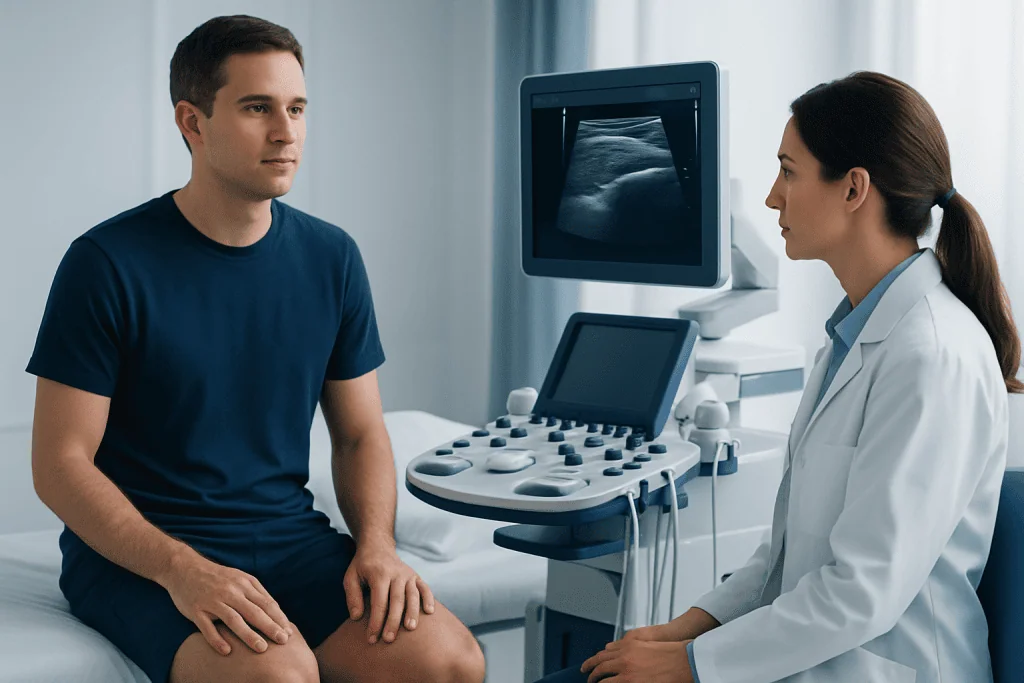
Symptoms depend on whether the issue is sudden, such as a sports injury, or gradual, such as overuse. Many people notice aching or sharp pain in the front of the thigh. The pain may start during sprinting, kicking, lunging, climbing stairs, or rising from a chair. Some feel discomfort more toward the hip, while others feel it in the middle of the thigh.
Other common symptoms include tenderness when pressing on the muscle, tightness, cramping, reduced flexibility, and weakness when trying to lift the knee or straighten the leg. Swelling or bruising can happen after a more significant tear. Some people also describe a pulling sensation, especially when the muscle is stretched.
If the rectus femoris tendon is involved, pain may be more localized near where the muscle attaches, and it may worsen with repeated use rather than a single sudden movement. Symptoms can overlap with tendonitis, particularly in people who train frequently or increase exercise intensity too quickly.
- Front-thigh pain or tenderness
- Pain when kicking, sprinting, or climbing stairs
- Tightness or reduced range of motion
- Weakness in lifting the thigh or straightening the knee
- Swelling, bruising, or a feeling of a sudden pull in more severe injuries
Common causes and risk factors

The most common cause of RF muscle pain is a strain, which happens when muscle fibers are overstretched or torn. This often occurs during explosive activities such as sprinting, jumping, sudden acceleration, or kicking. The rectus femoris is particularly prone to strain because it crosses two joints and often contracts forcefully while being lengthened.
Not all RF muscle problems come from a dramatic injury. Repetitive use can irritate the muscle or tendon over time. Long periods of sitting may also contribute to tightness in the front of the hip and thigh, especially if flexibility and strength are limited. Training errors, such as a sudden increase in distance, speed, intensity, or frequency, are another common factor.
Several issues can increase the risk of injury: poor warm-up, muscle imbalance between the front and back of the thigh, fatigue, inadequate recovery, previous quadriceps injury, and limited hip mobility. People who play football, soccer, track, martial arts, or racquet sports may be at higher risk because these activities involve quick bursts, kicking, and direction changes.
Less commonly, front-thigh pain may be related to referred pain from the hip, lower back, or nerve irritation. That is why persistent symptoms should not be assumed to be “just a pulled muscle,” especially if there is numbness, back pain, or symptoms extending below the knee.
How doctors diagnose RF muscle injuries
Diagnosis starts with a careful medical history. A doctor will usually ask when the pain began, whether there was a sudden pop or pull, which movements make it worse, and whether there has been recent training change or trauma. The pattern of symptoms often gives important clues about whether the problem is a mild strain, a tendon issue, or a different condition.
During the physical examination, the doctor may check for swelling, bruising, tenderness, muscle strength, flexibility, and pain with resisted hip flexion or knee extension. They may also assess gait, hip movement, and the surrounding muscles to look for imbalance or other sources of pain. This helps distinguish rectus femoris injury from problems involving the hip joint, other quadriceps muscles, or the lower back.
Imaging is not always necessary for mild cases, but it may be helpful when symptoms are severe, recovery is not progressing, or the diagnosis is uncertain. Ultrasound can identify muscle and tendon injuries, while MRI scanning can give more detailed information about the location and extent of a tear. In some situations, physical therapy and rehabilitation assessment is also a key part of diagnosis and recovery planning.
Treatment options and recovery
Most RF muscle injuries improve with conservative treatment. In the early phase, doctors often recommend reducing or temporarily stopping painful activities, especially sprinting, kicking, jumping, or heavy leg training. Gentle movement is usually encouraged as tolerated, since complete inactivity for too long can contribute to stiffness and weakness.
Physical therapy is often the main part of recovery. Treatment commonly focuses on pain control, restoring flexibility, improving strength in the quadriceps and surrounding muscles, and gradually reintroducing sport- or activity-specific movement. A structured program may include gentle stretching, progressive strengthening, balance work, and running or return-to-sport drills when symptoms improve.
Some people benefit from supportive measures such as ice in the early stage, brief use of compression, or guided activity modification. Doctors may discuss medications for short-term pain relief when appropriate, but self-medicating for long periods is not a substitute for assessment. Persistent or complex cases may need further evaluation with orthopedics and traumatology or sports injury care if symptoms limit daily life or athletic performance.
Recovery time varies widely. A minor strain may improve in days to weeks, while a more significant tear can take longer and requires a careful, graded return to activity. Returning too soon raises the risk of reinjury, especially if pain, tightness, or weakness remains.
Prevention and self-care
Preventing RF muscle problems usually depends on training habits rather than a single exercise. A gradual increase in exercise load is one of the most effective steps. Sudden jumps in sprinting volume, hill work, kicking drills, or leg strengthening can overload the rectus femoris before it has adapted.
A well-rounded routine can help reduce risk. This includes warming up before intense activity, maintaining hip and thigh flexibility, and strengthening the quadriceps, hamstrings, gluteal muscles, and core. Good movement control matters too, especially in activities that involve rapid acceleration, deceleration, and landing.
For self-care, people with mild symptoms often do best by easing back on aggravating activity while staying gently mobile. If sitting for long periods worsens tightness, regular movement breaks may help. Persistent pain should not be forced through. Ongoing symptoms deserve professional assessment to identify the cause and guide a safe plan.
- Increase training gradually
- Warm up before sports or vigorous exercise
- Build balanced strength in the legs and hips
- Address flexibility and mobility limits
- Allow enough recovery between hard sessions
When to seek medical care
Medical advice is important if front-thigh pain is severe, follows a significant injury, or makes it hard to walk, climb stairs, or bear weight. A sudden popping sensation, rapid swelling, visible deformity, or extensive bruising may suggest a more serious muscle or tendon tear that needs timely assessment.
People should also see a doctor if symptoms do not improve after a short period of rest and activity modification, or if pain keeps returning with exercise. Recurrent injuries can reflect an underlying issue such as weakness, poor mechanics, tendon involvement, or incomplete healing.
Urgent evaluation is advisable if there is fever, redness, numbness, marked weakness, calf swelling, chest symptoms, or pain that seems to come from the hip or lower back rather than the muscle itself. For international patients needing coordinated evaluation, Acibadem International’s multidisciplinary specialists in JCI-accredited hospitals diagnose and treat muscle, tendon, and sports-related conditions.
Frequently asked questions
What does RF muscle mean?
RF muscle usually means the rectus femoris. It is one of the quadriceps muscles at the front of the thigh and helps bend the hip and straighten the knee.
Where is rectus femoris pain usually felt?
Pain is often felt in the front of the thigh, sometimes higher near the hip crease and sometimes lower toward the knee. The exact location depends on whether the problem affects the muscle belly, the tendon, or both.
How do I know if my RF muscle is strained?
A strain often causes a sudden pull, pain during activity, tenderness, and sometimes swelling or bruising. Mild strains may only feel tight or sore, while more significant injuries can cause weakness and difficulty walking or exercising.
Can RF muscle pain go away on its own?
Mild symptoms can improve with rest, activity modification, and a gradual return to movement. However, ongoing, severe, or recurrent pain should be assessed by a doctor or physical therapist to confirm the cause and prevent reinjury.
Is the RF muscle the same as a hip flexor?
The rectus femoris is one of the muscles that helps flex the hip, so it contributes to the hip flexor group. But it also straightens the knee, which makes it different from some other hip flexor muscles.
What exercises help after an RF muscle injury?
Helpful exercises depend on the stage of recovery and the severity of the injury. They often begin with gentle range-of-motion work and progress to strengthening, balance, and sport-specific drills under professional guidance.
This article is for general information only and is not a substitute for professional medical advice. Please consult a qualified doctor about your individual situation.
Joint and spine care in Turkey — expert assessment & treatment
JCI-accredited · board-certified surgeons · reply within 24h
Add us as a Preferred Source to see more of our trusted health content across Google Search, AI Overviews and Discover.

More from the Health Library

Faeces in Vomit: What Patients Need to Know

2 Month Vaccines: What Patients Need to Know

Teste — Explained by Medical Evidence, Not Myths

Average Steps Per Day — Explained by Medical Evidence, Not Myths

Oat Bran Cereal and Its Role in a Balanced Diet

Manic Eyes: A Complete Medical Overview
Orthopedic Surgery & Traumatology Specialists at Acibadem

Dr. Ali Koç
Orthopedic Surgery & Traumatology
Dr. Ali Osman Çiçek
Orthopedic Surgery & Traumatology
Assoc. Prof. Dr. Ali Şahin
Orthopedic Surgery & Traumatology
Dr. Alp Er Tunga Bölükbaşı
Orthopedic Surgery & Traumatology