Sciatica Stretches: A Complete Medical Overview

Sciatica stretches may reduce pain and improve mobility when they are gentle, targeted, and matched to the cause of symptoms. Not every stretch helps every patient; some movements can worsen nerve irritation if done too aggressively.
Key Takeaways
- Sciatica stretches may reduce pain and improve mobility when they are gentle, targeted, and matched to the cause of symptoms.
- Not every stretch helps every patient; some movements can worsen nerve irritation if done too aggressively.
- Sciatica is usually a symptom of nerve compression or irritation, often linked to a lumbar disc problem or spinal narrowing.
- Warning signs such as severe weakness, loss of bladder or bowel control, or numbness in the groin area need urgent medical evaluation.
- A medical assessment can help combine stretching with other treatments such as physical therapy, medication, and lifestyle changes.
Sciatica stretches can be helpful for some people with nerve-related leg pain, especially when tight muscles and reduced mobility are contributing to symptoms. However, stretching is only one part of care, and the safest routine depends on the underlying cause of sciatica and how severe the symptoms are.
Overview: Do sciatica stretches help?
Sciatica stretches can help ease pain, stiffness, and limited movement in some people, particularly when the sciatic nerve is being irritated by tight muscles, reduced hip mobility, or inflammation around the lower back. Gentle stretching may lower tension in surrounding tissues and support better movement patterns, but it does not treat every cause of sciatica on its own.
Sciatica is not a diagnosis by itself. It describes pain, tingling, numbness, or weakness that follows the path of the sciatic nerve, often from the lower back through the buttock and down the leg. Common causes include a herniated lumbar disc, spinal stenosis, or less often irritation from nearby muscles such as the piriformis. Because of this, the right stretching approach is not the same for everyone.
A useful medical approach is to think of stretching as one tool within a broader plan. Exercises are usually safest when they are introduced gradually, guided by symptoms, and combined with posture advice, activity modification, and, when needed, professional evaluation. If symptoms are severe, worsening, or accompanied by weakness, stretching should not replace medical care.
What sciatica feels like
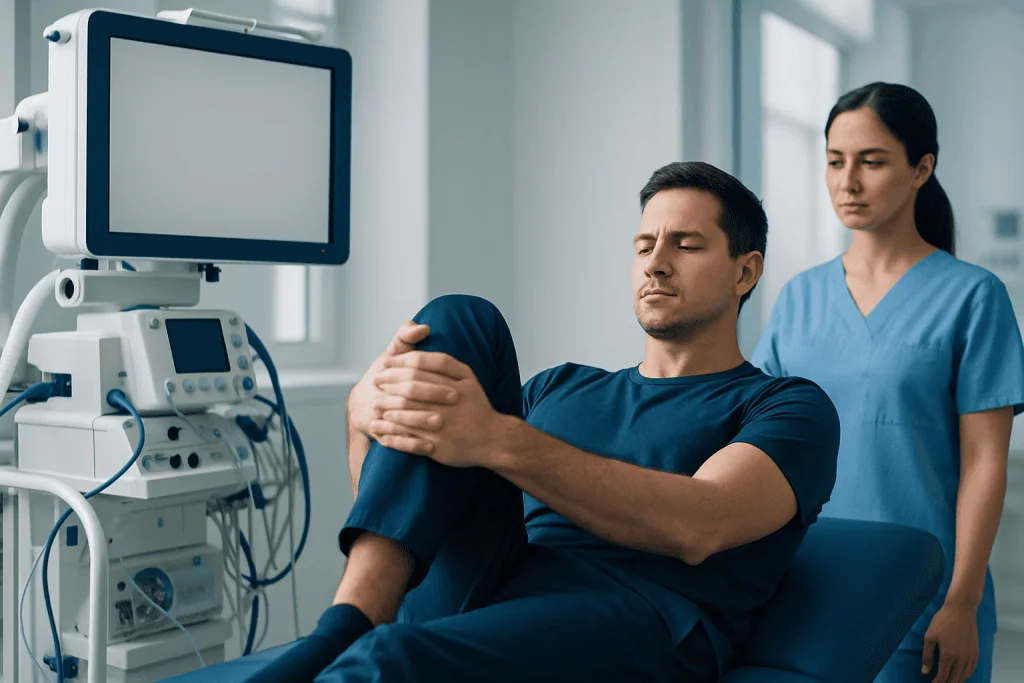
Sciatica usually causes pain that starts in the lower back or buttock and travels down one leg. The pain may feel sharp, burning, electric, or deep and aching. Some people notice numbness, pins-and-needles sensations, or weakness in the leg or foot. Symptoms are often worse on one side.
The pattern of pain can vary depending on which nerve root is affected. Some patients mainly feel discomfort in the buttock and back of the thigh, while others have pain that extends below the knee into the calf or foot. Sitting for long periods, coughing, sneezing, bending, or lifting may make symptoms more noticeable.
It is also common for movement to feel restricted. A person may avoid walking normally, hesitate to bend forward, or feel that certain positions trigger pain immediately. This is one reason stretching should be done carefully: movements that calm one pattern of sciatica may aggravate another.
- Pain radiating from the lower back or buttock into the leg
- Tingling, numbness, or burning sensations
- Muscle weakness in the leg or foot
- Symptoms that worsen with sitting or certain movements
Why sciatica happens and how stretching fits in

Most cases of sciatica are related to irritation or compression of a nerve root in the lower spine. A common reason is a herniated disc, where disc material presses on nearby nerves. Another frequent cause is spinal stenosis, which narrows the spaces around the nerves. Age-related wear, inflammation, and less commonly trauma can also contribute.
Sometimes symptoms that resemble sciatica are influenced by muscle tension, especially in the buttock and hip. In these cases, stretching the surrounding muscles may improve comfort by reducing mechanical stress and improving range of motion. Even then, the aim is not to force flexibility but to restore movement without increasing nerve irritation.
Stretching tends to work best when the pain is relatively stable and there are no signs of serious nerve compromise. It is less suitable as a stand-alone approach for severe, rapidly worsening, or unexplained symptoms. Patients with persistent or recurrent pain may benefit from structured assessment to determine whether symptoms are due to disc problems, spinal arthritis, instability, or another condition such as spinal alignment changes.
Which types of sciatica stretches are commonly used
There is no single “best” sciatica stretch. Clinicians generally choose movements based on the symptom pattern, physical examination, and how the person responds during activity. In broad terms, stretches often focus on the hamstrings, gluteal muscles, piriformis region, hip flexors, and lower back. Nerve-gliding exercises may also be recommended in selected cases, but these should be performed gently.
A practical rule is that stretches should create mild tension, not sharp pain. They should be slow, controlled, and comfortable enough that symptoms settle soon after stopping. For many people, it is better to repeat a short, tolerable stretch than to hold a painful one for a long time.
Examples of movements a clinician may consider include:
- Gentle knee-to-chest or supported low-back mobility exercises
- Figure-four or piriformis stretches for the buttock and hip
- Hamstring stretches done without forcing the knee straight
- Hip flexor stretches to reduce strain across the pelvis and lower back
- Neural mobility exercises, sometimes called nerve glides, under professional guidance
Some people improve more with extension-based movements, while others feel better with flexion-based positions. Because responses differ, a personalized plan is often safer than copying a general routine from the internet.
How to stretch safely at home
Safe stretching starts with symptom awareness. It is usually best to begin after a short walk or light movement rather than from a cold, stiff position. Movements should be gentle and controlled, with steady breathing and no bouncing. If a stretch sends pain farther down the leg, increases numbness, or causes marked weakness, it should be stopped.
Many people benefit from keeping the routine simple. One or two well-tolerated stretches performed regularly can be more useful than a long session of intense exercises. Good posture, frequent position changes, and avoiding prolonged sitting often matter just as much as the stretches themselves.
General self-care measures may support recovery:
- Take short walking breaks during the day
- Avoid lifting or twisting that clearly worsens pain
- Use a supportive sitting position and limit long periods of sitting
- Return gradually to normal activities as tolerated
- Seek professional guidance before starting a new routine if pain is severe or recurrent
If symptoms are ongoing, a structured rehabilitation program may be more effective than home stretching alone. In some cases, a doctor may recommend physical therapy and rehabilitation to improve flexibility, strength, posture, and nerve mobility in a supervised way.
Diagnosis and treatment beyond stretching
Doctors diagnose sciatica by combining medical history, physical examination, and, when appropriate, imaging. The exam may assess strength, reflexes, sensation, walking pattern, and which movements reproduce pain. Imaging is not always needed right away, but it can be helpful when symptoms are severe, persistent, or suggest a structural cause.
Treatment depends on the cause and severity. Many patients improve with conservative care such as activity modification, short-term pain relief strategies, physical therapy, and gradual exercise. If a compressed nerve is suspected, management focuses on reducing pressure and controlling inflammation while maintaining safe mobility.
When symptoms do not improve or there is significant nerve compression, other interventions may be discussed. Depending on the case, a specialist may evaluate whether options such as neurosurgical care or other spine-focused treatments are appropriate. If imaging suggests a significant disc problem, related care may also involve assessment of surgical treatment for a herniated disc in carefully selected patients.
Near the end of the care pathway, international patients may also seek evaluation at centers with coordinated specialties. Acibadem International’s multidisciplinary specialists and JCI-accredited hospitals diagnose and treat spine and nerve conditions with individualized plans based on the patient’s symptoms, examination, and imaging findings.
When to seek medical care
Medical review is important if sciatica is severe, lasts more than a few weeks, keeps returning, or interferes with walking, sleeping, or daily activities. A doctor can help confirm whether symptoms are truly due to sciatica and whether stretching is likely to help or possibly worsen the condition.
Urgent care is needed if symptoms include sudden or progressive leg weakness, trouble lifting the foot, loss of bowel or bladder control, fever with back pain, major trauma, or numbness around the groin or inner thighs. These features may suggest a more serious problem that requires prompt evaluation rather than self-care at home.
It is also sensible to seek advice when pain is present in both legs, appears without a clear reason, or is associated with unexplained weight loss, a history of cancer, or infection risk. Early assessment can guide the safest treatment plan and help avoid delays in care.
Frequently asked questions
Can sciatica stretches cure sciatica?
Sciatica stretches do not cure every cause of sciatica. They may reduce pain and improve movement when muscle tightness or mild nerve irritation contributes to symptoms, but structural causes such as a herniated disc may need broader treatment. A doctor can help decide what approach is most appropriate.
How often should sciatica stretches be done?
Frequency depends on symptoms, fitness, and the specific exercise plan. In general, gentle stretching is often better done regularly and briefly rather than intensely or for long periods. If symptoms flare during or after stretching, the routine should be reassessed.
Can stretching make sciatica worse?
Yes, it can if the wrong movement is chosen or if the stretch is too forceful. Pain that becomes sharper, travels farther down the leg, or is followed by more numbness or weakness is a sign to stop and seek professional advice. Stretching should feel controlled and tolerable, not aggressive.
Is walking better than stretching for sciatica?
Walking and stretching can both be helpful, but they serve different purposes. Gentle walking often keeps the back and legs moving without prolonged pressure from sitting, while stretching may target tight tissues. Many patients do best with a combination guided by symptoms.
What should be avoided with sciatica?
Activities that clearly worsen symptoms should be limited, especially heavy lifting, repetitive twisting, prolonged sitting, and forceful stretching. Bed rest for long periods is usually not recommended because it may increase stiffness and slow recovery. A gradual return to comfortable activity is often more helpful.
When is sciatica an emergency?
Sciatica needs urgent medical attention if it is accompanied by loss of bladder or bowel control, numbness in the groin area, sudden significant weakness, or severe symptoms after trauma. These can indicate serious nerve compression. Prompt evaluation is important.
References
- National Institute of Neurological Disorders and Stroke
- American Academy of Orthopaedic Surgeons
- National Institute for Health and Care Excellence
- American Association of Neurological Surgeons
- MedlinePlus
This article is for general information only and is not a substitute for professional medical advice. Please consult a qualified doctor about your individual situation.
Joint and spine care in Turkey — expert assessment & treatment
JCI-accredited · board-certified surgeons · reply within 24h
Add us as a Preferred Source to see more of our trusted health content across Google Search, AI Overviews and Discover.