Cartilage: A Complete Medical Overview

Cartilage cushions joints and helps many body parts keep their shape. It has a limited blood supply, so healing is often slower than in other tissues.
Key Takeaways
- Cartilage cushions joints and helps many body parts keep their shape.
- It has a limited blood supply, so healing is often slower than in other tissues.
- Cartilage problems may result from injury, overuse, aging, inflammation, or joint disease.
- Symptoms commonly include pain, stiffness, swelling, clicking, or reduced range of motion.
- Diagnosis may involve a physical exam and imaging such as X-ray or MRI.
- Treatment ranges from exercise and medicines to injections or surgery in selected cases.
Cartilage is a smooth, flexible connective tissue that helps joints move, absorbs shock, and gives structure to areas such as the nose, ears, and airways. When cartilage is damaged or wears down, it may lead to pain, stiffness, swelling, or reduced movement, and treatment depends on the cause, location, and severity.
What cartilage is and why it matters
Cartilage is a strong, smooth, flexible type of connective tissue found throughout the body. It covers the ends of bones in joints, where it helps surfaces glide over each other with very little friction. It also acts as a shock absorber, helping joints tolerate daily movement such as walking, bending, reaching, and turning.
Beyond the joints, cartilage provides structure and support to the nose, ears, rib cage, windpipe, and other areas. Unlike bone, cartilage is less rigid. Unlike muscle, it does not create movement. Its role is supportive: it helps the body move comfortably while maintaining shape in certain tissues.
One important feature of cartilage is that it has a limited blood supply. This is one reason cartilage does not heal as easily as many other tissues. Small injuries may persist, and long-term wear can gradually affect how well a joint functions.
Types of cartilage in the body
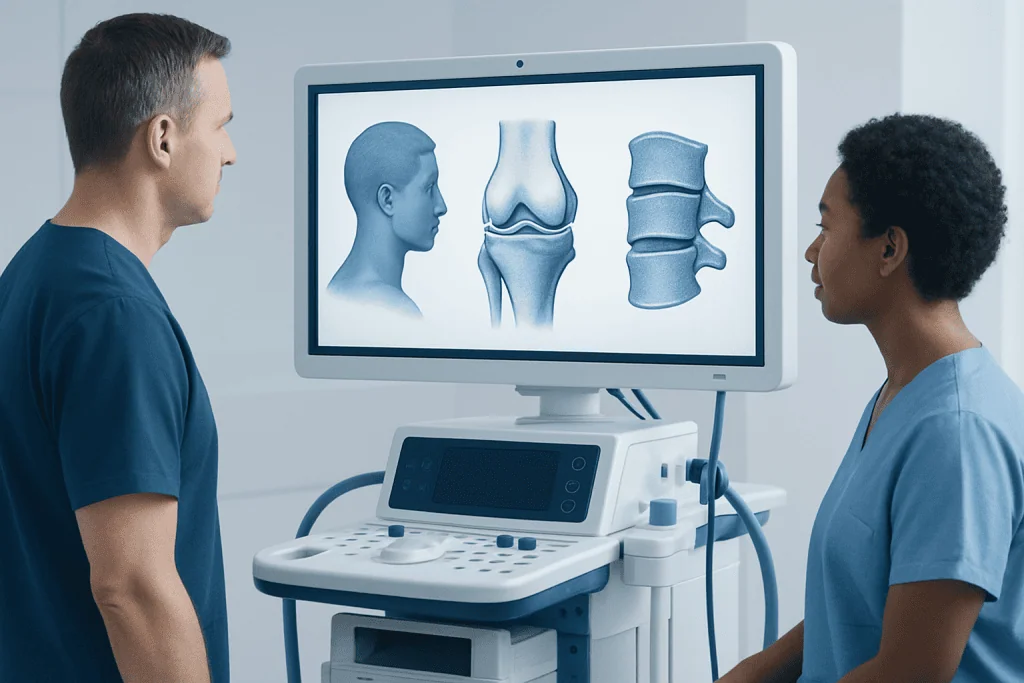
Doctors usually describe three main types of cartilage: hyaline cartilage, elastic cartilage, and fibrocartilage. Each type has a slightly different structure and purpose, but all help provide support, flexibility, or cushioning.
Hyaline cartilage is the most common type. It lines the ends of bones in many joints and is also found in the nose, trachea, and parts of the rib cage. This smooth surface is especially important for pain-free joint motion.
Elastic cartilage is more flexible and helps structures keep their shape while bending. It is found in areas such as the outer ear and parts of the throat. Fibrocartilage is tougher and denser, built to handle pressure and pulling forces. It is found in the spinal discs and meniscus of the knee.
- Hyaline cartilage: smooth joint lining and structural support
- Elastic cartilage: flexible support in the ear and airway structures
- Fibrocartilage: strong shock absorption in the spine and some joints
How cartilage becomes damaged
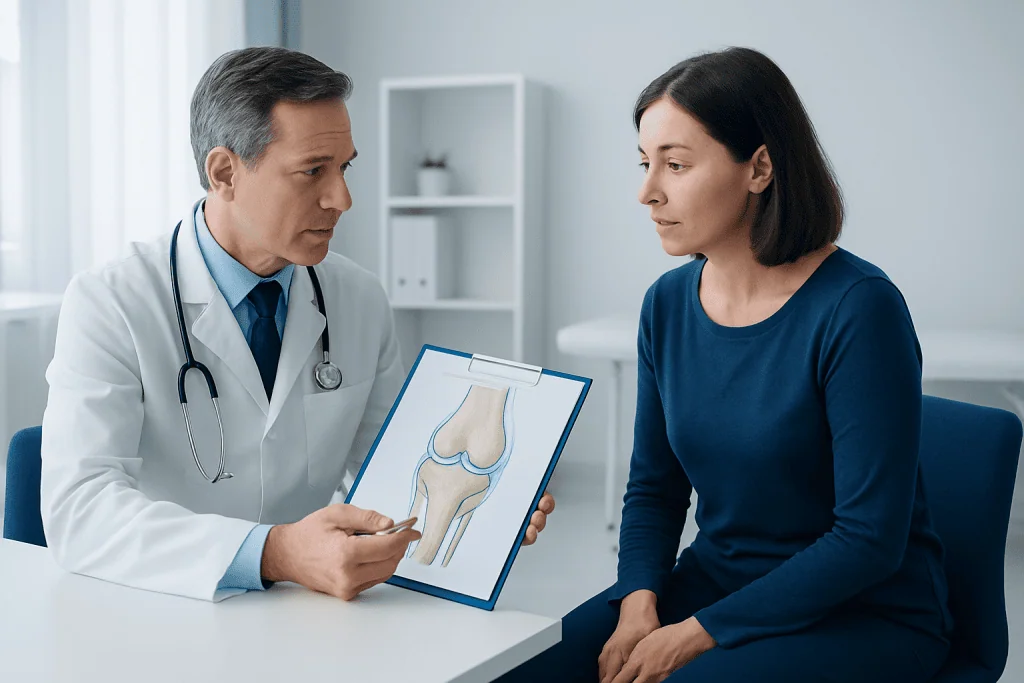
Cartilage can be damaged suddenly, such as after a sports injury, fall, twist, or direct impact. It can also be affected gradually over time. Repeated stress, excess body weight, high-impact activity, or long-standing changes in joint alignment may all contribute to wear.
Age-related degeneration is another common reason for cartilage breakdown. Over the years, cartilage may become thinner, rougher, and less able to cushion the joint. This process is often linked with osteoarthritis, especially in the knees, hips, hands, and spine.
Inflammatory joint diseases can also harm cartilage. In these conditions, ongoing inflammation in the joint lining may damage nearby tissues, including cartilage. In some people, cartilage problems are associated with previous injuries such as ligament tears, meniscus injuries, or fractures involving a joint surface.
Risk factors vary by location and cause, but often include aging, prior joint injury, repetitive heavy loading, obesity, poor muscle support, certain inflammatory diseases, and family history of joint disorders.
Signs and symptoms of cartilage problems
Cartilage itself does not contain many nerves, but damage to cartilage can affect the entire joint and surrounding tissues. Symptoms often include pain with movement, stiffness after rest, swelling, catching, grinding, or a sense that the joint is not moving smoothly.
In weight-bearing joints such as the knee or hip, symptoms may become more noticeable during walking, climbing stairs, squatting, or exercise. Some people describe clicking, locking, or reduced confidence in the joint. Others notice that they can no longer fully bend or straighten the area.
The exact symptoms depend on where the cartilage is located. For example, cartilage injury in the knee may cause swelling and instability, while wear in the hip may lead to groin pain and reduced rotation. Damage in the spine or rib cartilage can create a different pattern of discomfort.
- Pain during or after activity
- Joint stiffness, especially after rest
- Swelling or tenderness
- Reduced range of motion
- Grinding, clicking, or catching sensations
- Difficulty with daily activities or sports
How doctors diagnose cartilage conditions
Diagnosis starts with a careful medical history and physical examination. A doctor may ask when symptoms began, whether there was an injury, which movements trigger discomfort, and whether swelling or locking occurs. The joint is then assessed for tenderness, alignment, stability, swelling, and range of motion.
Imaging often helps clarify the cause. X-rays do not show cartilage directly, but they can reveal joint space narrowing, bone changes, alignment issues, or arthritis-related changes. MRI is especially useful because it can show cartilage, ligaments, tendons, menisci, and other soft tissues in detail.
In some cases, ultrasound, CT, blood tests, or diagnostic arthroscopy may be considered. Arthroscopy is a minimally invasive procedure that allows direct viewing of the inside of a joint. If symptoms suggest broader joint disease, the doctor may also evaluate for conditions such as arthritis or injury to nearby structures.
Treatment options for cartilage damage
Treatment depends on the location of the cartilage, the size and depth of the damage, the patient’s age and activity level, and whether there is associated arthritis or instability. Many people begin with non-surgical treatment aimed at reducing pain, improving function, and protecting the joint from further stress.
Conservative care may include rest from aggravating activities, physiotherapy, supportive exercise, weight management when appropriate, and pain-relieving or anti-inflammatory medicines recommended by a doctor. Muscle strengthening can improve how force is distributed across a joint, which may reduce symptoms even if the cartilage itself does not fully recover.
In selected cases, injections may be discussed to help with pain or inflammation. When symptoms persist, mechanical problems are present, or a distinct cartilage defect is found, surgery may be considered. Options vary and may include knee arthroscopy for evaluation or treatment, cartilage-smoothing procedures, repair techniques, or joint-preserving surgery. In more advanced degeneration, treatment may overlap with approaches used for knee replacement or hip replacement when whole-joint damage is severe.
The most suitable plan is individualized. A specialist will consider symptom severity, imaging findings, general health, and personal goals before recommending treatment.
Self-care, prevention, and supporting joint health
While not all cartilage problems can be prevented, everyday habits can help protect joint health. Regular low-impact activity supports the muscles that stabilize joints and may improve flexibility and balance. Walking, cycling, swimming, and guided strength training are often better tolerated than repeated high-impact exercise when symptoms are present.
Maintaining a healthy body weight can reduce stress on weight-bearing joints, especially the knees and hips. Good footwear, proper sports technique, gradual training progression, and adequate recovery time may also lower the risk of overuse-related damage. After an injury, timely assessment and rehabilitation can help prevent ongoing strain on the joint.
People with joint pain should avoid pushing through significant discomfort. Instead, it is often helpful to pace activity, use cold or heat as advised, and follow a structured exercise plan designed by a qualified professional. Self-care supports symptoms, but persistent pain or repeated swelling should be medically assessed.
When to seek medical care
Medical evaluation is important if joint pain lasts more than a few days, keeps returning, or begins to limit work, exercise, sleep, or daily tasks. A doctor should also assess symptoms such as locking, giving way, reduced movement, or swelling that does not settle.
Prompt care is especially important after a significant injury, such as a fall, twist, sports accident, or direct blow, particularly if the person cannot bear weight or move the joint normally. Early diagnosis may help identify not only cartilage injury but also ligament, meniscus, tendon, or bone problems.
Care should be sought urgently for severe pain, obvious deformity, fever with a hot swollen joint, or sudden inability to use a limb. For international patients who need orthopedic evaluation, Acibadem International’s multidisciplinary specialists in JCI-accredited hospitals diagnose and treat cartilage-related joint conditions using individualized care plans.
Frequently asked questions
Can cartilage heal on its own?
Cartilage has a limited blood supply, so it usually heals more slowly and less completely than many other tissues. Small areas may become less symptomatic over time, but significant cartilage damage often needs medical assessment and supportive treatment.
What does damaged cartilage feel like?
Damaged cartilage may cause joint pain, stiffness, swelling, clicking, or a catching sensation. Some people notice symptoms only during activity, while others feel discomfort after rest or have trouble fully moving the joint.
Is cartilage damage the same as arthritis?
Not exactly. Cartilage damage can happen from a single injury or overuse, while arthritis is a broader term for conditions that affect joints, including wear-related and inflammatory causes. However, cartilage loss is a key feature of osteoarthritis.
Which joints are most commonly affected by cartilage problems?
Cartilage problems are common in the knees, hips, ankles, shoulders, and spine. Weight-bearing joints are especially vulnerable because they experience repeated stress during daily activities.
How is cartilage damage diagnosed?
Doctors diagnose cartilage problems using symptoms, a physical examination, and imaging. MRI is often helpful because it shows soft tissues clearly, while X-rays can reveal joint changes that suggest cartilage loss or arthritis.
Can exercise help cartilage problems?
Yes, the right type of exercise can help many people by strengthening muscles, improving joint support, and maintaining range of motion. A doctor or physiotherapist can suggest a program that protects the joint and avoids worsening symptoms.
References
- National Institute of Arthritis and Musculoskeletal and Skin Diseases
- American Academy of Orthopaedic Surgeons
- Arthritis Foundation
- Mayo Clinic
- MedlinePlus
This article is for general information only and is not a substitute for professional medical advice. Please consult a qualified doctor about your individual situation.
Joint and spine care in Turkey — expert assessment & treatment
JCI-accredited · board-certified surgeons · reply within 24h
Add us as a Preferred Source to see more of our trusted health content across Google Search, AI Overviews and Discover.