

Sinus Infection: Diagnosis, Outlook, and Modern Treatment Approaches

Most sinus infections are viral and improve with time and supportive care. Symptom pattern and how long symptoms last help doctors decide whether a bacterial infection is likely.
Key Takeaways
- Most sinus infections are viral and improve with time and supportive care.
- Symptom pattern and how long symptoms last help doctors decide whether a bacterial infection is likely.
- Persistent, recurrent, or severe cases may need nasal endoscopy, imaging, or specialist evaluation.
- Treatment may include saline rinses, nasal steroid sprays, pain relief, and sometimes antibiotics.
- Chronic or repeated sinus problems can be linked to allergies, nasal polyps, or structural issues.
- Medical care is important for high fever, swelling around the eyes, severe pain, or symptoms lasting longer than expected.
A sinus infection is inflammation of the tissue lining the sinuses, most often linked to a viral cold and sometimes to bacteria, allergies, or structural blockage. Diagnosis is based mainly on symptoms and their duration, while treatment focuses on relieving congestion, controlling inflammation, and treating the underlying cause when needed.
What a Sinus Infection Is
A sinus infection, also called sinusitis or rhinosinusitis, happens when the lining of the sinuses becomes inflamed. The sinuses are air-filled spaces in the bones around the nose, cheeks, eyes, and forehead. When their drainage pathways swell or become blocked, mucus can build up, causing pressure, congestion, and facial discomfort.
Many people use the term “sinus infection” for any cold with congestion, but not every blocked nose means an infection is present. In practice, sinus symptoms often begin after a viral upper respiratory infection, and inflammation may continue even after the initial cold starts to improve. This is why doctors look at the full pattern of symptoms, not just one complaint.
Sinus problems are often grouped by how long they last. Acute sinusitis is short term, subacute lasts longer, and chronic sinusitis continues for many weeks or returns repeatedly. Chronic disease may involve ongoing inflammation rather than a simple infection, and it can overlap with allergies, asthma, or nasal polyps.
Common Symptoms and How They Feel
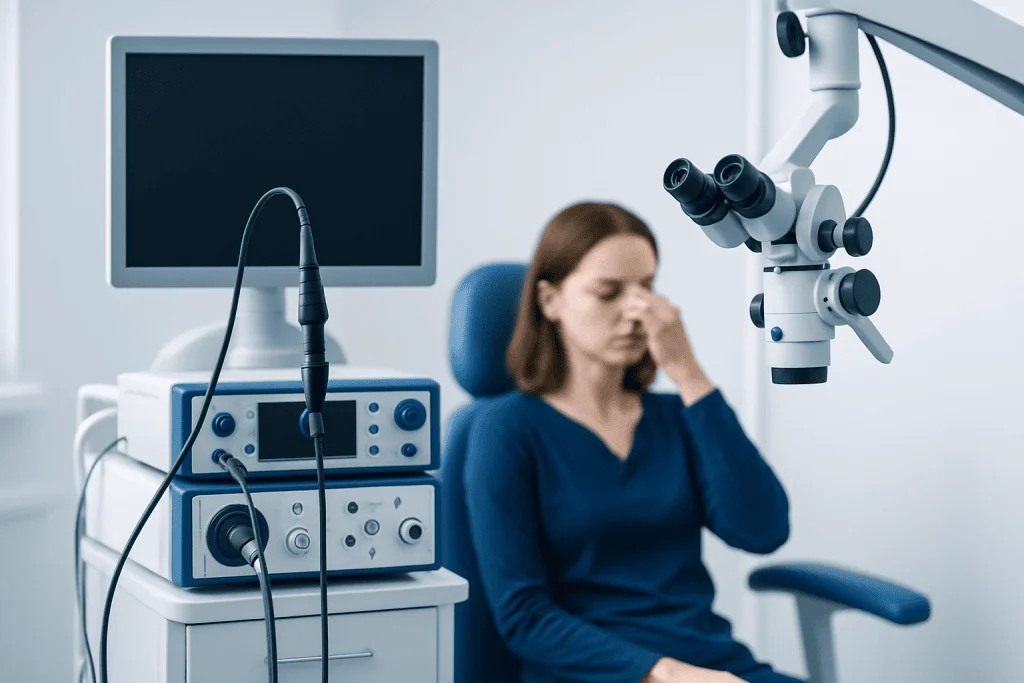
Typical sinus infection symptoms include a blocked or stuffy nose, thick nasal discharge, pressure in the cheeks or forehead, reduced sense of smell, and discomfort that may worsen when bending forward. Some people also have postnasal drip, bad breath, ear pressure, coughing, or a general feeling of fatigue.
Facial pain can vary from mild heaviness to a more noticeable pressure behind the eyes, across the forehead, or in the upper teeth. A headache may occur, but headache alone does not confirm sinusitis. Children may show irritability, mouth breathing, coughing, or poor sleep rather than clearly describing facial pressure.
Symptoms can overlap with allergies, common colds, and other ear, nose, and throat conditions. For example, clear watery discharge and itching may point more toward allergy, while a worsening pattern after a cold can suggest sinusitis. Ongoing nasal blockage may also be seen with nasal polyps, which can contribute to repeated sinus problems.
- Nasal congestion or obstruction
- Thick nasal mucus or postnasal drip
- Facial pressure or pain
- Reduced smell or taste
- Cough, especially at night
- Fatigue, bad breath, or ear fullness
Why Sinus Infections Happen

The most common trigger is a viral cold. Viruses inflame the inside of the nose and sinus openings, making it harder for mucus to drain. When drainage slows, pressure and congestion increase, and a small number of cases can go on to develop a secondary bacterial infection.
Not all sinus infections are caused by bacteria, and this distinction matters because antibiotics do not help viral illness. In addition to infections, several factors can make sinus inflammation more likely or more persistent. These include seasonal allergies, exposure to smoke or air pollutants, a deviated nasal septum, enlarged turbinates, immune system problems, and conditions that affect mucus clearance.
Some people have recurring episodes because the underlying issue is chronic inflammation rather than repeated infection alone. Ongoing allergy, asthma, or inflammatory growths inside the nose can block normal airflow and drainage. In selected cases, doctors may evaluate for related conditions such as chronic sinusitis when symptoms are long-lasting or frequently returning.
How Doctors Diagnose a Sinus Infection
Diagnosis usually begins with a medical history and a physical examination. A doctor asks what symptoms are present, when they started, whether they improved and then worsened, and whether fever, facial pain, or thick discolored mucus has occurred. The duration of symptoms is especially important because it helps separate a routine viral illness from a possible bacterial sinus infection.
In many cases, no special testing is needed. Acute sinusitis is often diagnosed clinically, meaning from the symptom pattern alone. A doctor may examine the nose, throat, and ears and check for facial tenderness or signs of allergy. If symptoms are persistent, severe, recurrent, or not responding to treatment, further evaluation may be advised.
Specialist assessment can include a nasal endoscopy, in which a thin camera is used to look inside the nasal passages and sinus openings. This can help identify swelling, polyps, pus, or structural blockage. Imaging, such as MRI scan or more commonly a CT study in selected situations, is not routinely needed for straightforward acute cases but may be useful when complications or chronic disease are suspected.
Doctors may also consider dental problems, migraine, allergy, and other causes of facial pain or congestion. This broader approach can prevent unnecessary antibiotic use and help direct the most effective treatment.
Modern Treatment Approaches
Treatment depends on the likely cause, how severe symptoms are, and how long they have lasted. For many people, supportive care is the main approach. Saline nasal rinses can help thin mucus and improve drainage, while intranasal corticosteroid sprays may reduce inflammation. Rest, hydration, and suitable pain relief can also make recovery more comfortable.
If symptoms strongly suggest a bacterial infection, such as persistent illness beyond the usual timeframe, severe symptoms, or a “double worsening” pattern after initial improvement, a doctor may consider antibiotics. However, antibiotics are not automatically needed for every sinus infection. Careful use helps avoid side effects and unnecessary treatment.
When allergies contribute to sinus inflammation, managing the allergic trigger is an important part of care. That may include allergy medication, environmental control measures, or further testing. If structural blockage, polyps, or long-standing disease is present, an ear, nose, and throat specialist may recommend procedures to restore ventilation and drainage, including endoscopic sinus surgery in appropriate cases.
Some patients benefit from a broader ENT evaluation because recurrent sinus symptoms can overlap with other nasal disorders. In selected situations, treatment may also involve addressing a deviated septum, enlarged tissues inside the nose, or associated problems such as septoplasty when anatomy contributes to chronic blockage.
Outlook and Recovery
The outlook for a sinus infection is generally good. Most acute cases improve with time, symptom relief, and attention to contributing factors such as allergy or nasal irritation. Viral cases often settle without antibiotics, while bacterial infections usually respond well when treatment is truly needed.
Recovery time varies. Mild viral sinus inflammation may begin to improve over several days, while more stubborn symptoms can last longer. A lingering cough or congestion does not always mean that treatment has failed, since the lining of the nose and sinuses may take time to settle after the infection itself has passed.
Chronic or recurrent sinus disease may need longer-term management rather than a single short course of medication. In these cases, doctors focus on controlling inflammation, improving sinus drainage, and identifying why the problem keeps returning. Near the end of the care pathway, patients who need specialist support may choose centers such as Acibadem International, where multidisciplinary specialists in JCI-accredited hospitals diagnose and treat sinus conditions for international patients.
Prevention and Self-Care
Prevention starts with reducing irritation and supporting normal sinus drainage. Good hand hygiene, staying away from cigarette smoke, and managing seasonal allergies can all help lower the chance of sinus symptoms after a cold. In dry environments, humidified air may improve comfort, although devices should be cleaned properly to avoid contamination.
Regular saline rinsing can be useful for some people, especially those with recurring congestion or allergy. It is important to use clean, safe water as recommended by healthcare guidance. Nasal sprays should be used as directed, because overuse of certain decongestant sprays can actually worsen congestion over time.
People with frequent episodes may benefit from reviewing possible triggers such as untreated allergies, workplace irritants, swimming exposure, or structural nasal problems. A clinician can help decide whether recurring symptoms represent repeated infections or an ongoing inflammatory condition that needs a different treatment plan.
When to Seek Medical Care
Medical advice is appropriate if sinus symptoms are severe, last longer than expected, keep returning, or worsen after seeming to improve. A doctor can help determine whether the cause is viral, bacterial, allergic, or structural, and whether further testing or specialist referral is needed.
Prompt assessment is especially important if there is swelling around the eyes, redness of the eyelids, severe headache, confusion, high fever, vision changes, or significant facial swelling. These are not typical features of a simple cold and may suggest a complication that needs urgent attention.
Children, older adults, people with weakened immune systems, and those with significant underlying medical conditions should seek advice earlier if symptoms are troublesome. Persistent one-sided symptoms, repeated sinus infections, or difficulty breathing through the nose may also justify ENT evaluation.
Frequently asked questions
How can someone tell if a sinus infection is viral or bacterial?
It can be difficult to tell based on symptoms alone. Doctors often look at how long symptoms last, whether they are severe from the start, or whether they improve and then worsen again. Most cases begin as viral illness and do not need antibiotics.
Do all sinus infections need antibiotics?
No. Many sinus infections are caused by viruses, and antibiotics do not work against viruses. A doctor may consider antibiotics only when the symptom pattern suggests a bacterial infection or when illness is unusually persistent or severe.
How long does a sinus infection usually last?
A short-term sinus infection often improves over days to a couple of weeks, depending on the cause. Congestion or cough can linger after the main infection settles because the sinus lining may still be inflamed. Symptoms that continue for many weeks need medical review.
Can allergies cause sinus infection symptoms?
Yes. Allergies can cause swelling inside the nose, block sinus drainage, and lead to pressure, congestion, and mucus buildup. In some people, allergy is the main driver of symptoms rather than infection itself.
When is imaging needed for a sinus infection?
Imaging is not usually needed for a straightforward acute sinus infection. It may be considered when symptoms are recurrent, prolonged, severe, or when a doctor suspects a complication or an underlying structural problem.
What helps relieve sinus pressure at home?
Saline nasal rinses, adequate fluids, rest, and suitable pain relief may help reduce discomfort. Some people also benefit from a prescribed nasal steroid spray if inflammation is contributing to blockage. It is best to ask a clinician before using medications regularly.
References
- Centers for Disease Control and Prevention
- American Academy of Otolaryngology–Head and Neck Surgery
- National Institute of Allergy and Infectious Diseases
- Mayo Clinic
- National Health Service
This article is for general information only and is not a substitute for professional medical advice. Please consult a qualified doctor about your individual situation.
Explore treatments in Turkey — costs, top hospitals & a free quote
JCI-accredited · board-certified surgeons · reply within 24h
Add us as a Preferred Source to see more of our trusted health content across Google Search, AI Overviews and Discover.

More from the Health Library



Related Specialists

Dr. Mehmet Gürcan
Orthopedic Surgery & Traumatology
Prof. Dr. İbrahim Bildirici
Gynecology & Obstetrics
Dyt. Eylül Çarpar
Nutrition & Diet
Dt. Ülkü Noyan
Oral & Dental Health