Albino — Explained by Medical Evidence, Not Myths
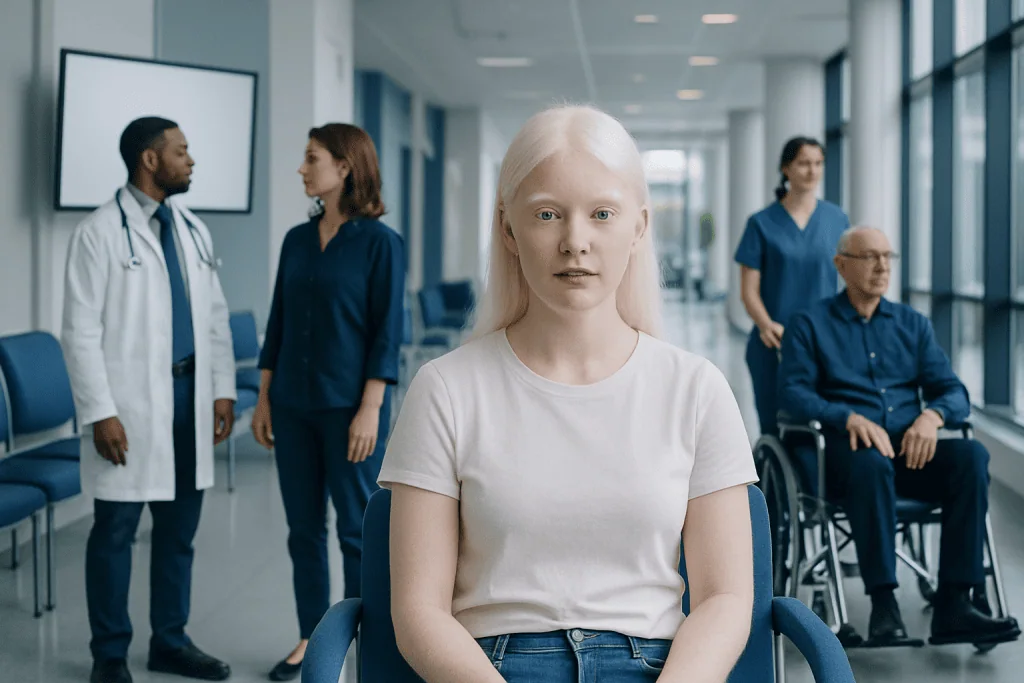
Albino usually refers to someone with albinism, an inherited condition that reduces melanin in the skin, hair, and eyes. Albinism is not contagious and is not caused by anything a person or parent did during pregnancy.
Key Takeaways
- Albino usually refers to someone with albinism, an inherited condition that reduces melanin in the skin, hair, and eyes.
- Albinism is not contagious and is not caused by anything a person or parent did during pregnancy.
- Vision problems are common in albinism and often need lifelong eye care and practical support.
- Sun protection is especially important because lighter skin has less natural protection from ultraviolet damage.
- There is no cure that restores normal melanin production, but regular medical care can help protect vision and skin health.
- People with albinism can lead full lives with appropriate medical follow-up, education, and social support.
Albino is a commonly used term for a person with albinism, a genetic condition that affects melanin production. Medical evidence shows that albinism mainly changes pigmentation and can affect vision and sun sensitivity, but it does not define a person’s abilities, intelligence, or lifespan by itself.
What “albino” means in medical terms
In medical language, the word “albino” is commonly used by the public to describe a person with albinism. Albinism is a group of inherited conditions that reduce or change the production of melanin, the pigment that gives color to the skin, hair, and eyes. The term itself can sound oversimplified, so many clinicians and patient groups prefer the phrase “person with albinism,” because it puts the person first rather than defining them by a condition.
Albinism is not an infection, not a disability in itself, and not a sign of poor general health. The main medical effects involve pigmentation, vision development, and sensitivity to sunlight. Some people have very light hair and skin, while others may have subtler changes depending on the type of albinism and their family background.
It is also important to separate medical facts from myths. Albinism does not affect intelligence, personality, or worth. The condition is genetic, and it can occur in many ethnic groups around the world. Accurate information helps people understand that albinism is a health condition requiring practical care, not fear or stigma.
How albinism affects the body
Melanin plays several roles in the body. It contributes to the color of the skin, hair, and eyes, and it is also involved in normal visual development. This is why albinism often affects vision as much as, or sometimes more than, appearance.
People with albinism may have pale skin, light blond, white, or yellowish hair, and lighter-colored eyes than other family members. However, appearance varies. Some individuals have a small amount of pigment and may gradually develop slightly darker hair or skin tone over time. The amount of visible pigment does not always predict how much the eyes are affected.
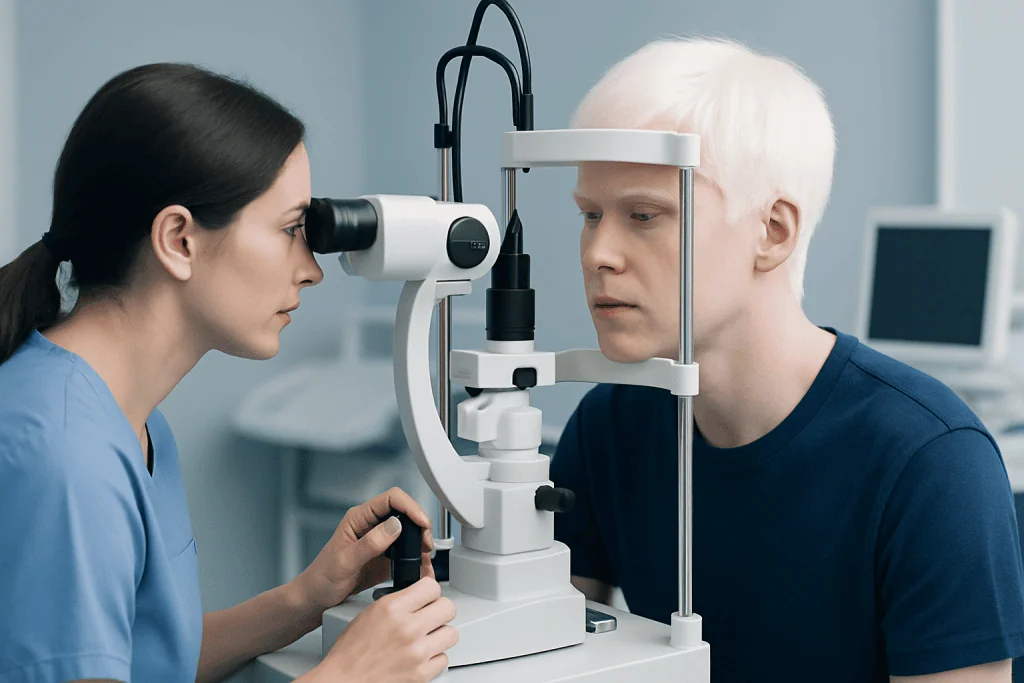
Eye-related features can include reduced visual acuity, sensitivity to bright light, involuntary eye movements called nystagmus, crossed eyes, and problems with depth perception. Because of these vision effects, some children need early ophthalmology assessment and support at school. Evaluation by specialists in eye care and treatment may help identify useful visual aids and management strategies.
Skin health is another important area. Lower melanin means less natural protection from ultraviolet radiation, so the skin can burn more easily and may have a higher long-term risk of sun-related skin damage. This is why routine skin protection and, when needed, support from dermatology specialists can be helpful.
Types, causes, and inheritance
Albinism is usually caused by inherited changes in genes involved in melanin production or distribution. The two broad groups are oculocutaneous albinism, which affects the skin, hair, and eyes, and ocular albinism, which mainly affects the eyes. Several subtypes exist, and they differ in how much pigment is present and how the eyes are affected.
Most forms are inherited in an autosomal recessive pattern. This means a child usually inherits one altered gene from each parent, while the parents themselves may not have albinism. Ocular albinism can sometimes follow an X-linked inheritance pattern, which affects males more often. A doctor may recommend genetic counseling when a family wants to understand recurrence risk, testing options, or the diagnosis in other relatives.
Albinism can occur on its own or as part of a syndrome. Rare syndromic forms may involve bleeding problems, lung disease, bowel inflammation, or immune system issues. This is one reason an accurate diagnosis matters. If a clinician suspects a broader inherited disorder, they may recommend evaluation for related genetic diseases and referral to appropriate specialists.
Parents do not cause albinism through diet, stress, or everyday activities during pregnancy. It is not the result of poor care and it cannot be prevented by home remedies. Understanding the genetic basis can relieve unnecessary guilt and support informed family planning.
Common signs and symptoms
The most visible signs of albinism involve reduced pigment in the skin, hair, and eyes. A newborn or child may have much lighter coloring than relatives, though this depends on ethnic background and the specific type of albinism. Some people tan very little or not at all, and they may sunburn quickly.
Vision symptoms are often what lead to diagnosis. A baby may not track objects well, may have rapid eye movements, or may show sensitivity to light. Older children and adults may describe blurred vision, trouble reading distant signs, difficulty with sports requiring depth perception, or eye strain in bright environments.
Doctors often look for a pattern of features rather than one sign alone. Common findings may include:
- Very light skin or hair compared with family members
- Light-colored irises or eyes that appear red or violet in certain light
- Nystagmus, or involuntary eye movements
- Reduced visual acuity
- Strabismus, also called misaligned eyes
- Photophobia, or sensitivity to bright light
- Easy sunburning and signs of sun damage over time
Not every person has every symptom, and severity can vary widely. In some cases, pigment changes are mild and the eye findings are more noticeable than the skin or hair differences. That is why proper ophthalmic and medical assessment is important when albinism is suspected.
How doctors diagnose albinism
Diagnosis begins with a medical history and physical examination. Doctors ask about family history, childhood vision concerns, sun sensitivity, and whether there are symptoms that suggest a syndromic form of albinism. The physical exam may assess skin and hair pigmentation, eye appearance, and general development.
Eye examination is central to diagnosis. An ophthalmologist may assess visual acuity, refractive errors, eye movements, retinal development, and the way the optic nerves are connected. This helps explain the person’s visual function and guides supportive care. In children, early diagnosis can improve access to low-vision aids and school accommodations.
Genetic testing can confirm the specific type of albinism in many cases. It may be especially useful when the diagnosis is uncertain, when family counseling is needed, or when a syndromic form is possible. Some patients may also need blood tests or evaluation by other specialists if there are signs of bleeding disorders, immune problems, or other systemic concerns.
Because albinism affects more than one area of health, care can involve dermatology, ophthalmology, genetics, pediatrics, and sometimes neurology or hematology. In complex cases, broader medical check-up programs may help organize assessments and follow-up in a structured way.
Treatment and long-term management
There is currently no treatment that restores typical melanin production across the body. Management focuses on protecting vision, reducing sun damage, and supporting daily function. Many people with albinism do very well when these needs are recognized early and addressed consistently.
Eye care may include prescription glasses, contact lenses, tinted lenses for light sensitivity, magnifiers, and classroom or workplace adaptations. Some people benefit from treatment for strabismus or other eye conditions, depending on the findings. Regular follow-up with eye specialists is important because needs can change with age.
Skin protection is a lifelong part of care. Broad-spectrum sunscreen, protective clothing, hats, shade, and avoiding intense midday sun can all reduce burning and long-term damage. A clinician may recommend periodic skin checks, especially for people who spend significant time outdoors or live in sunny climates.
Daily support also matters. Children may need large-print materials, seating near the front of a classroom, extra time for visual tasks, or assistive technology. Adults may benefit from workplace adjustments and low-vision services. If diagnosis or follow-up is complex, multidisciplinary teams, including those at Acibadem International’s JCI-accredited hospitals, may help coordinate care for international patients with albinism or related inherited conditions.
Prevention, self-care, and living well with albinism
Albinism itself cannot be prevented once the genetic change is present, but many of its day-to-day health effects can be reduced. The most important preventive steps are consistent sun protection and regular eye care. These habits help protect the skin, support better visual function, and improve comfort in daily life.
Self-care often includes building routines around the environment. Wearing sunglasses or tinted lenses outdoors, using visors or broad-brimmed hats, choosing shaded areas, and keeping sunscreen available can make outdoor activities safer and more comfortable. Families may also find it useful to speak with schools about accommodations early rather than waiting for problems to develop.
Emotional well-being deserves attention too. Visible differences can sometimes lead to teasing, misunderstanding, or social stress. Supportive family communication, accurate education, and if needed counseling can help children and adults build confidence and cope with stigma. When vision limitations affect learning or mobility, early practical support usually makes a meaningful difference.
People with albinism should also avoid misinformation. Unproven creams, supplements, or folk treatments do not correct the genetic cause. Safe, evidence-based care from qualified professionals remains the best approach.
When to seek medical care
Medical care should be sought if a baby or child has unusual eye movements, poor visual tracking, marked light sensitivity, or much lighter pigmentation than expected for the family pattern. An eye examination is especially important when vision seems affected, because early support can improve function and development.
Children and adults with albinism should also see a doctor if they have repeated sunburns, changing skin lesions, unexplained bruising or bleeding, frequent infections, breathing problems, or bowel symptoms such as chronic inflammation or bleeding. These features may suggest complications or a rarer syndromic form that needs additional evaluation.
Urgent care is appropriate for sudden vision changes, severe eye pain, signs of serious sunburn, or a skin lesion that bleeds, grows, or does not heal. If there is concern about an inherited disorder beyond isolated albinism, a doctor may recommend assessment for hereditary diseases and specialist follow-up.
In general, albinism is best managed with regular planned care rather than emergency visits. A qualified doctor can help create an individualized plan for eye checks, skin protection, and any needed supportive services.
Frequently asked questions
Is albino the same as albinism?
In everyday language, “albino” usually refers to a person with albinism. In medical and patient-centered language, “person with albinism” is often preferred because it is more respectful and precise.
Is albinism a disease or a disability?
Albinism is a genetic condition, not an infection or contagious disease. It can lead to visual impairment and sun sensitivity, so some people may qualify for disability-related support depending on how much their vision is affected.
Can albinism be cured?
There is no cure that reverses the genetic cause or restores normal melanin production throughout the body. However, eye care, low-vision support, and sun protection can greatly improve comfort, function, and long-term health.
Do all people with albinism have white hair and red eyes?
No. Appearance varies by type of albinism and family background. Many people with albinism have light hair and eyes, but not everyone has white hair, and the eyes are often blue, gray, or hazel rather than truly red.
Does albinism affect life expectancy?
In most common forms, albinism by itself does not usually shorten life expectancy. The main health concerns are vision problems and increased sun-related skin damage, which can be reduced with regular care and protection.
Can two parents without albinism have a child with albinism?
Yes. In many cases, both parents are healthy carriers of a gene change and do not have the condition themselves. If a child inherits the altered gene from both parents, the child may have albinism.
References
- National Eye Institute
- MedlinePlus
- Genetics Home Reference / National Library of Medicine resources
- American Academy of Ophthalmology
- National Organization for Rare Disorders
This article is for general information only and is not a substitute for professional medical advice. Please consult a qualified doctor about your individual situation.
Hair transplant in Turkey — costs, graft counts & a free assessment
JCI-accredited · board-certified surgeons · reply within 24h
Add us as a Preferred Source to see more of our trusted health content across Google Search, AI Overviews and Discover.