Cerebral Cortex: What Patients Need to Know

The cerebral cortex is the outer part of the brain responsible for many higher brain functions. Different areas of the cerebral cortex control movement, sensation, speech, vision, memory, and decision-making.
Key Takeaways
- The cerebral cortex is the outer part of the brain responsible for many higher brain functions.
- Different areas of the cerebral cortex control movement, sensation, speech, vision, memory, and decision-making.
- Symptoms of cortex-related problems depend on which brain region is affected and may include weakness, speech changes, seizures, or memory difficulties.
- Doctors evaluate cerebral cortex conditions with a neurological exam and brain imaging such as MRI or CT.
- Treatment depends on the cause and may involve medication, rehabilitation, surgery, or urgent stroke care.
- Sudden neurological symptoms require prompt medical attention.
The cerebral cortex is the brain’s folded outer layer and plays a central role in thinking, language, movement, memory, and sensory processing. Understanding what it does and how problems can affect it can help patients recognize symptoms early and seek appropriate medical care.
Overview: what the cerebral cortex does
The cerebral cortex is the thin, folded outer layer of the brain. Even though it is only a few millimeters thick, it is one of the body’s most important control centers. It helps a person think, speak, remember, plan, interpret sensations, and move with intention.
Patients often hear the term “cerebral cortex” during brain scans, neurological evaluations, or discussions about stroke, epilepsy, trauma, or memory changes. In simple terms, this structure is where much of the brain’s higher processing happens. It does not work alone, but it acts as a major hub that communicates with deeper brain structures, the spinal cord, and the rest of the nervous system.
The cortex is highly folded, creating ridges and grooves that increase its surface area. This design allows more nerve cells to fit into the skull and supports complex brain tasks. Because different parts of the cortex have different jobs, a problem in one area can cause very specific symptoms, while a more widespread problem may affect several abilities at once.
How the cerebral cortex is organized
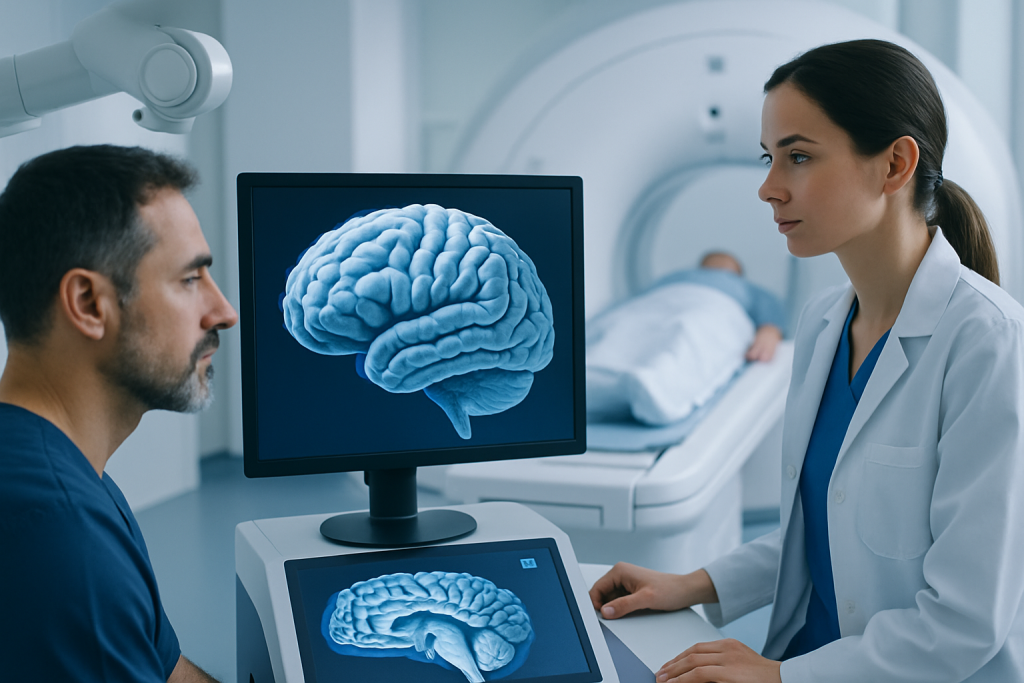
Doctors often describe the cerebral cortex by its lobes, which are broad regions on the right and left sides of the brain. Each lobe contributes to a different set of functions, although the brain works as an integrated network rather than as isolated parts.
The frontal lobe is involved in planning, judgment, personality, attention, problem-solving, and voluntary movement. It also contains important areas for speech production in many people. The parietal lobe helps process touch, body position, and spatial awareness. The temporal lobe supports hearing, language understanding, and aspects of memory and emotion. The occipital lobe primarily processes visual information.
There are also specialized areas within the cortex. Some regions receive sensory input, such as touch, sound, or vision. Others send motor commands to muscles. Still others help combine information so a person can recognize faces, understand words, make decisions, and respond appropriately to the environment.
- Motor cortex: helps control voluntary movement
- Sensory cortex: processes touch, pressure, pain, and temperature
- Visual cortex: interprets visual signals from the eyes
- Auditory cortex: processes sound
- Association areas: support memory, language, reasoning, and behavior
Symptoms linked to cerebral cortex problems

Symptoms related to the cerebral cortex vary widely because the cortex has many functions. Some people notice subtle changes, such as trouble concentrating, word-finding difficulty, or reduced coordination. Others develop more obvious neurological symptoms, including weakness, numbness, seizures, confusion, or changes in vision.
The exact symptoms often reflect the area involved. Frontal lobe problems may affect behavior, planning, or movement. Parietal lobe issues can cause numbness, difficulty judging space, or trouble recognizing the position of the body. Temporal lobe involvement may lead to memory changes, altered awareness, or language comprehension problems. Occipital lobe problems may cause visual disturbances.
Some symptoms come on suddenly, while others develop gradually. Sudden symptoms may suggest an emergency such as stroke. More gradual changes can occur with conditions such as tumors, infections, degenerative diseases, inflammation, or previous brain injury. Seizures can also arise when cortical nerve cells become abnormally overactive, as seen in epilepsy.
- Weakness or numbness on one side of the body
- Speech or language difficulty
- Memory loss or confusion
- Seizures
- Personality or behavior changes
- Visual problems
- Loss of coordination or balance
Common causes and risk factors
The cerebral cortex can be affected by many different medical conditions. Vascular problems are one important cause. When blood flow to part of the brain is blocked or reduced, brain tissue may be injured, as in ischemic stroke. Bleeding around or within the brain can also damage the cortex. These conditions usually require urgent medical assessment.
Other causes include head injury, brain infections, autoimmune inflammation, developmental conditions, tumors, and neurodegenerative diseases. For example, abnormal protein changes in the brain can affect cortical networks involved in memory and thinking, as in Alzheimer’s disease. Reduced oxygen levels, severe metabolic imbalance, and certain toxins can also disturb cortical function.
Risk factors depend on the underlying condition. Stroke risk may rise with high blood pressure, diabetes, smoking, high cholesterol, obesity, and heart disease. Seizure risk may increase after head trauma, infection, or structural brain abnormalities. Age is a factor in many degenerative conditions, while some cortical disorders are linked to genetics or problems during brain development before birth.
Importantly, not every symptom means there is permanent damage. Temporary cortical dysfunction can occur with migraine, seizures, infections, medication effects, or metabolic disturbances. A medical evaluation helps identify the true cause and guide treatment safely.
How doctors diagnose cerebral cortex conditions
Diagnosis begins with a careful medical history and neurological examination. Doctors ask when symptoms began, whether they appeared suddenly or gradually, and whether there were triggers such as injury, infection, severe headache, or loss of consciousness. They also assess speech, strength, sensation, reflexes, coordination, memory, and attention.
Brain imaging is often essential. A CT scan may be used quickly in emergency settings to look for bleeding or major structural problems. MRI gives more detailed images of the brain and is especially useful for evaluating the cortex, including inflammation, small strokes, tumors, scarring, and some degenerative changes. In many situations, doctors may recommend MRI imaging as part of a comprehensive assessment.
Additional tests depend on the suspected cause. Blood tests can look for infection, metabolic imbalance, vitamin deficiency, or autoimmune disease. An electroencephalogram, or EEG, may be used when seizures are a concern. Neuropsychological testing can help assess memory, language, attention, and other cognitive functions in a structured way.
When symptoms suggest a vascular problem, urgent stroke evaluation is especially important. This may include brain scans, blood vessel imaging, and heart tests. The goal is not only to identify what has happened in the cerebral cortex, but also to find the underlying reason so treatment can begin promptly.
Treatment options and recovery
There is no single treatment for the cerebral cortex itself because therapy depends on the condition affecting it. For example, stroke treatment focuses on restoring or supporting blood flow and preventing further brain injury. Seizures may be managed with anti-seizure medication. Infections require targeted antimicrobial treatment, while autoimmune inflammation may respond to immunotherapy. Tumors may need surgery, radiotherapy, or other specialized care.
In some situations, procedures are used to treat the underlying cause. Patients with certain structural brain conditions may be assessed for neurosurgical treatment. If there is concern for a brain mass or another lesion involving the cortex, doctors may use brain tumor treatment planning to determine the best approach. Emergency vascular care can be critical in acute stroke treatment pathways.
Recovery often includes rehabilitation as well as medical treatment. Depending on symptoms, a person may benefit from physical therapy, occupational therapy, speech-language therapy, cognitive rehabilitation, or psychological support. The brain can sometimes adapt after injury, especially when rehabilitation begins early and is tailored to the patient’s needs.
Long-term outlook varies. Some people recover fully after a temporary cortical disturbance, while others live with ongoing changes in movement, language, memory, or behavior. Follow-up care helps monitor progress, adjust treatment, and support daily functioning at home, school, or work.
Protecting brain health and supporting the cortex
Not every cerebral cortex disorder can be prevented, but many healthy habits support overall brain health. Managing blood pressure, blood sugar, and cholesterol helps protect blood vessels that supply the brain. Avoiding smoking, limiting alcohol, staying physically active, and eating a balanced diet may also lower the risk of vascular brain disease.
Protecting the head is another practical step. Wearing seat belts, using helmets when appropriate, and reducing fall risks at home can help prevent traumatic brain injury. Good sleep, treatment of hearing or vision problems, stress management, and regular medical checkups also support healthy brain function.
People who already have a neurological condition may be advised to take medications regularly, attend rehabilitation, and monitor for new symptoms. Family support can be important when a condition affects memory, language, or behavior. Small changes in routine, safety planning, and clear communication often make daily life easier.
Near the end of the care journey, some patients seek expert review in centers with neurology, neuroradiology, neurosurgery, and rehabilitation working together. Acibadem International’s multidisciplinary specialists and JCI-accredited hospitals diagnose and treat cerebral cortex-related conditions for international patients when advanced assessment or coordinated care is needed.
When to seek medical care
Medical attention is recommended for new or unexplained neurological symptoms, especially if they affect speech, movement, sensation, memory, awareness, or vision. Even if symptoms seem mild, a professional evaluation can help identify whether the cerebral cortex or another part of the nervous system is involved.
Urgent care is needed for sudden weakness, facial drooping, severe confusion, difficulty speaking, loss of vision, a new seizure, sudden severe headache, or sudden loss of balance. These can be warning signs of stroke, bleeding, or another serious brain problem. Timing matters, so emergency services should be contacted promptly rather than waiting to see if symptoms pass.
Patients should also arrange medical review for progressive memory decline, personality change, recurrent episodes of altered awareness, or persistent symptoms after a head injury. Early assessment may improve treatment options and help families plan supportive care.
Frequently asked questions
What is the cerebral cortex in simple terms?
The cerebral cortex is the outer layer of the brain. It helps manage thinking, language, memory, movement, and the way the body interprets senses such as touch, vision, and hearing.
Can a problem in the cerebral cortex cause personality or behavior changes?
Yes. Changes in behavior, judgment, motivation, or personality can happen when areas of the frontal cortex are affected. These symptoms should be assessed by a doctor, especially if they are new or worsening.
Does cerebral cortex damage always mean permanent disability?
Not always. Some cortical problems are temporary and improve when the underlying cause is treated, such as certain seizures, infections, or metabolic disturbances. In other cases, rehabilitation can help the brain adapt and improve function over time.
How do doctors know if symptoms are coming from the cerebral cortex?
Doctors use the pattern of symptoms, a neurological examination, and brain imaging to understand which part of the brain may be involved. Tests such as MRI, CT, EEG, and blood work can help clarify the cause.
What conditions commonly affect the cerebral cortex?
Common examples include stroke, epilepsy, head injury, brain tumors, infections, and neurodegenerative diseases. The effect on a patient depends on which cortical region is involved and how extensive the problem is.
When should someone go to the emergency room for possible cerebral cortex symptoms?
Emergency care is needed for sudden weakness, facial drooping, trouble speaking, sudden confusion, new seizures, severe headache, or sudden vision loss. These symptoms may signal stroke or another urgent brain condition and should not be delayed.
References
- National Institute of Neurological Disorders and Stroke
- National Institute on Aging
- World Health Organization
- American Stroke Association
- MedlinePlus
This article is for general information only and is not a substitute for professional medical advice. Please consult a qualified doctor about your individual situation.
Explore treatments in Turkey — costs, top hospitals & a free quote
JCI-accredited · board-certified surgeons · reply within 24h
Add us as a Preferred Source to see more of our trusted health content across Google Search, AI Overviews and Discover.
Check your numbers in seconds
BMI, calories, due date, blood pressure and 30+ more clinical calculators — free, instant, doctor-reviewed ranges.

More from the Health Library



Related Specialists

Dr. Alp Er Tunga Bölükbaşı
Orthopedic Surgery & Traumatology
Assoc. Prof. Dr. Selim Ergün
Orthopedic Surgery & Traumatology
Dt. Yasemin Çakmakçı
Oral & Dental Health
Asst. Prof. Dr. Altuğ Özagar
Otorhinolaryngology