Groin Area — Explained by Medical Evidence, Not Myths

The groin area is not a single organ; it is a junction of muscles, ligaments, nerves, blood vessels, lymph nodes, and nearby pelvic structures. Groin pain may start in the area itself or be referred from the hip, lower back, urinary tract, or reproductive organs.
Key Takeaways
- The groin area is not a single organ; it is a junction of muscles, ligaments, nerves, blood vessels, lymph nodes, and nearby pelvic structures.
- Groin pain may start in the area itself or be referred from the hip, lower back, urinary tract, or reproductive organs.
- A groin strain is common after sports or sudden movement, but persistent, severe, or unexplained pain needs medical assessment.
- Warning signs include a bulge, fever, swelling, trouble walking, urinary symptoms, testicular pain, or pain after trauma.
- Diagnosis often relies on a physical exam and may include ultrasound, X-ray, MRI, or lab tests depending on the suspected cause.
The groin area is the region where the lower abdomen, pelvis, and upper inner thigh meet. Symptoms in this area are common and can come from muscles, tendons, joints, nerves, lymph nodes, hernias, or nearby urinary and reproductive organs, so the cause depends on the exact location, triggers, and associated symptoms.
What the groin area is and why symptoms happen there
The groin area is the place where the lower abdomen meets the upper thigh on each side of the body. It includes the inner hip crease and tissues around it rather than one single structure. This region contains muscles that move the hip and thigh, tendons, ligaments, nerves, blood vessels, lymph nodes, and the inguinal canal, an anatomical passage where hernias can occur.
Because many structures cross this small area, discomfort can have different causes. A person may feel pain after exercise because of a muscle strain, or notice a lump related to a hernia or enlarged lymph node. Sometimes the problem is not in the groin itself but is referred from the hip joint, lower spine, urinary tract, or reproductive organs.
For this reason, “groin pain” is a symptom, not a diagnosis. The most helpful clues are exactly where the pain is felt, whether it came on suddenly or gradually, what makes it worse, and whether there are other symptoms such as swelling, fever, urinary changes, numbness, or abdominal pain.
Anatomy of the groin area in simple terms
The groin area sits between the abdomen and the thigh and supports standing, walking, turning, and lifting. Key muscle groups here include the adductors on the inner thigh, hip flexors at the front of the hip, and lower abdominal muscles. These structures work together to stabilize the pelvis and control leg movement, which is why athletic activity commonly stresses this region.
Other important parts include the hip joint, nearby bursae, sensory nerves, and lymph nodes. The inguinal canal is especially important because weakness there can allow tissue to push through, causing an inguinal hernia. In men, the spermatic cord passes through this area; in women, related supporting structures also travel through the canal.
Understanding this anatomy helps explain why symptoms can vary. Sharp pain during sprinting often points to muscle or tendon injury, while aching with stiffness may come from the hip joint. A tender lump may suggest a hernia or swollen lymph node, and burning or tingling can suggest nerve irritation.
Common symptoms linked to the groin area
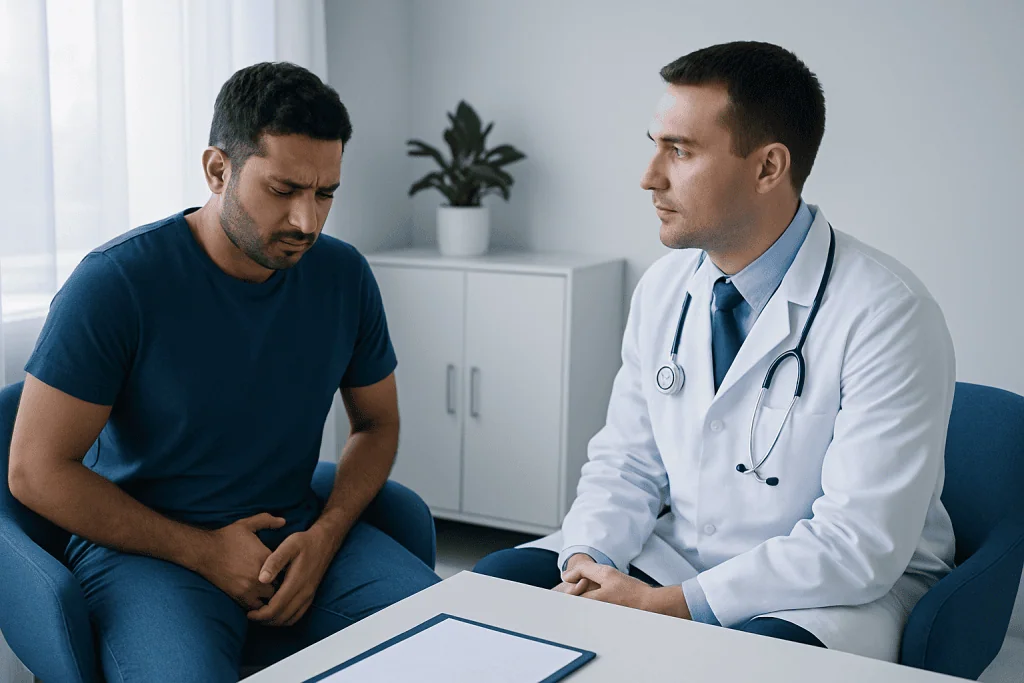
People describe groin symptoms in several ways. Some feel a pulling pain on the inner thigh, especially when walking, climbing stairs, or changing direction. Others notice a deep ache near the hip crease, tenderness to touch, stiffness, or pain that spreads to the lower abdomen, buttock, or thigh.
Swelling or a visible bulge can be an important clue. A bulge that becomes more obvious with coughing, standing, or lifting may be associated with a hernia. Enlarged lymph nodes may feel like small tender lumps, often after infection or skin irritation in nearby areas.
Some symptoms suggest causes outside the muscles. Burning with urination, blood in the urine, flank pain, or frequent urination may point to urinary tract problems or kidney stones. Sudden testicular pain, scrotal swelling, menstrual-related pelvic pain, numbness, fever, or inability to bear weight are all signs that the symptom pattern deserves prompt medical attention.
- Pain with running, kicking, or side-stepping
- Stiffness or reduced hip range of motion
- Bruising or tenderness after strain or impact
- A lump or dragging sensation in the groin
- Urinary, abdominal, or reproductive symptoms together with groin pain
What can cause pain or a lump in the groin area
Muscle and tendon problems are among the most common causes. A groin strain usually affects the inner thigh adductor muscles and may happen during sport, sudden twisting, overstretching, or a forceful change of direction. Hip flexor strain, tendon irritation, or overuse injuries can also produce pain near the front of the groin. Joint-related causes include hip labral problems, osteoarthritis, and pain referred from the lower back or sacroiliac region.
Hernias are another important cause, especially when there is a bulge or discomfort with coughing and lifting. Inguinal and femoral hernias can cause pressure, aching, or a visible lump. Treatment depends on symptoms and examination findings, and some people may need hernia surgery after specialist assessment.
Other causes include enlarged lymph nodes from infection or inflammation, urinary tract issues, kidney stones, and conditions affecting the reproductive organs. In men, testicular disorders can be felt as groin pain; in women, ovarian cysts, pelvic floor problems, or gynecologic conditions can contribute. Nerve irritation, such as entrapment of sensory nerves in the pelvis or upper thigh, may cause burning, tingling, or numbness rather than a simple ache.
Less commonly, infections, inflammatory conditions, fractures, blood vessel problems, or tumors may be involved. That is why pain that does not improve, keeps returning, or is accompanied by systemic symptoms should not be dismissed as “just a pulled muscle.”
How doctors evaluate the groin area
Assessment begins with a careful history. A doctor usually asks when the symptom started, whether it followed sport or trauma, if there is a bulge, and what movements worsen it. Questions about fever, weight loss, urinary symptoms, bowel changes, menstrual or testicular symptoms, and back pain help narrow the possibilities.
The physical exam is often very informative. The clinician may check for tenderness in muscles and tendons, hip movement, strength, hernia signs, skin changes, swollen lymph nodes, and whether pain is reproduced by coughing, leg lifting, or resisted thigh movement. Depending on symptoms, the abdomen, hip, lower back, genital area, or pelvis may also need assessment.
Tests are chosen based on what the exam suggests. Ultrasound can help assess hernias, soft tissues, and some lumps. X-rays may be useful when bone or hip joint disease is suspected, while MRI can show muscles, tendons, and deeper joint structures in more detail. Blood tests or urine tests may be ordered if infection, inflammation, or urinary causes are possible.
If there is concern about the hip joint itself, further imaging or specialist review may be recommended. This is sometimes useful when groin pain actually reflects hip pain rather than an injury limited to the inner thigh.
Treatment options for groin area problems
Treatment depends on the cause rather than the symptom alone. For a mild muscle strain, early care usually includes temporary rest from the triggering activity, gentle movement within comfort, ice in the first phase, and gradual return to activity. A clinician may advise short-term pain relief and a rehabilitation plan focused on flexibility, strength, balance, and correcting movement patterns that contributed to the injury.
Physical therapy is often useful when symptoms come from muscles, tendons, the hip, or the lower back. It can help restore hip mobility, strengthen the core and inner thigh muscles, and reduce reinjury risk. Persistent sports-related groin pain sometimes needs a more detailed evaluation because several structures can be involved at the same time.
When a hernia is present, management may range from observation to surgery depending on symptoms, size, and risk of complications. In some cases, doctors may recommend general surgery assessment. Urinary, infectious, gynecologic, or testicular causes are treated according to the underlying diagnosis, which is why self-treating every groin symptom as a strain can delay appropriate care.
If symptoms are severe, recurrent, or unclear, multidisciplinary evaluation can be helpful. Near the end of the care pathway, some international patients choose centers such as Acibadem International, where multidisciplinary specialists in JCI-accredited hospitals evaluate groin-related conditions and tailor treatment to the identified cause.
Prevention and self-care
Not every cause of groin pain can be prevented, but many muscle-related problems can be reduced with sensible training habits. A gradual increase in exercise intensity, proper warm-up, and attention to flexibility and hip strength are important for athletes and non-athletes alike. Core stability and balanced leg strength help reduce stress on the inner thigh and pelvis.
People who sit for long periods may benefit from regular movement breaks and hip mobility exercises. Good lifting technique and avoiding sudden overload can also help, especially for people whose work involves carrying or repetitive strain. If there is a history of groin injury, returning to sport too soon may increase the chance of recurrence.
Self-care is reasonable for brief, mild symptoms after minor strain, but it should be measured and observant. If the pain is worsening, affecting walking, or associated with a lump, urinary symptoms, abdominal pain, fever, or genital symptoms, medical review is the safer choice. A clear diagnosis is especially important before returning to intense activity.
When to seek medical care
Medical care is recommended if groin pain lasts more than a few days, keeps coming back, limits walking or daily activity, or follows a significant injury. It is also wise to seek assessment if there is a lump, visible swelling, bruising, or pain that is not improving with rest. Ongoing symptoms are best evaluated because treatment differs greatly between muscle injuries, joint problems, hernias, and urinary or reproductive causes.
Urgent medical care is important for severe pain, sudden testicular pain, a tender bulge that cannot be pushed back, fever, vomiting, inability to bear weight, numbness, weakness, or symptoms after a fall or direct trauma. People should also seek prompt care if groin pain occurs with blood in the urine, inability to pass urine, or significant abdominal symptoms.
In children, older adults, pregnant people, and anyone with cancer history or unexplained weight loss, new groin symptoms deserve particular attention. When in doubt, a qualified doctor can help identify whether the problem is minor and self-limited or whether it needs targeted treatment.
Frequently asked questions
Where is the groin area exactly?
The groin area is the region where the lower abdomen meets the upper thigh on either side of the body. It includes the hip crease and nearby muscles, tendons, nerves, lymph nodes, and the inguinal canal.
Is groin pain usually a pulled muscle?
A pulled muscle, often called a groin strain, is a common cause, especially after sports or sudden movement. However, groin pain can also come from a hernia, hip joint problem, urinary tract issue, nerve irritation, or reproductive organs, so persistent symptoms should be assessed.
What does a hernia in the groin area feel like?
A groin hernia may feel like pressure, aching, or a dragging sensation, sometimes with a visible or palpable bulge. The bulge may become more noticeable when standing, coughing, or lifting and may improve when lying down.
Can hip problems cause pain in the groin area?
Yes. The hip joint often refers pain to the front of the groin, especially in arthritis, labral problems, or other hip disorders. Pain that worsens with walking, twisting, or reduced hip movement can suggest a hip-related cause.
How long does a groin strain take to heal?
Recovery depends on how mild or severe the injury is and whether the person rests and rehabilitates properly. Mild strains may improve in days to a few weeks, while more significant injuries can take longer and may need physical therapy.
When is groin pain an emergency?
Urgent evaluation is needed for severe pain, a painful bulge that cannot be reduced, sudden testicular pain, inability to walk, numbness or weakness, fever, vomiting, or symptoms after significant trauma. These features can point to conditions that should not be managed at home.
This article is for general information only and is not a substitute for professional medical advice. Please consult a qualified doctor about your individual situation.
Joint and spine care in Turkey — expert assessment & treatment
JCI-accredited · board-certified surgeons · reply within 24h
Add us as a Preferred Source to see more of our trusted health content across Google Search, AI Overviews and Discover.

More from the Health Library

Avner Hershlag — Explained by Medical Evidence, Not Myths

Facial Nerve: An Evidence-Based Guide for Patients

Fugue State: A Complete Medical Overview

Gum Graft: An Evidence-Based Guide for Patients

Healthy BMI for Women: A Complete Medical Overview