Facial Nerve: An Evidence-Based Guide for Patients

The facial nerve helps control facial movement, blinking, tears, and part of taste. Facial nerve problems can cause drooping, weakness, trouble closing the eye, altered taste, or sound sensitivity.
Key Takeaways
- The facial nerve helps control facial movement, blinking, tears, and part of taste.
- Facial nerve problems can cause drooping, weakness, trouble closing the eye, altered taste, or sound sensitivity.
- Causes range from temporary inflammation such as Bell's palsy to infection, trauma, tumors, or stroke-related symptoms.
- Diagnosis usually depends on history, a physical examination, and sometimes imaging or nerve tests.
- Treatment depends on the cause and may include eye protection, medicines, rehabilitation, or surgery in selected cases.
- Sudden facial weakness should be assessed promptly to rule out urgent conditions such as stroke.
The facial nerve controls facial expression and also helps with blinking, tear production, taste, and some sound sensitivity. When the facial nerve is irritated, inflamed, compressed, or injured, it can cause facial weakness, asymmetry, eye problems, and other symptoms that often need medical assessment.
Overview: what the facial nerve does
The facial nerve is the seventh cranial nerve. It carries signals from the brain to the muscles that create facial expression, such as smiling, frowning, and closing the eyes. It also has roles beyond movement, including helping control tear production, carrying taste from part of the tongue, and supplying a small muscle in the ear that affects sound sensitivity.
Because the facial nerve travels through a narrow bony canal and several delicate branches, it can be affected by swelling, pressure, infection, injury, or less commonly by tumors. When this happens, the result may be weakness on one side of the face, trouble blinking, dryness of the eye, drooling, or changes in taste. The pattern of symptoms often gives important clues about where the problem is located.
Patients often ask whether any facial drooping means a stroke. Not always. A common cause is Bell's palsy, which is a sudden weakness of the facial nerve itself. However, facial weakness can also happen with stroke and other serious conditions, so sudden or new symptoms should not be self-diagnosed. Prompt medical evaluation is the safest approach.
Common symptoms of facial nerve problems
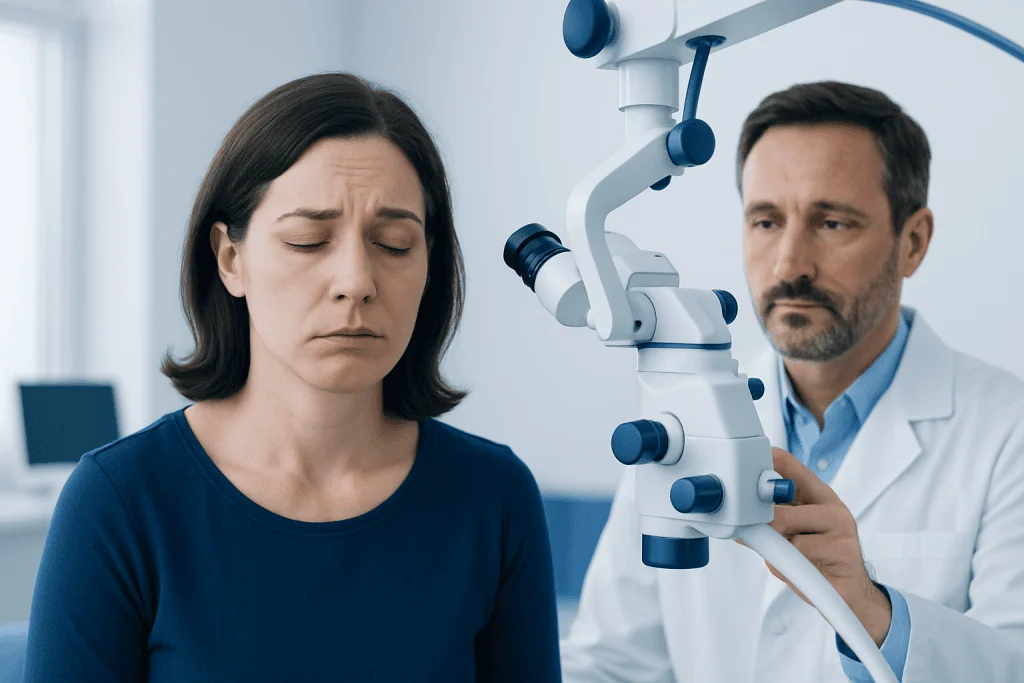
Symptoms can begin suddenly or develop more gradually, depending on the cause. The most noticeable sign is often weakness or drooping on one side of the face. A person may notice an uneven smile, difficulty raising the eyebrow, flattening of the forehead lines, or trouble fully closing one eye.
The facial nerve also affects several functions that patients may not immediately connect to it. Eye irritation can happen because blinking is weaker or incomplete. Some people develop excessive tearing, while others feel dry eye because the tear film is not spread normally. Taste changes, especially on the front part of the tongue, may occur, and sounds may seem unusually loud in one ear.
Other symptoms can include:
- Facial numbness or a strange heavy feeling, although true numbness often points to other nerves as well
- Drooling or difficulty keeping food and liquids inside the mouth
- Pain around the ear or jaw
- Muscle twitching, tightness, or involuntary movements during recovery
- Speech changes caused by lip weakness
Not every symptom means the nerve is severely damaged. In some cases, the nerve is inflamed but still able to recover well. The timing, severity, and associated symptoms help doctors decide how urgent the problem is and what tests may be needed.
How facial nerve disorders happen
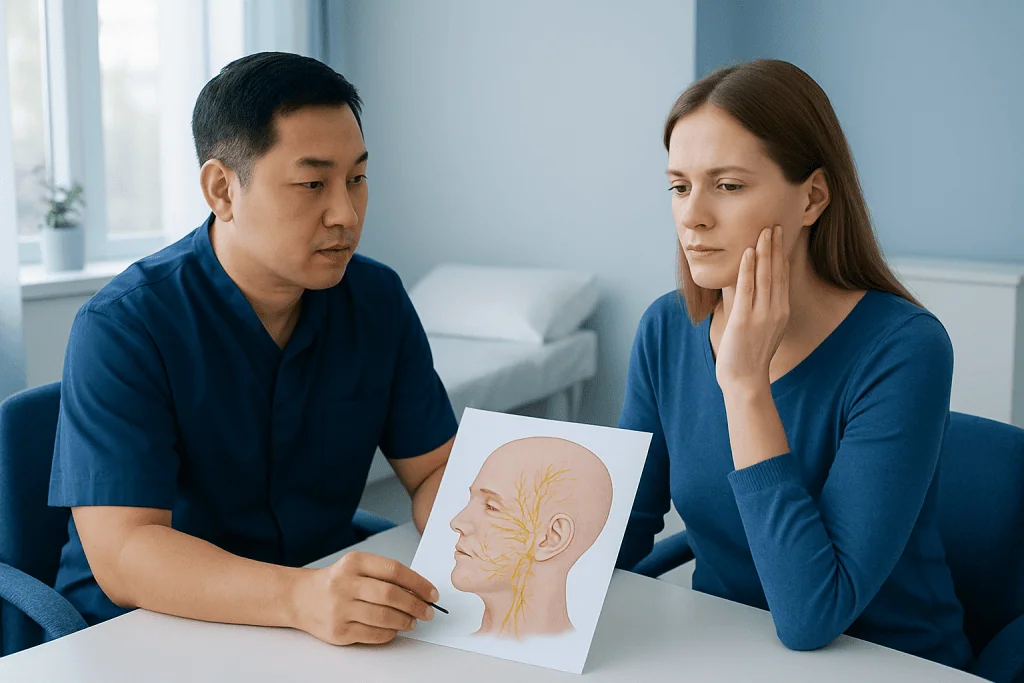
The facial nerve begins in the brainstem, passes through the skull near the ear, and then branches across the face. Problems can occur anywhere along this route. Inflammation is one of the most common mechanisms. In Bell's palsy, swelling of the nerve inside its tight bony channel can temporarily block the signals that control facial movement.
Infections may affect the nerve directly or indirectly. Viral illnesses are commonly discussed in relation to Bell’s palsy, and shingles involving the ear can also injure the nerve. Middle ear disease, severe outer ear infection, or nearby inflammation may contribute in some situations. Trauma is another cause, especially after temporal bone injury, facial injury, or surgery near the ear, jaw, or parotid gland.
Less common but important causes include benign or malignant growths, neurologic disease, and systemic conditions that affect nerves. In some patients, doctors may investigate for structural problems using MRI scanning or other imaging. When a brain-related cause is suspected, conditions such as stroke must be considered urgently, especially if facial weakness is accompanied by arm weakness, speech difficulty, imbalance, or confusion.
Risk factors and conditions linked to facial weakness
Facial nerve problems can happen at any age, but some situations raise the likelihood. A recent viral illness, pregnancy, diabetes, high blood pressure, immune changes, and severe stress are often discussed in relation to sudden peripheral facial weakness. Previous facial nerve episodes or a history of shingles may also be relevant.
Trauma-related risk is higher in people who have had recent head injury, ear surgery, dental or jaw procedures, or operations involving the salivary glands. Tumors near the ear, parotid gland, skull base, or brainstem can sometimes present with slowly progressive weakness rather than sudden drooping. A gradual onset deserves careful medical review because it is less typical of simple Bell’s palsy.
Doctors also consider associated symptoms. Hearing loss, persistent dizziness, severe ear pain, a rash around the ear, repeated episodes, facial spasms, or weakness affecting both sides of the face can suggest a less straightforward cause. This is why a detailed history matters, even when the visible symptom appears similar from one person to another.
Diagnosis: what doctors look for
Diagnosis begins with a medical history and physical examination. Doctors assess when the weakness started, whether it progressed over hours or days, and whether other symptoms are present. They examine facial movements such as eyebrow raise, eye closure, smiling, and puffing the cheeks. The forehead is especially important because weakness there may help distinguish a peripheral facial nerve problem from some central neurologic causes.
The examination usually includes the ears, eyes, mouth, and a broader neurologic assessment. Eye protection needs are checked right away if the eyelid does not close fully. If the presentation is classic for Bell’s palsy, extensive testing may not always be necessary at the first visit. However, atypical symptoms, recurrent weakness, severe pain, or gradual progression often lead to further evaluation.
Additional tests may include blood work, hearing tests, or imaging such as MRI scanning or CT in selected cases. Some patients benefit from nerve function studies, especially if the diagnosis is uncertain or recovery is not progressing as expected. The goal is not only to confirm facial nerve involvement, but also to identify whether treatment should focus on inflammation, infection, structural compression, or another underlying disorder.
Treatment options and recovery
Treatment depends on the cause, the severity of weakness, and how quickly it was recognized. In many cases of acute Bell’s palsy, doctors may recommend a short course of medication to reduce nerve inflammation, especially when started early. If a viral cause is strongly suspected in certain situations, antiviral medicine may also be considered. Patients should use only treatments prescribed or approved by a qualified clinician.
Eye care is one of the most important parts of treatment when blinking is weak. Lubricating drops, ointment at night, moisture shields, or taping the eyelid closed during sleep may be advised to protect the cornea. This can prevent pain, dryness, and vision complications while the nerve recovers.
Rehabilitation may help improve coordination and reduce long-term stiffness or unwanted facial movements. Selected patients may be referred for physical therapy and rehabilitation focused on facial exercises, massage, and movement retraining. If there is a structural cause such as a tumor, severe injury, or ongoing compression, treatment may involve procedures by ENT, neurology, plastic surgery, or neurosurgery specialists.
Recovery varies. Many people improve significantly over weeks to months, but some develop residual weakness, tightness, or synkinesis, which means one facial movement unintentionally triggers another. Follow-up is important if improvement stalls, new symptoms appear, or facial function remains limited.
Self-care, prevention, and daily living tips
Not every facial nerve problem can be prevented, but practical self-care can reduce discomfort and support recovery. Eye protection is the priority when the eyelid does not close properly. Sunglasses outdoors, lubricating eye products recommended by a clinician, and careful nighttime protection can help avoid corneal injury.
Gentle daily routines are usually more helpful than forceful exercises. Patients should avoid repeatedly straining facial muscles or trying unproven devices without medical advice. Good sleep, hydration, and balanced nutrition support general recovery, and managing conditions such as diabetes or high blood pressure may also be beneficial.
People recovering from facial weakness often feel self-conscious about speaking, eating, or appearing in public. Reassurance matters: visible asymmetry does not always reflect permanent damage. Support from clinicians trained in facial nerve care can help patients learn safe exercises, protect the eye, and monitor recovery in a structured way.
For international patients who need assessment or treatment, Acibadem International’s multidisciplinary specialists and JCI-accredited hospitals diagnose and manage facial nerve conditions using coordinated neurological, ENT, imaging, rehabilitation, and surgical care when needed.
When to seek medical care
New facial weakness should be assessed promptly, especially if it begins suddenly. Urgent evaluation is important if facial drooping appears together with arm or leg weakness, trouble speaking, double vision, severe headache, confusion, or difficulty walking, because these can be signs of a medical emergency such as stroke.
Medical review is also advisable if the eye cannot close fully, if there is severe ear pain, a rash around the ear, hearing changes, persistent dizziness, fever, or recent head trauma. Gradually worsening weakness, recurrent episodes, weakness on both sides of the face, or lack of improvement over time should also be investigated further.
Even when the cause turns out to be temporary inflammation, early care can protect the eye and improve comfort. A qualified doctor can decide whether simple supportive care is enough or whether tests and specialist treatment are needed.
Frequently asked questions
What is the facial nerve responsible for?
The facial nerve mainly controls the muscles used for facial expression, such as smiling, blinking, and frowning. It also helps with tear production, part of taste on the tongue, and a small muscle in the ear that influences sound sensitivity.
Does facial nerve weakness always mean Bell's palsy?
No. Bell's palsy is a common cause of sudden one-sided facial weakness, but it is not the only cause. Stroke, infection, trauma, tumors, and other neurologic conditions can also affect facial movement, so a doctor should assess new symptoms.
How can someone tell facial nerve palsy from a stroke?
It is not always safe to tell without medical assessment. In some peripheral facial nerve problems, the forehead is also weak, while some strokes affect the lower face more than the forehead, but exceptions exist. If facial weakness starts suddenly or occurs with speech trouble, arm weakness, or imbalance, urgent evaluation is needed.
Can the facial nerve recover?
Yes, many facial nerve problems improve, especially when the cause is temporary inflammation. Recovery may take weeks or months, and the outcome depends on the cause, severity, and how quickly appropriate care begins.
Why is eye care important in facial nerve palsy?
If the eyelid does not close properly, the eye can become dry, irritated, and vulnerable to corneal injury. Protecting the eye with lubrication and other measures recommended by a clinician is an important part of treatment.
When are scans or nerve tests needed?
Not everyone needs them right away. Imaging or nerve studies are more likely when symptoms are unusual, recovery is delayed, weakness keeps worsening, or the doctor suspects a structural or central cause.
References
- National Institute of Neurological Disorders and Stroke
- National Institute on Deafness and Other Communication Disorders
- American Academy of Neurology
- Mayo Clinic
- NHS
This article is for general information only and is not a substitute for professional medical advice. Please consult a qualified doctor about your individual situation.
Explore treatments in Turkey — costs, top hospitals & a free quote
JCI-accredited · board-certified surgeons · reply within 24h
Add us as a Preferred Source to see more of our trusted health content across Google Search, AI Overviews and Discover.
Check your numbers in seconds
BMI, calories, due date, blood pressure and 30+ more clinical calculators — free, instant, doctor-reviewed ranges.

More from the Health Library

Healthy Snacks for Teens: A Complete Medical Overview

Spider Veins — Explained by Medical Evidence, Not Myths

Lichen Simplex Chronicus — Explained by Medical Evidence, Not Myths

Blister Between Toes: A Complete Medical Overview

Deep Blackheads — Explained by Medical Evidence, Not Myths