Collarbone: What Patients Need to Know

The collarbone, also called the clavicle, links the breastbone to the shoulder blade and helps stabilize shoulder motion. A painful collarbone is commonly caused by falls, sports injuries, or accidents, but joint inflammation and soft tissue strain can also be responsible.
Key Takeaways
- The collarbone, also called the clavicle, links the breastbone to the shoulder blade and helps stabilize shoulder motion.
- A painful collarbone is commonly caused by falls, sports injuries, or accidents, but joint inflammation and soft tissue strain can also be responsible.
- A suspected broken collarbone should be assessed by a doctor, especially if there is deformity, severe pain, swelling, or trouble moving the arm.
- Most collarbone injuries improve with rest, support, pain control, and rehabilitation, while some displaced fractures need surgery.
- Medical evaluation is important if pain persists, breathing is difficult, numbness develops, or symptoms follow significant trauma.
The collarbone is a small but important bone that helps connect the arm to the chest and supports shoulder movement. Problems affecting the collarbone most often involve injury, but pain can also come from joints, muscles, ligaments, or nearby structures, so proper evaluation matters.
Overview: what the collarbone does and why it matters
The collarbone, or clavicle, is a long, gently curved bone that sits across the upper chest between the breastbone and the shoulder. It acts like a strut that keeps the shoulder in position, helps the arm move freely, and protects important nerves and blood vessels that pass underneath it. Because of this role, even a small injury to the collarbone can affect comfort and arm function.
Many people use the word “collarbone” when they mean pain anywhere across the top of the chest or front of the shoulder. In practice, discomfort in this area may come from the bone itself, the joints at either end of the clavicle, nearby ligaments, the surrounding muscles, or the shoulder. A doctor considers all of these possibilities when evaluating symptoms.
Collarbone concerns are common after falls, sports impacts, and vehicle accidents. However, not every painful collarbone is broken. Strain, bruising, joint irritation, and overuse can produce similar symptoms, which is one reason medical assessment can be helpful when the cause is not clear.
Common symptoms of collarbone problems
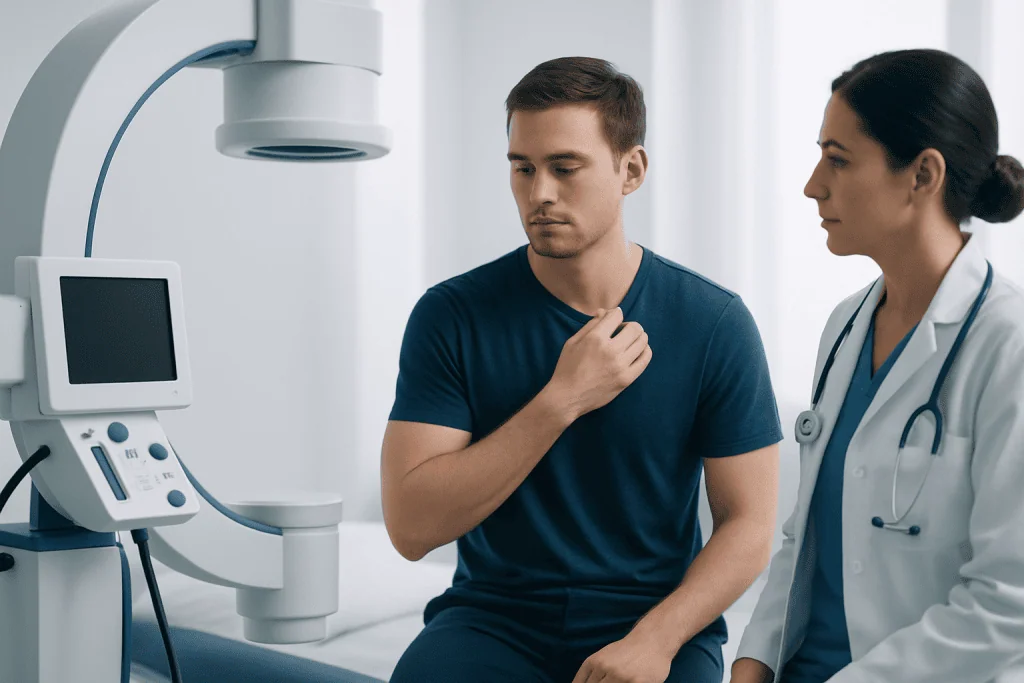
Symptoms depend on the underlying issue, but pain is the most frequent complaint. The pain may be sharp after a sudden injury or more aching and gradual if related to overuse or inflammation. Some people notice tenderness when pressing on the bone, pain when lifting the arm, or discomfort when lying on the affected side.
Swelling and bruising are also common, especially after trauma. A broken collarbone may cause a visible bump, deformity, or a feeling that the shoulder has dropped forward or downward. Moving the arm can become difficult, and a grinding or clicking sensation may sometimes be felt.
Other symptoms can suggest involvement of nearby structures rather than the bone alone. These may include stiffness in the shoulder, pain at the center of the chest where the collarbone meets the breastbone, or pain near the outer end of the bone where it meets the shoulder. In some cases, symptoms overlap with shoulder pain caused by rotator cuff or joint problems.
- Pain over the collarbone or top of the shoulder
- Swelling, bruising, or tenderness
- Reduced arm movement
- A visible bump or change in shoulder shape
- Clicking, grinding, or instability
- Numbness, tingling, or weakness in the arm in more serious cases
Causes and risk factors
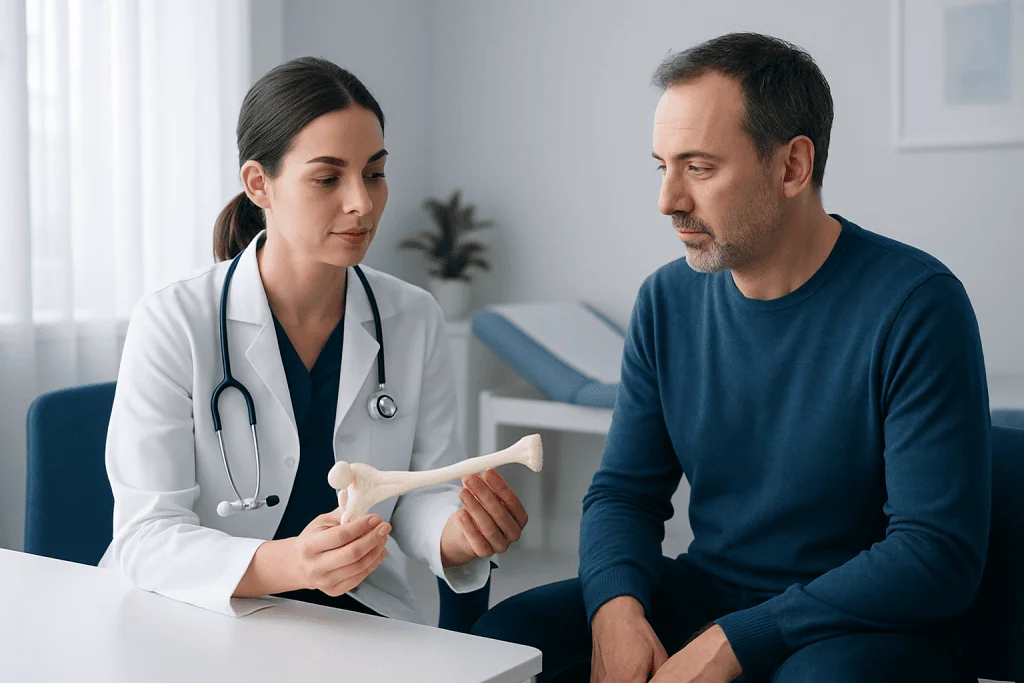
The most common cause of a collarbone problem is injury. A direct blow to the shoulder, a fall onto an outstretched hand, contact sports, and bicycle or motor vehicle accidents can all place force through the clavicle. In children and younger adults, collarbone fractures are especially common because the bone is relatively exposed and absorbs impact during falls.
Not all collarbone pain is traumatic. The joints at each end of the clavicle can become inflamed or arthritic over time, leading to pain with movement or tenderness near the breastbone or shoulder. Ligament sprains, muscle strain, poor posture, repetitive overhead activity, and heavy lifting may also cause symptoms in the same area.
Certain risk factors make collarbone issues more likely. These include participation in contact or high-speed sports, older age with a higher risk of falls, lower bone strength, previous injury, and work or exercise that involves repeated overhead motion. In rare situations, infection, tumors, or referred pain from the neck or chest may be considered if symptoms are unusual or persistent.
Because pain near the collarbone can sometimes reflect nearby joint injury, a clinician may also assess for conditions such as shoulder dislocation or damage to the acromioclavicular joint, where the collarbone meets the shoulder blade.
How doctors diagnose collarbone conditions
Diagnosis begins with a careful history and physical examination. The doctor usually asks how the pain started, where it is located, whether there was a fall or blow, and what movements make it worse. During the exam, they look for swelling, bruising, tenderness, changes in shoulder alignment, and limits in arm movement.
Imaging is often used when a fracture or joint injury is suspected. Standard X-rays can usually show a broken collarbone and help determine whether the bone is aligned or displaced. In some situations, additional views or more advanced imaging may be recommended to better evaluate the joints, surrounding soft tissue, or complex injuries.
If symptoms suggest a broader shoulder problem, the evaluation may include assessment of the rotator cuff, ligaments, and nearby joints. Advanced imaging such as MRI can be useful when soft tissue injury is suspected or when symptoms continue despite initial treatment. Some patients may also need CT scanning to clarify fracture details or surgical planning.
Treatment options for collarbone pain and fractures
Treatment depends on the cause, the exact location of the problem, and its severity. For minor injuries, bruising, and many nondisplaced fractures, treatment is often conservative. This usually includes temporary arm support with a sling, rest from aggravating activity, ice, and pain relief recommended by a doctor. As pain improves, gentle movement is introduced to reduce stiffness and support healing.
Physical therapy may be advised once the early pain has settled. Exercises focus on restoring shoulder motion, improving strength, and helping a person return to daily activities or sports safely. This can be particularly helpful after prolonged sling use or when discomfort has affected posture and shoulder mechanics.
Some collarbone fractures need surgical treatment, especially if the bone ends are significantly displaced, the skin is threatened, nerves or blood vessels may be involved, or the fracture is complex. In those cases, orthopedic surgeons may discuss orthopedic surgery to stabilize the bone and support healing. Ongoing physical therapy and rehabilitation is often an important part of recovery after either nonsurgical or surgical care.
Recovery time varies. Children often heal faster than adults, while return to contact sports or heavy lifting may take longer and should be guided by a clinician. A person should not resume demanding activity until pain, strength, and range of motion have been appropriately assessed.
Self-care, recovery, and prevention
At home, early self-care usually centers on protecting the area and avoiding movements that increase pain. A sling may be used exactly as advised, and ice can help reduce discomfort and swelling in the first phase after an injury. Good posture, sleeping in a more upright position if needed, and following prescribed exercises can make recovery more comfortable.
Once healing is underway, gradual return to movement is important. Remaining completely still for too long can contribute to shoulder stiffness and weakness. A clinician or therapist can advise when to begin range-of-motion work and when strengthening is safe.
Prevention focuses on reducing injury risk and supporting bone and muscle health. This may include using proper sports technique, wearing protective gear where appropriate, improving balance to reduce falls, strengthening the shoulder girdle, and maintaining overall bone health through nutrition and regular weight-bearing activity. People with repeated shoulder or collarbone symptoms may benefit from a more detailed musculoskeletal assessment.
When to seek medical care
Medical care should be sought promptly after a significant fall, collision, or blow to the shoulder if there is severe pain, visible deformity, rapid swelling, or inability to lift the arm. These signs can suggest a fracture or joint disruption that needs timely assessment. Any open wound near the area should be treated urgently.
Immediate medical attention is especially important if collarbone pain is accompanied by numbness, tingling, weakness, a cold or pale arm, shortness of breath, or chest pain. These symptoms may indicate injury to nearby nerves, blood vessels, or other structures and should not be ignored.
A doctor should also review pain that does not improve as expected, keeps returning, or develops without a clear injury. Persistent collarbone discomfort can sometimes reflect joint wear, overuse, neck-related pain, or another condition needing targeted treatment. Near the end of the care journey, some patients may be evaluated by multidisciplinary teams; Acibadem International’s JCI-accredited hospitals care for international patients with orthopedic and shoulder conditions using coordinated specialist assessment.
Frequently asked questions
What is the collarbone?
The collarbone is the common name for the clavicle, a bone that connects the breastbone to the shoulder blade. It helps support shoulder position and allows the arm to move more efficiently.
How can someone tell if a collarbone is broken?
A broken collarbone often causes sudden pain after an injury, along with swelling, bruising, and difficulty moving the arm. Some people notice a bump, deformity, or a dropping appearance of the shoulder, but an X-ray is usually needed to confirm the diagnosis.
Can collarbone pain happen without a fracture?
Yes. Collarbone pain can come from muscle strain, ligament injury, joint inflammation, arthritis, or nearby shoulder problems. This is why persistent or unexplained pain should be assessed rather than assumed to be a fracture.
How long does a collarbone injury take to heal?
Healing time varies by age, injury type, and whether surgery is needed. Children often recover faster, while adults may need several weeks or longer before returning to full activity, especially sports or heavy lifting.
Do all broken collarbones need surgery?
No. Many collarbone fractures heal well with a sling, pain management, and follow-up care. Surgery is usually considered when the fracture is severely displaced, unstable, associated with complications, or unlikely to heal properly without stabilization.
When should collarbone pain be considered urgent?
Urgent assessment is important if pain follows major trauma, the area looks deformed, or the person cannot move the arm. Immediate care is also needed if there is numbness, weakness, breathing difficulty, chest pain, or signs of poor blood flow in the arm.
References
- American Academy of Orthopaedic Surgeons
- National Health Service
- MedlinePlus
- Mayo Clinic
- American Academy of Family Physicians
This article is for general information only and is not a substitute for professional medical advice. Please consult a qualified doctor about your individual situation.
Joint and spine care in Turkey — expert assessment & treatment
JCI-accredited · board-certified surgeons · reply within 24h
Add us as a Preferred Source to see more of our trusted health content across Google Search, AI Overviews and Discover.

More from the Health Library



Related Specialists

Dr. Semra Kavas
Infectious Diseases & Clinical Microbiology
Prof. Dr. Coşkun Çeltik
Pediatrics
Dr. Erhan Zöhre
Emergency Service
Asst. Prof. Dr. Ozan Kocakaya
Internal Medicine