Relief of Stiff Neck: What Works, What Does Not, and Safety Notes

Most stiff necks are caused by muscle strain, poor posture, or sleeping position and improve with time. Evidence-backed self-care includes gentle range-of-motion exercises, heat, staying active, and short-term use of pain relievers when appropriate.
Key Takeaways
- Most stiff necks are caused by muscle strain, poor posture, or sleeping position and improve with time.
- Evidence-backed self-care includes gentle range-of-motion exercises, heat, staying active, and short-term use of pain relievers when appropriate.
- Prolonged immobilization, aggressive stretching, and repeated neck cracking may worsen symptoms or delay recovery.
- Red-flag symptoms include fever, severe headache, weakness, numbness, trouble walking, pain after trauma, or pain that does not improve.
- A stiff neck can sometimes reflect an underlying spine, nerve, or infection-related problem that needs medical evaluation.
Relief of stiff neck often starts with simple measures: gentle movement, heat, short-term pain relief, and avoiding positions that keep the neck tense. Most cases improve within days, but sudden severe pain, fever, weakness, or pain after injury should be assessed by a doctor promptly.
Overview: what usually works for relief of stiff neck
Relief of stiff neck usually comes from a small group of practical steps rather than one “quick fix.” For most people, the most helpful approach is to keep the neck moving gently, apply heat for muscle tightness, adjust posture and sleep position, and use short-term pain relief if needed and medically suitable. Many episodes are related to muscle strain or joint irritation and improve over several days to one or two weeks.
What often does not help is complete bed rest, forcing the neck through painful stretches, or wearing a soft collar for long periods without medical advice. These may make the neck feel temporarily protected but can lead to more stiffness. Self-care should aim to calm pain while preserving normal movement.
Not every stiff neck is the same. Some cases come with shoulder pain, headaches, tingling, or pain that shoots down the arm, which can suggest nerve involvement such as cervical disc herniation. Others may be linked to wear-and-tear changes in the neck joints, such as cervical spondylosis. Because the right treatment depends on the cause, persistent or unusual symptoms deserve medical attention.
Symptoms and common patterns
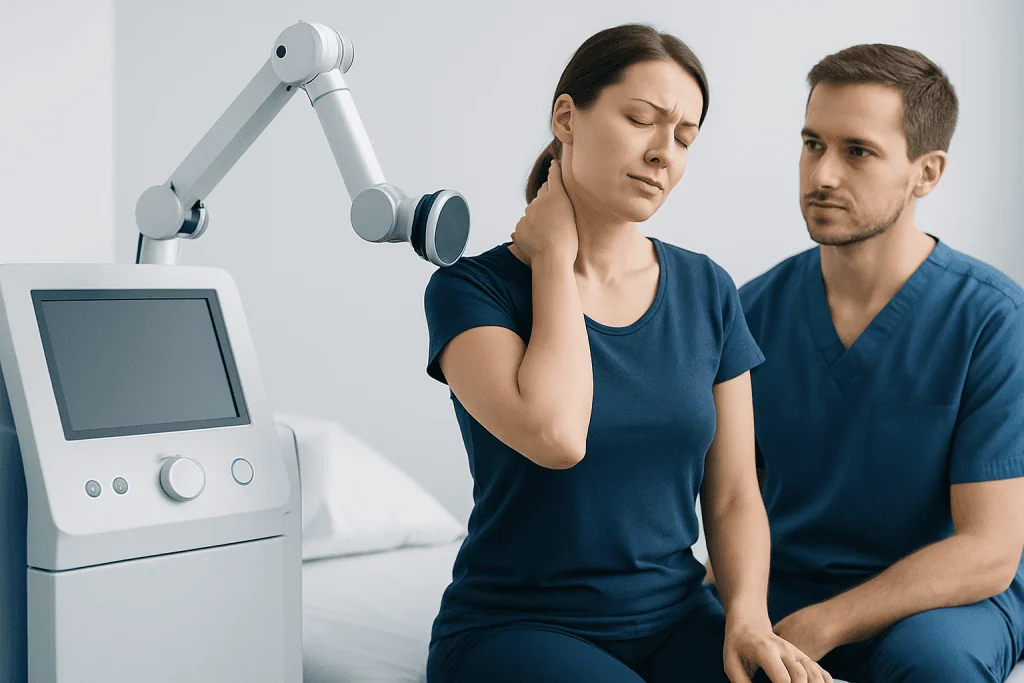
A stiff neck usually feels like tightness, reduced range of motion, soreness, or pain when turning the head. Some people notice the pain mostly on one side, while others feel it at the base of the skull, across the shoulders, or into the upper back. Morning stiffness is common after sleeping in an awkward position, and pain may worsen after long periods at a desk or using a phone.
There may also be muscle spasm, tenderness to touch, or a feeling that the neck is “locked.” A mild tension-type headache can occur at the same time, especially if the muscles at the back of the head are tight. In many uncomplicated cases, the pain is annoying but manageable, and there are no neurological symptoms.
Symptoms that suggest a more complex problem include pain radiating into the arm, numbness, tingling, hand weakness, balance problems, or severe pain after a fall or accident. Stiff neck with fever, rash, strong headache, light sensitivity, or confusion is not typical of simple muscle strain and needs urgent assessment.
Causes and risk factors

The most common cause of a stiff neck is mechanical strain. This can happen after sleeping in an unusual position, working at a computer without support, holding the phone between the ear and shoulder, carrying heavy bags, or sudden overuse during exercise or daily activity. Emotional stress can also contribute because it increases muscle tension around the neck and shoulders.
Less commonly, stiff neck can come from problems involving the discs, nerves, or joints of the cervical spine. These include disc herniation, arthritis-related changes, whiplash after a car accident, or inflammatory conditions. Infections and serious neurological causes are much less common, but they are important because they may present with neck stiffness plus systemic or neurological warning signs.
Risk factors include long periods of screen time, poor workstation setup, low physical activity, previous neck pain, older age, and jobs or hobbies that involve repetitive neck positioning. People who already have shoulder tightness, poor sleep support, or chronic stress may be more likely to develop recurrent symptoms.
- Common: muscle strain, awkward sleep position, posture-related tension
- Sometimes: whiplash, disc problems, degenerative spine changes
- Less common but urgent to rule out: infection, fracture, significant nerve compression
Evidence-backed self-care options
For many people, the best-supported home measures are simple. Gentle movement is usually better than prolonged rest. Slowly turning the head side to side, tilting ear toward shoulder within a comfortable range, and rolling the shoulders can help prevent further stiffness. These movements should feel mild and controlled, not forceful.
Heat is often useful when muscle spasm or tightness is the main problem. A warm shower, heating pad, or warm compress applied for short intervals may ease pain and improve mobility. Some people prefer cold in the first day after a sudden strain, especially if the area feels acutely sore, but evidence for one being clearly superior is limited; comfort and response can guide the choice.
Over-the-counter pain relievers may help in the short term when used as directed and when a person has no medical reason to avoid them. Nonsteroidal anti-inflammatory drugs and acetaminophen can reduce pain enough to make normal movement easier. Because these medicines are not suitable for everyone, people with stomach ulcers, kidney disease, liver disease, blood-thinner use, pregnancy, or other medical conditions should ask a healthcare professional before using them.
Targeted physical therapy can be especially helpful if pain lasts longer than a few days, keeps returning, or affects work and sleep. A clinician may recommend physical therapy and rehabilitation to improve mobility, posture, muscle endurance, and return to activity. In some cases, doctors may also suggest pain management strategies if pain is ongoing or complex.
What does not work well, or may carry safety concerns
Many popular remedies for stiff neck have limited evidence, and some can be risky. Complete bed rest often prolongs stiffness and deconditioning. Wearing a soft cervical collar for long periods without guidance may reduce movement so much that recovery slows. A collar may occasionally be advised after injury or for a specific condition, but it is not a routine answer for ordinary muscular stiffness.
Aggressive stretching is another common mistake. Pushing through sharp pain, asking someone to “crack” the neck, or repeatedly twisting it to force a pop may worsen muscle spasm and can, in rare cases, cause injury. High-velocity neck manipulation should be approached cautiously and discussed with a qualified clinician, especially if there is severe pain, nerve symptoms, dizziness, vascular risk factors, or recent trauma.
Massage, topical creams, ergonomic gadgets, and special pillows may help some people, but the evidence is mixed and results vary. These options are best viewed as supportive rather than essential. If used, they should not replace movement, posture correction, or medical evaluation when warning signs are present.
Herbal products and supplements are often promoted for pain, but quality, safety, and interactions can be uncertain. They may not be suitable for people taking other medications or living with chronic conditions. It is wise to review any supplement with a doctor or pharmacist before use.
Diagnosis and when medical assessment may be needed
A doctor usually starts by asking how the stiffness began, where the pain travels, whether there was injury, and whether there are symptoms such as fever, numbness, weakness, headache, or trouble with balance. The physical examination often includes checking range of motion, muscle tenderness, reflexes, strength, and sensation. Many short-lived cases do not need immediate imaging.
Tests may be considered when symptoms suggest a more specific cause or when they do not improve as expected. X-rays can show alignment and some degenerative changes, while MRI is more useful for discs, nerves, and soft tissues. In selected situations, blood tests or other investigations may be needed to look for inflammation or infection.
If symptoms point to a structural neck problem, referral for specialist care may be appropriate. Evaluation by orthopedics and traumatology or neurosurgery may be considered for significant nerve compression, persistent weakness, trauma, or severe pain not responding to conservative treatment. The goal is not always surgery; often it is to clarify the diagnosis and choose the safest treatment plan.
Prevention and everyday habits that can reduce recurrence
Preventing future episodes often depends on reducing strain throughout the day. A comfortable workstation, screen at eye level, supported forearms, and regular position changes can reduce neck loading. When using a phone or tablet, bringing the device closer to eye level may help limit the forward-head posture that often aggravates symptoms.
Sleep support matters as well. A pillow that keeps the neck in a neutral position is usually more helpful than one that forces the head too high or too low. Stomach sleeping can rotate the neck for long periods and may contribute to morning stiffness in some people.
General conditioning is also important. Regular walking, upper-back strengthening, and mobility exercises for the chest, shoulders, and neck can improve posture tolerance. Stress management may help too, since many people tighten the neck and shoulder muscles during periods of tension without realizing it.
For people with recurrent or persistent neck problems, individualized guidance can make a difference. Near the end of the care pathway, specialized assessment may identify movement patterns or spine conditions contributing to repeated flare-ups. Acibadem International’s multidisciplinary specialists in JCI-accredited hospitals diagnose and treat neck and spine conditions for international patients when more advanced evaluation is needed.
When to seek medical care
Seek urgent medical care if a stiff neck occurs with fever, severe headache, confusion, fainting, rash, light sensitivity, weakness, numbness, loss of coordination, bowel or bladder changes, or trouble walking. Immediate assessment is also important after a car accident, fall, sports injury, or any trauma that could affect the spine. These red flags are not typical of simple muscle tension.
Prompt medical care is also advisable if pain is severe, wakes the person from sleep, radiates down the arm, or is accompanied by tingling or hand weakness. A doctor should assess symptoms that do not start improving within several days, keep returning, or limit work and daily activities. Children, older adults, and people with cancer, immune suppression, or recent infection may need lower thresholds for evaluation.
If there are no red flags and the symptoms are mild, home care for a short period is reasonable. However, self-care should be stopped and professional advice sought if stretching, exercise, or over-the-counter medicines seem to make the pain clearly worse rather than better.
Frequently asked questions
How long does a stiff neck usually last?
A mild stiff neck from muscle strain or an awkward sleeping position often improves within a few days and may resolve within one to two weeks. Recovery can take longer if posture habits, stress, or an underlying spine condition are contributing. Symptoms that persist or worsen should be checked by a doctor.
Is heat or ice better for relief of stiff neck?
Both can help, and the better choice often depends on what feels most comfortable. Heat is commonly useful for muscle tightness and spasm, while ice may feel better during the first day after a sudden strain. If one option increases discomfort, it is reasonable to switch to the other.
Should a person rest or keep moving?
Gentle movement is usually better than complete rest. Normal daily activity within a comfortable range can reduce stiffness and help the neck recover. Prolonged bed rest or avoiding all motion may delay improvement.
Can a stiff neck be a sign of something serious?
Yes, although most cases are not serious. A stiff neck can sometimes be linked to infection, nerve compression, trauma, or other conditions when it occurs with fever, severe headache, weakness, numbness, confusion, or pain after an injury. Those symptoms need prompt medical care.
Is it safe to crack or manipulate the neck at home?
Forcefully twisting or cracking the neck at home is not recommended. It can worsen pain, strain the joints and muscles, and in rare situations lead to complications. It is safer to use gentle range-of-motion exercises and seek professional advice if pain is significant or persistent.
When should imaging such as an MRI be considered?
Imaging is not needed for every stiff neck. It may be considered when symptoms follow trauma, include arm weakness or numbness, suggest nerve compression, or do not improve with appropriate conservative care. A doctor decides which test is most useful based on the history and examination.
References
- National Institute of Neurological Disorders and Stroke
- American Academy of Orthopaedic Surgeons
- National Institute of Arthritis and Musculoskeletal and Skin Diseases
- Mayo Clinic
- National Health Service
This article is for general information only and is not a substitute for professional medical advice. Please consult a qualified doctor about your individual situation.
Joint and spine care in Turkey — expert assessment & treatment
JCI-accredited · board-certified surgeons · reply within 24h
Add us as a Preferred Source to see more of our trusted health content across Google Search, AI Overviews and Discover.