Pain Behind Knee Explained: Common Triggers and Red Flags

Pain behind the knee can come from muscles, tendons, cartilage, ligaments, cysts, arthritis, or circulation problems. A recent twist, sports injury, or overuse often points to a musculoskeletal cause such as strain or meniscus damage.
Key Takeaways
- Pain behind the knee can come from muscles, tendons, cartilage, ligaments, cysts, arthritis, or circulation problems.
- A recent twist, sports injury, or overuse often points to a musculoskeletal cause such as strain or meniscus damage.
- Sudden swelling, warmth, redness, calf tenderness, or trouble bearing weight should be assessed promptly.
- Diagnosis is based on symptoms, an exam, and sometimes imaging such as ultrasound, X-ray, or MRI.
- Treatment depends on the cause and may include rest, physical therapy, medications, drainage, or surgery in selected cases.
Pain behind knee is a symptom rather than a diagnosis. It commonly comes from muscle or tendon strain, a Baker’s cyst, arthritis, meniscus injury, or less often a blood clot or ligament injury, so the pattern of pain and any swelling, injury, or calf symptoms help guide what it means.
Overview: what pain behind the knee usually means
Pain behind knee is usually linked to structures at the back of the joint, including muscles, tendons, ligaments, cartilage, bursae, and blood vessels. In many people, it is caused by overuse, a strain, irritation from arthritis, or fluid collecting in a Baker’s cyst. Less commonly, it can signal a more urgent problem such as a ligament tear, a popliteal artery issue, or a deep vein thrombosis.
The location alone does not confirm the cause. Doctors also consider whether the pain started suddenly or gradually, whether there was a twist or fall, and whether there is stiffness, swelling, clicking, locking, redness, or calf pain. This broader pattern is often more useful than the pain location by itself.
Posterior knee pain may be felt during walking, climbing stairs, squatting, running, or fully straightening or bending the knee. Some causes stay limited to the joint, while others begin in nearby structures such as the hamstrings, calf muscles, or blood vessels behind the knee.
Common signs and how the pain may feel
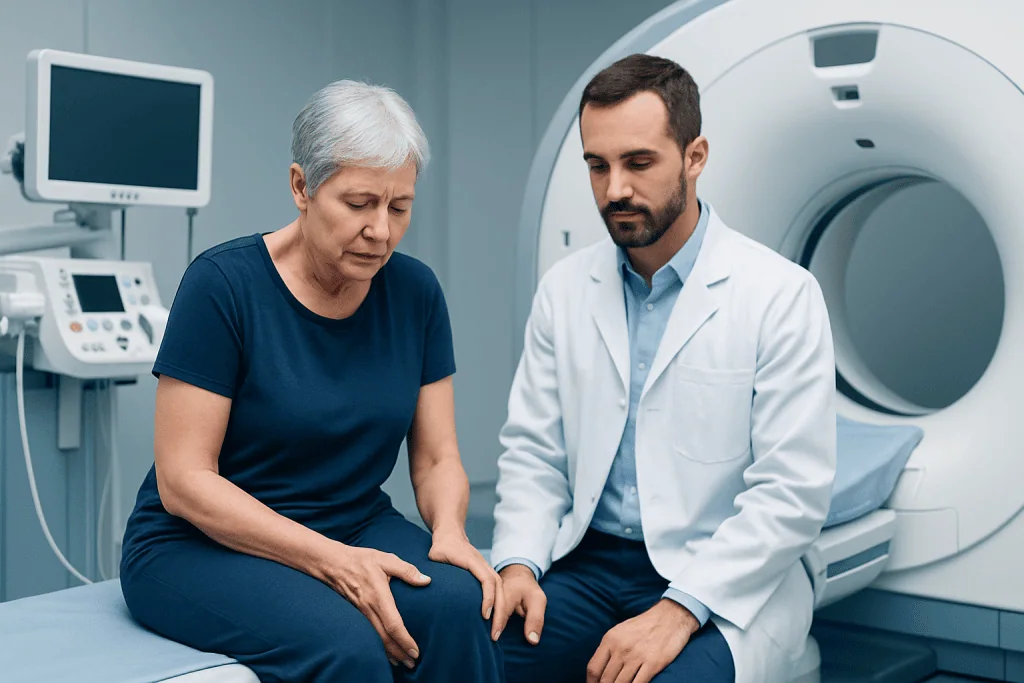
Pain in the back of the knee can feel dull, tight, sharp, throbbing, or like pressure. A muscle or tendon strain often causes aching or pulling discomfort that gets worse with activity. Meniscus or cartilage problems may lead to pain with twisting, crouching, or getting up from a chair.
Swelling may be mild and generalized, or there may be a fuller feeling in the hollow behind the knee. Some people notice stiffness after sitting, reduced range of motion, or a sense that the knee is unstable. A Baker’s cyst can create pressure or a visible bulge, especially when the knee is straight.
Symptoms that deserve more attention include warmth, redness, marked swelling, fever, inability to bear weight, a popping sensation during injury, or calf swelling and tenderness. These features can point to infection, significant internal injury, or a clot rather than a simple strain.
- Common associated symptoms: swelling, stiffness, clicking, locking, weakness, tightness
- Activity-related pain: worse with running, stairs, kneeling, squatting, or twisting
- Possible urgent signs: sudden calf swelling, redness, shortness of breath, severe trauma, fever
Common triggers and possible causes
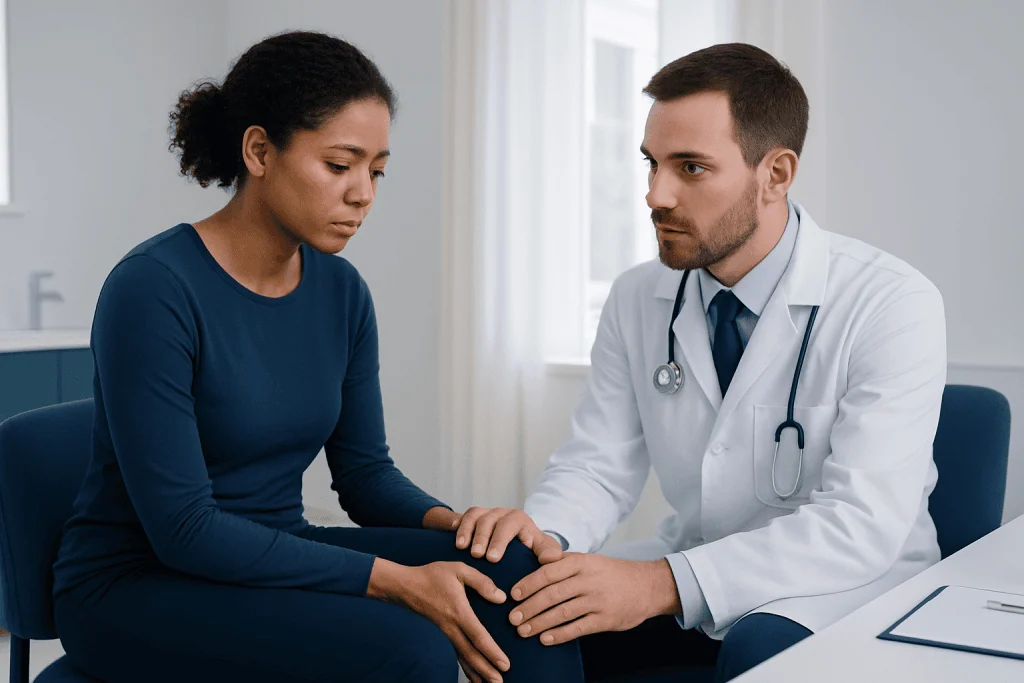
One common cause is a strain of the hamstring tendon or calf muscle. These tissues cross behind the knee and can become irritated after sports, uphill walking, sudden acceleration, or poor conditioning. Tendon irritation usually causes pain with movement and tenderness along the soft tissues rather than deep inside the joint.
A Baker’s cyst is another frequent reason for pain or pressure behind the knee. This is a fluid-filled swelling that often develops when the knee makes excess joint fluid because of arthritis, inflammation, or a meniscus tear. The cyst itself may be the clue, but the underlying knee problem still needs attention. In some people, the root problem may be related to a meniscus tear or osteoarthritis.
Injuries inside the knee can also refer pain to the back. Meniscus tears, cartilage wear, and ligament injuries may produce posterior pain along with swelling, popping, catching, or a sense that the knee gives way. The posterior cruciate ligament can be injured in sports or dashboard-type trauma, while generalized wear-and-tear changes may become more noticeable with age.
Less common but important causes include inflammatory arthritis, infection, deep vein thrombosis, and vascular problems in the popliteal region. A blood clot in the leg may cause calf swelling, warmth, and tenderness rather than isolated joint pain. Because these causes are more serious, doctors look for warning signs rather than assuming every case is orthopedic.
Risk factors that make behind-knee pain more likely
Several factors raise the chance of developing pain behind knee. Repetitive sports, sudden increases in exercise, weak or tight leg muscles, and poor movement mechanics can overload the tissues around the joint. Jobs or routines that involve prolonged kneeling, squatting, or stair climbing may have a similar effect.
Age-related changes also matter. As people get older, cartilage can wear down, tendons may become less flexible, and the risk of degenerative meniscus tears rises. Excess body weight can increase stress on the knee and may worsen both symptoms and recovery time.
Prior knee injury is another major factor. A previous ligament tear, meniscus damage, or surgery can alter joint mechanics and increase the chance of swelling, stiffness, and recurrent pain. Certain medical conditions, including inflammatory joint disease or circulation problems, may also shift the evaluation away from a simple overuse explanation.
How doctors diagnose the cause
Diagnosis starts with a careful history. A doctor will ask when the pain began, whether there was an injury, which movements worsen it, and whether there are symptoms such as swelling, locking, numbness, calf pain, fever, or shortness of breath. This helps narrow the cause quickly and identify red flags.
The physical exam often includes checking the knee’s range of motion, swelling, stability, tenderness, and ability to bear weight. The doctor may examine the hamstrings, calf, and the back of the knee for a cyst or vascular fullness. Comparing both legs can reveal whether the issue is localized to the knee or part of a broader leg problem.
Imaging is chosen based on the suspected cause. X-rays can show alignment and arthritis, while ultrasound may help identify a Baker’s cyst or evaluate for a possible clot in the leg. MRI is more useful for soft tissue injuries such as meniscus, cartilage, or ligament damage and may be recommended when symptoms persist or mechanical symptoms are present. If specialists suspect a structural problem, further assessment may be part of an evaluation for knee surgery or a non-surgical treatment plan.
Treatment options based on the cause
Treatment depends on what is causing the pain. For many strains and mild overuse injuries, short-term activity modification, ice, elevation, and guided return to movement are enough to settle symptoms. Doctors may also suggest pain-relieving or anti-inflammatory medicines when appropriate, taking into account the person’s overall health.
Physical therapy is often central to recovery. A tailored program can improve flexibility, strengthen the quadriceps, hamstrings, calves, and hip muscles, and correct movement patterns that place extra stress on the knee. This is especially helpful for recurrent posterior knee pain, tendon problems, and recovery after injury.
If a Baker’s cyst is present, treatment focuses on the reason the joint is producing excess fluid. Arthritis care, aspiration in selected cases, or management of an associated cartilage or meniscus problem may reduce the cyst-related pressure. For persistent degenerative joint disease, some people may be assessed for knee replacement after conservative options have been considered.
More significant structural injuries may need bracing, injections, or surgery. For example, repair of internal damage may be discussed if there is locking, instability, or a major tear, including options related to meniscus surgery. A blood clot, infection, or vascular problem is treated very differently and requires prompt medical care rather than home management.
Self-care and prevention
Many cases of pain behind knee improve with practical self-care, especially when symptoms began after overuse rather than major trauma. Resting from aggravating activities for a short period, using ice, and gradually returning to exercise can help calm irritated tissues. Gentle range-of-motion work is often useful, but forcing a painful knee to stretch deeply can make symptoms worse.
Prevention focuses on balanced strength and gradual training. Warm-up routines, progressive increases in exercise intensity, and attention to footwear and technique can reduce strain on the knee. Building strength in the hips and thighs may improve knee alignment during walking, running, and climbing stairs.
Weight management, control of inflammatory conditions, and early treatment of recurring swelling can also help lower the risk of ongoing knee problems. When symptoms keep returning, it is wise to seek medical advice rather than repeatedly resting and restarting activity without understanding the cause.
- Ease back into sports gradually after time off
- Strengthen the legs and hips, not just the knee
- Avoid sudden spikes in distance, speed, or hill training
- Seek review if swelling or locking keeps coming back
When to seek medical care
Medical care is recommended if pain behind knee follows a significant twist, fall, direct blow, or if the knee cannot fully straighten, feels unstable, or gives way. Ongoing pain that lasts more than a few days, repeated swelling, or symptoms that interfere with walking, work, or sleep also deserve assessment.
Prompt evaluation is important for red flags such as calf swelling, redness, warmth, chest pain, shortness of breath, fever, severe swelling, or inability to bear weight. These symptoms can suggest a clot, infection, or more serious internal injury rather than a simple strain.
Specialist evaluation may help when the diagnosis is unclear or symptoms continue despite rest and rehabilitation. Near the end of the care pathway, patients may be seen by orthopedic, sports medicine, vascular, or rehabilitation teams. Acibadem International’s multidisciplinary specialists in JCI-accredited hospitals diagnose and treat knee conditions for international patients when advanced evaluation or treatment is needed.
Frequently asked questions
What is the most common cause of pain behind the knee?
Common causes include muscle or tendon strain, a Baker’s cyst, arthritis, and meniscus problems. The most likely cause depends on whether the pain started after exercise, developed gradually, or came with swelling or injury.
Can pain behind the knee be caused by a blood clot?
Yes, but not every painful knee means a clot. A deep vein thrombosis is more concerning when there is calf swelling, warmth, redness, tenderness, or unexplained shortness of breath, and it needs prompt medical assessment.
How can someone tell the difference between a Baker’s cyst and a muscle strain?
A muscle strain often causes pulling pain during activity and tenderness in the soft tissues. A Baker’s cyst may feel like pressure, fullness, or a lump behind the knee and is often linked to swelling inside the joint.
Should someone exercise with pain behind the knee?
Light movement may be reasonable if symptoms are mild and there was no major injury, but painful activities should be reduced. If exercise worsens the pain, swelling, or instability, a doctor or physical therapist should guide the next steps.
What tests are used to diagnose posterior knee pain?
Doctors usually begin with a history and physical exam. Depending on the suspected cause, they may order an X-ray, ultrasound, or MRI to look for arthritis, a cyst, a clot, or soft tissue injury.
When is surgery needed for pain behind the knee?
Surgery is not needed for most mild strains or temporary overuse pain. It may be considered for significant meniscus tears, ligament injuries, advanced arthritis, or other structural problems that do not improve with non-surgical treatment.
References
- American Academy of Orthopaedic Surgeons
- National Institute of Arthritis and Musculoskeletal and Skin Diseases
- National Health Service
- American College of Rheumatology
- Centers for Disease Control and Prevention
This article is for general information only and is not a substitute for professional medical advice. Please consult a qualified doctor about your individual situation.
Joint and spine care in Turkey — expert assessment & treatment
JCI-accredited · board-certified surgeons · reply within 24h
Add us as a Preferred Source to see more of our trusted health content across Google Search, AI Overviews and Discover.