Purpura: An Evidence-Based Guide for Patients

Purpura means small areas of bleeding under the skin and is not the same as a typical rash. It can happen because of fragile blood vessels, low platelets, infections, medications, inflammation, or clotting problems.
Key Takeaways
- Purpura means small areas of bleeding under the skin and is not the same as a typical rash.
- It can happen because of fragile blood vessels, low platelets, infections, medications, inflammation, or clotting problems.
- Some cases are mild and resolve on their own, but widespread purpura or purpura with bleeding or illness needs medical assessment.
- Diagnosis usually involves a physical exam, medication review, and blood tests to look for platelet or clotting problems.
- Treatment depends on the cause and may include observation, stopping a triggering medicine, or specialist care.
Purpura refers to purple, red, or brownish spots caused by bleeding under the skin. It is not a single disease, but a sign that can range from harmless bruising to a condition that needs prompt medical evaluation.
Overview: What purpura means
Purpura is the medical term for purple, red, or brownish spots that appear when small blood vessels leak blood into the skin or mucous membranes. These spots do not usually blanch, or fade, when pressed because the color comes from blood outside the vessels rather than from surface irritation. Purpura can be tiny pinpoint spots, often called petechiae, or larger patch-like areas that resemble bruises.
Importantly, purpura is a finding, not a diagnosis by itself. It can be linked to simple causes such as minor trauma, aging skin, or medicines that affect clotting. It can also be associated with platelet disorders, inflammation of blood vessels, infections, or other medical conditions. Because the possibilities are broad, the pattern of the spots and any accompanying symptoms help guide evaluation.
Many people first notice purpura on the legs, arms, or inside the mouth. Some cases are painless, while others occur with swelling, tenderness, fever, or easy bleeding. Understanding the context helps determine whether reassurance is enough or whether prompt medical care is needed.
How purpura looks and feels

Purpura usually appears as flat spots under the skin that are reddish-purple at first and may turn brownish or yellowish as the body clears the blood. The lesions can be small and scattered or form larger irregular patches. Unlike eczema, hives, or allergic rashes, purpura does not typically feel raised or itchy, although associated skin inflammation can sometimes cause discomfort.
Doctors often describe purpura by size. Petechiae are very small pinpoint spots, while ecchymoses are larger bruise-like areas. Some people develop only a few isolated marks after mild injury. Others notice many spots appearing without a clear reason, which deserves closer attention.
Associated symptoms vary by cause. A person may have:
- Easy bruising
- Nosebleeds or bleeding gums
- Heavy menstrual bleeding
- Blood in urine or stool
- Joint or abdominal pain
- Fever, fatigue, or general illness
Purpura itself may not be painful, but the symptoms around it can offer important clues. For example, purpura together with unexplained bleeding can suggest a platelet or clotting problem, while purpura with abdominal pain or joint pain may point to an inflammatory condition.
Common causes and risk factors
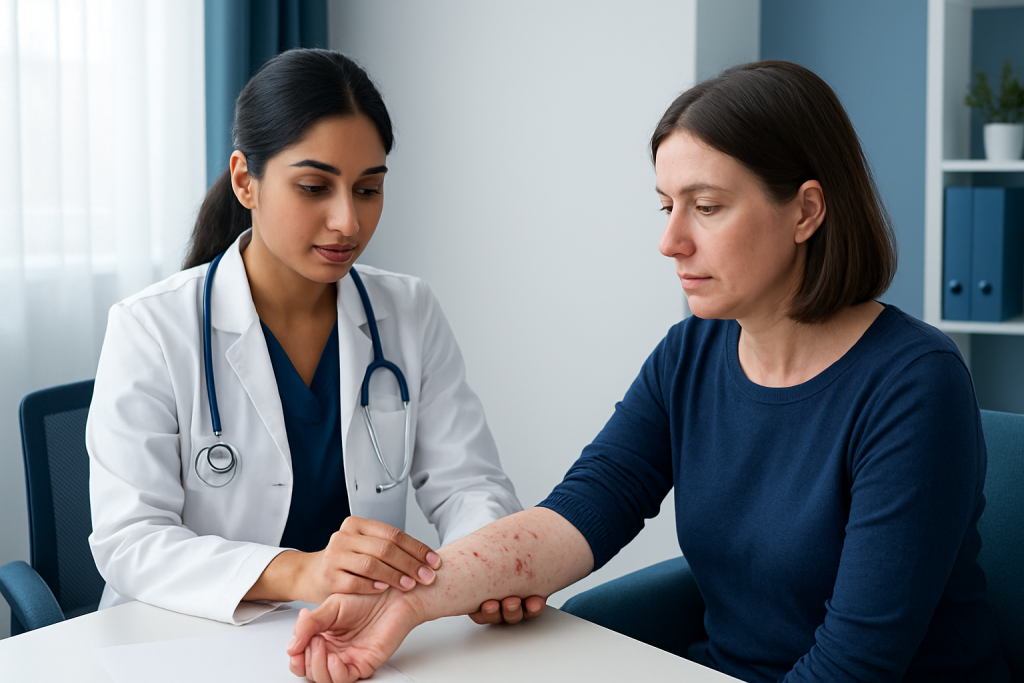
Purpura develops when bleeding occurs from tiny blood vessels into the skin. One broad category is non-thrombocytopenic purpura, which means platelet counts are normal but blood vessels may be fragile or inflamed. This can happen with aging skin, sun damage, minor trauma, certain infections, steroid use, vitamin deficiencies, or blood vessel inflammation called vasculitis. In some people, a doctor may evaluate for vasculitis if the skin findings are part of a wider inflammatory illness.
Another major category is thrombocytopenic purpura, where there are too few platelets to help the blood clot normally. Platelets may fall because of viral infections, immune conditions, bone marrow disorders, pregnancy-related issues, or medicines. A well-known example is immune thrombocytopenia, in which the immune system mistakenly destroys platelets. Less commonly, purpura can relate to more serious blood conditions that may overlap with evaluation for leukemia or other bone marrow disorders.
Medications are an important and often overlooked factor. Blood thinners, antiplatelet medicines, corticosteroids, and some antibiotics or other drugs can increase the likelihood of skin bleeding. Recent infections, chronic liver disease, kidney disease, autoimmune disorders, and a personal or family history of unusual bleeding can also raise risk.
In children, purpura may appear after a viral illness and can sometimes be self-limited, but it still warrants proper assessment. In older adults, fragile skin and medications are common contributors. In every age group, the full clinical picture matters more than the appearance of the spots alone.
How doctors diagnose purpura
Diagnosis begins with a detailed history and physical examination. A doctor will ask when the spots began, whether they are spreading, and whether there has been fever, infection, recent new medicines, easy bruising, gum bleeding, heavy periods, or other symptoms. It is also helpful to mention supplements, over-the-counter pain relievers, and any family history of bleeding disorders.
The examination looks at the size and distribution of the spots, whether they blanch, and whether there are signs of infection, liver disease, or autoimmune disease. Purpura on the lower legs may suggest one group of causes, while widespread petechiae involving the mouth can suggest another. The doctor may also check for enlarged lymph nodes, joint swelling, abdominal tenderness, or spleen enlargement.
Blood tests are often used to identify the cause. These may include a complete blood count to assess platelets, clotting studies, inflammatory markers, kidney and liver function tests, and tests for infection or autoimmune disease when indicated. In selected cases, skin biopsy or additional hematology work-up may be recommended. If the pattern suggests a platelet problem, a specialist may arrange more focused evaluation and, when appropriate, hematology care.
Because purpura can reflect conditions that affect more than the skin, diagnosis is not based on appearance alone. A careful work-up helps distinguish harmless bruising from disorders that need treatment.
Treatment options and what recovery depends on
There is no single treatment for purpura because management depends entirely on the underlying cause. Mild purpura from minor trauma or age-related skin fragility may improve with time and skin protection alone. If a medicine is contributing, a doctor may recommend adjusting or changing it, but medicines should never be stopped without medical advice.
When low platelets are the cause, treatment may involve observation or therapies aimed at reducing immune destruction or addressing another underlying illness. If purpura is related to infection, inflammation, or a blood-clotting problem, care focuses on that condition. People with vasculitic causes may need coordinated evaluation by specialists, and some may benefit from further diagnostic support such as comprehensive medical assessment.
Severe cases may require urgent treatment, especially if there is significant bleeding, very low platelets, or signs of serious infection or organ involvement. Hospital-based care can include close monitoring, transfusion support in selected situations, or treatment of the triggering disorder. For some patients, a multidisciplinary approach involving dermatology, internal medicine, hematology, or rheumatology is most appropriate.
Near the end of the care pathway, some people need follow-up rather than active treatment. Monitoring ensures that the spots are fading, blood counts are stable, and no new warning signs are appearing. Acibadem International’s multidisciplinary specialists and JCI-accredited hospitals diagnose and treat conditions linked to purpura for international patients when specialist assessment is needed.
Self-care, prevention, and daily precautions
Not all cases of purpura can be prevented, especially when they are linked to immune or blood disorders. Still, a few practical steps may reduce risk or help avoid worsening. Protecting the skin from trauma, reviewing medicines regularly with a clinician, and avoiding unnecessary use of drugs that increase bleeding risk can be helpful.
If a doctor has identified easy bruising or low platelets, patients may be advised to limit contact sports, use a soft toothbrush, and watch for bleeding from the gums or nose. Alcohol moderation and management of chronic liver disease can also matter because liver health affects clotting factors. Good nutrition supports overall vascular and blood health, especially if deficiency is contributing.
People should not self-diagnose new purple spots as harmless bruising if they are appearing often or without injury. Taking photos over a few days can help document whether the spots are spreading. It is also useful to keep a list of all medications and supplements for any medical visit.
Self-care should complement, not replace, medical evaluation. New, unexplained purpura deserves professional attention, particularly when symptoms are widespread or accompanied by bleeding or illness.
When to seek medical care
Medical advice is recommended for purpura that appears without a clear cause, keeps recurring, or involves many new spots. Evaluation is also important if purpura develops after starting a new medicine, during an infection, or together with fatigue, weight loss, abdominal pain, or joint swelling.
Prompt or urgent care is needed if purpura is accompanied by nosebleeds that do not stop, bleeding gums, blood in urine or stool, severe headache, confusion, shortness of breath, fever, fainting, or rapidly spreading spots. Infants, young children, older adults, and people with cancer treatment, immune suppression, or known blood disorders should be assessed without delay if new purpura appears.
In an emergency setting, doctors can quickly check platelet counts, clotting, and signs of infection or internal bleeding. Early assessment is especially important because some causes are straightforward and easily managed, while others require fast treatment to prevent complications.
Frequently asked questions
Is purpura the same as a rash?
Not exactly. Purpura is caused by bleeding under the skin, while many rashes come from inflammation or irritation on the skin surface. A key clue is that purpura often does not fade when pressed.
Can purpura be harmless?
Yes, some cases are mild and related to minor injury, aging skin, or temporary vessel fragility. However, unexplained or widespread purpura should still be evaluated because it can also signal platelet, clotting, immune, or infectious problems.
What is the difference between petechiae and purpura?
Petechiae are very small pinpoint areas of bleeding under the skin. Purpura is a broader term that includes larger purple or red spots caused by the same basic process. Both can appear together depending on the cause.
Does purpura always mean low platelets?
No. Some people have purpura even though platelet counts are normal, especially when the issue is blood vessel fragility, inflammation, or certain medications. Blood tests help determine whether platelets are involved.
How is purpura treated?
Treatment depends on the cause rather than the skin spots alone. Some people only need monitoring, while others may need medication changes, treatment for infection or inflammation, or specialist care for a blood disorder.
When should someone worry about purpura?
Purpura deserves prompt medical attention if it appears suddenly, spreads quickly, or occurs with fever, unusual bleeding, weakness, or severe illness. It is also important to seek care if there is no clear injury or if the person has a condition or medicine that affects clotting.
References
- National Heart, Lung, and Blood Institute
- American Academy of Dermatology
- MedlinePlus
- Merck Manual Professional Edition
- Cleveland Clinic
This article is for general information only and is not a substitute for professional medical advice. Please consult a qualified doctor about your individual situation.
Explore treatments in Turkey — costs, top hospitals & a free quote
JCI-accredited · board-certified surgeons · reply within 24h
Add us as a Preferred Source to see more of our trusted health content across Google Search, AI Overviews and Discover.