When Do Babies Start Talking? Causes, Explanations, and Next Steps

Many babies say first words near 12 months, but a range of normal exists. Understanding, gestures, eye contact, and response to sound matter as much as spoken words.
Key Takeaways
- Many babies say first words near 12 months, but a range of normal exists.
- Understanding, gestures, eye contact, and response to sound matter as much as spoken words.
- Speech delay can be linked to hearing problems, developmental differences, or limited language opportunities, but sometimes no serious cause is found.
- Early evaluation is important if a baby is not babbling, not responding to sounds, or is losing skills already gained.
- Parents can support language growth through talking, reading, singing, and responsive play.
Most babies begin to babble by about 6 months and say a first meaningful word around 12 months, but normal language development varies widely. Many late talkers catch up, while certain red flags suggest a child should be assessed for hearing, speech, or developmental concerns.
Overview: when do babies start talking?
Many parents wonder, when do babies start talking? In most cases, babies begin with cooing in early infancy, move into babbling around 4 to 6 months, and say a first meaningful word around 12 months. Some children talk earlier and some later, and a later start does not always mean there is a problem.
What matters is not only the age of the first word, but the whole pattern of communication. Babies usually show language development before they speak by turning toward voices, making eye contact, smiling socially, using gestures, and reacting to familiar words. A child who is not saying much but clearly understands language and communicates in other ways may simply be developing at a different pace.
At the same time, certain warning signs deserve medical review. These include little or no babbling, poor response to sound, loss of words or social skills, or delays in understanding simple language. Early assessment can help identify whether a child needs reassurance, hearing checks, speech support, or evaluation for another developmental issue.
Typical speech and language milestones by age
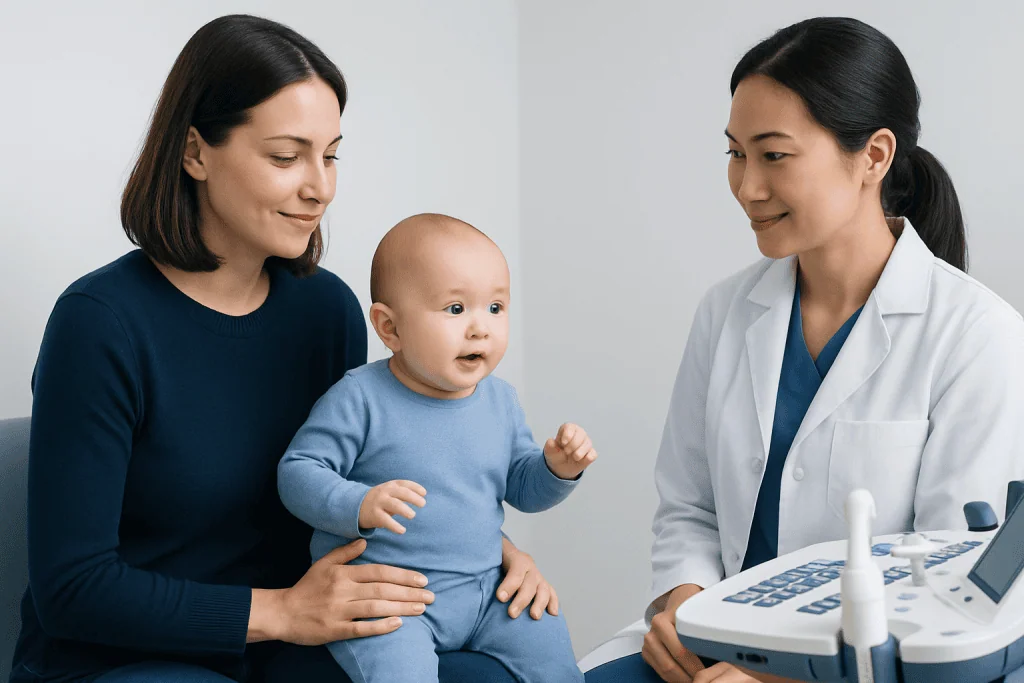
Speech develops in steps, and those steps begin long before true words appear. In the first few months, babies usually cry, coo, and make pleasure sounds. By around 4 to 6 months, many begin babbling with repeated sounds such as “ba,” “da,” or “ma.” Around 7 to 12 months, babbling often becomes more varied, and babies may copy tone patterns from the people around them.
Near the first birthday, many babies say one or two meaningful words such as “mama,” “dada,” or the name of a favorite object. By 15 to 18 months, some children use several words and can point to body parts or familiar objects when named. By about 2 years, many toddlers start combining two words, such as “more milk” or “mommy come.”
Receptive language, or what a child understands, often develops before expressive language, or what a child says. This means a baby may follow simple requests, look at a named object, or respond to their name before speaking clearly. Doctors pay close attention to both understanding and speaking because each gives useful clues about development.
- By 6 months: cooing, laughter, and babbling may begin
- By 9 months: varied babbling and response to familiar voices
- By 12 months: first meaningful word may appear
- By 18 months: several words and simple understanding
- By 24 months: two-word phrases often begin
Why some babies talk later than others
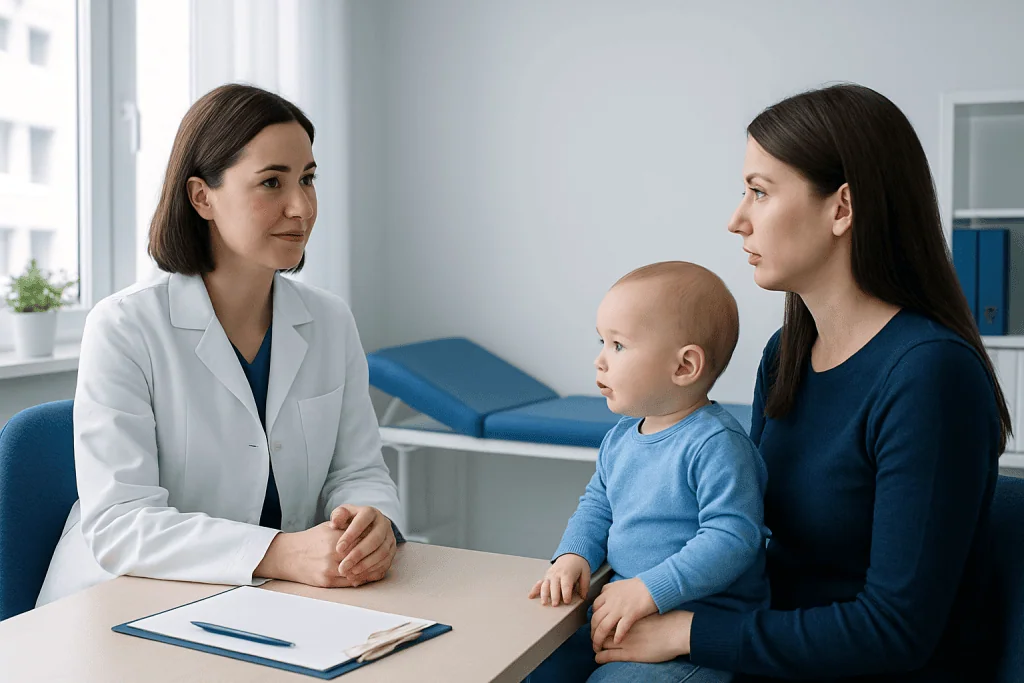
There is no single age at which every baby must start talking. Language development is shaped by biology, hearing, temperament, and the child’s environment. Some babies are naturally quieter but still understand well and communicate through gestures, facial expressions, and shared attention. Others may focus first on movement skills, such as crawling and walking, before speech becomes more noticeable.
Family history can also play a role. Some children have relatives who were late talkers and later developed normal speech. In bilingual or multilingual homes, children may divide words across languages, which can make spoken vocabulary seem smaller at first, though total language learning is often normal. Being exposed to more than one language does not cause a speech disorder.
Still, delayed speech can sometimes be related to an underlying medical or developmental issue. Hearing loss, frequent ear infections with reduced hearing, oral-motor difficulties, autism spectrum disorder, global developmental delay, and some neurological conditions can affect speech and language progress. A healthcare professional considers the whole child rather than focusing on one milestone alone.
Red flags that may need medical review
Although many variations are harmless, some signs suggest a baby or toddler should be evaluated sooner rather than later. One important concern is hearing. A baby who does not startle to loud sounds, does not turn toward voices, or seems not to recognize familiar sounds may need a hearing assessment. Even mild hearing problems can interfere with early speech development.
Another red flag is limited social communication. If a child rarely makes eye contact, does not point or wave, does not respond to their name, or seems unusually disconnected from people, a doctor may look more broadly at communication and developmental skills. These signs do not diagnose a condition on their own, but they do deserve attention.
Loss of skills is especially important. A child who previously babbled, used gestures, or said words and then stopped should be assessed promptly. Depending on the child’s pattern of symptoms, doctors may consider evaluations related to autism spectrum disorder or other developmental conditions. In some cases, a hearing problem, neurological issue, or regression in communication skills needs further investigation.
- No babbling by about 9 months
- No response to name or familiar sounds by around 9 to 12 months
- No meaningful words by about 15 to 18 months
- No gestures such as pointing or waving by around 12 months
- Loss of speech, babbling, or social skills at any age
How doctors evaluate delayed talking
When parents ask why a baby is not talking yet, doctors usually begin with a detailed developmental history. They ask about pregnancy and birth, feeding, hearing concerns, family history, illnesses, and whether the child understands language, points, imitates sounds, or uses gestures. They also ask what languages are spoken at home and how the child communicates during daily routines.
A physical examination may include the ears, mouth, tongue movement, and general neurological development. Because hearing is so important for speech, many children with delayed talking are referred for formal hearing testing. This step matters even when a child seems to hear some sounds at home, because partial hearing loss can be easy to miss.
Depending on the findings, the child may also be assessed by a speech-language pathologist or developmental pediatric specialist. If concerns involve hearing or frequent ear problems, an ear specialist may be involved, sometimes with ear surgery or other treatment when medically indicated. If broader developmental concerns are present, clinicians may recommend screening for developmental delay and may suggest therapies that support communication, play, and learning.
Treatment and early support options
Treatment depends on the cause. Some children only need monitoring and practical support at home, especially if they are progressing steadily in understanding, play, and social interaction. Others benefit from early speech and language therapy, which helps build communication through play, gestures, sounds, words, and parent coaching.
If hearing loss is affecting language development, treatment focuses on improving access to sound and communication. This may involve medical treatment of ear conditions, hearing devices, or specialist follow-up. In selected cases of significant hearing impairment, families may discuss options such as cochlear implant care with a specialist team.
When delayed talking is part of a broader developmental picture, support may include developmental therapy, occupational therapy, and family guidance in addition to speech therapy. The main goal is early, individualized support rather than waiting to see if the problem becomes more obvious. Near the end of the evaluation process, some families also seek multidisciplinary care; Acibadem International’s specialists in JCI-accredited hospitals evaluate and treat communication and developmental concerns for international patients.
How parents can encourage language at home
Simple everyday interactions are one of the best ways to support speech and language growth. Talking to a baby during feeding, bathing, dressing, and play helps the child connect words with actions and objects. Parents do not need special teaching methods; warm, responsive conversation is often most helpful.
Reading aloud, singing, naming objects, and pausing to let the baby respond all encourage communication. Following the child’s lead is useful: if the baby looks at a ball, a parent can say “ball,” “red ball,” or “roll the ball.” Repetition helps, and gestures such as pointing can strengthen understanding before words become clear.
Screen time should not replace face-to-face interaction, especially in infants and young toddlers. Children learn language best through real human exchange, where they can watch facial expressions, hear natural speech, and take turns. If there are concerns about speech, parents should not feel they caused the delay; the right next step is simply to discuss it with a qualified clinician.
When to seek medical care
Parents should seek medical advice if they are worried about hearing, social interaction, or a lack of progress in communication. It is reasonable to raise concerns at any well-child visit, even if the baby is still young. Early reassurance can be helpful, and early intervention can make a meaningful difference when support is needed.
More urgent assessment is sensible if a child loses previously gained speech or social skills, does not respond to sound, or has other developmental concerns such as poor eye contact or difficulty interacting. If a doctor suspects ear disease, hearing loss, or another ENT problem, referral for specialist evaluation may be advised, sometimes including pediatric ENT care.
Parents do not need to wait for a severe delay before asking for help. A timely conversation with a pediatrician can clarify whether a child is within a broad range of normal, needs hearing testing, or would benefit from early speech-language support. In many cases, a careful assessment provides both practical next steps and peace of mind.
Frequently asked questions
Is it normal for a baby not to talk at 12 months?
Yes, some babies do not say a clear first word exactly at 12 months and still develop normally. Doctors look at the full picture, including babbling, gestures, eye contact, understanding of simple words, and response to sound.
What is the difference between babbling and talking?
Babbling is the stage when babies make repeated speech-like sounds such as “ba-ba” or “da-da” without consistent meaning. Talking means using a sound or word purposefully and repeatedly to refer to a person, object, or need.
Can bilingual homes cause speech delay?
Growing up with more than one language does not cause a speech disorder. A bilingual child may spread words across two languages, so each language may seem smaller at first, but total language development can still be normal.
Should parents wait and see if a late talker catches up?
Some late talkers do catch up, but it is still wise to discuss concerns with a pediatrician. Early evaluation can identify hearing problems or developmental differences and can provide guidance on whether monitoring or therapy is best.
What tests might a doctor order for a baby who is not talking?
The most common first step is a hearing assessment, because hearing problems can affect speech development. The doctor may also recommend developmental screening and evaluation by a speech-language pathologist, depending on the child’s symptoms.
Can ear infections affect speech development?
They can, especially if repeated infections or middle-ear fluid reduce hearing over time. If hearing is muffled during a critical period for language learning, speech development may slow, so medical review is important.
References
- American Academy of Pediatrics
- Centers for Disease Control and Prevention
- National Institute on Deafness and Other Communication Disorders
- American Speech-Language-Hearing Association
- World Health Organization
This article is for general information only and is not a substitute for professional medical advice. Please consult a qualified doctor about your individual situation.
Explore treatments in Turkey — costs, top hospitals & a free quote
JCI-accredited · board-certified surgeons · reply within 24h
Add us as a Preferred Source to see more of our trusted health content across Google Search, AI Overviews and Discover.