Cognitive Behavioral Therapy: Diagnosis, Outlook, and Modern Treatment Approaches

Cognitive behavioral therapy focuses on the connection between thoughts, feelings, and behaviors. It is commonly used for anxiety, depression, stress-related conditions, sleep problems, and some chronic health challenges.
Key Takeaways
- Cognitive behavioral therapy focuses on the connection between thoughts, feelings, and behaviors.
- It is commonly used for anxiety, depression, stress-related conditions, sleep problems, and some chronic health challenges.
- CBT is structured, goal-oriented, and usually time-limited, with skills practiced between sessions.
- Diagnosis does not involve a test for CBT itself; a clinician first evaluates symptoms and goals to decide whether CBT is appropriate.
- Many people benefit from CBT in person, online, individually, in groups, or as part of a broader treatment plan.
Cognitive behavioral therapy is a practical, evidence-based form of psychotherapy that helps people recognize and change thought patterns and behaviors that contribute to emotional distress. It is used for a wide range of mental health concerns and can be effective on its own or alongside medication and other treatments.
Overview
Cognitive behavioral therapy is a structured form of talk therapy that helps people identify unhelpful thinking patterns and behaviors, then replace them with more balanced and useful responses. In practical terms, it teaches skills for managing distress, solving problems, and responding differently to difficult situations. Because it is focused and measurable, many people find it easier to understand what they are working on from session to session.
CBT is not a single script used in the same way for everyone. A therapist adapts it to the person’s symptoms, daily life, goals, and health background. It may be used for anxiety, depression, panic attacks, obsessive thoughts, phobias, insomnia, and stress-related difficulties, and it can also support people living with chronic medical conditions who are coping with pain, fatigue, or health-related worry.
One reason cognitive behavioral therapy is widely used is that it aims to build lasting self-management skills. Sessions often include learning how thoughts influence emotions, noticing patterns such as avoidance or self-criticism, and practicing healthier ways to respond. Over time, these skills can help reduce symptoms and improve functioning at work, school, home, and in relationships.
How Cognitive Behavioral Therapy Works
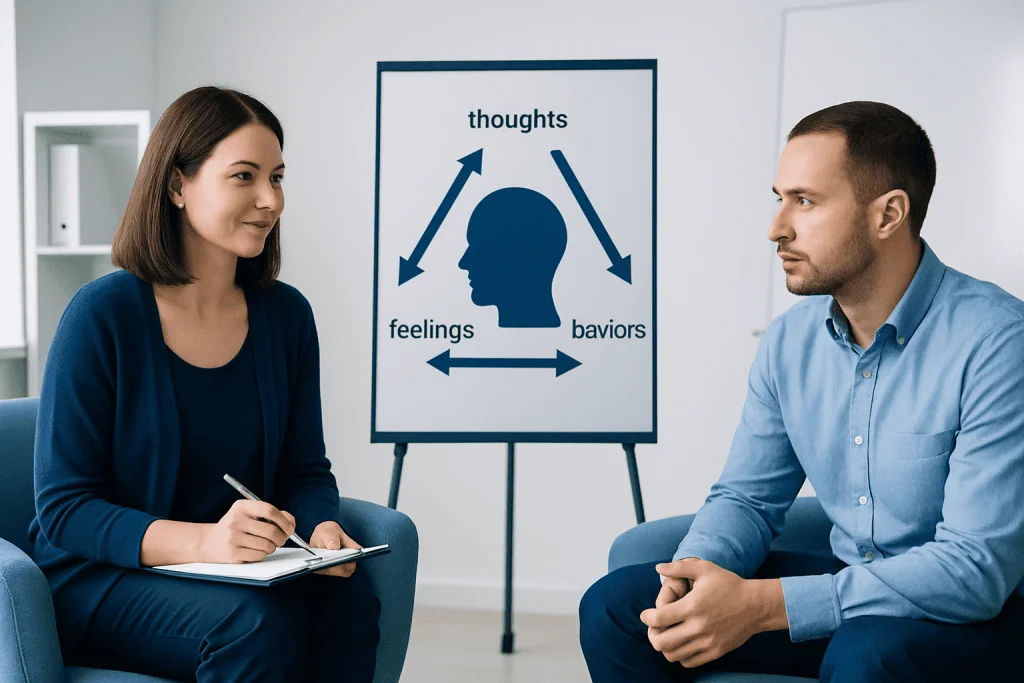
The core idea behind CBT is that thoughts, feelings, physical sensations, and behaviors affect one another. For example, a person who automatically expects the worst may feel more anxious and begin avoiding situations that seem threatening. Avoidance can bring short-term relief, but it often keeps the fear going. CBT helps break this cycle by making patterns visible and testing more helpful alternatives.
During therapy, a clinician may ask the person to track situations that trigger distress, the thoughts that appeared in those moments, and the actions that followed. Together, they look for patterns such as catastrophizing, all-or-nothing thinking, overgeneralizing, or assuming what others think. The goal is not forced positivity; it is to build a more accurate, balanced, and workable perspective.
CBT also includes behavioral strategies. Depending on the issue, these may involve gradual exposure to feared situations, activity scheduling for low mood, sleep-focused routines, relaxation techniques, or problem-solving exercises. Homework between sessions is common because practice helps new skills become part of everyday life.
- Identifying automatic thoughts
- Challenging unhelpful beliefs with evidence
- Changing avoidance and safety behaviors
- Building coping skills and routines
- Monitoring progress with clear goals
Who May Benefit and Common Symptoms Addressed

Cognitive behavioral therapy can be helpful for children, teenagers, adults, and older adults, although the style and techniques are adjusted by age and need. It is commonly recommended when symptoms begin affecting daily functioning, sleep, concentration, work performance, school attendance, relationships, or general quality of life. Some people seek CBT for a specific diagnosis, while others use it to address a cluster of symptoms that has not yet been fully defined.
Symptoms commonly addressed through CBT include excessive worry, persistent sadness, loss of interest, panic symptoms, irritability, racing thoughts, social fear, intrusive thoughts, trouble sleeping, avoidance behaviors, and poor stress tolerance. It may also support people managing grief, adjustment difficulties, health anxiety, or emotional responses to chronic illness. In some cases, CBT is part of care for depression or anxiety disorders when a clinician believes structured psychotherapy is appropriate.
CBT is not limited to severe mental illness. Many people use it for milder but still disruptive concerns such as perfectionism, low self-esteem, procrastination, or recurring negative thought cycles. It can also help individuals who understand their problem intellectually but struggle to change daily habits or emotional reactions on their own.
Assessment and Diagnosis Before Starting CBT
There is no laboratory test or scan that determines whether someone should have cognitive behavioral therapy. Instead, a qualified mental health professional or physician evaluates symptoms, medical history, emotional wellbeing, current stressors, and treatment goals. This process helps clarify whether CBT is likely to help and whether other conditions should also be considered.
Assessment may include a clinical interview, questionnaires about mood, anxiety, sleep, trauma, attention, or functioning, and a discussion of personal history. A clinician may also ask about substance use, medications, physical health conditions, and safety concerns such as self-harm thoughts. This broader view is important because emotional symptoms can overlap with medical problems, medication side effects, or other psychiatric conditions.
Sometimes CBT is used as a first-line treatment. In other cases, it is combined with medical care, lifestyle support, or psychiatric treatment. If a person has significant mood symptoms, a psychiatrist may help determine whether psychiatric evaluation and treatment should be part of the plan. A careful assessment also helps set realistic therapy goals, such as reducing panic attacks, improving sleep, returning to social activities, or managing depressive thinking more effectively.
Modern Treatment Approaches and What Sessions Involve
Modern cognitive behavioral therapy remains grounded in the same principles, but delivery has become more flexible and personalized. CBT may be offered in person, through secure telehealth platforms, individually, in groups, or in guided digital formats. These approaches can improve access, especially for people balancing work, school, caregiving, or travel.
A typical course of CBT is structured and goal-focused. Early sessions often involve assessment, education about symptoms, and identifying patterns. Later sessions concentrate on practical strategies, reviewing progress, and preventing relapse. Many therapists use worksheets, symptom logs, or digital tools to support skill-building between visits. The number of sessions varies depending on the condition, symptom severity, and whether CBT is being combined with other treatments.
CBT is often integrated with broader mental health care. For some individuals, combining psychotherapy with clinical psychology support or medication management may be the most appropriate approach. Specific CBT-based methods may also be tailored for panic disorder, insomnia, obsessive-compulsive symptoms, trauma-related difficulties, or chronic pain. This makes treatment more precise than a one-size-fits-all model.
For patients whose symptoms are linked to or worsened by sleep disruption, stress regulation, or neurological concerns, clinicians may work across specialties. In selected cases, further support from neurology evaluation may help rule out conditions that can mimic or complicate mental health symptoms. Near the end of treatment, many people develop a maintenance plan so they can continue using CBT tools independently.
Outlook, Benefits, and Possible Limits
The outlook with cognitive behavioral therapy is often positive, especially when the treatment plan matches the person’s needs and there is regular participation. Many people learn skills that help them understand triggers, respond more calmly, and regain a sense of control. Improvement may involve fewer symptoms, but it can also mean better sleep, stronger daily routines, less avoidance, improved work or school function, and healthier relationships.
CBT does not usually aim to erase all distress from life. Instead, it teaches strategies for responding to stress and difficult emotions more effectively. Progress is often gradual rather than immediate, and practice outside sessions matters. Some people notice early gains, while others need more time before changes become meaningful in daily life.
Like any treatment, CBT has limits. It may not be enough on its own for everyone, particularly if symptoms are severe, long-standing, or linked with major trauma, substance use, psychosis, or complex medical issues. In these situations, clinicians may recommend a broader care plan that includes psychiatric support, family involvement, or other therapies. Acibadem International’s multidisciplinary specialists and JCI-accredited hospitals diagnose and treat mental health conditions for international patients when coordinated evaluation and treatment are needed.
Self-care, Support Between Sessions, and When to Seek Medical Care
Self-care can strengthen the effects of cognitive behavioral therapy, but it does not replace professional treatment when symptoms are significant. Helpful habits include regular sleep and wake times, physical activity suited to the person’s health, balanced meals, reduced alcohol or recreational drug use, and scheduled time for social connection or enjoyable activities. Keeping a thought diary or practicing a coping exercise between sessions can also make therapy more effective.
Support from family or trusted friends may help, especially when they understand the person’s goals. Loved ones can encourage healthy routines, gradual exposure to avoided situations, and follow-through with appointments without becoming controlling. It is also helpful to recognize that setbacks happen; a difficult week does not mean therapy has failed.
Medical care should be sought if symptoms are persistent, worsening, or interfering with daily life, or if sleep, appetite, concentration, school, work, or relationships are clearly affected. Prompt professional help is especially important if a person has panic attacks, severe depression, extreme anxiety, substance misuse, or symptoms after a traumatic event. Emergency help is needed right away if there are thoughts of self-harm, suicide, or harming others, or if someone is unable to care for themselves safely.
Frequently asked questions
What is cognitive behavioral therapy in simple terms?
Cognitive behavioral therapy is a type of talk therapy that helps a person notice unhelpful thoughts and behaviors and replace them with healthier ones. It is practical, structured, and focused on building skills that can be used in everyday life.
What conditions can cognitive behavioral therapy help treat?
CBT is commonly used for anxiety, depression, panic disorder, phobias, insomnia, stress-related problems, and some obsessive or trauma-related symptoms. It may also help people cope better with chronic pain, long-term illness, and health anxiety as part of a broader care plan.
How long does cognitive behavioral therapy usually take?
The length of CBT varies depending on the person’s symptoms, goals, and whether treatment is combined with other care. Some people have a brief course over several weeks, while others benefit from a longer period of structured sessions and follow-up.
Is cognitive behavioral therapy the same as counseling?
CBT is a form of counseling or psychotherapy, but it has a specific structure and set of methods. It is usually more goal-oriented and skills-based than general supportive counseling, with active exercises inside and outside sessions.
Can cognitive behavioral therapy work without medication?
Yes, many people benefit from CBT without taking medication, especially when symptoms are mild to moderate or when the issue is well suited to structured psychotherapy. However, some people do best with a combination of therapy and medication, depending on the diagnosis and symptom severity.
Does cognitive behavioral therapy work online?
For many people, CBT can be effective when delivered through secure online sessions with a qualified clinician. Virtual care may improve access and convenience, although in-person treatment may still be preferred in some cases based on symptoms, safety, or personal comfort.
References
- National Institute of Mental Health
- American Psychological Association
- National Health Service
- Mayo Clinic
- World Health Organization
This article is for general information only and is not a substitute for professional medical advice. Please consult a qualified doctor about your individual situation.
Explore treatments in Turkey — costs, top hospitals & a free quote
JCI-accredited · board-certified surgeons · reply within 24h
Add us as a Preferred Source to see more of our trusted health content across Google Search, AI Overviews and Discover.