

Baby Teeth Chart: An Evidence-Based Guide for Patients

Most children get 20 baby teeth, usually starting around 6 months of age and finishing by about 2.5 to 3 years. Teeth often erupt in a predictable order, but the exact timing can vary by several months and still be normal.
Key Takeaways
- Most children get 20 baby teeth, usually starting around 6 months of age and finishing by about 2.5 to 3 years.
- Teeth often erupt in a predictable order, but the exact timing can vary by several months and still be normal.
- A baby teeth chart can help parents monitor development, teething symptoms, and when permanent teeth may begin replacing primary teeth.
- Pain, fever, facial swelling, or feeding difficulties are not typical teething signs and may need medical or dental evaluation.
- Regular oral care should begin before the first tooth appears and continue throughout early childhood.
A baby teeth chart outlines the usual order and age range for baby teeth to appear and later fall out. It is a helpful guide for families, but normal dental development varies, so a child may still be healthy even if teeth arrive a little earlier or later than average.
Overview: What a Baby Teeth Chart Shows
A baby teeth chart is a timeline that shows the usual order and age range for primary teeth to come in and later fall out. Most children develop 20 baby teeth in total: 10 in the upper jaw and 10 in the lower jaw. These teeth support chewing, speech development, facial growth, and the spacing needed for permanent teeth.
In most babies, the first teeth appear at about 6 months of age, although some develop them earlier and others later. The lower central incisors often come first, followed by the upper front teeth. By around age 2.5 to 3 years, most children have a full set of primary teeth.
A chart is best used as a guide rather than a strict schedule. A few months of difference in eruption or tooth loss is often still within the normal range. If a child seems comfortable, is growing well, and has no signs of oral disease, variation alone is not usually a cause for concern.
Because baby teeth affect nutrition, comfort, and future dental alignment, it is useful for parents to understand what the chart means and when to ask for professional advice. If there are concerns about tooth structure, crowding, or delayed eruption, a dentist may evaluate for issues such as dental malocclusion or other developmental factors.
Baby Teeth Chart: Typical Eruption and Shedding Timeline
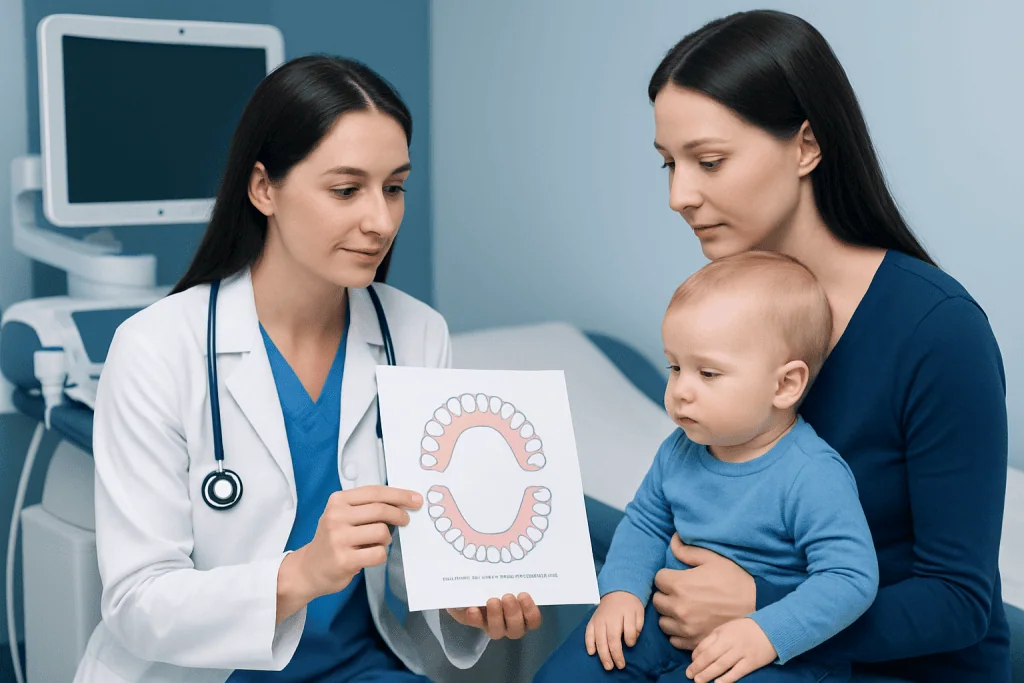
The usual pattern of tooth eruption begins with the front incisors and ends with the second molars. While every child is different, the following age ranges are commonly used in pediatric dentistry:
- Lower central incisors: about 6-10 months
- Upper central incisors: about 8-12 months
- Upper lateral incisors: about 9-13 months
- Lower lateral incisors: about 10-16 months
- First molars: about 13-19 months
- Canines: about 16-23 months
- Second molars: about 23-33 months
Baby teeth also fall out in a general sequence that often mirrors eruption. Many children begin losing primary teeth around age 6. Lower and upper central incisors commonly loosen first, and the process continues gradually until about age 12, when the second primary molars are usually replaced.
The chart can help parents understand what stage their child may be in, but it does not predict the exact day a tooth will erupt or shed. Some children teethe in clusters, with several teeth appearing over a short time, while others progress more slowly. Both patterns can be normal.
Permanent teeth begin developing below the gums long before they are visible. For some children, eruption timing may be influenced by inherited traits, birth history, nutrition, or local factors in the mouth. If there is concern about how the teeth are forming or emerging, a dental exam and, at times, dental X-ray evaluation may help clarify the situation.
Common Teething Signs and What Is Not Typical

Teething can cause mild and temporary discomfort. Common signs include drooling, gum rubbing, a desire to chew on objects, mild irritability, and brief changes in sleep or feeding. The gums may look slightly swollen where a tooth is about to emerge.
Some babies seem to have few symptoms, while others are more sensitive. Symptoms usually come and go as each tooth erupts. Gentle reassurance, a clean teething ring, or cool washcloths may provide comfort.
It is important not to attribute every symptom to teething. High fever, persistent diarrhea, vomiting, rash over the body, severe lethargy, or marked refusal to drink are not typical effects of tooth eruption. These symptoms may point to an unrelated illness and deserve medical assessment.
If a child develops persistent bad breath, gum bleeding, mouth sores, or obvious pain when chewing, a dentist should check for other causes such as infection, trauma, or early tooth decay. In some cases, symptoms can overlap with other oral conditions, including gum disease, although this is less common in very young children than in adults.
Why Timing Can Vary: Causes and Influences
Baby teeth do not erupt on the same day for every child because dental development is influenced by both genetics and environment. A family pattern of early or late teething is common. Children born prematurely may also show a different timeline, especially in the first years of life.
Nutrition and general health can also play a role. Adequate intake of key nutrients supports bone and tooth development, while certain medical conditions may affect growth and eruption patterns. However, a slightly delayed first tooth does not automatically mean there is a health problem.
Local issues in the mouth may sometimes delay or alter eruption. These can include crowding, lack of space, an unusually shaped tooth, or, less commonly, a tooth that is blocked from coming through the gum. Dental trauma to the mouth may also affect later eruption.
When delays are significant or one side of the mouth appears very different from the other, professionals may investigate further. Depending on the findings, care may involve monitoring, preventive dental treatment, or pediatric dental and orthodontic planning, including orthodontic assessment when alignment concerns are present.
How Dentists Assess Baby Teeth Development
Dental assessment begins with a history and clinical examination. The dentist looks at the number of erupted teeth, gum health, spacing, bite pattern, and any signs of enamel defects or decay. Parents may also be asked about feeding habits, use of pacifiers, thumb sucking, and oral hygiene routines.
In a child with delayed eruption, early tooth loss, or asymmetry, the dentist will consider whether the pattern still fits normal variation. Growth, medical history, and developmental milestones help provide context. In many cases, reassurance and follow-up are all that is needed.
If there is concern about impacted teeth, absent teeth, crowding, or injury, imaging may be recommended. Dental imaging can show whether tooth buds are present, how roots are developing, and whether a permanent tooth is affecting a baby tooth’s position.
Early evaluation is also useful for prevention. Monitoring the bite and spacing of baby teeth can identify issues before they become more complex. A pediatric dentist may advise preventive fluoride measures, dietary changes, or treatment if there are concerns about early decay or structural problems.
Oral Care, Prevention, and Self-Care at Home
Oral care should begin before the first tooth erupts. Parents can gently wipe a baby’s gums with a soft, clean cloth once or twice a day. After the first tooth appears, brushing should start with a small, soft toothbrush and an age-appropriate amount of fluoride toothpaste, following local dental guidance.
Healthy feeding habits support healthy teeth. Frequent exposure to sugary drinks, juice, sweetened milk, or prolonged bedtime bottle use can increase the risk of tooth decay. Water is usually the preferred drink between meals once the child is old enough, and snacks with less added sugar are gentler on teeth.
Regular dental visits are important even when no problem is obvious. Early checkups help families learn proper cleaning, fluoride use, and ways to reduce cavities. If decay is found, prompt dental fillings or other care may protect the tooth and reduce pain or infection risk.
Comfort measures for teething should be simple and safe. A chilled teething ring, gentle gum massage, and cuddling are often enough. Parents should avoid unsafe numbing products unless specifically recommended by a qualified clinician, and they should ask a healthcare professional before using any medicine for teething pain.
When to Seek Medical or Dental Care
Parents should consider medical or dental advice if no teeth have appeared by around 18 months, if teeth seem to erupt in a very unusual pattern, or if a child loses baby teeth much earlier than expected after trauma-free loosening. Evaluation is also sensible when a child has significant pain, difficulty eating, or swelling of the gums or face.
Urgent assessment is important if there is fever with mouth swelling, pus, severe bleeding, facial injury, or signs of dehydration from poor drinking. A chipped or knocked-out tooth should be examined promptly, even if the child seems calm afterward.
Persistent white, brown, or black spots on the teeth may indicate decay or enamel problems and should not be ignored. Likewise, chronic mouth breathing, loud snoring, or jaw concerns may affect oral development and deserve discussion with a clinician.
For families seeking coordinated evaluation, Acibadem International’s multidisciplinary specialists and JCI-accredited hospitals provide diagnosis and treatment for children and adults with dental and oral health concerns, including preventive and developmental assessment when needed.
Frequently asked questions
When do babies usually get their first tooth?
Many babies get their first tooth at around 6 months of age. However, some develop a tooth earlier and others later, and both can be normal if the child is otherwise healthy.
How many baby teeth should a child have?
A full set of baby teeth includes 20 teeth. These usually finish erupting by about 2.5 to 3 years of age.
Is it normal if my child follows the baby teeth chart a little late?
Yes. Tooth eruption often varies by several months, and a mild delay is commonly still normal. If no teeth have appeared by around 18 months, or if there are other developmental concerns, a dentist or pediatrician can assess further.
Can teething cause fever or diarrhea?
Teething may cause mild fussiness, drooling, and gum discomfort, but it does not usually cause high fever, persistent diarrhea, or vomiting. If these symptoms occur, they should not automatically be blamed on teething and may need medical review.
When do baby teeth start falling out?
Most children begin losing baby teeth at about age 6. The process usually continues gradually until around age 12, although the timing can vary.
Why are baby teeth important if they are going to fall out?
Baby teeth help children chew properly, speak clearly, and maintain space for permanent teeth. They also support normal jaw and facial development, so keeping them healthy matters.
References
- American Academy of Pediatric Dentistry
- American Dental Association
- Centers for Disease Control and Prevention
- National Institute of Dental and Craniofacial Research
- Mayo Clinic
This article is for general information only and is not a substitute for professional medical advice. Please consult a qualified doctor about your individual situation.
Explore treatments in Turkey — costs, top hospitals & a free quote
JCI-accredited · board-certified surgeons · reply within 24h
Add us as a Preferred Source to see more of our trusted health content across Google Search, AI Overviews and Discover.

More from the Health Library



Related Specialists

Dt. Elif Ceren Güzelel
Oral & Dental Health
Prof. Dr. Veli Yalçın
Urology
Prof. Dr. Vildan Ertekin
Pediatrics
Dr. Mustafa Serkan Vurucu
Emergency Service