Abductor Muscle — Explained by Medical Evidence, Not Myths

Abductor muscles move the arm, leg, thumb, or fingers away from the center of the body. The hip abductors are especially important for walking, balance, and pelvic stability.
Key Takeaways
- Abductor muscles move the arm, leg, thumb, or fingers away from the center of the body.
- The hip abductors are especially important for walking, balance, and pelvic stability.
- Pain or weakness in an abductor muscle may be caused by strain, tendinopathy, bursitis, nerve problems, or arthritis.
- Diagnosis usually relies on a physical examination and, when needed, imaging such as ultrasound or MRI.
- Many cases improve with rest, activity changes, targeted exercise, and physical therapy.
- Persistent pain, limping, sudden weakness, or symptoms after a fall should be assessed by a doctor.
An abductor muscle is any muscle that moves a body part away from the body's midline, such as lifting the leg out to the side or raising the arm sideways. When people talk about “abductor muscle pain,” they most often mean problems affecting the hip or shoulder abductors, usually from overuse, strain, tendon irritation, or joint-related conditions.
Overview: what an abductor muscle does
An abductor muscle is a muscle that moves a limb or body part away from the body’s midline. In simple terms, it helps create “sideways” movement. For example, the muscles that lift the arm out to the side and the muscles that move the leg away from the other leg are abductors. This is a normal, essential part of everyday movement rather than a special or rare muscle group.
Several parts of the body have abductors. Important examples include the hip abductors, such as the gluteus medius and gluteus minimus; the shoulder abductors, especially the deltoid and supraspinatus; and smaller abductors in the hand and foot. These muscles work together with tendons, bones, joints, and nerves, so pain in the “abductor muscle” area is not always caused by the muscle itself.
The hip abductors deserve special attention because they help keep the pelvis level during walking, climbing stairs, and standing on one leg. If they are weak or painful, a person may limp, feel unsteady, or notice discomfort on the outer side of the hip. Shoulder abductors are also important because they help position the arm for reaching, lifting, and many daily tasks.
Understanding the abductor muscle in this evidence-based way helps separate common facts from myths. These muscles do not need extreme training routines or universal stretching programs. What matters most is identifying the actual cause of pain or weakness and choosing treatment based on anatomy, activity level, and the person’s symptoms.
Where abductor muscles are found in the body
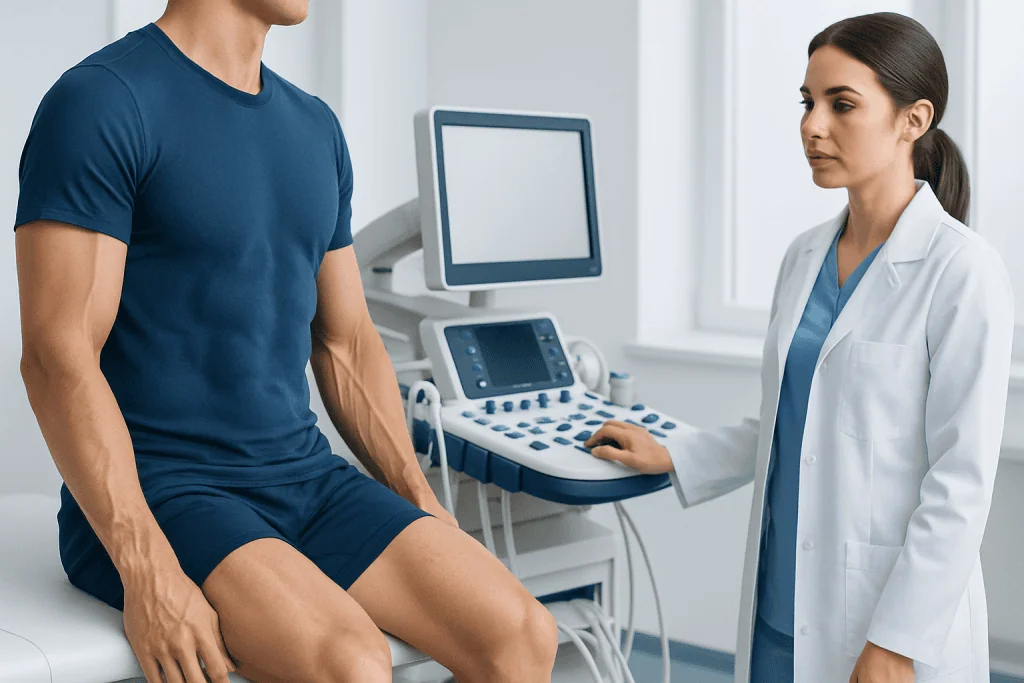
The term “abductor muscle” does not refer to one single muscle. It is a functional label used in anatomy. Any muscle whose main action is abduction can be called an abductor. This is why the same term may be used when discussing the hip, shoulder, hand, thumb, or even the toes.
At the hip, the main abductors are the gluteus medius, gluteus minimus, and tensor fasciae latae. They stabilize the pelvis when one foot is off the ground. If these muscles or their tendons are irritated, a person may feel pain over the outer hip, especially when walking, running, or lying on that side. Some people with outer hip pain are eventually found to have hip bursitis, tendon irritation, or both.
At the shoulder, abduction begins with the supraspinatus and continues mainly with the deltoid. These muscles let the arm rise out to the side. If abduction is painful or weak, the cause may involve the rotator cuff, shoulder impingement, arthritis, or inflammation. In some cases, symptoms overlap with conditions such as frozen shoulder, which can limit movement in more than one direction.
Smaller abductor muscles in the hand and foot assist fine motor control, grip adjustment, balance, and weight distribution. Although these muscles are less often discussed, they can also be affected by overuse, footwear issues, nerve compression, or inflammatory conditions.
Symptoms linked to abductor muscle problems

Symptoms vary depending on which abductor muscle is involved. At the hip, common complaints include pain on the outer side of the hip, tenderness when pressing the area, discomfort when standing on one leg, limping, and pain when walking uphill or climbing stairs. At the shoulder, symptoms often include pain when lifting the arm to the side, weakness during overhead activity, and discomfort at night when lying on the affected side.
Some people describe a deep ache, while others notice a sharp pain during a specific movement. Muscle-related symptoms may include tightness, cramping, fatigue, or a feeling that the area is “not activating” properly. Tendon-related symptoms tend to become worse with repeated activity and may improve temporarily with rest. Joint or bursa problems can also mimic muscle pain.
Weakness is an important symptom because it may point to more than simple soreness. Hip abductor weakness can cause the pelvis to drop on one side during walking. Shoulder abductor weakness can make it difficult to reach a shelf, put on clothing, or carry objects safely. Weakness may come from pain, but it can also result from tendon tears, nerve conditions, or advanced joint disease.
Not all discomfort near an abductor muscle comes from exercise. Pain may be referred from the lower back, sacroiliac region, or neck. Numbness, tingling, burning pain, or symptoms traveling down the arm or leg make nerve involvement more likely and should not be assumed to be a simple muscle strain.
Common causes and risk factors
The most common cause of abductor muscle pain is overuse or strain. This can happen after a sudden increase in exercise, repetitive side-stepping movements, a long walk or run, poor lifting mechanics, or a return to activity after inactivity. A strain affects muscle fibers, while tendinopathy affects the tendon that connects the muscle to bone. Both can cause pain and reduced function.
At the hip, outer hip pain is often related to gluteal tendinopathy, bursitis, or weakness around the pelvis. At the shoulder, pain during abduction may come from rotator cuff irritation, inflammation, or degenerative changes. In older adults, osteoarthritis may change how a joint moves and increase stress on surrounding muscles. In active people, training errors and inadequate recovery are frequent contributors.
Biomechanics also matter. Weak core muscles, poor balance, leg length differences, flat feet, reduced flexibility, and altered walking patterns can place extra load on the hip abductors. At the shoulder, posture, repetitive overhead use, and reduced scapular control can increase stress on the abductor muscles and tendons. People who spend long hours sitting may also develop weakness that becomes noticeable only when they become more active.
Risk factors include age-related tendon changes, previous injury, obesity, certain inflammatory conditions, and occupations or sports that involve repetitive lifting or side-to-side movement. In some cases, pain that seems muscular may actually be linked to joint damage or a tendon tear. Structural problems such as hip labral tear can also contribute to altered movement and secondary abductor overload.
How doctors diagnose abductor muscle pain or weakness
Diagnosis starts with a careful history. A doctor usually asks where the pain is felt, when it began, what movements trigger it, and whether there was a fall, sports injury, or change in training. Questions about numbness, tingling, fever, weight loss, joint stiffness, or back pain help identify whether the problem is muscular, tendinous, joint-related, or neurological.
The physical examination often includes checking posture, gait, range of motion, tenderness, strength, and balance. Specific movement tests can suggest whether the pain is coming from the hip abductors, shoulder abductors, nearby tendons, the bursa, or a joint. A doctor may also examine the lower back or neck if referred pain is suspected.
Imaging is not always needed for mild, recent symptoms. However, ultrasound, X-rays, or MRI may be recommended when pain is severe, persistent, recurrent, or associated with significant weakness. X-rays can show arthritis or bone problems. Ultrasound can assess tendons and bursae. MRI offers a more detailed view of muscles, tendons, cartilage, and other soft tissues.
If there is concern about nerve involvement, additional tests may be required. Blood tests may occasionally be used when infection, inflammatory disease, or another systemic condition is suspected. The goal is to identify the real source of symptoms rather than labeling all outer hip or shoulder pain as a simple “abductor strain.”
Treatment options and rehabilitation
Treatment depends on the cause. Many mild to moderate abductor muscle problems improve with a combination of relative rest, temporary activity changes, ice or heat as appropriate, and a gradual return to movement. Relative rest means reducing activities that trigger pain, not complete bed rest. Long periods of inactivity can allow muscles to weaken further.
Physical therapy is often central to recovery. A rehabilitation plan may include gentle range-of-motion work, progressive strengthening, balance training, and exercises that improve movement patterns. For hip abductor problems, therapy often focuses on pelvic stability and load management. For shoulder problems, it usually includes scapular control and rotator cuff strengthening. In appropriate cases, a doctor may recommend physical therapy and rehabilitation to restore function safely.
Medicines may be used for short-term symptom relief when suitable for the individual, but they do not correct the underlying mechanical issue. In selected cases, image-guided injections may be considered for bursitis or inflammation. If imaging shows a major tendon tear, significant structural joint damage, or symptoms that do not improve with conservative care, surgical treatment may be discussed. Depending on the site and diagnosis, this may involve orthopedic evaluation and, for certain shoulder conditions, shoulder surgery.
Recovery time varies. A simple strain may improve over weeks, while tendinopathy or chronic weakness can take longer and requires a more structured approach. Near the end of care, some international patients may seek multidisciplinary assessment; Acibadem International’s specialists in JCI-accredited hospitals diagnose and treat muscle, tendon, and joint problems with coordinated evaluation when needed.
Prevention, self-care, and when to seek medical care
Prevention focuses on steady conditioning rather than sudden effort. Helpful strategies include warming up before exercise, increasing activity gradually, strengthening the hips and core, improving shoulder mechanics, and allowing enough recovery between demanding sessions. Supportive footwear, posture awareness, and avoiding abrupt changes in training surface or intensity may also reduce strain on the hip abductors.
At home, self-care may include temporary reduction of painful activities, gentle stretching only if it does not worsen symptoms, and simple strengthening exercises recommended by a qualified professional. People with outer hip pain may benefit from avoiding prolonged lying on the painful side. Those with shoulder pain may need to reduce repetitive overhead tasks until the area calms down.
Medical care should be sought if pain is severe, follows a fall or sudden injury, or does not improve after a short period of sensible self-care. A doctor should also assess visible swelling, inability to bear weight, a new limp, major weakness, reduced range of motion, or pain that wakes a person regularly at night. Numbness, tingling, fever, or unexplained weight loss also deserve prompt evaluation.
Early assessment can help prevent a minor overload problem from becoming a longer-term tendon or joint issue. It is especially important for athletes, older adults, and anyone with recurrent symptoms. If pain repeatedly returns, a clinician can look for the reason, whether that is weakness, training error, arthritis, bursitis, or another underlying condition.
Frequently asked questions
What is an abductor muscle in simple terms?
An abductor muscle moves a body part away from the center of the body. For example, lifting the arm out to the side or moving the leg sideways uses abductor muscles.
Which abductor muscle is most often painful?
In everyday practice, the hip abductors are a common source of symptoms, especially on the outer side of the hip. Shoulder abductors are also frequently involved, particularly in people who do repetitive overhead activities.
Can abductor muscle pain go away on its own?
Mild pain from temporary overuse or a minor strain may improve with rest, activity adjustment, and a gradual return to exercise. If pain is persistent, keeps returning, or is associated with weakness, medical assessment is advisable.
How do I know if it is a strain or something more serious?
A simple strain often causes pain after activity but gradually improves over days to weeks. Severe weakness, inability to use the limb normally, pain after a fall, night pain, numbness, or symptoms that do not improve may suggest a tendon tear, joint problem, or nerve issue.
What exercises help abductor muscle weakness?
Exercises depend on the body area involved and the cause of weakness. Targeted strengthening, balance work, and movement retraining are often helpful, but a physical therapist or doctor should guide exercise selection if pain is significant or the diagnosis is unclear.
Should a person stretch an abductor muscle if it hurts?
Not always. Gentle stretching may help some people, but aggressive stretching can irritate an already inflamed tendon or bursa. If stretching increases pain, it is better to stop and seek professional advice.
This article is for general information only and is not a substitute for professional medical advice. Please consult a qualified doctor about your individual situation.
Explore treatments in Turkey — costs, top hospitals & a free quote
JCI-accredited · board-certified surgeons · reply within 24h
Add us as a Preferred Source to see more of our trusted health content across Google Search, AI Overviews and Discover.

More from the Health Library

Stearic Acid: What Patients Need to Know

Epiduo Drug: An Evidence-Based Guide for Patients

Asexual: A Complete Medical Overview
Solar Plexus: A Complete Medical Overview

Nervine: An Evidence-Based Guide for Patients

Viagra Generic — Explained by Medical Evidence, Not Myths
Orthopedic Surgery & Traumatology Specialists at Acibadem

Dr. Bülent Özmen
Orthopedic Surgery & Traumatology
Dr. Bülent Yücel
Orthopedic Surgery & Traumatology
Prof. Dr. Burak Akan
Orthopedic Surgery & Traumatology
Dr. Burak Boynuk
Orthopedic Surgery & Traumatology