Angioplasty: Candidacy, Procedure Steps, and Recovery Timeline

Angioplasty uses a small balloon, and often a stent, to widen a narrowed artery. It is commonly performed for coronary artery disease but may also be used in other blood vessels.
Key Takeaways
- Angioplasty uses a small balloon, and often a stent, to widen a narrowed artery.
- It is commonly performed for coronary artery disease but may also be used in other blood vessels.
- Doctors decide candidacy based on symptoms, imaging results, urgency, and overall health.
- Most people recover quickly, though medicines, follow-up, and lifestyle changes remain important.
- Like any procedure, angioplasty has risks, but for many patients the benefits outweigh them.
Angioplasty is a minimally invasive procedure used to open narrowed or blocked arteries and improve blood flow, most often in the heart. It can relieve symptoms such as chest pain and may reduce damage during a heart attack, but candidacy, benefits, and recovery depend on the artery involved and the person’s overall health.
Overview: what angioplasty is and how it helps
Angioplasty is a procedure that opens an artery narrowed by fatty deposits, blood clot, or other blockage so blood can flow more easily. It is most often used to treat narrowed coronary arteries that supply the heart, but similar techniques may be used in other parts of the body. In many cases, a small mesh tube called a stent is placed during the procedure to help keep the artery open.
The aim of angioplasty is straightforward: restore circulation, relieve symptoms, and lower the chance of damage caused by poor blood supply. In the heart, this may ease chest discomfort, improve exercise tolerance, and help limit injury during a heart attack when performed urgently. It is not the same as open-heart surgery, because it is done through a thin catheter inserted into a blood vessel rather than through a large chest incision.
Angioplasty is often part of a broader plan for cardiovascular care. Medicines to control cholesterol, blood pressure, clotting, and symptoms usually remain important after the procedure. People may also need evaluation for related conditions such as coronary artery disease to address the underlying cause of artery narrowing.
Who may be a candidate for angioplasty
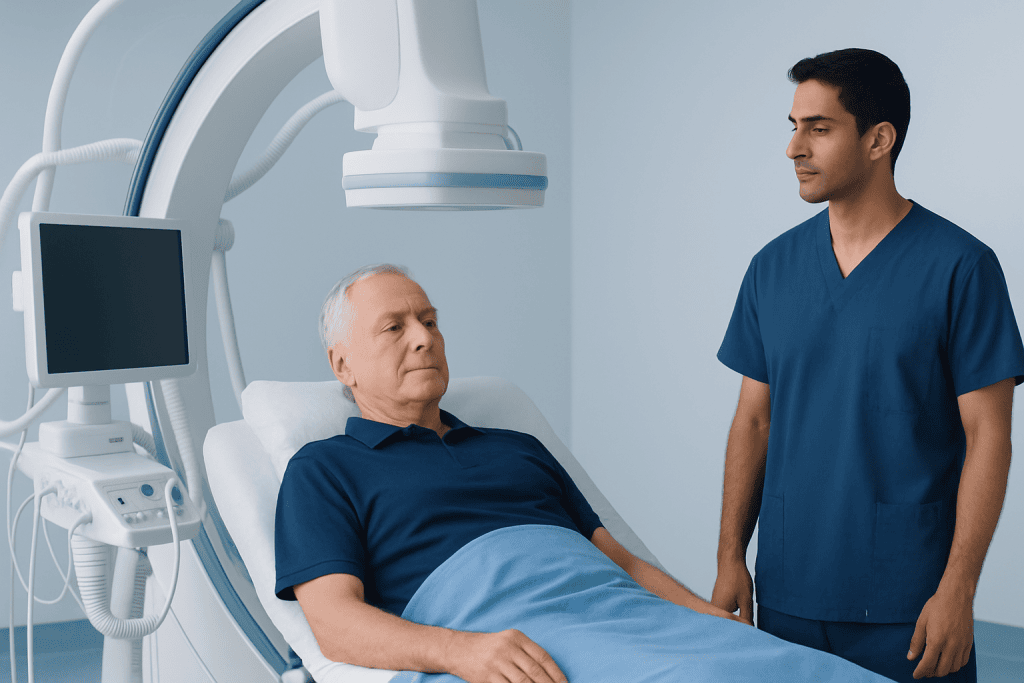
Doctors consider angioplasty when there is evidence that an artery is significantly narrowed and causing symptoms or posing a health risk. In cardiology, common reasons include stable chest pain caused by reduced blood flow to the heart, worsening angina despite medicines, or an acute heart attack where blood flow needs to be restored quickly. It may also be considered when test results show a blockage that is likely to benefit from intervention.
Candidacy depends on more than the presence of a blockage. The care team looks at how severe the narrowing is, where it is located, whether one or several arteries are involved, and whether the anatomy is suitable for catheter-based treatment. A person’s age, kidney function, bleeding risk, diabetes, and other medical conditions also help guide the decision.
Not everyone with narrowed arteries needs angioplasty. Some people do well with medication and lifestyle changes alone, while others may be better served by surgery if multiple complex blockages are present. For selected patients with severe or diffuse coronary disease, doctors may discuss alternatives such as coronary artery bypass grafting to improve blood flow in a different way.
How the angioplasty procedure works: step by step

Before angioplasty, the patient usually has blood tests, an electrocardiogram, and imaging or angiography to identify the blockage. The procedure is commonly done in a catheterization laboratory. Sedation is often light, meaning the patient is relaxed but awake, and the skin is numbed where the catheter will enter, most often at the wrist or groin.
The doctor guides a thin tube through the blood vessel to the narrowed artery using live X-ray imaging. Contrast dye helps show the blood vessels clearly. Once the catheter reaches the blockage, a very small balloon at its tip is positioned across the narrowed area and inflated for a short time. This presses the plaque against the artery wall and widens the passage.
In many cases, a stent is then placed. The stent expands with the balloon and remains in the artery to support it after the balloon is removed. The doctor checks that blood flow has improved and then removes the catheter. This treatment approach is often referred to as angioplasty and stent placement when both balloon dilation and stenting are performed.
The total procedure time can vary depending on how many arteries are treated and how complex the blockage is. Some angioplasties are planned in advance, while others are performed urgently during a heart attack. Afterward, the patient is moved to a recovery area for monitoring of heart rhythm, blood pressure, puncture-site bleeding, and overall stability.
Benefits, limits, and possible risks
For the right patient, angioplasty can improve blood flow quickly and effectively. Benefits may include less chest pain, improved ability to be active, and reduced heart muscle damage when a blocked coronary artery is opened promptly during a heart attack. Because it is minimally invasive, recovery is usually faster than with open surgery.
At the same time, angioplasty has limits. It treats a specific narrowed area, but it does not cure atherosclerosis, the disease process that causes plaque buildup in arteries. That is why long-term treatment still includes heart-healthy habits and medicines to reduce the chance of future narrowing or clot formation.
Possible risks include bleeding or bruising where the catheter was inserted, an allergic reaction to contrast dye, irregular heart rhythm, infection, kidney strain from contrast, blood clot formation, or re-narrowing of the treated artery. Rare but serious complications can include heart attack, stroke, artery damage, or emergency surgery. The care team reviews these risks in the context of the expected benefits for each individual.
In some cases, additional procedures may be needed if symptoms continue or if other arteries are affected. When doctors assess circulation more broadly, they may recommend further cardiac catheterization or other tests to guide next steps and long-term management.
Recovery timeline after angioplasty
Recovery after angioplasty is often measured in days rather than weeks, although the exact timeline depends on why the procedure was done and whether there were any complications. After a planned angioplasty, some people go home the same day or after one overnight stay. If the procedure was performed during a heart attack or involved more complex treatment, the hospital stay may be longer.
During the first 24 to 48 hours, mild soreness or bruising at the wrist or groin access site is common. The care team usually advises drinking fluids, avoiding heavy lifting, and watching for signs of bleeding, swelling, or increasing pain. Most people can return to light daily activities within a few days, but the doctor will give individualized guidance about work, exercise, and driving.
Over the following weeks, recovery focuses not only on healing from the procedure but also on protecting the artery over the long term. Medications are very important, especially if a stent was placed, because anti-clotting treatment helps prevent a clot from forming inside the stent. Follow-up visits may include review of symptoms, blood pressure, cholesterol management, and plans for supervised exercise or heart rehabilitation.
A realistic recovery timeline often includes gradual improvement rather than an immediate cure. Some symptoms may ease quickly, while stamina, confidence with exercise, and risk-factor control take longer. If symptoms return, worsen, or new symptoms appear, prompt medical review is important.
Prevention and self-care after angioplasty
After angioplasty, healthy habits play a major role in keeping arteries open and reducing future cardiovascular risk. Stopping smoking, following a heart-healthy eating pattern, staying physically active within medical advice, managing weight, and getting enough sleep all support recovery. Stress management can also help as part of a broader heart-care plan.
Medicines should be taken exactly as prescribed. These may include drugs to prevent blood clots, lower cholesterol, control blood pressure, or treat diabetes. It is important not to stop anti-platelet medicines on one’s own after stent placement, because this can raise the risk of a dangerous clot.
Regular follow-up matters even when a person feels well. Monitoring helps doctors assess symptom control, check medication tolerance, and address risk factors early. For some patients, structured rehabilitation and specialist review in cardiology rehabilitation can support a safer return to exercise and daily life.
When to seek medical care
Medical care should be sought urgently for chest pain, pressure, or tightness that is severe, lasts more than a few minutes, comes with shortness of breath, sweating, nausea, fainting, or spreads to the arm, back, neck, or jaw. These symptoms can signal a heart attack and should not be ignored. Emergency evaluation is especially important if symptoms are new or different from usual angina.
After angioplasty, patients should contact a doctor promptly if they notice increasing redness, swelling, bleeding, or discharge at the catheter site; fever; severe bruising; leg or arm numbness; or recurring chest pain. Sudden shortness of breath, weakness on one side, trouble speaking, or collapse requires emergency attention.
People with recurring symptoms may need reassessment for progression of artery disease or complications. At Acibadem International, multidisciplinary specialists in JCI-accredited hospitals diagnose and treat cardiovascular conditions for international patients, including evaluation after angioplasty when ongoing care is needed.
Frequently asked questions
Is angioplasty the same as getting a stent?
Not exactly. Angioplasty refers to widening the artery with a balloon, while a stent is a small mesh tube that is often placed afterward to help keep the artery open. Many people have both during the same procedure.
How long does angioplasty take?
A straightforward angioplasty may take about 30 minutes to a few hours, depending on the number and complexity of blockages. Preparation and recovery time in the hospital add to the overall visit. Emergency procedures during a heart attack may follow a different timeline.
Will angioplasty cure coronary artery disease?
No. Angioplasty treats a specific narrowed area, but it does not remove the underlying tendency to develop plaque in the arteries. Ongoing medicines, follow-up, and lifestyle changes are still needed to reduce future risk.
Is angioplasty painful?
Most people do not feel sharp pain during the procedure because the access site is numbed and sedation is commonly used. Some may feel pressure at the insertion site or brief discomfort when the balloon is inflated. Any symptoms should be reported to the care team during the procedure.
How soon can normal activities be resumed after angioplasty?
Many people return to light activities within a few days after a planned angioplasty, but timelines vary. Recovery may be longer after a heart attack or a more complex procedure. The treating doctor provides guidance based on the access site, overall health, and whether a stent was placed.
Can arteries become blocked again after angioplasty?
Yes, re-narrowing can happen, although modern stents and medicines have reduced this risk. New blockages can also develop in other parts of the arteries over time. That is why long-term prevention and regular medical follow-up remain important.
References
- American Heart Association
- National Heart, Lung, and Blood Institute
- European Society of Cardiology
- Society for Cardiovascular Angiography and Interventions
This article is for general information only and is not a substitute for professional medical advice. Please consult a qualified doctor about your individual situation.
Heart care in Turkey — expert evaluation and treatment
JCI-accredited · board-certified surgeons · reply within 24h
Add us as a Preferred Source to see more of our trusted health content across Google Search, AI Overviews and Discover.
Check your numbers in seconds
BMI, calories, due date, blood pressure and 30+ more clinical calculators — free, instant, doctor-reviewed ranges.