Si Joint: A Complete Medical Overview

The SI joint links the sacrum and pelvis and plays an important role in stability and shock absorption. SI joint pain commonly causes discomfort in the lower back, buttock, groin, or thigh and may worsen with standing, walking, or climbing stairs.
Key Takeaways
- The SI joint links the sacrum and pelvis and plays an important role in stability and shock absorption.
- SI joint pain commonly causes discomfort in the lower back, buttock, groin, or thigh and may worsen with standing, walking, or climbing stairs.
- Diagnosis usually combines medical history, physical examination, imaging, and sometimes image-guided diagnostic injections.
- Treatment often begins with activity modification, physical therapy, pain-relief medication, and supportive measures.
- Persistent or severe symptoms may require specialist evaluation for injections, rehabilitation, or selected procedures.
The SI joint, or sacroiliac joint, connects the lower spine to the pelvis and helps transfer weight between the upper body and legs. When this joint becomes irritated, inflamed, too stiff, or too mobile, it can cause low back, buttock, groin, or upper leg pain that may resemble other spine or hip conditions.
What Is the SI Joint?
The SI joint, or sacroiliac joint, is the joint between the sacrum at the base of the spine and the iliac bones of the pelvis. There is one joint on each side. These joints are strong and designed for stability, but they also allow a small amount of movement that helps absorb forces during walking, lifting, bending, and changes in posture.
Although the SI joints do not move as freely as the knee or shoulder, they are important for transferring body weight from the upper body to the hips and legs. Because they sit close to the lower spine, hips, buttocks, and pelvic structures, pain from the SI joint can sometimes be difficult to identify without a careful assessment.
People often use the term “SI joint dysfunction” to describe symptoms caused by abnormal motion, inflammation, strain, or degeneration in the sacroiliac joint. In practice, this means the joint may be moving too much, too little, or becoming irritated over time. The result is pain that may feel similar to lower back pain from other causes, which is why accurate diagnosis matters.
How SI Joint Problems Feel
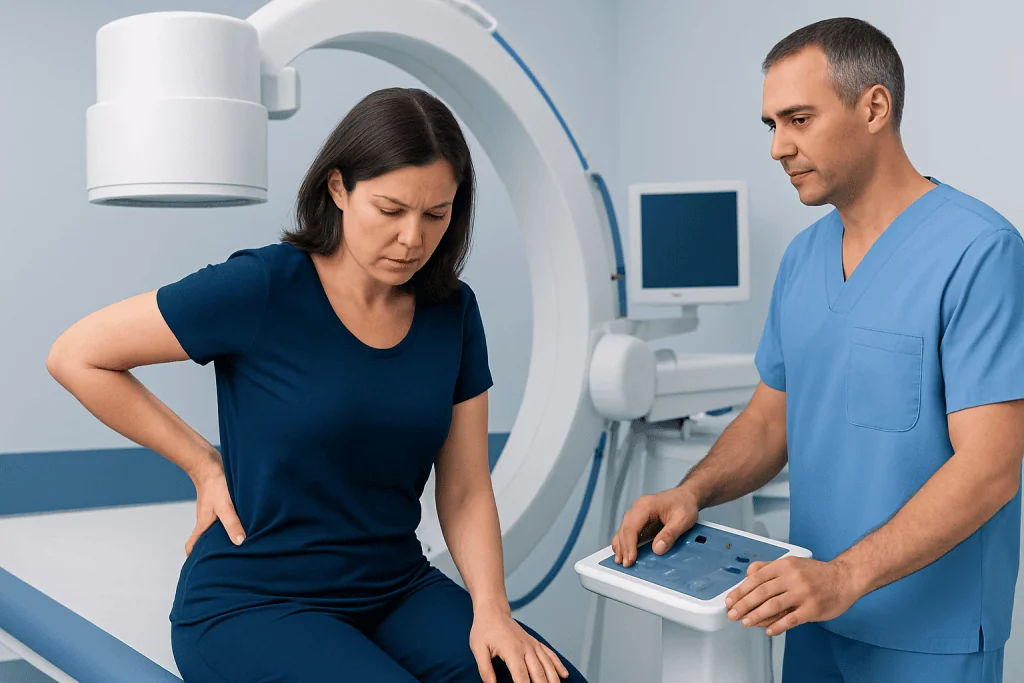
SI joint pain usually starts in the lower back or buttock on one side, although it can affect both sides. Some people feel a deep ache, while others notice sharp pain with certain movements. The discomfort may spread into the groin, outer hip, or upper thigh, but it usually does not travel all the way down the leg in the same pattern as classic sciatica.
Symptoms often become more noticeable during activities that load the pelvis unevenly. Standing for long periods, climbing stairs, turning in bed, getting out of a car, taking long strides, or rising from sitting can all provoke pain. Some people feel better when resting, while others notice stiffness after sitting too long.
Other common features include a sense of pelvic instability, tenderness over the back of the pelvis, or pain when putting more weight on one leg. Because SI joint discomfort can overlap with hip disease, muscle strain, or nerve-related back problems, self-diagnosis is not always reliable. A clinician may also consider related conditions such as sciatica or hip and spine disorders when evaluating symptoms.
- Low back pain near the belt line
- Buttock pain, often one-sided
- Groin, hip, or upper thigh discomfort
- Pain that worsens with standing, walking, stairs, or turning
- Stiffness after rest or prolonged sitting
Why SI Joint Pain Happens
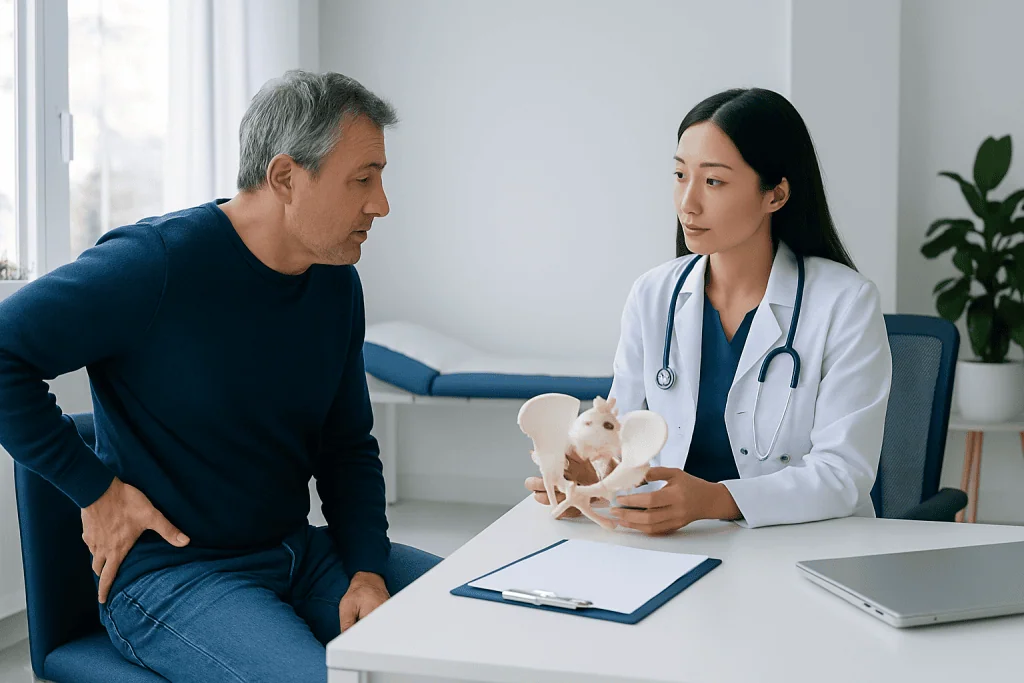
SI joint pain can develop for several reasons. Sometimes it follows a fall, twisting injury, sports strain, or sudden change in physical activity. In other cases, the joint becomes irritated gradually because of repetitive stress, muscle imbalance, posture changes, arthritis, or degeneration with age.
Pregnancy is another well-recognized factor. Hormonal changes can loosen ligaments, and the added mechanical load on the pelvis can place more stress on the SI joints. After pregnancy, some people continue to experience symptoms for a period of time, especially if surrounding muscles are weak or overloaded.
Inflammatory conditions can also affect the sacroiliac joints. In these cases, pain may be part of a broader pattern of spinal or joint inflammation. Less commonly, infection, fracture, or other serious disease may involve the area, especially when pain is accompanied by fever, significant trauma, unexplained weight loss, or pain that is severe and persistent at night.
Risk factors may include prior low back injury, leg-length differences, altered gait, hypermobility, osteoarthritis, previous lumbar fusion, and occupations or sports that involve repetitive lifting or rotation. The joint may also become painful because nearby tissues such as ligaments and muscles are strained while trying to stabilize the pelvis.
How Doctors Diagnose SI Joint Conditions
Diagnosing SI joint pain usually begins with a detailed medical history. A doctor will ask where the pain is felt, what movements trigger it, whether it radiates below the knee, and how long symptoms have been present. They may also ask about previous injuries, pregnancy, inflammatory disease, or past spine surgery.
During the physical examination, the clinician checks posture, walking pattern, hip motion, spine movement, and tenderness over the pelvis. A group of provocative maneuvers may be used to stress the SI joint in controlled ways. No single test proves the diagnosis on its own, but a consistent pattern can strongly suggest that the SI joint is a pain source.
Imaging may be helpful, especially to rule out other causes such as fracture, hip disease, arthritis, or problems in the lower spine. X-rays, MRI, or CT scans may be used depending on the symptoms and the suspected cause. If the diagnosis remains uncertain, an image-guided injection of local anesthetic into the SI joint can help confirm whether the joint is responsible for the pain.
Because the symptoms often overlap with those of spinal disc disease, hip disorders, and nerve compression, some patients need a broader musculoskeletal assessment. This may include evaluation by specialists in orthopedics, physical medicine, pain medicine, or rheumatology depending on the clinical picture.
Treatment Options for SI Joint Pain
Treatment depends on the cause, severity, and duration of symptoms. For many people, the first step is conservative care. This often includes short-term activity modification, heat or ice, and nonprescription or prescription pain-relief medicines recommended by a doctor. The aim is to reduce pain enough to allow a gradual return to normal movement.
Physical therapy is a central part of care. A tailored program may focus on improving pelvic stability, strengthening the core and hip muscles, restoring flexibility, and correcting movement patterns that strain the joint. In some cases, a pelvic or SI belt may be recommended for additional support, especially during specific activities or after pregnancy.
If symptoms continue despite conservative treatment, doctors may consider image-guided injections. These injections can reduce inflammation and may also help confirm the diagnosis. Some patients with ongoing pain benefit from specialized pain management strategies, while others may be referred for physical therapy and rehabilitation to improve long-term function.
When pain is severe, persistent, and clearly linked to the SI joint after thorough evaluation, more advanced procedures may be discussed. These can include nerve-targeted procedures or, in selected cases, orthopedic surgery such as SI joint fusion. Surgery is generally considered only after well-guided nonsurgical treatment has not provided enough relief and when the diagnosis is well established.
Self-care, Recovery, and Prevention
Most people are encouraged to stay gently active rather than resting completely for long periods. Short walks, posture changes, and controlled exercises may help prevent stiffness and support recovery. However, activities that clearly worsen pain, such as heavy lifting, twisting, or high-impact exercise, may need to be reduced temporarily.
Home care often focuses on protecting the joint while keeping surrounding muscles active. A physical therapist may teach safe ways to sit, stand, turn in bed, lift objects, and return to exercise. Strengthening the abdominal, gluteal, and hip muscles can improve pelvic stability and may lower the chance of recurrence.
Long-term prevention is often linked to body mechanics and conditioning. Useful habits may include warming up before exercise, progressing activity gradually, maintaining a healthy body weight, avoiding repeated uneven loading of the pelvis, and addressing footwear or gait issues when relevant. For people with recurrent symptoms, an individualized exercise plan is usually more effective than relying on rest alone.
Recovery time varies. Mild flare-ups may improve within days to weeks, while more persistent cases may take longer and benefit from structured rehabilitation. Improvement is often gradual, and steady progress in movement and function is usually a more reliable sign than pain disappearing all at once.
When to Seek Medical Care
Medical assessment is appropriate when low back or buttock pain lasts more than a few weeks, returns frequently, or limits walking, work, sleep, or daily activities. A doctor should also evaluate pain that follows an injury, significantly changes normal movement, or does not improve with basic self-care.
Urgent medical attention is needed if pain is accompanied by fever, new weakness, numbness, loss of bowel or bladder control, major trauma, or unexplained weight loss. These features may point to conditions that need prompt care and should not be assumed to be simple SI joint strain.
Persistent pelvic, hip, or low back pain can have several causes, and treatment works best when the source is identified clearly. Near the end of the care pathway, patients seeking coordinated evaluation may benefit from centers with spine, orthopedics, pain, and rehabilitation expertise. Acibadem International’s multidisciplinary specialists and JCI-accredited hospitals diagnose and treat SI joint-related conditions for international patients when appropriate.
Frequently asked questions
What does the SI joint do?
The SI joint connects the sacrum, which is the triangular bone at the base of the spine, to the pelvis. Its job is to help transfer weight and force between the upper body and the legs while providing stability and limited shock absorption.
Where is SI joint pain usually felt?
SI joint pain is most often felt in the lower back or buttock, usually on one side. It can also spread to the groin, hip, or upper thigh, which is one reason it may be confused with hip or spine conditions.
Can SI joint pain feel like sciatica?
Yes, SI joint pain can sometimes resemble sciatica because it may radiate into the buttock or leg. However, true sciatica usually involves irritation of a nerve root and often causes pain, tingling, or numbness traveling farther down the leg.
How is SI joint dysfunction confirmed?
Doctors usually combine symptom history, physical examination findings, and imaging to narrow down the diagnosis. In some cases, an image-guided injection of anesthetic into the joint is used to help confirm that the SI joint is the source of pain.
Does SI joint pain go away on its own?
Mild SI joint irritation may improve with time, activity modification, and guided exercise. If pain is ongoing, recurrent, or limiting daily life, medical evaluation is important because targeted treatment is often more effective than waiting alone.
What is the best treatment for SI joint pain?
There is no single best treatment for everyone, because care depends on the cause and severity of symptoms. Many people improve with physical therapy, pain-relief strategies, and posture or movement changes, while others may need injections or specialist procedures.
References
- National Institute of Arthritis and Musculoskeletal and Skin Diseases
- American Academy of Orthopaedic Surgeons
- National Health Service
- Mayo Clinic
- American College of Rheumatology
This article is for general information only and is not a substitute for professional medical advice. Please consult a qualified doctor about your individual situation.
Joint and spine care in Turkey — expert assessment & treatment
JCI-accredited · board-certified surgeons · reply within 24h
Add us as a Preferred Source to see more of our trusted health content across Google Search, AI Overviews and Discover.

More from the Health Library



Related Specialists

Prof. Dr. Düzgün Yıldırım
Radiology
Assoc. Prof. Dr. Fuzuli Tuğrul
Radiation Oncology
Prof. Dr. Kahraman Öztürk
Orthopedic Surgery & Traumatology
Dr. Ayça Sözen
Pediatrics