

Back Exercises Exercises: An Evidence-Based Guide for Patients

Gentle, consistent back exercises can improve flexibility, strength, and function for many common back problems. Exercises should match the person’s symptoms and should not sharply increase pain, numbness, or weakness.
Key Takeaways
- Gentle, consistent back exercises can improve flexibility, strength, and function for many common back problems.
- Exercises should match the person’s symptoms and should not sharply increase pain, numbness, or weakness.
- Core, hip, and posture-focused movements often support back health as much as direct back exercises.
- Sudden severe pain, trauma, fever, bowel or bladder changes, or progressive weakness need prompt medical care.
- A clinician or physical therapist can tailor an exercise plan when pain is persistent, recurring, or hard to explain.
Back exercises exercises can help many people ease stiffness, support the spine, and improve everyday movement. The most helpful routine depends on the cause of symptoms, fitness level, and whether warning signs suggest a need for medical evaluation first.
Overview: Do Back Exercises Really Help?
Back exercises exercises can help many people with mild to moderate mechanical back pain, stiffness, or deconditioning. In general, movement is better than prolonged bed rest for common back pain, and a well-chosen exercise program may improve flexibility, support the muscles around the spine, and make daily activities more comfortable.
The key is that not every exercise suits every person. Some people benefit most from stretching tight muscles, while others need more work on core strength, hip mobility, posture, or movement control. Exercises should feel manageable and should not trigger a marked increase in pain during or after the session.
Back discomfort can come from muscles, joints, discs, nerves, posture, work demands, inactivity, or a combination of factors. Because the causes are varied, the safest approach is to start with gentle movements and build gradually. If back pain is persistent or associated with leg pain, numbness, or weakness, a medical assessment may be useful before starting a new routine, especially if conditions such as lumbar disc herniation are a concern.
How Exercise Supports the Back

The spine relies on surrounding muscles, ligaments, discs, and joints to move and stay stable. When these structures are overloaded, weak, tight, or poorly coordinated, pain may develop. Exercise helps by improving circulation to soft tissues, restoring movement, and training the body to share loads more efficiently during sitting, lifting, walking, and reaching.
Many people think back care means only stretching the lower back. In reality, hip muscles, abdominal muscles, and the upper back also influence spinal comfort. Better trunk control can reduce strain on the lower back, while improved hip mobility may make bending and standing less stressful.
Regular exercise may also reduce fear of movement. After an episode of back pain, some people begin to avoid activity, which can lead to stiffness and weakness. A graded program helps rebuild confidence and function step by step. For people with longer-lasting symptoms, structured physical therapy and rehabilitation may help identify the most appropriate exercises and pacing.
Which Types of Back Exercises Are Most Useful?
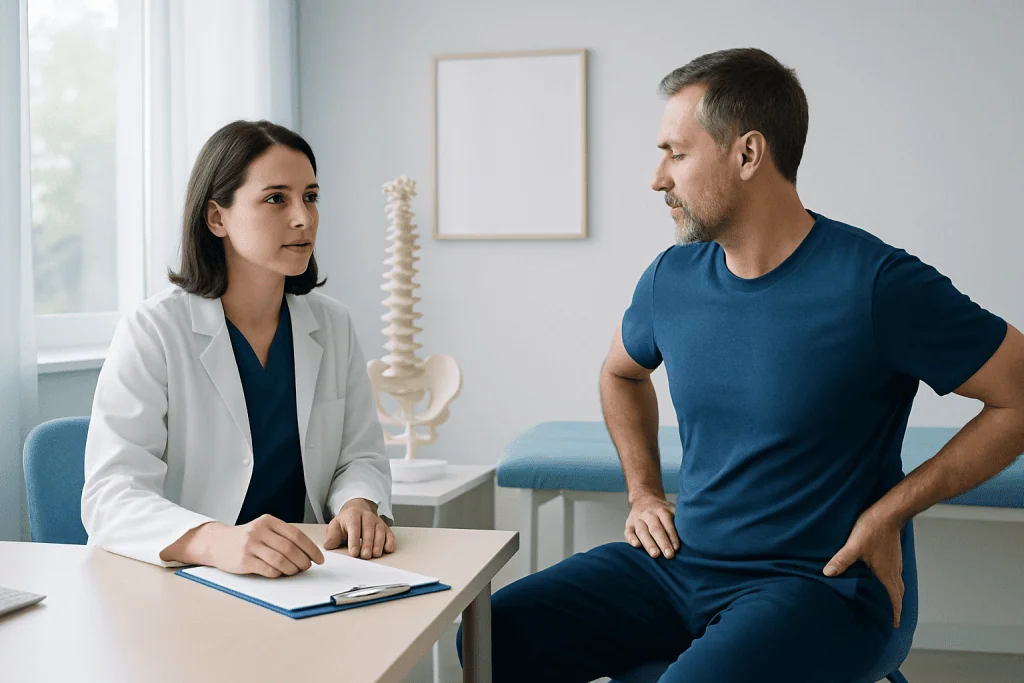
There is no single best routine for everyone, but most evidence-based programs include a mix of gentle mobility work, stretching, strengthening, and functional movement. Exercises are usually introduced gradually, with attention to posture, breathing, and symptom response rather than pushing through pain.
Commonly recommended categories include:
- Mobility exercises: gentle movements to reduce stiffness, such as pelvic tilts or controlled spinal motion within a comfortable range.
- Stretching: hamstring, hip flexor, gluteal, and lower back stretches when tightness contributes to discomfort.
- Core strengthening: exercises that build endurance in the abdominal and trunk muscles that support the spine.
- Hip and glute strengthening: movements that improve pelvic stability and reduce stress on the lower back.
- Posture and movement training: practice for sitting, standing, lifting, and changing positions with less strain.
- Low-impact aerobic activity: walking, swimming, or cycling to improve conditioning and support recovery.
Examples that many people tolerate well include abdominal bracing, bridges, bird-dog, knee-to-chest variations, cat-camel, side-lying leg work, and short walking sessions. However, an exercise that helps one person may worsen symptoms in another. Movements involving repeated bending, twisting, or heavy loading may need to be limited in some situations, especially when nerve irritation or disc-related pain is present.
For this reason, exercise selection should be individualized. Someone with simple muscular strain may improve with a broad program, while someone recovering from spine surgery or dealing with persistent nerve symptoms may need closer supervision.
A Safe, Patient-Friendly Approach to Starting
A practical way to begin is to choose a few low-intensity exercises and perform them consistently rather than doing a large number all at once. Slow progress is usually more sustainable than an aggressive start. Many people do well with brief sessions most days of the week, followed by gradual increases in repetitions, hold times, or walking duration.
During exercise, mild effort or stretching is expected, but sharp, radiating, or escalating pain is not. Symptoms that settle shortly after movement may be acceptable, while pain that lingers for hours or becomes clearly worse suggests the routine should be modified. Good technique matters more than the number of repetitions.
Helpful principles include:
- Warm up with a short walk or gentle movement before stretching or strengthening.
- Move in a slow, controlled way without bouncing.
- Breathe normally and avoid holding the breath during effort.
- Stop or reduce an exercise if it causes leg numbness, tingling, weakness, or increasing pain.
- Balance exercise with regular movement breaks during the day, especially if sitting for long periods.
Footwear, sleep quality, work setup, and stress can also influence back symptoms. Exercise works best when paired with general lifestyle measures such as changing positions often, avoiding sudden overload, and returning to normal activity as tolerated.
Common Causes of Back Pain and Why They Matter
Back pain is a symptom rather than a single disease. In many adults, it is mechanical, meaning it relates to muscles, joints, ligaments, discs, or movement patterns rather than a dangerous underlying problem. Mechanical pain may start after lifting, prolonged sitting, sports, or no clear event at all.
Other causes can include disc bulging, nerve compression, age-related wear in the spine, scoliosis, inflammatory conditions, osteoporosis-related fractures, or referred pain from nearby structures. Some people mainly feel local soreness, while others have pain shooting into the buttock or leg, which may suggest nerve involvement such as sciatica.
Understanding the pattern of symptoms helps guide exercise choice. For example, pain that is worse after inactivity may respond well to gentle mobility work, while pain linked to weakness and fatigue may benefit more from progressive strengthening. If symptoms are recurrent, severe, or unusual, doctors may assess for structural causes and, when needed, discuss options such as orthopedic rehabilitation as part of recovery.
Diagnosis and When Exercise Alone Is Not Enough
Many short-lived episodes of back pain improve with time, relative activity modification, and a sensible exercise plan. A doctor may diagnose common back pain based on symptoms and a physical examination, including posture, range of motion, strength, reflexes, and any nerve-related findings. Imaging is not always needed right away for uncomplicated back pain.
Tests such as X-ray, MRI, or CT may be considered if pain follows trauma, lasts longer than expected, or is associated with neurological symptoms or other warning signs. Blood tests may be used when infection, inflammatory disease, or another medical cause is suspected.
Exercise alone may not be enough when pain is persistent, repeatedly disrupts sleep or work, or clearly limits walking, standing, or self-care. In those cases, treatment may include supervised rehabilitation, medication guidance from a clinician, posture and ergonomic review, or specialist evaluation. A multidisciplinary assessment can help clarify whether symptoms are mainly muscular, joint-related, disc-related, or nerve-related.
When to Seek Medical Care
Medical attention is important if back pain starts after a fall, accident, or other injury, or if it is sudden and severe without a clear explanation. Prompt evaluation is also needed when pain is accompanied by fever, unexplained weight loss, a history of cancer, or pain that is constant and not influenced by movement.
People should seek urgent care if they develop new or worsening leg weakness, numbness around the groin or saddle area, or changes in bowel or bladder control. These symptoms can suggest significant nerve compression and should not be managed with home exercise alone.
A non-urgent medical review is sensible if pain lasts more than a few weeks, keeps returning, radiates below the knee, or prevents normal daily activities. In such cases, a clinician can recommend targeted treatment and safe progression. Acibadem International’s multidisciplinary specialists and JCI-accredited hospitals diagnose and treat back conditions for international patients when more detailed evaluation is needed.
Frequently asked questions
What are the best back exercises exercises for beginners?
Beginners often do best with gentle mobility and stability exercises rather than intense stretching or heavy strengthening. Simple options such as pelvic tilts, bridges, bird-dog variations, and short walks are commonly used, but the best routine depends on symptoms and overall fitness.
Should someone exercise when the back is painful?
For many common types of back pain, gentle movement is helpful and prolonged bed rest is usually not advised. However, exercise should not sharply increase pain or cause numbness, weakness, or pain spreading down the leg. When in doubt, a doctor or physical therapist can advise on the safest level of activity.
How often should back exercises be done?
Many people benefit from short, regular sessions several days a week rather than occasional intense workouts. The exact frequency depends on the type of exercise, symptom severity, and recovery response. A gradual, consistent program is usually more effective than doing too much too soon.
Can back exercises prevent future pain?
They can help lower the chance of recurring pain by improving strength, flexibility, posture, and movement habits. Prevention also depends on staying active, managing workload, using good lifting technique, and avoiding long periods in one position. No exercise plan can prevent every episode, but regular activity is often beneficial.
When should someone stop an exercise?
An exercise should be stopped or modified if it causes sharp pain, increasing radiating leg pain, numbness, tingling, or weakness. Pain that continues to worsen after the session is also a sign that the exercise may not be suitable. A clinician can help adjust the program safely.
Is imaging needed before starting back exercises?
Not always. Many people with uncomplicated back pain can begin a gentle, conservative program without immediate scans. Imaging is more likely to be recommended when there has been trauma, persistent pain, neurological symptoms, or other warning signs.
References
- World Health Organization
- National Institute of Neurological Disorders and Stroke
- National Institute for Health and Care Excellence
- American Academy of Orthopaedic Surgeons
- North American Spine Society
This article is for general information only and is not a substitute for professional medical advice. Please consult a qualified doctor about your individual situation.
Joint and spine care in Turkey — expert assessment & treatment
JCI-accredited · board-certified surgeons · reply within 24h
Add us as a Preferred Source to see more of our trusted health content across Google Search, AI Overviews and Discover.

More from the Health Library



Related Specialists

Assoc. Prof. Dr. Serap Şahin Önder
Otorhinolaryngology
Dr. Mustafa Kemal Gürsel
Otorhinolaryngology
Dr. Habibe Seyisoğlu
Gynecology & Obstetrics
Dr. Halil Algan
Treatment of Pain Algology