Rubella — Explained by Medical Evidence, Not Myths

Rubella usually causes a mild fever, rash, and swollen lymph nodes, and some people have very few symptoms. The main medical concern is rubella during pregnancy, especially early pregnancy, because it can lead to congenital rubella syndrome.
Key Takeaways
- Rubella usually causes a mild fever, rash, and swollen lymph nodes, and some people have very few symptoms.
- The main medical concern is rubella during pregnancy, especially early pregnancy, because it can lead to congenital rubella syndrome.
- Doctors may confirm rubella with laboratory tests, particularly in pregnancy, outbreaks, or uncertain cases.
- There is no specific antiviral cure for rubella; treatment is mainly supportive while the illness runs its course.
- MMR vaccination is the most effective way to prevent rubella and protect communities.
Rubella is a contagious viral infection that is often mild in children and adults, but it matters medically because infection during pregnancy can cause serious birth defects. Evidence-based care focuses on recognizing symptoms, confirming the diagnosis when needed, preventing spread, and protecting people through vaccination.
What rubella is and why it still matters
Rubella is a viral infection sometimes called German measles. In many children and adults, it causes a mild illness with a short-lasting rash and fever, and some people may not realize they have it at all. Even so, rubella remains medically important because it can be dangerous during pregnancy.
The greatest concern is infection in a pregnant person, especially in the first trimester. The virus can cross the placenta and affect the developing baby, leading to miscarriage, stillbirth, or a group of serious birth defects known as congenital rubella syndrome. This is why accurate information about rubella should focus not only on the rash, but also on prevention and pregnancy safety.
Rubella is different from measles, although the two illnesses are often confused. Measles usually causes a more severe infection with higher fever and more prominent cough, runny nose, and inflamed eyes, while rubella is often milder. People who want to understand that difference may also read about measles.
How rubella spreads and who is at risk
Rubella spreads mainly through respiratory droplets when an infected person coughs, sneezes, or talks. It can also spread through close contact with respiratory secretions. A person may transmit the virus before the rash appears, which is one reason outbreaks can occur before the illness is recognized.
Anyone who is not immune can get rubella. Immunity usually comes from prior vaccination or, less commonly, a past infection. Risk is higher for people who are unvaccinated, those living in or traveling to areas with lower vaccination coverage, and people in close-contact settings such as schools, childcare environments, or shared households.
Pregnant people who are not immune are the group of greatest concern. Newborns with congenital rubella syndrome can also shed the virus for an extended period and may infect others, so careful medical follow-up is important in these cases.
Symptoms of rubella in children and adults
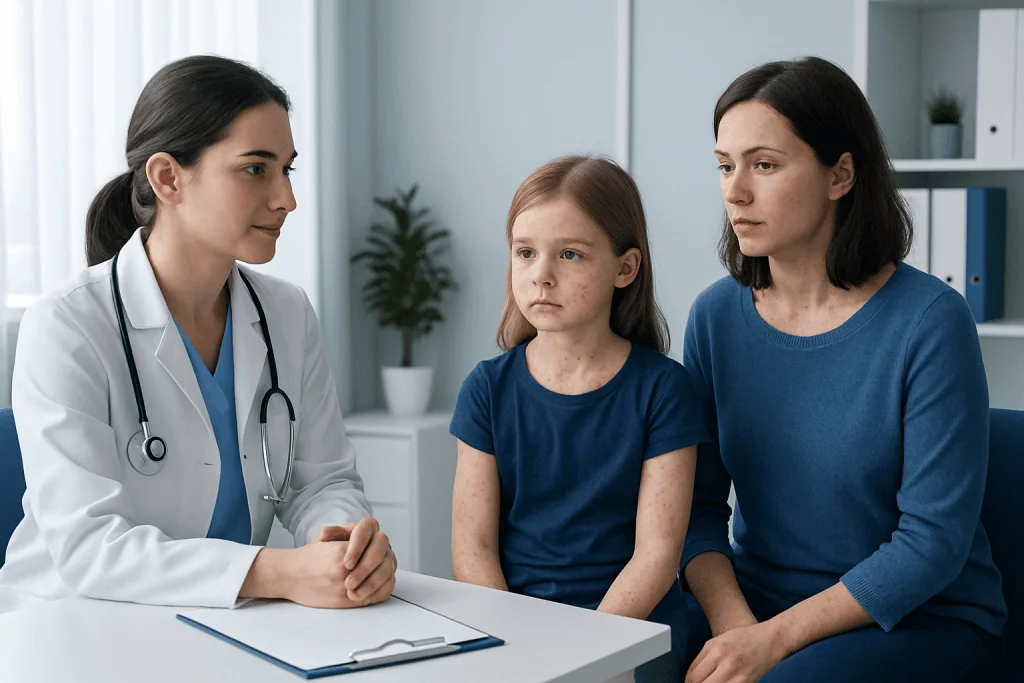
Rubella symptoms often begin mildly. Common features include a low-grade fever, a fine pink or red rash that usually starts on the face and spreads downward, and swollen lymph nodes, especially behind the ears and at the back of the neck. The rash generally lasts about three days, which is why rubella has sometimes been described as a “three-day measles.”
Other symptoms can include headache, tiredness, mild redness of the eyes, runny nose, and general discomfort. In older children, teenagers, and adults, joint pain or joint swelling may occur, particularly in women. These symptoms can be uncomfortable but are usually temporary.
Not everyone with rubella develops the full classic picture. Some people have such mild symptoms that the infection is missed, while others may only have swollen glands or a rash. Because several viral illnesses can look similar, symptoms alone are not always enough to make a reliable diagnosis.
- Low-grade fever
- Pink or red rash spreading from the face to the body
- Swollen lymph nodes behind the ears or neck
- Headache and fatigue
- Mild eye redness or runny nose
- Joint pain, more common in adults
Rubella and pregnancy: the most important medical concern
Rubella in pregnancy deserves special attention because the infection can affect the fetus, especially if it occurs early in pregnancy. The risk is highest during the first trimester, when important organs are forming. For this reason, even a mild rash illness should be assessed carefully in someone who is pregnant or may be pregnant.
Congenital rubella syndrome can cause a range of problems, including hearing loss, eye abnormalities such as cataracts, heart defects, growth restriction, developmental delay, and other complications. The exact effects can vary, but the possibility of long-term harm is why public health programs emphasize vaccination before pregnancy rather than after exposure.
Pregnant people should not receive the live MMR vaccine during pregnancy. Instead, protection is ideally confirmed before conception. If a pregnant person has been exposed to rubella or develops symptoms, prompt medical evaluation is important so that appropriate testing, counseling, and follow-up can be arranged. Related maternal infections may also be discussed in the context of cytomegalovirus (CMV), which can also affect pregnancy outcomes.
How doctors diagnose rubella
Doctors may suspect rubella based on symptoms, recent exposures, vaccination history, and whether there is a local outbreak. However, because many viral rashes resemble one another, laboratory confirmation is often needed. This is especially true during pregnancy, in newborns, in outbreak investigations, or when public health reporting is required.
Testing commonly includes blood tests that look for rubella antibodies and, in some situations, tests that detect the virus directly from respiratory samples. Interpreting antibody results can be complex, particularly in pregnancy, because timing matters and false-positive results can occur. For that reason, clinicians often consider symptoms, test timing, repeat testing, and public health guidance together.
Some patients may need additional evaluation depending on their situation. A pregnant person may need obstetric follow-up and fetal assessment. A newborn with suspected congenital rubella syndrome may need hearing, eye, heart, and developmental evaluation, and targeted testing in laboratory and imaging settings such as diagnostic imaging when clinically appropriate.
Treatment and supportive care
There is no specific antiviral treatment that cures rubella. In most otherwise healthy children and adults, care is supportive while the infection resolves on its own. This usually means rest, fluids, and simple measures to reduce fever or discomfort as advised by a qualified clinician.
People with rubella should avoid close contact with others, especially pregnant people who may not be immune. Isolation advice may vary by local public health guidance, but staying home while contagious helps reduce transmission. Good hand hygiene and covering coughs and sneezes are also sensible protective steps.
When rubella affects pregnancy or a newborn, care becomes more specialized. Management may involve obstetricians, pediatricians, infectious disease specialists, and other experts depending on the complications involved. If congenital heart or developmental issues are suspected, doctors may coordinate further assessment and supportive services, including pediatric care for infants and children who need longer-term follow-up.
Prevention, immunity, and common myths
The most effective way to prevent rubella is vaccination, usually through the measles-mumps-rubella (MMR) vaccine. In countries with routine immunization programs, vaccination has greatly reduced rubella infections and congenital rubella syndrome. Immunity is not just a personal benefit; high community vaccination coverage also protects pregnant people and babies who are especially vulnerable.
A common myth is that rubella is always too mild to matter. While many cases are mild, that message overlooks the serious risks in pregnancy. Another misconception is that a person can judge immunity by memory alone, but many adults are unsure of their vaccine history. When there is uncertainty, a doctor may review records or consider antibody testing in selected situations, especially before pregnancy.
People planning a pregnancy can discuss immunity at a routine visit. If vaccination is needed, it should be given before pregnancy, with advice about when to try to conceive afterward according to current medical guidance. For broader preventive health support, clinicians may also coordinate check-up and screening visits to review vaccines and overall health status.
When to seek medical care
Medical advice should be sought promptly if a person who is pregnant, may be pregnant, or is planning pregnancy has been exposed to rubella or develops a rash illness. Care is also important for infants with possible congenital infection, for anyone with unclear diagnosis during an outbreak, or for people whose symptoms are more severe than expected.
Urgent assessment may be needed if there are signs of dehydration, breathing difficulty, high fever, persistent vomiting, confusion, or severe weakness, since these symptoms may suggest another illness or a complication rather than straightforward rubella. Parents should also contact a doctor if a child has a new rash and fever and the cause is uncertain.
At the end of the care pathway, some patients may benefit from multidisciplinary evaluation. Acibadem International’s multidisciplinary specialists and JCI-accredited hospitals diagnose and treat infectious and pregnancy-related conditions for international patients when further assessment is needed.
Frequently asked questions
Is rubella the same as measles?
No. Rubella and measles are caused by different viruses, and measles is usually the more severe illness. Rubella is often milder, but it is especially important because of the risk it poses during pregnancy.
What does rubella rash look like?
Rubella often causes a fine pink or red rash that begins on the face and then spreads to the body. It usually lasts only a few days and may come with mild fever and swollen lymph nodes.
How dangerous is rubella in pregnancy?
Rubella during pregnancy can be very serious, especially in early pregnancy. It may cause miscarriage, stillbirth, or congenital rubella syndrome, which can affect the baby's hearing, eyes, heart, and development.
Can adults get rubella?
Yes, adults can get rubella if they are not immune. Adults may have mild symptoms, but joint pain is more common than in children, and infection matters greatly if the person is pregnant.
How is rubella treated?
There is no specific antiviral cure for rubella. Treatment usually focuses on rest, fluids, and relieving fever or discomfort while the infection improves naturally.
Can rubella be prevented?
Yes. The best prevention is vaccination with the MMR vaccine according to national immunization guidance. Checking immunity before pregnancy is especially important.
References
- World Health Organization
- Centers for Disease Control and Prevention
- European Centre for Disease Prevention and Control
- American College of Obstetricians and Gynecologists
- National Health Service
This article is for general information only and is not a substitute for professional medical advice. Please consult a qualified doctor about your individual situation.
Explore treatments in Turkey — costs, top hospitals & a free quote
JCI-accredited · board-certified surgeons · reply within 24h
Add us as a Preferred Source to see more of our trusted health content across Google Search, AI Overviews and Discover.